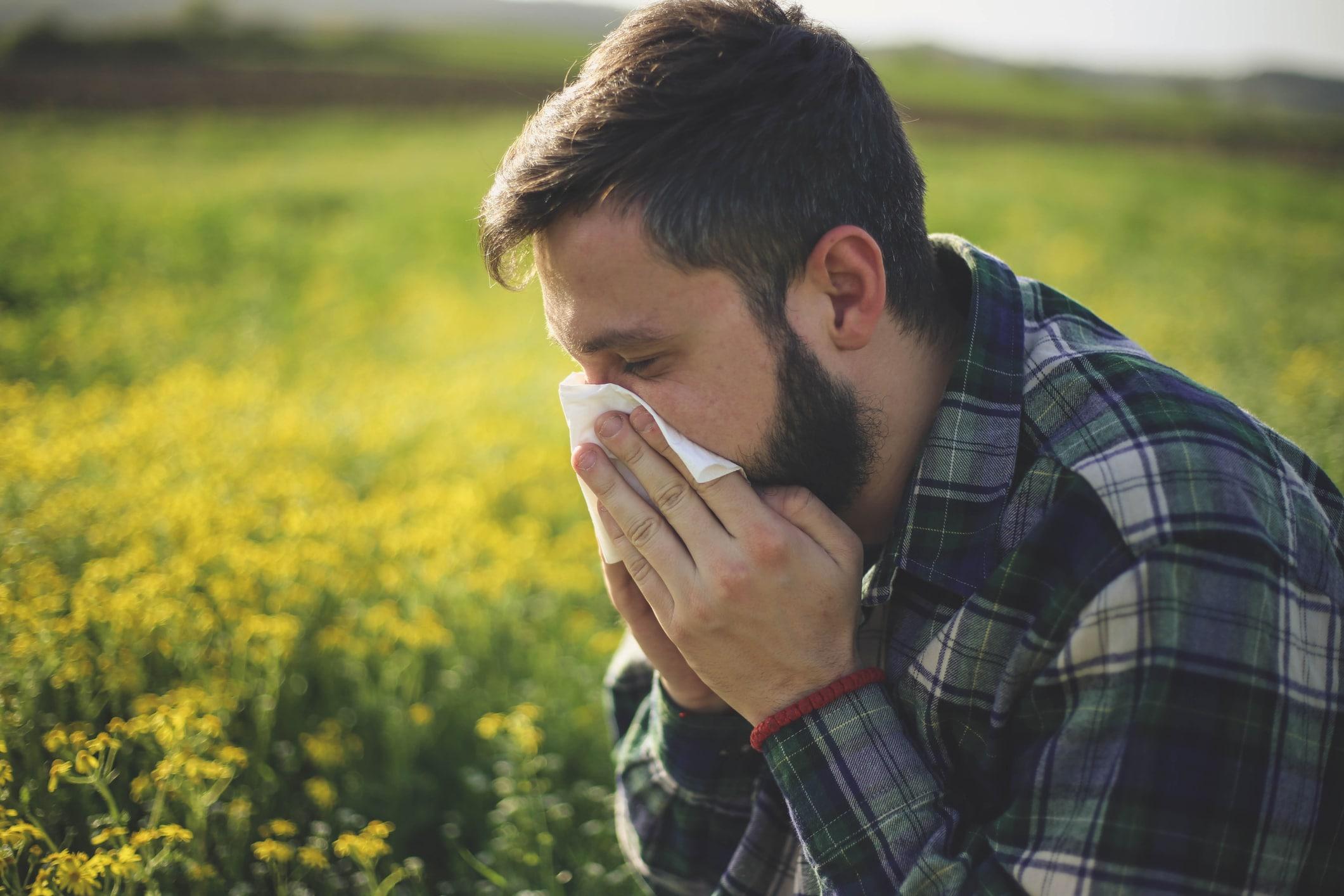
To mark World Allergy Day, we bring you this post on CBD and allergies so you can find out everything that is currently being researched on the subject.
Allergies are very common nowadays. Whether seasonal, food, skin or any other kind, allergies have a significant impact on a person's wellbeing. Cannabidiol (CBD), the non-psychoactive phytocannabinoid par excellence, has gained popularity due to its potential health benefits. While some studies suggest that CBD has potential effects on the immune system, it may benefit allergies by fighting inflammation.
CBD and allergies: the relationship between allergies and the endocannabinoid system
What is an allergy?
Allergies are an overreaction of the immune system to substances that are generally harmless, known as allergens. Common allergens include pollen, dust mites, certain foods, pet dander, insect stings and medicines.
The immune system in allergies
When a person with an allergy is exposed to an allergen, the immune system overreacts and starts releasing antibodies such as immunoglobulin E (IgE), which triggers the release of histamine and other chemicals.
Histamine is responsible for causing symptoms such as itching, sneezing and watery eyes. That is why the main, immediate treatment for an allergic response is antihistamines.
The endocannabinoid system and the immune system
Our body's endocannabinoid system is made up of enzymes, endogenous cannabinoids and endocannabinoid receptors, the most notable of which are the CB1 and CB2 receptors.
Cannabinoid receptors, particularly CB2 receptors, are widely distributed in immune cells.
Effects of CBD on the immune system and allergy symptoms
CBD is the main non-psychoactive cannabinoid in the cannabis plant, known for its therapeutic value. It attracts interest because of its various properties, such as its analgesic, antipsychotic, antioxidant and anti-inflammatory effects (1).
This cannabinoid is able to interact with the CB1 and CB2 cannabinoid receptors. However, a significant part of CBD's biological effects occurs without the involvement of CB1 or CB2 receptors (2), as CBD can bind to other types of receptors found on immune cells.
CBD modulates the immune response by either increasing or decreasing it. The latter is called immunosuppression, and it is a predominant property of CBD.
CBD-induced immunosuppression occurs by directly suppressing the activation of different types of immune cells, promoting cell death (apoptosis) and facilitating the generation of cells that regulate the immune response. These regulatory cells then help to regulate other immune cell targets, which contributes to the overall immunomodulatory effects of CBD (3).
The immunosuppressive capacity of CBD has been shown to be useful for autoimmune diseases (4, 5), but it has not yet been proven to be effective for allergies.
It should be noted that the immunosuppressive effect of CBD only occurs where disease is present, since CBD can block the activation of immune mechanisms that occur in response to a stimulus; in other words, CBD does not lower the immunity of a healthy person.
On the other hand, CBD can stimulate the immune system, although to a lesser extent. These opposing effects are the reason why CBD is under investigation, as the reasons that trigger this modulation are not yet fully understood.
How can CBD help with allergy symptoms?
The actual effectiveness of CBD in treating allergy symptoms is unknown because there is a lack of research on it. In theory, current data suggest that CBD may relieve allergies indirectly, as it may reduce the inflammatory response resulting from the allergy.
Perhaps future research will point to other mechanisms by which CBD might act. But according to current scientific research, the potential benefits of CBD for allergies are limited to its anti-inflammatory properties.
Current studies on CBD for allergies
To date, scientific studies on CBD and allergies are very scarce. One publication reported positive effects when CBD was used for allergic airway inflammation in a rodent model (6). It has also been suggested that CBD may be beneficial for allergic dermatitis due to its anti-inflammatory action in skin conditions (7).
The potential of cannabis terpenes for allergies
Other components of cannabis that could be of interest for allergies are terpenes. Terpenes are aromatic compounds found in plants such as cannabis, and they are responsible for their aromas and some therapeutic properties. Some terpenes, such as limonene, myrcene, pinene and linalool, which can be found in various strains of the cannabis plant, are able to produce an anti-inflammatory effect (8).
On this basis, in theory, full spectrum CBD would give better results, since terpenes also have an anti-inflammatory action. The relief of inflammation might even be enhanced by the entourage effect, which, although it has not been proven for allergies, is a premise that has been validated for other conditions.
Although some people claim that aromatherapy can relieve allergies, it is important to bear in mind that scientific research in this area is insufficient and the evidence is inconclusive.
Considerations and precautions when using CBD for allergies
How can you use CBD oil to treat allergies?
Overall, more research is needed to establish how effective CBD is for allergy symptoms. It is advisable to consult a medical professional for personalised advice and treatment options to manage allergies.
For use on dermatitis, the recommendation seems to be applying a cream, ointment or CBD oil four times a day (9), or enough to maintain a constant release of CBD into the skin.
Using CBD for allergies should be assessed with caution to avoid interactions with medication. Since the antihistamines commonly used to treat allergies are metabolised by the same liver enzymes as CBD, combining CBD with antihistamines could produce adverse effects.
Bear in mind, too, that the dose of CBD needed tends to vary widely, and there is no established CBD dose for treating allergies or for treating inflammation.
We hope you have found this post on current research into CBD and allergies useful. Please remember that this article is for information only and is not intended to prevent, treat or diagnose any disease. Cannactiva products are not medicines. Consult a healthcare professional if you have any questions about allergies and before using CBD.
References
- Pisanti, S., Malfitano, A. M., Ciaglia, E., Lamberti, A., Ranieri, R., Cuomo, G., Abate, M., Faggiana, G., Proto, M. C., Fiore, D., Laezza, C., & Bifulco, M. (2017). Cannabidiol: State of the art and new challenges for therapeutic applications. Pharmacology & therapeutics, 175, 133–150. https://doi.org/10.1016/j.pharmthera.2017.02.041
- Giorgi V, Marotto D, Batticciotto A, Atzeni F, Bongiovanni S, Sarzi-Puttini P. Cannabis and Autoimmunity: Possible Mechanisms of Action. Immunotargets Ther. 2021 Jul 21;10:261-271. https://doi.org/10.2147/ITT.S267905
- Nichols, J. M., & Kaplan, B. L. F. (2020). Immune Responses Regulated by Cannabidiol. Cannabis and cannabinoid research, 5(1), 12–31. https://doi.org/10.1089/can.2018.0073
- Jones, É., & Vlachou, S. (2020). A Critical Review of the Role of the Cannabinoid Compounds Δ9-Tetrahydrocannabinol (Δ9-THC) and Cannabidiol (CBD) and their Combination in Multiple Sclerosis Treatment. Molecules (Basel, Switzerland), 25(21), 4930. https://doi.org/10.3390/molecules25214930
- Mathur, K., Vuppalanchi, V., Gelow, K., Vuppalanchi, R., & Lammert, C. (2020). Cannabidiol (CBD) Consumption and Perceived Impact on Extrahepatic Symptoms in Patients with Autoimmune Hepatitis. Digestive diseases and sciences, 65(1), 322–328. https://doi.org/10.1007/s10620-019-05756-7
- Vuolo, F., Abreu, S. C., Michels, M., Xisto, D. G., Blanco, N. G., Hallak, J. E., Zuardi, A. W., Crippa, J. A., Reis, C., Bahl, M., Pizzichinni, E., Maurici, R., Pizzichinni, M. M. M., Rocco, P. R. M., & Dal-Pizzol, F. (2019). Cannabidiol reduces airway inflammation and fibrosis in experimental allergic asthma. European journal of pharmacology, 843, 251–259. https://doi.org/10.1016/j.ejphar.2018.11.029
- Baswan, S. M., Klosner, A. E., Glynn, K., Rajgopal, A., Malik, K., Yim, S., & Stern, N. (2020). Therapeutic Potential of Cannabidiol (CBD) for Skin Health and Disorders. Clinical, cosmetic and investigational dermatology, 13, 927–942. https://doi.org/10.2147/CCID.S286411
- Del Prado-Audelo, M. L., Cortés, H., Caballero-Florán, I. H., González-Torres, M., Escutia-Guadarrama, L., Bernal-Chávez, S. A., Giraldo-Gomez, D. M., Magaña, J. J., & Leyva-Gómez, G. (2021). Therapeutic Applications of Terpenes on Inflammatory Diseases. Frontiers in pharmacology, 12, 704197. https://doi.org/10.3389/fphar.2021.704197
- Xu, D. H., Cullen, B. D., Tang, M., & Fang, Y. (2020). The Effectiveness of Topical Cannabidiol Oil in Symptomatic Relief of Peripheral Neuropathy of the Lower Extremities. Current pharmaceutical biotechnology, 21(5), 390–402. https://doi.org/10.2174/1389201020666191202111534