Linalool: the lavender terpene found in cannabis

Linalool is the terpene behind the characteristic scent of lavender, an aromatic compound found in many aromatic plants and, of course, in cannabis. In this post, we'll look at what linalool is and how it can affect your experience with cannabis.
What is linalool and what are the effects of this terpene in cannabis?
Introduction to the terpene linalool
To get to know the properties of linalool, we suggest a journey. A mental one, to a charming village in the region of Castilla-La Mancha. Brihuega, for example. There, we invite you to stroll through that countryside of violet lavender fields, whose perfume fills the air in mid-July.
When the sun goes down and the heat lets up, sit down on that plain covered in lavender, and open some Ohana (Hawaiian Runtz) CBD flower. Can you smell that fragrance, that soothing aroma? If so, you're ready to understand the properties of the floral terpene par excellence: linalool.
What is linalool?
Linalool is a terpene, a volatile natural compound responsible for giving a scent to various plants, herbs, fruits and vegetables in the plant kingdom. Even though the name linalool may mean little to us, it's a scent we live with every day without realising it.
Linalool has a sweet floral aroma, with refreshing citrus notes in the background.
This aromatic compound is found in a host of cosmetic and hygiene products, and it's that characteristic scent of lavender that makes us pick a soap when, on lifting the lid, it gives off such a floral, clean fragrance.
In fact, linalool is one of the most widely used terpenes in essential oil formulations for aromatherapy, and also one of the most common fragrances in creams.
Chemistry
It is an acyclic monoterpene made up of two isoprene units of five carbon atoms each. Within the terpene family, it is one of the lightest, like myrcene or limonene. That means it is highly volatile, able to reach our sense of smell quickly, which is why it is one of the first aromas we pick up when smelling cannabis.
What is the aroma of linalool?
Linalool has a sweet floral aroma. The easiest way to identify it is to think of the smell of lavender, which is one of the plants that produces the highest levels of linalool. Although the predominant fragrance of this monoterpene is floral, it also gives off refreshing citrus notes in the background.
That blend of floral, citrus and refreshing notes makes it a calming aroma that evokes relaxation. Think of a lavender-scented shower gel and the lovely feeling it leaves while you're in the bath, and bear in mind that it isn't the soap itself but the terpene linalool that is the star behind such tranquillity.
We've all been exposed to linalool many times, not only through the plants that produce it but also through the soaps, colognes and creams that include it among their ingredients. You already knew the terpene in this post; you just hadn't put a name to it yet.
Where is linalool found?
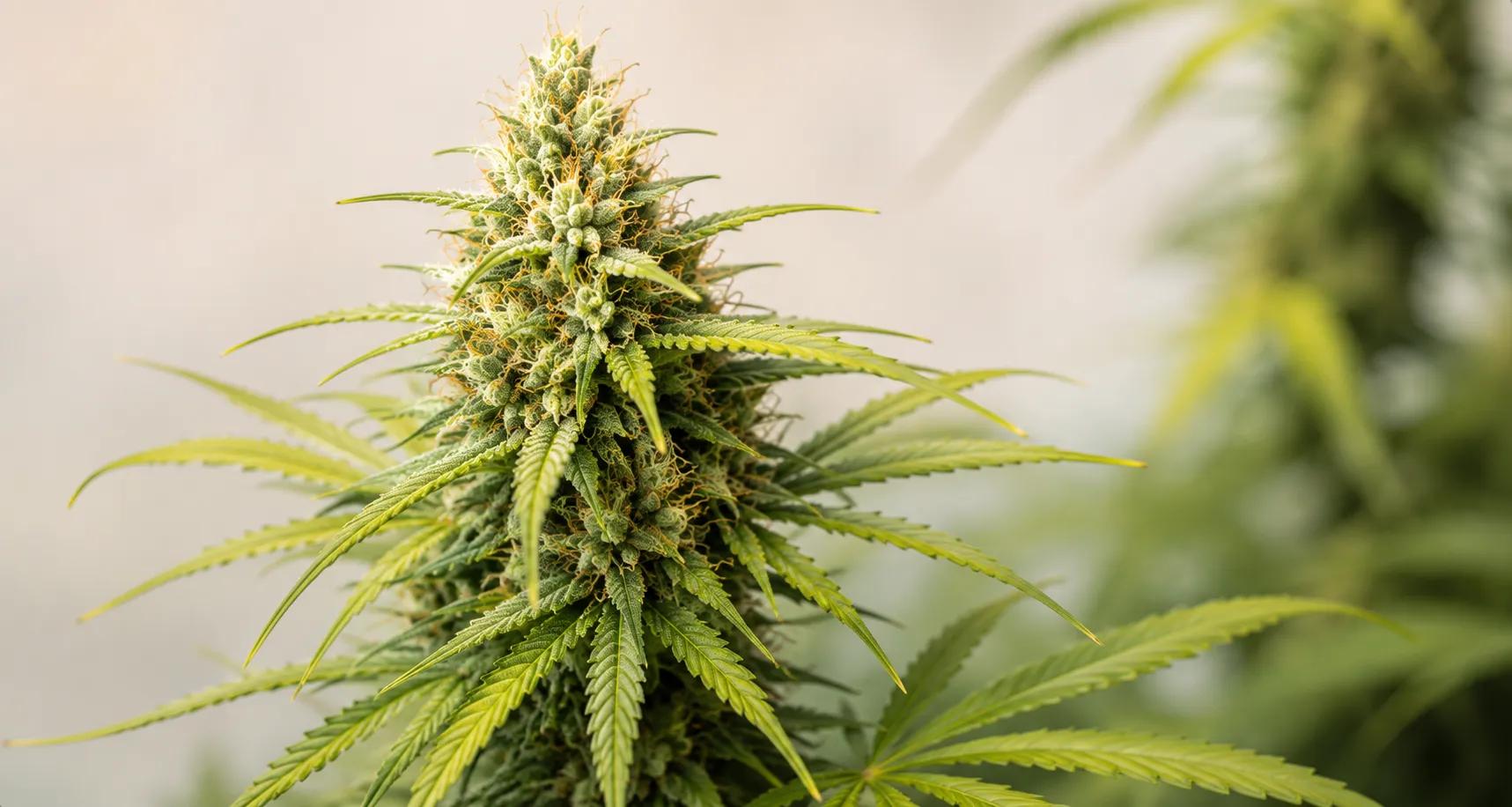
Linalool is present in more than 200 plant species, especially in the essential oils of herbs and spices, including the cannabis plant, which produces it in its trichomes. The signature plant for the aroma of linalool is undoubtedly lavender, whose essential oil is 30% linalool.
This monoterpene is also found in the essential oil of basil and thyme (linalool chemotype), in cardamom, sage, lemon balm and, of course, in cannabis flower, among others.
CBD flower rich in linalool
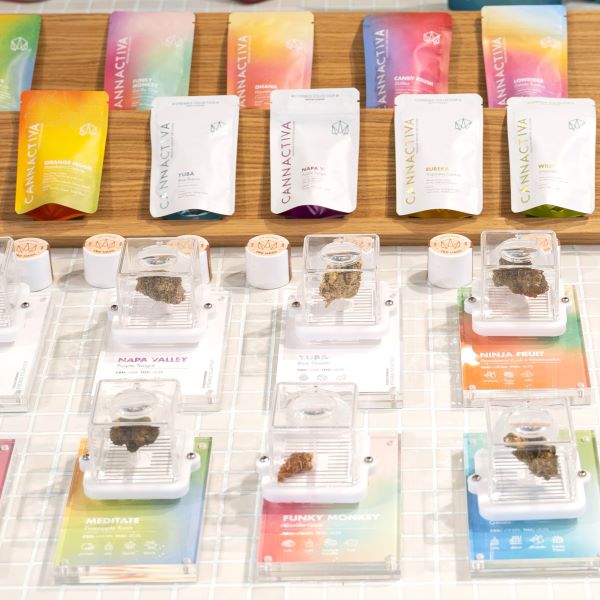
You can find linalool in the buds of the following Cannactiva strains:
Linalool rarely appears among the three terpenes with the highest levels in gas chromatography results, which are the ones that define a strain's smell. The thing is, even though it is a highly prized terpene, it's like the most expensive perfumes: it comes in small doses.
Those treasured portions of the floral, calming terpene par excellence are found in the Zkittlez, Do-Si-Dos and Amnesia Haze strains. Anyone who has smelt the nuances of linalool in a strain will come back to it time and again in search of those olfactory notes that are so recognisable and so hard to forget.
Which cannabis strains are rich in linalool?
If we search for cannabis strains with linalool as the dominant terpene in any cannabis dispensary search engine, we'll struggle to find one. Because even though linalool is indeed present in cannabis, and even though it has a large following, it isn't usually a dominant terpene.
To preserve that unmistakable aroma, remember that linalool evaporates at 198 degrees Celsius.
How can you identify the aroma of linalool in cannabis?
In cannabis plants, the aroma of linalool comes through as a sweet floral undertone. Although it is a terpene found in some cannabis strains, it isn't the most common and is rarely one of a strain's dominant terpenes.
Linalool is rarely the dominant terpene: rather, it is responsible for adding organoleptic richness to the plant, the one that gives those distinctive nuances to the overall aroma of a particular strain. If, when you smell CBD flower, you notice sweet floral, citrus and refreshing notes, that bud contains linalool.
Effects of linalool in cannabis
Linalool is credited with sedative and calming properties. It has also shown potential anxiolytic and antidepressant benefits.
Linalool has a calming effect.
That said, some of these properties are enhanced by the entourage effect (known in Spanish as efecto séquito). That's why linalool from cannabis, when used not in isolation but together with other elements of the plant, offers greater benefits for the body, by acting in synergy with the effects of the plant's other active compounds.

How does linalool interact with cannabinoids?
Because of the entourage effect, linalool (like other terpenes) can enhance the properties of some cannabinoids. On the one hand, according to the conclusions of various studies compiled by Ethan B Russo in Taming THC: potential cannabis synergy and phytocannabinoid-terpenoid entourage effects, the combination of linalool and limonene could contribute to the clinical efficacy of CBD extracts, enhancing their properties against anxiety when used together (1).
The same would apply to the properties cannabinoids show for combating insomnia. Russo also estimated that the terpenes linalool, caryophyllene and myrcene, thanks to their sedative and anxiolytic properties, would enhance the properties of cannabinoids for better sleep (1).
It has also been observed that, although linalool is effective at producing calming effects on its own, this sedative effect was amplified when it was combined with other terpenes such as citronellol and α-terpineol (3).
Benefits and properties of linalool
Plants rich in linalool, such as lavender or lemon balm, have traditionally been used in folk medicine for anxiety and depression. This terpene may have effects on the central nervous system, as shown in studies in animals but also in humans, providing anticonvulsant and sedative effects (4, 5, 6). Like β-pinene, it has shown antidepressant activity (7, 8).
Linalool is known for its sedative and calming properties. It can help reduce anxiety and stress and promote both mental and physical relaxation.
It has been observed that linalool could modulate GABAergic neurotransmission. GABA (gamma-aminobutyric acid) is a key inhibitory neurotransmitter in the nervous system, known for reducing neuronal excitability and promoting relaxation. Linalool appears to interact with GABA-A receptors and increase GABA activity, resulting in increased inhibitory tone in the nervous system. In other words: linalool would facilitate the action of the neurotransmitter GABA in the brain, leading to anxiolytic, sedative and relaxing effects (9).
I hope you've enjoyed this journey through the aromatic nuances of cannabis. The next time you savour one of your favourite strains, I invite you to sharpen your senses and pick out those characteristic floral notes of linalool. This terpene has unique sensations to offer you!
References
- Russo E. B. (2011). Taming THC: potential cannabis synergy and phytocannabinoid-terpenoid entourage effects. British journal of pharmacology, 163(7), 1344–1364. https://doi.org/10.1111/j.1476-5381.2011.01238.x
- Raz N, Eyal AM, Zeitouni DB, Hen-Shoval D, Davidson EM, Danieli A, Tauber M, Ben-Chaim Y. Selected cannabis terpenes synergize with THC to produce increased CB1 receptor activation. Biochem Pharmacol. 2023 Jun;212:115548. doi: 10.1016/j.bcp.2023.115548. Epub 2023 Apr 19. PMID: 37084981.
- Russo E, Grotenhermen F. Handbook for cannabis therapeutics. From Bench to Bedside. The Haworth Press, Inc 2006.
- E. Elisabetsky, L.F. Brum, D.O. Souza, Anticonvulsant properties of linalool in glutamate-related seizure models, Phytomedicine 6 (1999) 107–113.
- E. Elisabetsky, J. Marschner, D.O. Souza, Effects of linalool on glutamatergic system in the rat cerebral cortex, Neurochem. Res. 20 (1995) 461–465.
- Y. Sugawara, A. Shigetho, M. Yoneda, T. Tuchiya, T. Matumura, M. Hirano, Relationship between mood change, odour and its physiological effects in humans while inhaling the fragrances of essential oils as well as linalool and its enantiomers, Molecules 18 (2013) 3312–3338.
- Guzmán-Gutiérrez SL, Bonilla-Jaime H, Gómez-Cansino R, Reyes-Chilpa R. Linalool and β-pinene exert their antidepressant-like activity through the monoaminergic pathway. Life Sci. 2015 May 1;128:24-9. doi: 10.1016/j.lfs.2015.02.021. Epub 2015 Mar 11. PMID: 25771248.
- Silvia Laura Guzmán-Gutiérrez , Herlinda Bonilla-Jaime, Rocío Gómez-Cansino , Ricardo Reyes-Chilpa. 2015 May 1. Linalool and β-pinene exert their antidepressant-like activity through the monoaminergic pathway.
- Koulivand PH, Khaleghi Ghadiri M, Gorji A. Lavender and the nervous system. Evid Based Complement Alternat Med. 2013;2013:681304. doi: 10.1155/2013/681304. Epub 2013 Mar 14. PMID: 23573142; PMCID: PMC3612440.
- US Department of Agriculture. Dr. Duke's Phytochemical and Ethnobotanical Databases. https://phytochem.nal.usda.gov/