The evolution of cannabis: from 4% to 35% THC in under 30 years
In short:
- In the 1990s cannabis contained around 4% THC; today the average is 16-17% and many strains exceed 30%: an increase of nearly 875% in under 30 years.
- The jump is down to artificial selection of THC-rich plants over generations and to the professionalisation of growing (indoor, outdoor and greenhouse), not to a single factor.
- More THC doesn’t always mean “more potent”: the effect depends on the whole set of cannabinoids and terpenes (the entourage effect); that’s why CBD-rich and 1:1 strains are gaining ground.
Did you know that just a few decades ago cannabis barely had 4% THC? Today, many strains exceed 30%. This radical change has completely transformed the way people buy cannabis online, with more potent, personalised options tailored to each consumer profile.
In this article we explain how cannabis has evolved, from the first genetics to modern THC-rich strains. Find out the key factors behind this development: strains, cannabinoid profiles, terpenes and much more.
The evolution of cannabis throughout history
In the early 1990s, the THC content of cannabis was around 4%, but by the end of that same decade it had risen to 6% [1]. In 2012 we find cannabis with THC levels of approximately 12%. Currently, in 2022, the average THC percentage in cannabis is 16-17%, but there are strains that can reach up to 35% [2]. That’s an 875% increase in THC content in less than 30 years! This incredible increase shows how much progress has been made in developing new cannabis strains.
The development of new types of cannabis has sent THC content soaring from 4% to 35% THC in less than 30 years.
Unfortunately, cannabis strains that are very high in THC are also low in CBD. CBD is a non-psychoactive component of cannabis that interacts with THC, toning down its adverse effects [3, 4].
Studies have shown that the effects of both cannabinoids appear to differ when they are consumed together versus each one in isolation [5]. The effects of isolated THC, in medicines such as Dronabinol (Marinol®, Syndros® – a synthetic THC drug), for example, are unpleasant [6, 7], but improve when it is combined with CBD [8].
The THC content of cannabis has increased by 875% from the early 1990s to today. These very potent strains also have a low CBD content, which increases the likelihood of adverse effects from THC.
This drastic increase in THC content over time would explain the strong effects of the type of cannabis consumed today, compared with cannabis in the Beatles’ era.
Fortunately, we now also find 1:1 cannabis strains, i.e. with similar amounts of THC and CBD, as well as strains high in CBD but with zero THC content.
Genetic development of cannabis over the years
The genetic origin of cannabis
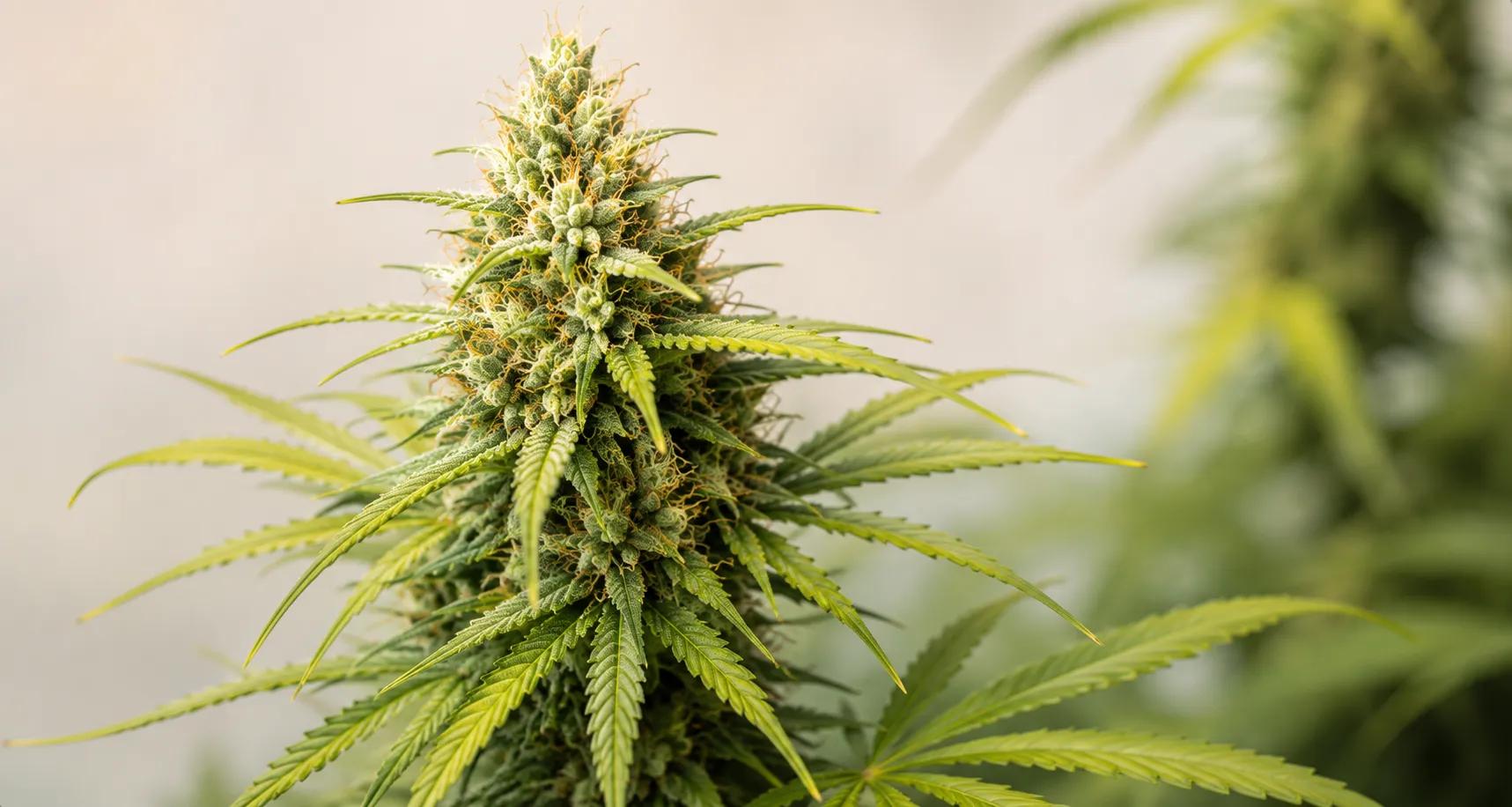
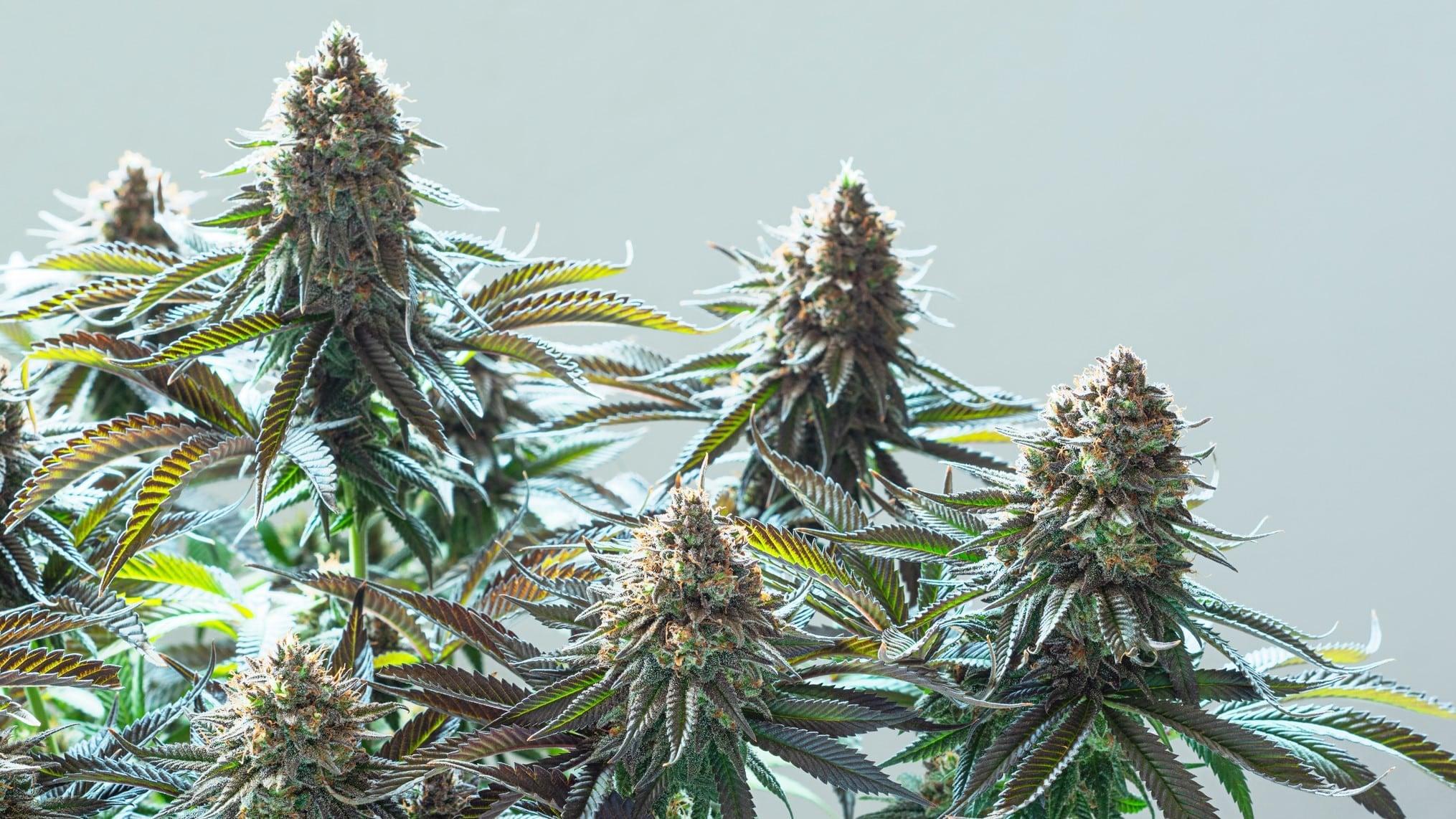
The development of different cannabis strains is possibly due to several factors. These include genetic changes in the plant, together with improvements in growing conditions and techniques. Choosing a cannabis seed with specific genetics, or controlling environmental factors such as sun exposure or fertilisation, gives rise to cannabis strains with different levels of THC and CBD, as well as of other cannabinoids, terpenes and flavonoids. It can also encourage the appearance of specific physical traits in the plants, such as bigger buds or the purple colour of cannabis.
As we mentioned on a previous occasion, there is only one species of cannabis, Cannabis sativa L., which has different lineages, including two large groups:
- Industrial hemp: very tall plants (up to 6 metres), with few branches and few inflorescences. This type of plant is characterised by high production of seeds (used for oil extraction) and/or fibre (raw material for building materials, textiles, etc.).
- Marijuana: short plants, with many branches and enlarged flowers, and a higher cannabinoid content than industrial hemp.
These two cannabis lineages show differences in their genetic material. So most of the cannabis strains found on the recreational market are crosses between selected marijuana-type plants, with a higher cannabinoid content.
Selecting cannabis strains with high THC content
Over the years, cannabis growers have chosen the plants with a high THC percentage to be the parents of the next generations. In biology we call this artificial selection: when we humans choose which plant we will use to reproduce.
Thanks to this method we have, for example, various breeds of dogs or chickens, or so many varieties of tomatoes. In the case of cannabis, artificial selection was carried out by those who, for generations, grew cannabis in secret, carefully selecting the plants richest in cannabinoids.
CBD cannabis strains
A type of cannabis without THC is currently booming: CBD cannabis. This low-THC cannabis is where CBD flower comes from. These strains have been developed by crossing low-THC strains, but in the hopefully near future we will be able to obtain them through advanced technology such as genetic engineering. CBD buds are gaining popularity as a legal alternative to traditional cannabis.
If you want to understand how these two compounds differ, we explain the differences between THC and CBD.
Many kinds of cannabis were obtained through artificial selection in clandestine grows, such as basements, cupboards and bathrooms.
Although CBD cannabis is legally called hemp because of its low THC content, the plant is more similar to marijuana than to industrial hemp.

How the growing method affects cannabis
Over time, and especially thanks to the legalisation and regulation of cannabis for medical and / or recreational use (depending on the country), another factor that may have contributed to the development of new cannabis strains is that growing conditions have been perfected and professionalised.
Today there is excellent technology used in different types of cannabis growing, whether indoor, outdoor or in a greenhouse. This may also help to increase the levels of cannabinoids, and possibly of other compounds too. The type of growing also encourages the plant to be more productive or to develop certain physical characteristics, such as bigger buds.
Types of cannabis you can buy today
The cannabis industry has become professionalised. Today we can buy different cannabis strains, selected according to their cannabinoid and terpene profile, bud characteristics, flowering time and the most suitable type of growing.
From classic strains to more modern hybrids with unique characteristics, each type of cannabis offers a different experience through its different flavour, aroma and effect profiles, as well as physical characteristics, such as buds and leaves of very different sizes and shapes. They only have one thing in common: names that are peculiar, to say the least.
The funny names of cannabis strains
Marijuana-type cannabis varieties or strains are given commercial names that are as diverse and varied as they are amusing:
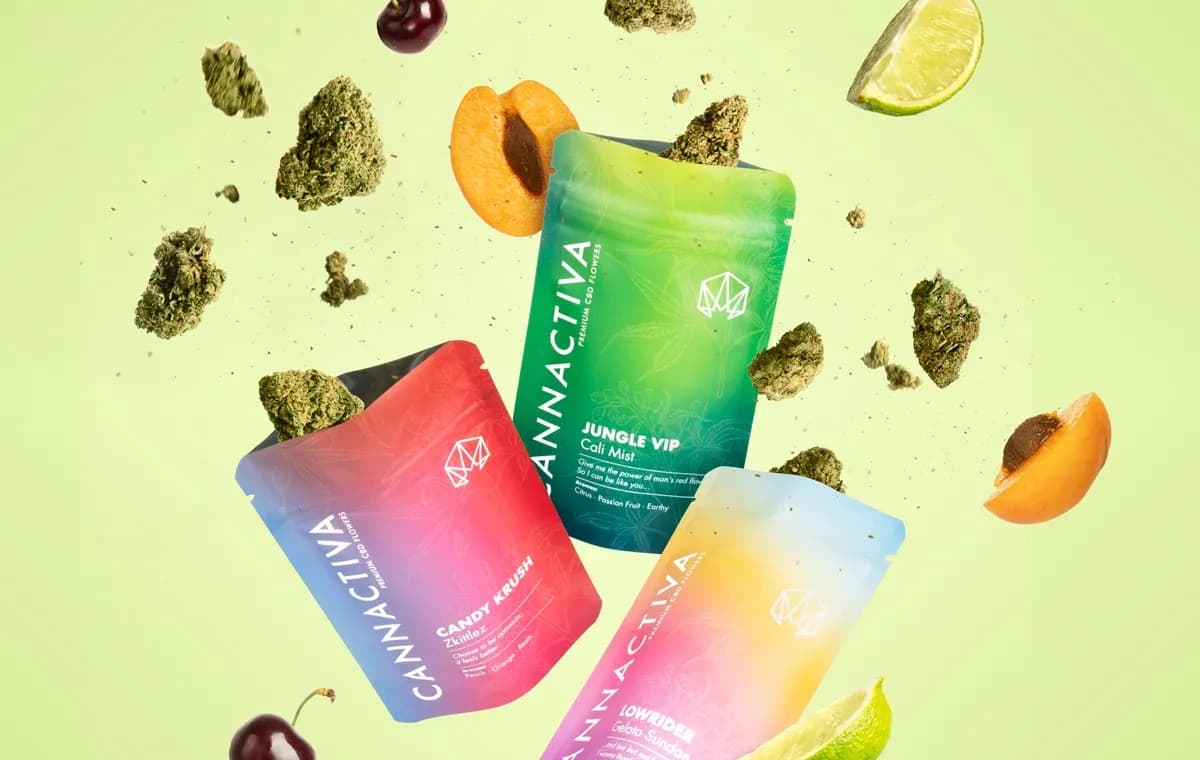
- According to the aromas of the strain, such as “Skunk”, “Lemon” (lemon or lime, as in Lemon OG), “Candy” (sweets), “Zkittlez” (after the American sweet brand Skittles ®), “Tangerine Dream”, “Mandarin Cookies” (mandarin biscuits), “Sour Diesel”, “Sweet Cheese”, “Watermelon Zkittlez” (watermelon sweets), “Blueberry”, “Gorilla Glue” (after the Gorilla glue brand), “Gelato Sundae” (ice cream sundae), among many others. The characteristic aromas of cannabis are usually down to its terpene content.
- According to the colour of the plant, the pistils (little hairs) or the buds: “Black Widow”, “Gelato” (ice cream), “White Widow”, “High Red”, “Purple Punch”, “Purple Urkle”, “Orange Cookies”, “Orange Bud”, etc.
- According to the (supposed) place of origin, such as “Durban Poison”, a port city in South Africa, “Afghan Kush”, from the Kush region of Afghanistan, “Maui Wowie”, from Hawaii, or “Santa Marta Gold”, after the Colombian city. There are also many names that refer to the Emerald Triangle, the region of California in the United States best known for growing cannabis, such as the towns of “Eureka”, “Yuba” or “Willits”.
- According to the parents of the cross, strains inherit the name of their parents. “Super Lemon Haze” is the cross of “Lemon Skunk” and “Super Silver Haze”. “Lohan” is the offspring of Trainwreck x L.A. Confidential. “Black Dawg” is the offspring of Black Widow x StarDawg.
- In many other cases, cannabis strain names combine all of the above: “Candy Kush Zkittlez”, “Eureka Tropicana Cookies”, “Yuba Blue Dream”, “Willits Limoncello”, “Pineapple Kush”, “Strawberry Kush”, “Space Cookies”, “Space Queen”, “New York Sour Diesel”, “Purple Haze” (purple cannabis, a nickname taken from the Jimi Hendrix song), “Pink Haze” (another lilac cannabis strain), “Lemon Haze”, “Blue Cheese”, “Purple Diesel”, “Auto AK-47” (from the cross with autoflowering strains), “OG” (from Original Gangster).
Different cannabis strains can have rather amusing trade names. By origin: “Hawaiian Haze”; by smell: “Lemon Skunk”; by colour: “Black Widow”; by the names of their parents, for example “Super Lemon Haze”, which is the cross of “Lemon Skunk” and “Super Silver Haze”.
Cannabis strains by effect
It is also common in the cannabis industry to classify cannabis strains according to their supposed effects on the body. So we have indica and sativa cannabis, depending on whether they produce an energising or, on the contrary, a sedative effect. In short, this distinction is not accurate, as we found out in the post: indica and sativa: just to confuse us.
The market for cannabis seed strains
The system of cannabis strain names has no scientific basis and is flawed, because when we sequence the DNA of commercial strains, or analyse their chemotype, we see that individuals with the same name can have very different, barely related chemotypes or DNA.
The difference could be because each cannabis grower names their own strains using the popular naming systems mentioned above. That way, every company can sell its “own” strain of “Candy Kush” cannabis, which ends up creating a bud market with many types of the same strain that, in reality, may bear no resemblance to one another. As a result, strain names are becoming increasingly ambiguous.
Differences between types of cannabis of the same strain could also be due to the fact that the type of growing affects the plant’s characteristics and its production of compounds, such as bud size, THC, CBD or minor cannabinoid content (CBG, CBC, CBN or THCV, among others), the presence of terpenes (beta-myrcene, beta-caryophyllene, limonene, linalool, alpha- and beta-pinene, humulene, among others) and flavonoids (anthocyanins, apigenin, luteolin,…). This could explain why two seeds with identical genetics can develop different characteristics.
Because of this lack of information about strain names, I personally always recommend that consumers – particularly medical cannabis patients – go back to the same place and ask for the same thing when they find a product they like or that gives them relief. Because if they buy the same cannabis strain somewhere else, even if the product has the same name, there is no guarantee that it will be exactly the same or that it will produce the same effects.
When you find a product you like or that gives you relief, go back to the same place and ask for the same thing, because somewhere else, even if it has the same name, it may not be exactly the same and may not produce the same effects.
What is the strongest weed?
To finish, the question everyone has been waiting for. Which type of cannabis has the most potent effects? Most people would probably think of a type of cannabis very high in THC. The amount of THC varies a great deal between strains, and many shops that sell buds set the price of their products based on how much of this compound the weed contains. But, anecdotally, it is said that cannabis with the right chemotype, even with less THC, can be stronger than another strain that is very high in THC.
So plants high in THC (e.g. 28-30%) could have weaker psychoactive effects than others with less THC (e.g. 16-18%) but with a variety of other compounds (e.g. CBD and a particular terpene profile). This anecdote would support the theory of the “entourage effect”, which proposes that all these compounds act together to produce particular effects.
In other words, THC, it seems, is not the only factor that determines the potency, quality and effect of cannabis: the variety in the type and amount of other compounds besides THC apparently matters a great deal, because they can influence the effects of cannabis.
The effect of a cannabis strain depends on many compounds, not just on its THC or CBD content. This is known as the “entourage effect”, in which the combination of compounds in the plant produces a particular effect, which could be important for how consumers feel it.
That’s why I always argue that it is essential to measure terpenes, not just cannabinoids. Firstly, because knowing the plants’ chemotype lets us choose better which ones to cross (what we explained about artificial selection). Secondly, because it would help to better understand the effects of medical cannabis if doctors knew what, how much and in what percentages the products their patients use contain, so they could prescribe more accurately. Finally, knowing the chemotype is essential for complying with rules and regulations that are sometimes unfair, absurd and proposed by people who don’t understand the plant’s biology. But this anger and frustration is a subject for another piece.
So, as for which is the strongest weed, well, I have a few questions for you: will that differ between us consumers? Does what gives me the strongest “high” (or “traba”, as they say in Colombia) have the same effect on you? Or could the effect of a type of cannabis be different even in the same person, depending on whether they have eaten, haven’t slept, or on their mood?
To really know which weed strain is the most potent, we would need to know how much the plant’s chemotype affects consumers through double-blind studies. And, well, we are getting ever closer to being able to carry out these studies. I would love, in some way, to be part of these studies to research the different cannabis strains and their effects on the body.
References
1. Volkow, N.D., et al., Adverse Health Effects of Marijuana Use. New England Journal of Medicine, 2014. 370(23): p. 2219-2227.
2. Smith, C.J., et al., The phytochemical diversity of commercial cannabis in the United States. PLoS one, 2022. 17(5): p. e0267498.
3. Englund, A., et al., Cannabidiol inhibits THC-elicited paranoid symptoms and hippocampal-dependent memory impairment. Journal of Psychopharmacology, 2013. 27(1): p. 19-27.
4. Boggs, D.L., et al., Clinical and preclinical evidence for functional interactions of cannabidiol and Δ 9-tetrahydrocannabinol. Neuropsychopharmacology, 2018. 43(1): p. 142-154.
5. Solowij, N., et al., A randomised controlled trial of vaporised Δ 9-tetrahydrocannabinol and cannabidiol alone and in combination in frequent and infrequent cannabis users: acute intoxication effects. European archives of psychiatry and clinical neuroscience, 2019. 269(1): p. 17-35.
6. Carter, G.T., et al., Cannabis in palliative medicine: improving care and reducing opioid-related morbidity. American Journal of Hospice and Palliative Medicine, 2011: p. 1049909111402318.
7. Calhoun, S.R., G.P. Galloway, and D.E. Smith, Abuse potential of dronabinol (Marinol®). Journal of psychoactive drugs, 1998. 30(2): p. 187-196.
8. Zuardi, A.W., J.E.C. Hallak, and J.A.S. Crippa, Interaction between cannabidiol (CBD) and∆ 9-tetrahydrocannabinol (THC): influence of administration interval and dose ratio between the cannabinoids. Psychopharmacology, 2012. 219(1): p. 247-249.
Questions about the evolution of cannabis and the development of new strains
How much THC does cannabis have today?
The current average is around 16-17% THC, compared with roughly 4% in the 1990s, and the most potent strains can reach 30-35%. Hemp and CBD flower, on the other hand, stay below 0.2-0.3% THC.
Does CBD flower contain THC?
It comes from cannabis plants selected to be very low in THC (below the legal limit) and rich in CBD, so its effect is not psychoactive. It is a legal alternative to traditional cannabis.
Is today’s cannabis stronger than it used to be?
It has much more THC, but “stronger” doesn’t depend on THC alone: the profile of terpenes and other cannabinoids (the entourage effect) matters so much that a strain with less THC can feel just as intense.
Questions about the evolution of cannabis and the development of new strains
What is artificial selection in cannabis?
Artificial selection is an evolutionary method used in agriculture that describes the process by which humans choose plants with desirable characteristics in order to breed them and develop future crops from their seeds. In this method, humans play an active role in the evolution of species, carefully selecting specimens with desirable traits, such as cannabis strains with a higher concentration of the cannabinoid THC or big buds on cannabis plants. In this way, organisms are actively shaped to suit human needs.
How are cannabis strains developed?
Cannabis strains are obtained by crossing different types of cannabis and selecting the specimens with the best characteristics, which is called artificial selection.
How is THC-free cannabis obtained?
THC-free cannabis has been achieved by crossing strains high in CBD. I will explain it properly in another piece, but when the gene that produces the THC compound is truncated or faulty, THC is not produced and other cannabinoids, such as CBD, build up. So strains that only produce CBD probably have a faulty THC gene. Those that produce both THC and CBD have genes that compete in a similar way for the precursor (CBGA), and those that only produce THC have a faulty CBD gene.
What are the effects of THC?
THC, or Δ-9-tetrahydrocannabinol, is one of the cannabinoid compounds obtained from the Cannabis sativa plant. The plant produces the cannabinoid in its acid form (THCA; Δ-9-tetrahydrocannabinolic acid), but when it is heated this acid form changes into its neutral form (THC) through a chemical process called decarboxylation. As well as being the psychoactive compound (the one that produces the high), THC also has therapeutic potential.
Does transgenic cannabis exist?
It is a myth that transgenic cannabis exists, that is, cannabis into which genes from another plant species, or even from animals, have been introduced. Nor do I believe that cisgenic cannabis exists, in which genes from the same species, Cannabis sativa, are introduced. Introducing genes in the laboratory is a costly process that requires suitable staff and specialised machinery. That said, several biotech companies are working on this, and in a few years we may have transgenic or cisgenic cannabis, which would help, for example, hemp to produce little THC, or females not to be fertilised.
Is CBD psychoactive, or psychotropic?
CBD, or cannabidiol, is another of the cannabinoids obtained from cannabis. The plant produces cannabidiolic acid (CBDA), which, when heated, turns into CBD through decarboxylation. Although it is not psychoactive like THC, CBD is psychotropic: that is, it has no intoxicating effects but it does act on the brain. This compound also shows great promise in the medical field.
What are CBN cannabis strains?
CBN is a special type of cannabinoid because, unlike many others in its family, it is not produced naturally while the plant is growing. Instead, CBN is produced by the breakdown of THC through an oxidative process that happens naturally, above all over time. CBN has a milder psychoactive effect than THC, which many consumers see as an advantage. Cannabis strains high in CBN are hard to find, as interest in this substance is relatively new.