The Beatles and cannabis: the day Bob Dylan gave them their first joint
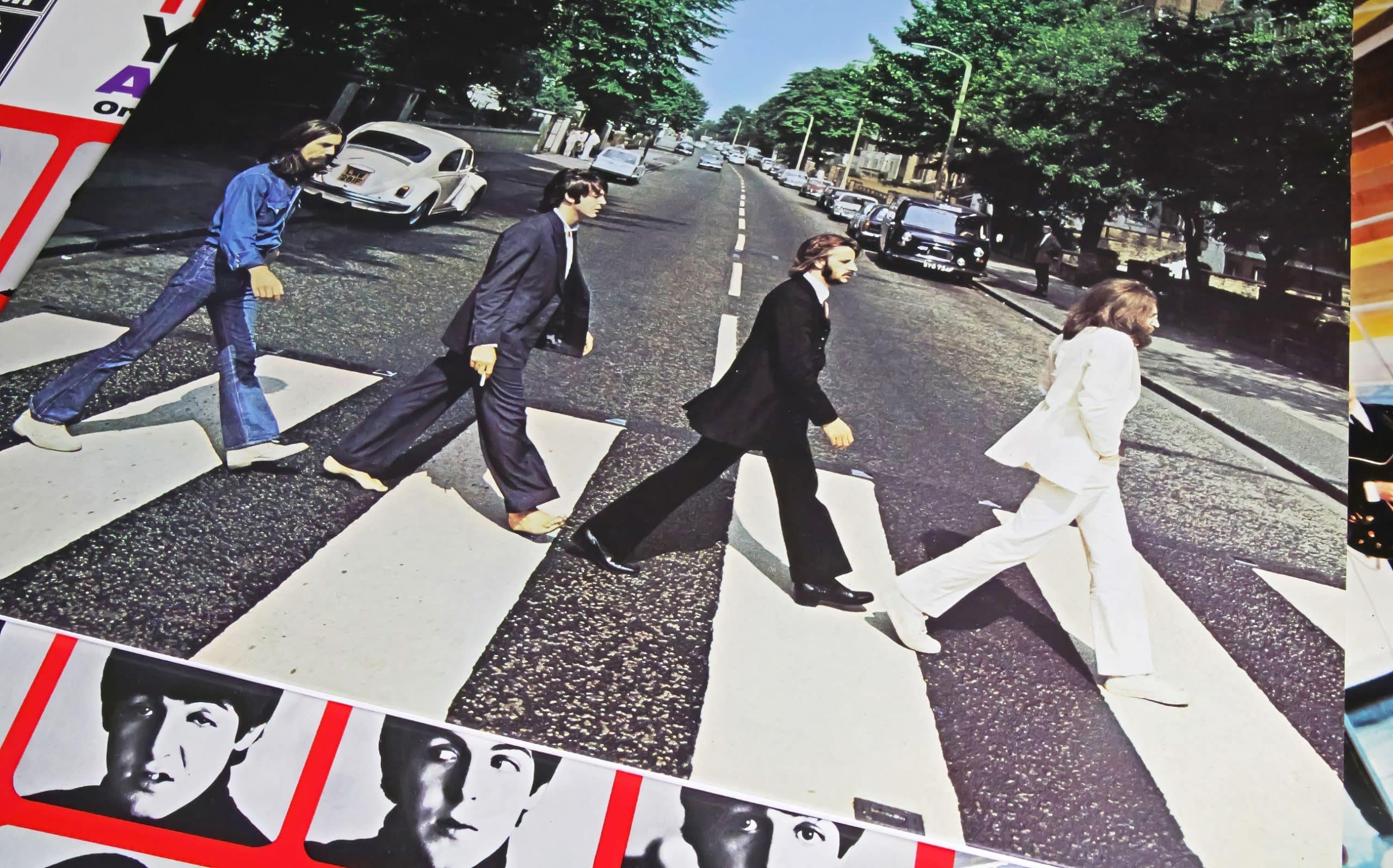
The Beatles and cannabis: the day Bob Dylan gave them their first taste of a joint and the world changed forever
The night of Friday 28 August 1964, in a New York hotel suite, changed the world. One (not so) small toke for man, one giant leap for mankind.
On that hot day more than half a century ago, the brains of the four Beatles felt the psychoactive effect of THC for the first time. That night, Bob Dylan brought them a bag full of buds as a gift and everything was transformed forever. Culture, music and the way people saw things changed at that moment, and there was no going back (luckily).
The meeting between these five megastars set off a Big Bang-style chemical reaction that, in one way or another, forever bent the course of rock, pop, fashion, spirituality and much more besides.
After that meeting, the lads from Liverpool leapt from teenage innocence to the lyrical and musical depth of adulthood. Nor did Dylan come out of that collision unscathed: on his next album he left folk behind and added electric guitar and voice to America’s collective unconscious.
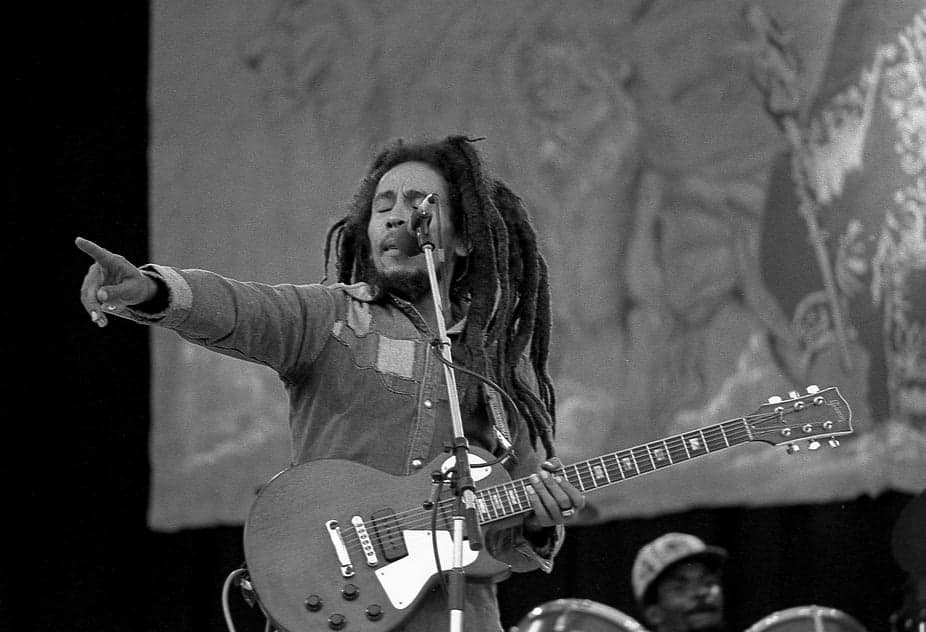
Even though they were the same age – between 21 and 24 – the Beatles had idolised Dylan ever since they heard The Freewheelin’ Bob Dylan (1963). The Minnesota musician also admired the four Brits and was fascinated by what they were stirring up all over the planet.
For that visit to New York, both sides made the moves needed to meet each other. After the show at the Forest Hills tennis stadium in Queens, the quartet hurried back to the sixth-floor suite of the Delmonico Hotel in Manhattan, where they were staying.
While DJ Murray the K was getting the records ready for the after-show party, the four Englishmen and their manager Brian Epstein went into a suite for dinner.
The man in charge of bringing Dylan to the hotel was New York Post journalist (and later rock band manager) Al Aronowitz, who had himself introduced Dylan to cannabis the year before, after meeting the poet Allen Ginsberg and other leading figures of the Beat movement.
What we do know is that, that night in 1964, someone went to fetch Bob from the Woodstock area, where he lived, then they picked up the journalist in New Jersey, and from there they all headed to the phone box opposite the Delmonico, from where they called to be let up.
– Hey, we’re here.
Some three thousand people surrounded the phone box and the famous building on Park Avenue and 59th Street where the Beatles were living. The sixth floor was full of police officers in the corridors.
In the suite, expensive drinks were everywhere. But when Epstein asked Bob what he would like to drink, he answered with his trademark curtness: “Bring cheap wine.”
At the same time, someone in the group offered him some “purple hearts”, Drinamyl amphetamine pills that kept everyone awake and which, until then, had been the only drug the Beatles had taken with any regularity, back in their days playing the bars of Hamburg. But Dylan turned them down and then suggested the master plan: smoking some bud.
Epstein confessed that they had never done it. Dylan laughed in disbelief and then asked what they had meant in the song I Want to Hold Your Hand by “and when I touch you I get high, I get high”.
Surprised and laughing, Lennon explained that he had misheard: the song said “I can’t hide”, not “I get high”. Then Victor Maymudes, Dylan’s tour assistant, handed him the bag full of cannabis buds, which they tipped into a fruit bowl, and Bob Dylan rolled the first joint the Beatles would ever smoke.
How the Beatles reacted to smoking their first joint
Lennon appointed Ringo as “royal taster”, and Dylan took him into another room and handed him the cigarette. Everything had an unusual, playful solemnity. The drummer’s inexperience led him to smoke the whole thing without passing it on, and he ended up looking as if he’d stuck his head inside his bass drum during “Helter Skelter”.
“It was the first time I really smoked cannabis and I laughed and laughed and laughed,” Ringo said in a TV interview, many years later.
Paul also described the moment in Many Years from Now, Barry Miles’s book published in 1997: “The first time I smoked, it really hit me hard. It was quite a discovery, something different. George Harrison, John and I were sitting in the main room of the suite, drinking. We were there with our Scotch and Cokes, and Dylan had just given Ringo a toke.
Ringo came in and we asked him: ‘What’s it like?’ ‘The ceiling’s coming down on me,’ he replied. And we exclaimed: ‘Oh God! We’ve got to try it!’, and we jumped up and ran into the back room, first John, then George and me, and then Brian. We all had a toke and for about five minutes we kept saying: ‘This doesn’t do anything. Can you feel anything?’ And then we started laughing uncontrollably.”
It hit each of them in its own way. Epstein, an elegant and reserved man, was found with a roach between his lips. He was looking in the mirror, pointing at himself and shouting “Jew!”. George was walking like a mime behind Paul, and John and Ringo were on the floor in stitches.
Dylan got in sync too, and for quite a while he kept answering the room phone with a shout of “Hello, this is Beatlemania!”. Years later, on Conan O’Brien’s show, in front of millions of viewers, Starr recalled: “Imagine: Dylan was your first dealer!”.
Paul McCartney believed he was going through a moment of enlightenment and asked for a pencil and paper: “I spent the whole night running from one side to the other, and later, when I went back to the bedroom, I discovered the Meaning of Life. I wanted to tell people what it was all about. I was the greatest discoverer, in that sea of cannabis, in New York. I was sailing the seas and I had discovered it.” When assistant Mal Evans finally found him a pencil and paper, he jotted down a somewhat cryptic proto-tweet: “There are seven levels.”
“It’s a fairly succinct remark; it relates to many major religions, although I didn’t know that at the time. We know it now because we’ve paid a lot of attention to those things since then, but that was the first time,” McCartney told Miles thirty years later, and he admitted: “We were sort of proud that Dylan had introduced us to cannabis. It was like being introduced to meditation and getting your mantra from the Maharishi.”

The influence of cannabis on the Beatles
From that night on, cannabis became a decisive influence on the Beatles’ artistic development and opened the doors of perception for them. “They expanded their minds,” in the words of their press officer, Derek Taylor. “Until the advent of rap, pop music remained largely influenced by that night at the Delmonico. The meeting didn’t just change pop music, it changed the times,” Aronowitz reflected some time later.
The fact is that after that episode, words such as “high” (as in elevated, spaced out, flying, stoned) or “grass” (that is, weed) began to appear in the Beatles’ lyrics, along with songs that in one way or another referred to cannabis, such as “A Day in the Life” or “With a Little Help from My Friends”.
The same goes for Dylan, who barely a year and a half later released Blonde on Blonde (1966), which opens with Rainy Day Women ♯12 & 35, an anthem straight to the heart in which, laughing, he lets rip with “Everybody must get stoned”. The song was banned by many radio stations at the time, but it still reached No. 2 in the US charts.
Within the Beatles, Paul wrote the first song entirely about cannabis: “Got to Get You into My Life”, included on Revolver, also from 1966.
“It’s a song about that; it’s not about a person, it’s about weed. It’s an ode to weed, the way someone else might write an ode to chocolate. I liked it, it didn’t give me a bad time, and for me it was a way to expand the mind, literally,” he explained. These are the first lines of the song:
“I was alone, I went out for a walk
I didn’t know what I would come across
another path where I
might see a different way of thinking”.
Although the Beatles were already recording and filming scenes in a haze of cannabis smoke during the shooting of the film Help! in February 1965, it was above all on the album Rubber Soul (December 1965) that cannabis took on a significant role in their artistic quest.
The Beatles’ only excess was smoking joints and sitting down to write or record. “We were exploring the idea that music could be made through cannabis, so you’d smoke a joint, then sit down at the piano and think: ‘Ah, this could be a really good idea’,” McCartney said.
Rubber Soul could be considered one of the most stoned albums in history. “It’s the joint album,” Lennon confirmed in 1972. It marks a stylistic break in the band’s story, which from then on becomes more complex and mature.
The title itself already holds clues to its stoner humour: taken literally, “Rubber Soul” would be a “soul made of rubber”. But it is also an ironic nod to the Black music genre that many English rockers were starting to try out, and for which they were being called out in the United States (the Rolling Stones had been criticised for making “plastic soul”).
Recording Rubber Soul was the click that opened many windows and set the Beatles on a colourful, different and fairly hippie path (at least for a while), which carried on with Revolver, Magical Mystery Tour and Sgt. Pepper. “Dylan introduced us all to cannabis and really opened up a different kind of sensibility for us; more like jazz musicians,” Paul recalled in Many Years from Now.
Lennon defended cannabis use like an activist, following the campaign led by Allen Ginsberg, and it earned him persecution from the Nixon government. “The only thing you can say for sure about cannabis is that it isn’t violent,” John stressed in a speech in Canada in the 70s.
Paul also set out his position in Miles’s book: “If someone asked me for real advice, I’d tell them to stay clean. But in a stressful world, I’d still say cannabis was one of the best tranquillising drugs. People tend to fall asleep under its effect rather than go out and commit murder.”
What would have happened to our tastes, our influences and our record shelves if, that day, Bob had stayed at home reading in his armchair instead of going to the Delmonico? ... A phrase attributed to Plato could be the caption for the photo of that meeting: “When the mood of the music changes, the walls of the city shake.”
Why not believe that the revolution of the 1960s truly began on that Friday in August 1964?
Perhaps it’s as McCartney told Barry Miles: “For me, the ’60s are like the future, as if they never happened. I feel that decade is yet to arrive. And we’re in a sort of time warp and it’s still to come.”
Information about the Beatles and cannabis (frequently asked questions)
When did the Beatles try cannabis?
The Beatles’ first cannabis joint was on the night of Friday 28 August 1964, in a suite at the Delmonico Hotel in New York. In 2001, Donald Trump bought the hotel to turn it into homes and named it The Trump Park Avenue.
Which Beatles music was inspired by cannabis?
The Beatles’ first song entirely about cannabis was “Got to Get You into My Life”, on the album Revolver (1966). However, years earlier, from the moment they tried their first joint in 1964, there are various references to cannabis. While shooting the film Help! (1965) they filmed stoned scenes, and many songs mention cannabis, such as “A Day in the Life” or “With a Little Help from My Friends”. Their most stoned album is Rubber Soul (1965), according to Lennon, because they got their inspiration from smoking joints to write the songs.