Is Atocha named after hemp? The legend, esparto grass and the real history
If you live in Madrid or often pass through the station, someone may have told you at some point that Atocha is named after hemp: that the carts loaded with fibre from Valencia came in that way, and that those bales were called ‘atochas’. It’s a lovely story, and since our Madrid shop is a ten-minute walk from the station, we would have loved it to be true. So we went to find out where it comes from.
The short answer: the records say ‘atocha’ is esparto grass, not hemp. But the real story has more hemp in it than you might think, and it also goes through Valencia.
What people say
The hemp version circulates mainly on internet question-and-answer sites: according to it, Atocha was the end of the road along which the carts of hemp from Valencia, known as ‘atochales’, reached Madrid. We haven’t found any source to back it up – no old document, no place-name study, no dictionary – and the pages that tell it don’t say where they got it from.
What the records say: ‘atocha’ is esparto
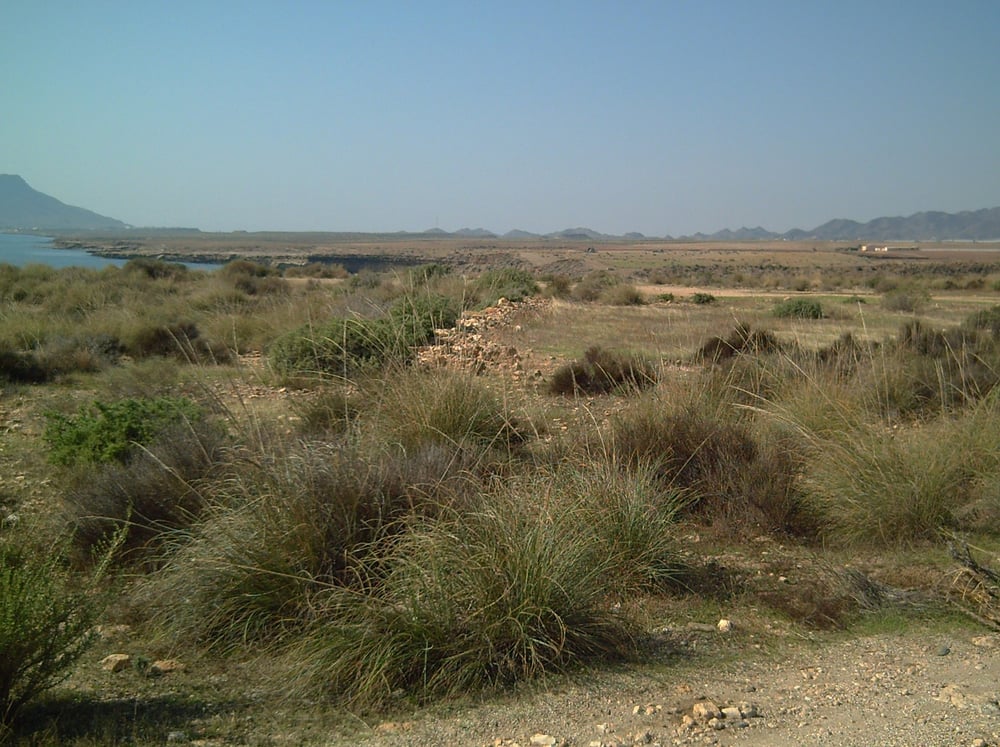
- The Royal Spanish Academy’s dictionary lists ‘atocha’ as another name for esparto, and ‘atochal’ or ‘atochar’ as the field where it grows.
- The area already appears in the Fuero de Madrid as ‘Toia’ (1202) and ‘Tocha’ (1219), according to Joan Corominas’s etymological dictionary, and in 1629 the chronicler Jerónimo de la Quintana calls it ‘Prado del Atochar’.
- Three explanations have been put forward for the name: the ‘atochar’, that is, a field of esparto; the chapel of Our Lady of Atocha, whose image, according to tradition, appeared among esparto plants; and the ‘atochada’, a low wall of earth and grasses to hold back the water of a stream. None of them mentions hemp.
The most interesting lead is in a 2024 report by the Royal Academy of History, written when the Community of Madrid opened the process to declare the traditional spinning of esparto an Asset of Cultural Interest (Bien de Interés Cultural). It explains that in Madrid the most widely used esparto was precisely the ‘atocha’ (‘Stipa tenacissima or fine esparto’), which grows in the ‘atochares’ of the south-east of the region, in towns such as Colmenar de Oreja and Villarejo de Salvanés. And that there was once a Madrid guild of esparto workers, with ‘twenty-three masters, seven widows with shops, thirty journeymen and eight apprentices’, based at the church of Our Lady of Atocha, ‘whose name alludes to this activity’. In 1907 there were still 31 esparto shops in the province, 11 of them in the capital.
What about hemp? The part of the legend that is true
The legend doesn’t pull hemp out of thin air. For centuries, Spain’s great hemp centre lay in the lands of the old Kingdom of Valencia: in the Vega Baja del Segura and, above all, in Callosa de Segura (Alicante).
The decree by which the Generalitat Valenciana declared the ‘Hemp Culture’ of Callosa de Segura an Intangible Asset of Cultural Interest (Bien de Interés Cultural Inmaterial) in 2024 puts it like this:
- There are records of hemp growing in the irrigated farmland of the Segura dating back to the 13th century: Alfonso X had to settle a dispute between neighbours because the water from the retting – the ponds where the stalks were left to soak to release the fibre – was being emptied into the river.
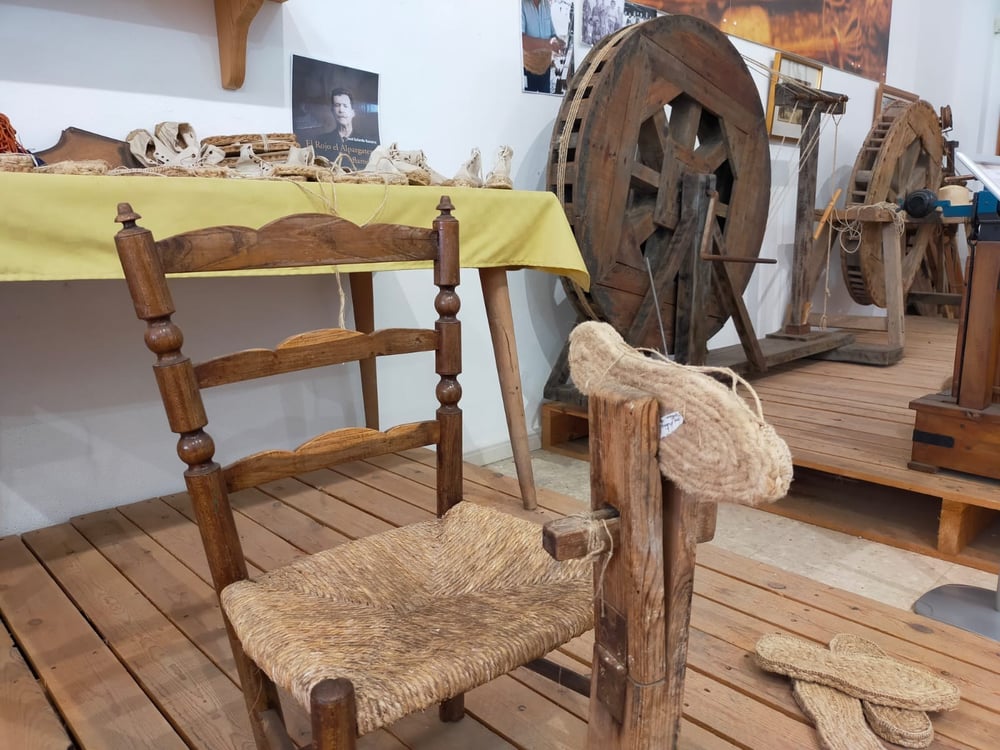
- Hemp was spun into lines, ropes and large fishing nets, and the shorter fibres were braided into espadrille soles.
- In the 19th century, Madoz’s dictionary described Callosa’s harvest as ‘abundant and of the finest quality’, and its most important industry was making hemp espadrilles. The leftover stalks were sold to the Cartagena Arsenal.
- In 1953, the Vega Baja produced 60% of all the hemp in Spain.
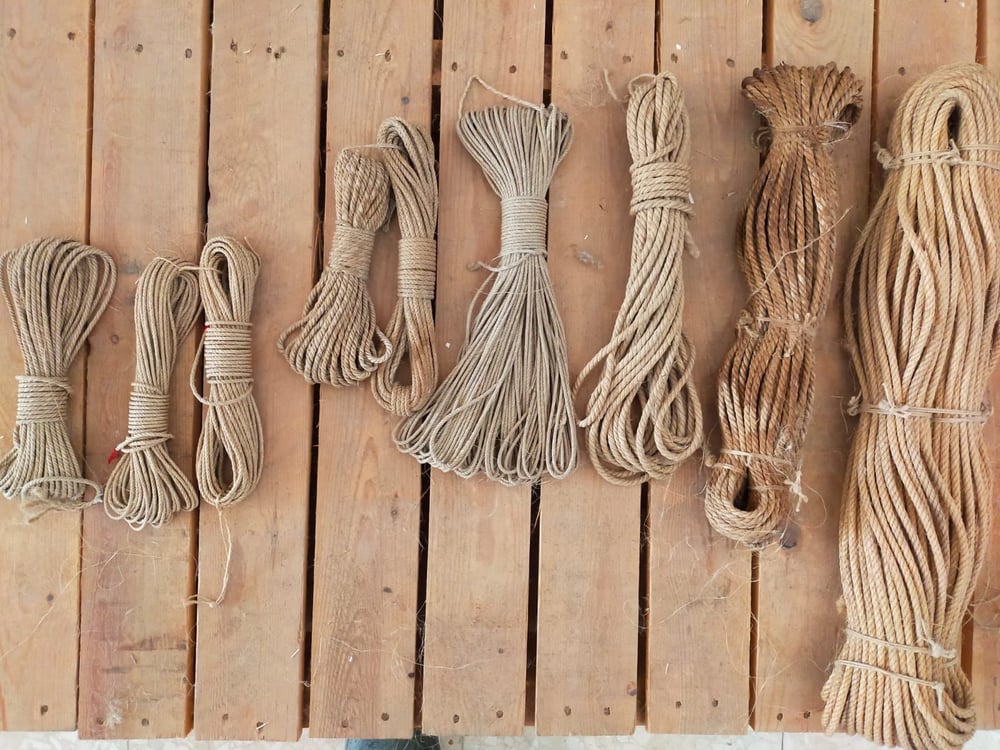
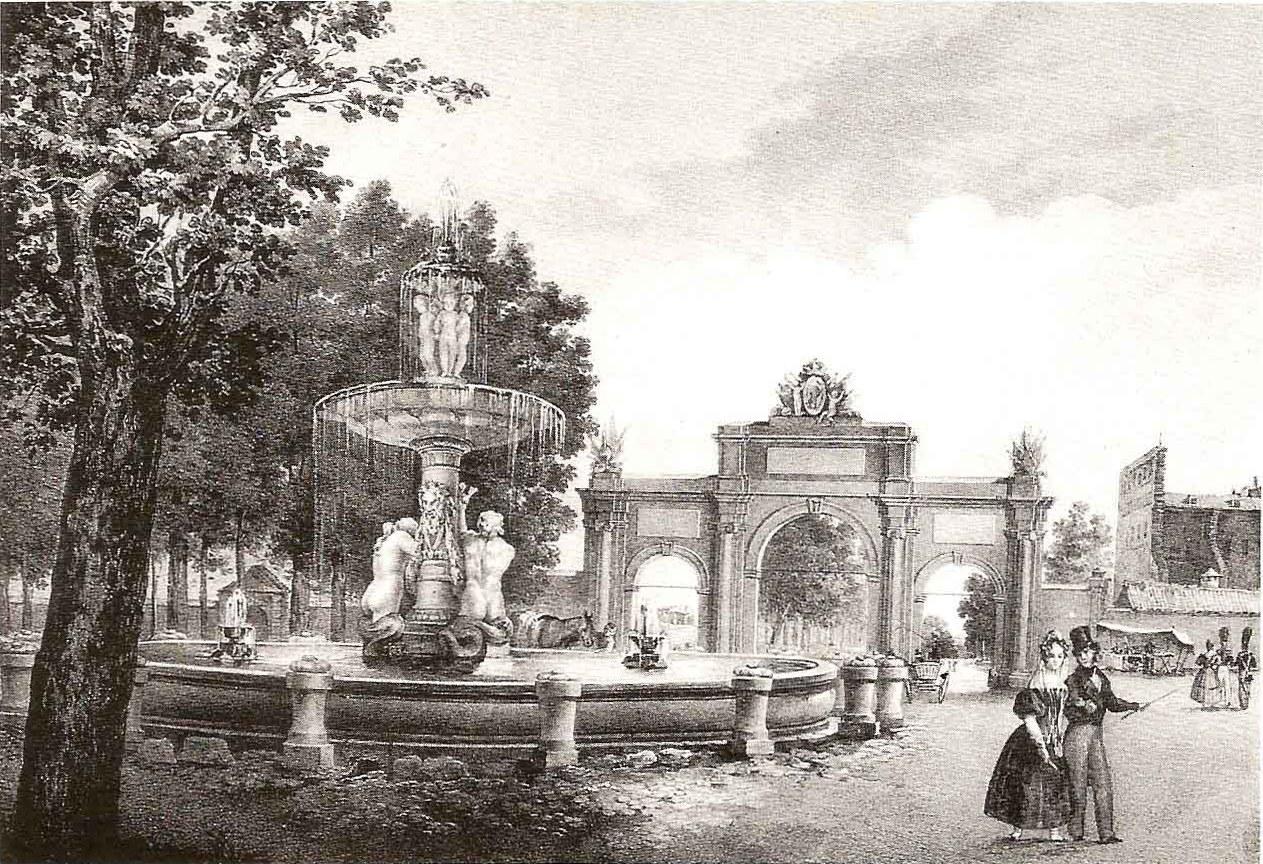
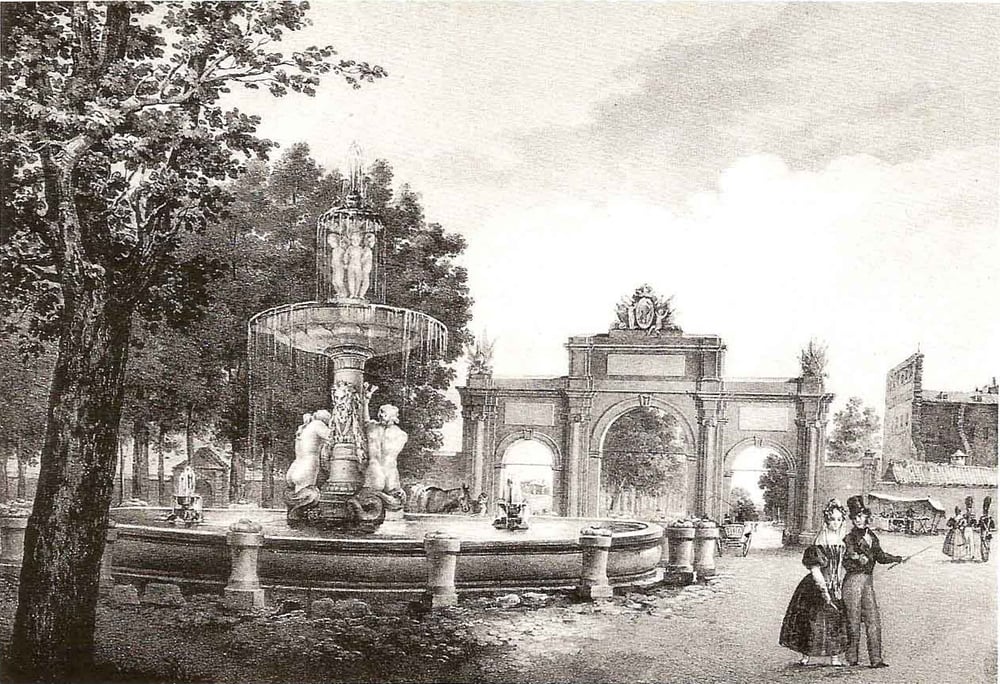
And that hemp really did pass through Atocha. From the 18th century, the Camino Real de Alicante linked the Court with the port of Alicante and entered Madrid through the Puerta de Atocha: that was the way the hemp from the Vega Baja came in, and the esparto from the dry lands of the Vinalopó too. What doesn’t appear in any record is that hemp gave Atocha its name. The place name is several centuries older, and neither the dictionaries nor the hemp vocabulary of Callosa, where the sheaves are called ‘garbas’ and the bales ‘quintales’, calls hemp ‘atocha’. Most likely, popular memory merged the gate through which both fibres entered with the name of one of them.
Esparto and hemp, sister fibres
It makes sense that people mix them up, because they were used for almost the same things:
- Both were made into ropes, cords, mats and espadrille soles.
- Esparto grows wild, on dry, poor land; hemp was grown on irrigated river plains, like the Segura’s.
- Both had their heyday until the mid-20th century and declined together: around 1960, synthetic fibres closed Madrid’s esparto shops and sank Callosa’s hemp industry.
- And both are heritage today: esparto spinning in Madrid, declared an Asset of Cultural Interest in 2025, and Callosa’s hemp culture, declared in 2024.
Today, in Atocha and Lavapiés
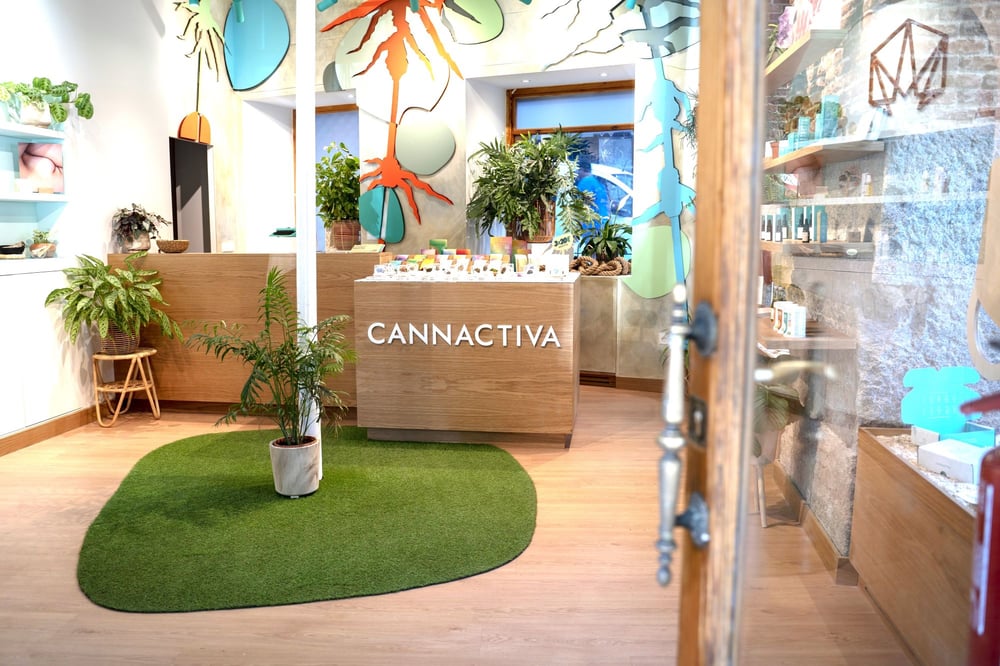
Our Madrid shop is at calle Argumosa, 27, in Lavapiés, about a 10-minute walk from Atocha station. There you’ll find hemp flower, CBD hash and CBD oils, with their certificates of analysis published on the website, and someone from the team to tell you where each one comes from.
If you pass through the station, now you know: Atocha is esparto. Hemp didn’t give it its name, but it was part of this story too.
Frequently asked questions
What does ‘atocha’ mean?
It’s another name for esparto (Stipa tenacissima), and that’s how the Royal Spanish Academy’s dictionary records it. An ‘atochal’ or ‘atochar’ is a field of esparto.
Is Atocha named after hemp?
No record says so. Hemp from the Vega Baja did enter Madrid through the Puerta de Atocha, along the Camino Real de Alicante, but the name is centuries older and comes from esparto.
Where did hemp come from in Spain?
Mainly from the Vega Baja del Segura, in Alicante, and especially from Callosa de Segura. In 1953 that area produced 60% of Spain’s hemp.
What is the difference between esparto and hemp?
Esparto is a wild grass of dry areas. Hemp is a cultivated plant, and its fibre comes from the stalk. Both were used for centuries for ropes, mats and espadrilles.
Sources
- Royal Academy of History, report on the opening of the process to declare the Traditional Spinning of Esparto an Asset of Cultural Interest (Resolución de 4 de junio de 2024, BOCM of 19 June 2024). Boletín de la Real Academia de la Historia, reports from September to December 2024.
- Decreto 50/2024, de 29 de abril, del Consell, de declaración de Bien de Interés Cultural Inmaterial de la ‘Cultura del Cáñamo’ de Callosa de Segura (DOGV of 3 May 2024; BOE of 7 August 2024).
- Royal Spanish Academy, Diccionario de la lengua española: ‘atocha’, ‘atochal’.
- Wikipedia, ‘Atocha (Madrid)’: the ‘prado de Toia’ in the Fuero de Madrid and the three explanations of the name.
- Joan Corominas and José A. Pascual, Diccionario crítico etimológico castellano e hispánico, entry ‘atocha’: ‘Toia’ (1202) and ‘Tocha’ (1219) in the Fuero de Madrid; esparto; no meaning related to hemp at all.
- El Español (Alicante), ‘Desmontando el mito: por qué la madrileña Estación de Atocha no debe su nombre a una planta alicantina’, 25 October 2026: the Camino Real de Alicante, the Puerta de Atocha and the hemp of the Vega Baja.
- Images, on Wikimedia Commons: ‘Puerta de Atocha (Madrid)’, engraving by Calderón and Vicente Camarón, public domain; ‘Esparto (Stipa tenacissima) en la Marina de Cope’, by Ingegneriadell´elizia, CC BY 3.0; ‘Variedad cuerdas de fibra de cáñamo’ and ‘Técnica para la confección de alpargatas de cáñamo’, by Comunica-AFM, CC BY 4.0.