Where does the word “marijuana” come from? Origin and history
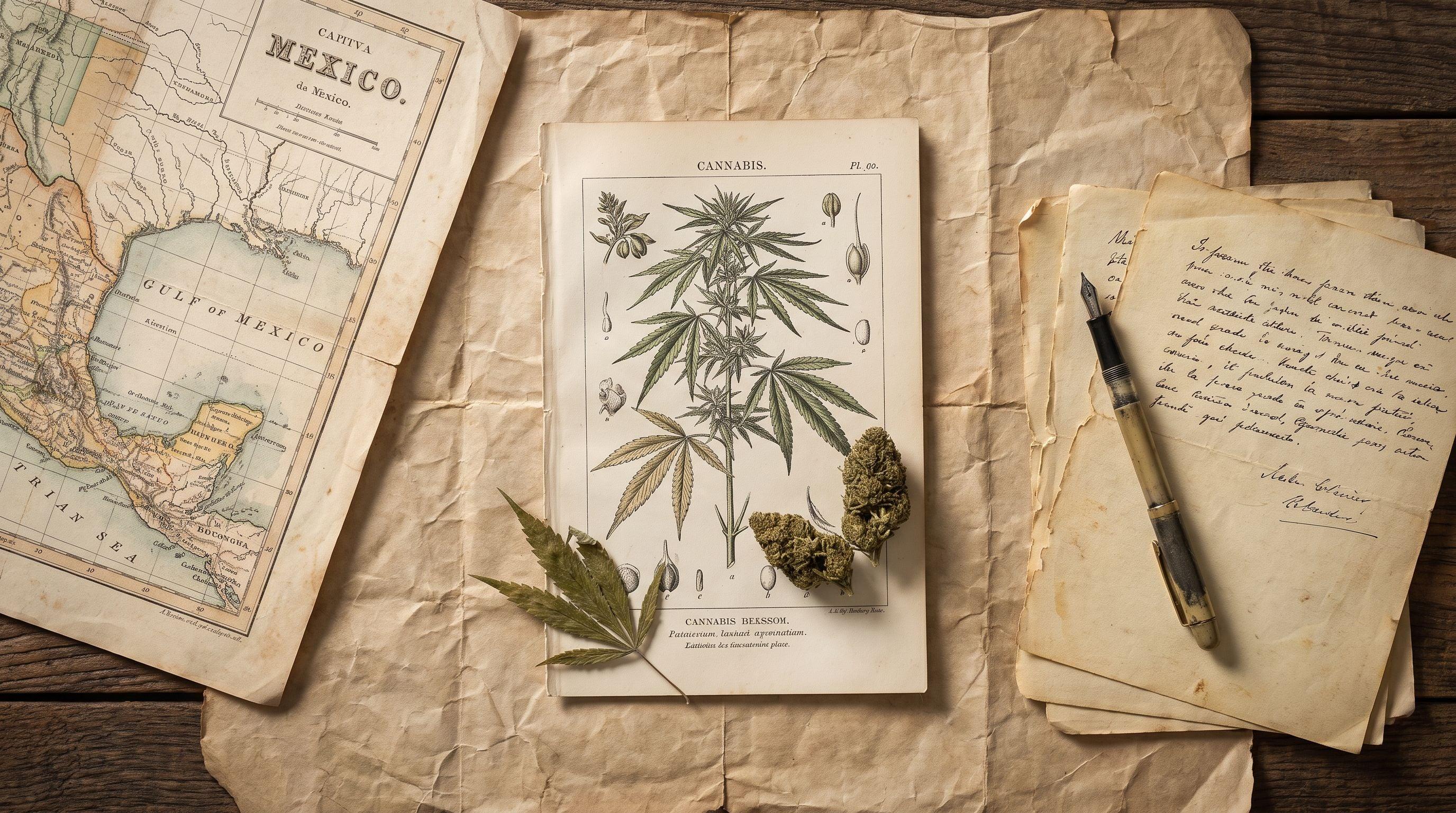
Few plants in the world have as many names as cannabis: over a thousand in Spanish alone. But none carries as much history – or as much controversy – as the word marijuana. We use it every day, it turns up in songs, laws and headlines, and yet hardly anyone knows exactly where it comes from.
In this article we explain what marijuana means, why it's called that and where the word comes from. Its origin takes us to 19th-century Mexico, passes through a curious linguistic tangle involving Nahuatl, Chinese and Spanish first names, and ends with it becoming the propaganda weapon used to ban cannabis across half the world. Here's the story.
In short
- The word marijuana was born in Mexico in the mid-19th century; its exact etymology is still a mystery.
- The two best-known theories link it to the names “María Juana” / “Rosa María” and to the Nahuatl word “mallihuan” (prisoner).
- In the 1930s, the US popularised the term to stigmatise cannabis and Mexican immigrants.
- “Marijuana” and “cannabis” are the same plant: one is the popular name and the other the scientific one.
Where does the word “marijuana” come from? A name born in Mexico
The first thing to make clear is that “marijuana” is a Mexican word. Both the Spanish spelling “marihuana” and its variant “mariguana” originated in Mexico, and both are correct according to the Academia Mexicana de la Lengua (Mexican Academy of Language), although “mariguana” remained largely confined to the south of the country and Central America, while “marihuana” spread throughout the Spanish-speaking world. The English spelling “marijuana”, with a j, isn't correct in Spanish.
The term appeared just as cannabis had become part of everyday life in Mexico. It wasn't an exotic or unknown plant: it was common weed, smoked and grown by ordinary people, which explains why it needed a name of its own for everyday use.
It's worth keeping two things apart: where the word comes from and where the plant comes from. Because cannabis itself didn't originate in Mexico: the plant is native to Central Asia – thought to be the steppes of the Himalayas – and has been with humans for thousands of years. It was Europeans who took it to the Americas, where the plant found a new name. In other words, the plant is ancient and Asian; the word “marijuana”, by contrast, is young and Mexican.
The first written record of “marijuana”
The earliest written evidence takes us to the 1846 Mexican National Pharmacopoeia, which distinguished two varieties of cannabis: a non-psychoactive one called Sativa (hemp), and another with “narcotic leaves” named Rosa María, to which “mariguana” was added as a popular synonym.
Shortly afterwards, in his Lecciones de farmacología (1853), the physician Leonardo Oliva was already speculating that “marihuana” was a synonym for “Rosa María”.
And by then the word was already out on the street: it appears in the original lyrics of “La Cucaracha”, the famous song from the time of the Mexican Revolution, whose protagonist can't walk because he has no “marihuana pa’ fumar” (marijuana to smoke).
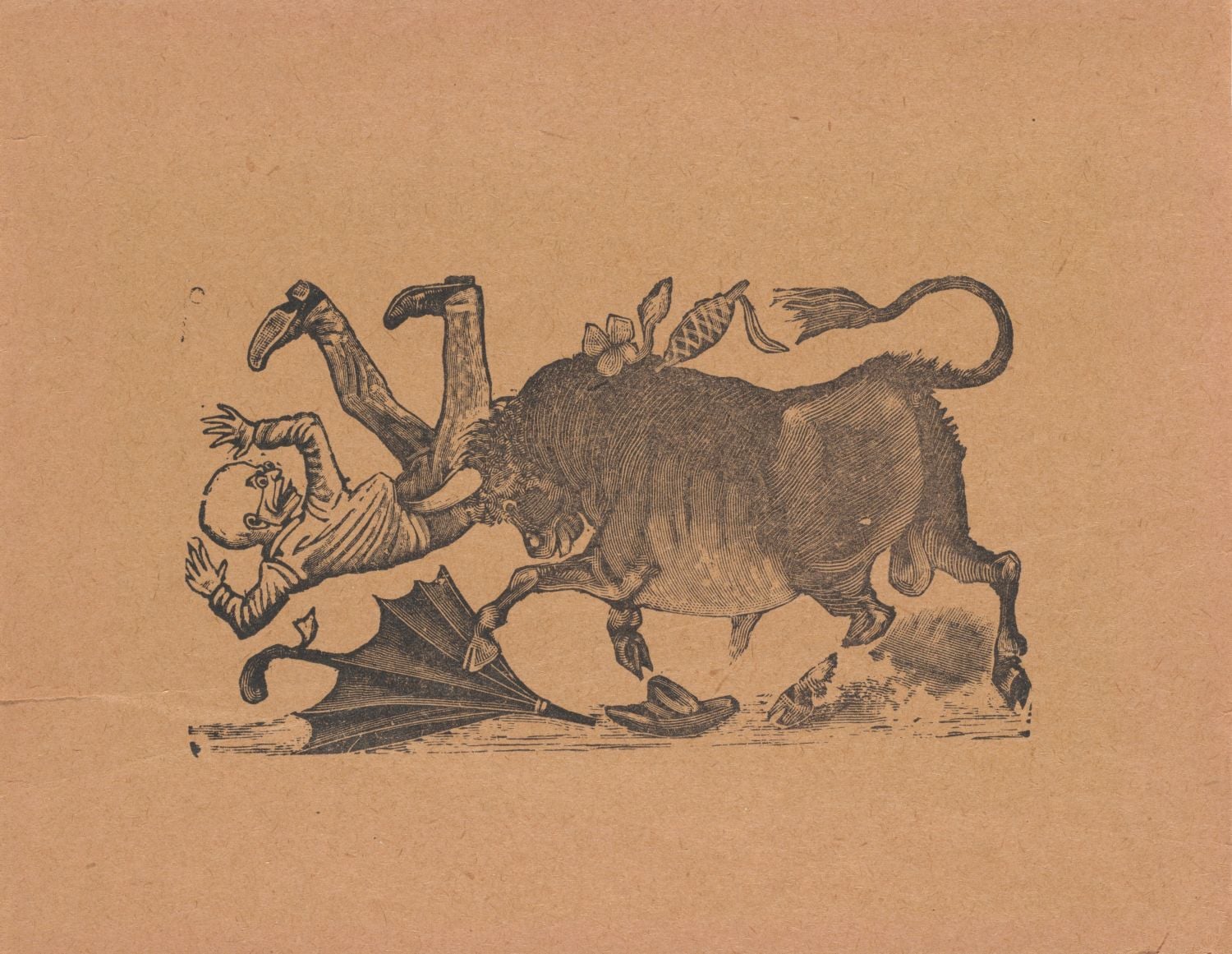
It even made its way into popular art: in the early 20th century, the legendary engraver José Guadalupe Posada – the man behind the calaveras (skulls) – created “Don Chepito Mariguano”, considered the first character in Mexican comics, a bug-eyed dandy of dubious conduct portrayed as a marijuana user. His prints are now held by institutions such as the New York Public Library.
Theories on the origin and etymology of “marijuana”
This is where it gets interesting, because nobody knows for certain where the word comes from. Linguists and historians work with several hypotheses, and almost all of them have their weak spots. These are the main ones.
The “María Juana” (and “Rosa María”) theory
It's the most popular and the most intuitive explanation: “marihuana” would be a corruption of the names “María” and “Juana” (the Spanish equivalent of Mary Jane). It fits a very real habit in Spanish of giving the plant women's names: hence nicknames such as María, Mari Juana, Juanita, Doña Juana or Rosa María.
The problem is that no historian or linguist backs this theory as the real origin. It works very well as folk etymology and as wordplay, but it's probably an after-the-fact (a posteriori) explanation: the sound “marihuana” existed first and was later associated with the first names, not the other way round.
The Nahuatl origin: “mallihuan”, the prisoner
The second major hypothesis points to the language of the Aztecs. According to the Oxford English Dictionary, the term could come from the Nahuatl mallihuan, meaning “prisoner” – a very evocative image: the plant that “captures” whoever uses it. In Nahuatl the l sounds similar to the r, so once adapted into Spanish it would have drifted into something close to “marihuana”.
It sounds watertight, but it has two major snags. The first: the linguist Jason D. Haugen finds no semantic basis to justify the connection and suspects it's pure phonetic coincidence. The second, and more damning: cannabis was brought to the Americas by Europeans, so it's unlikely that its name comes from an indigenous language. In fact, this etymology was popularised in the 1930s by none other than the man in charge of the US anti-drug crusade, which is reason enough to take it with a pinch of salt.
The Chinese connection: from “ma ren hua” to “marijuana”
There's a third route that's gaining supporters. The word could come from the Chinese má rén huā (麻仁花), literally “hemp seed flower”, which would have been introduced by Chinese immigrants who came to work in Mexico and other parts of the Americas.
What's fascinating is that this root may be far older: both the Chinese ma and the word “marihuana” could go back to a Semitic root, mrj, thought to mean “hemp”. That same origin would explain why in Mexico cannabis is also called “orégano chino” (Chinese oregano) and why it sounds so much like mejorana, the Spanish word for marjoram.
Other hypotheses: Mariguana island and the Arabic root
To complicate matters further, there are theories to suit every taste. One links it to the Caribbean island of “Mariguana” (now Mayaguana, in the Bahamas), where cannabis was supposedly grown between the 16th and 18th centuries. Another proposes a combination of several Arabic terms, in keeping with hemp's strong presence in the Islamic world. As you can see, the origin of the word marijuana is far from settled.
“Marijuana”, the word used to ban cannabis
If the word “marijuana” carries a certain stigma today, it's no accident: it was made that way on purpose.
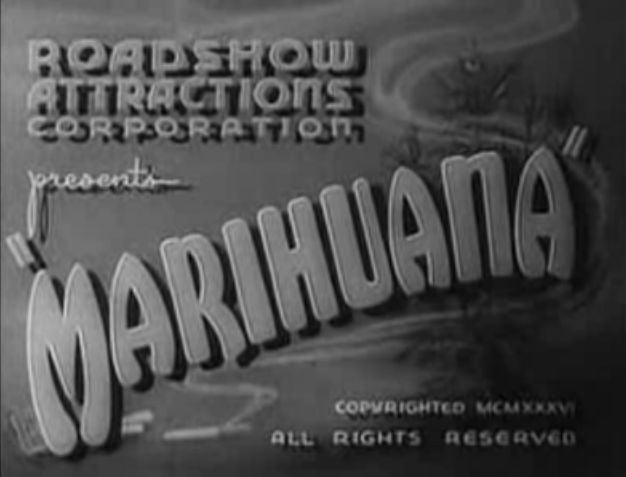
In the early 20th century, thousands of Mexicans emigrated to the United States after the Revolution, taking both the plant and its name with them. Enter Harry J. Anslinger, first commissioner of the Federal Bureau of Narcotics and the great driving force behind prohibition. Anslinger understood that saying “cannabis” – the name found in medicine cabinets across half the country – frightened no one. But “marijuana” sounded foreign, exotic and dangerous.
So he deliberately chose that term to associate the plant with the Mexican and Latino population and build a false image of violent users. A letter he presented to Congress is notorious: “I wish I could show you what a small marihuana cigarette can do to our Spanish-speaking residents.” The strategy worked: those xenophobic overtones were written into law with the Marihuana Tax Act of 1937, which in practice banned cannabis in the United States.
That said, there's a detail that's often overlooked. The historian Isaac Campos, in his book Home Grown: Marijuana and the Origins of Mexico's War on Drugs (University of North Carolina Press, 2012), shows that the stigma wasn't invented in the United States but travelled from Mexico: there, marijuana was already associated with madness and violence, and the country banned it nationwide in 1920, seventeen years before its northern neighbour. In other words, the famous reefer madness had Mexican roots before it became an American rallying cry.
We're still living with the consequences: much of the prejudice that still surrounds the plant stems from a propaganda campaign that chose a word precisely because it “sounded foreign”.
The origin of the word “cannabis”: a root thousands of years old
Compared with the youthful “marijuana”, the word “cannabis” is venerably old. Its origins lie deep in a Proto-Indo-European root, *kan(n)aB-, from which the plant's names descend in a host of languages: Czech konopí, Hebrew qannabbôs and English cannabis.
The first documented term was the Greek kánnabis, probably borrowed in turn from a Scythian or Thracian language. From Greek it passed directly into Latin cannăbis, and from there, almost unchanged, into today's “cannabis”. That same Latin root, incidentally, is what gave Spanish the word “cáñamo” (hemp).
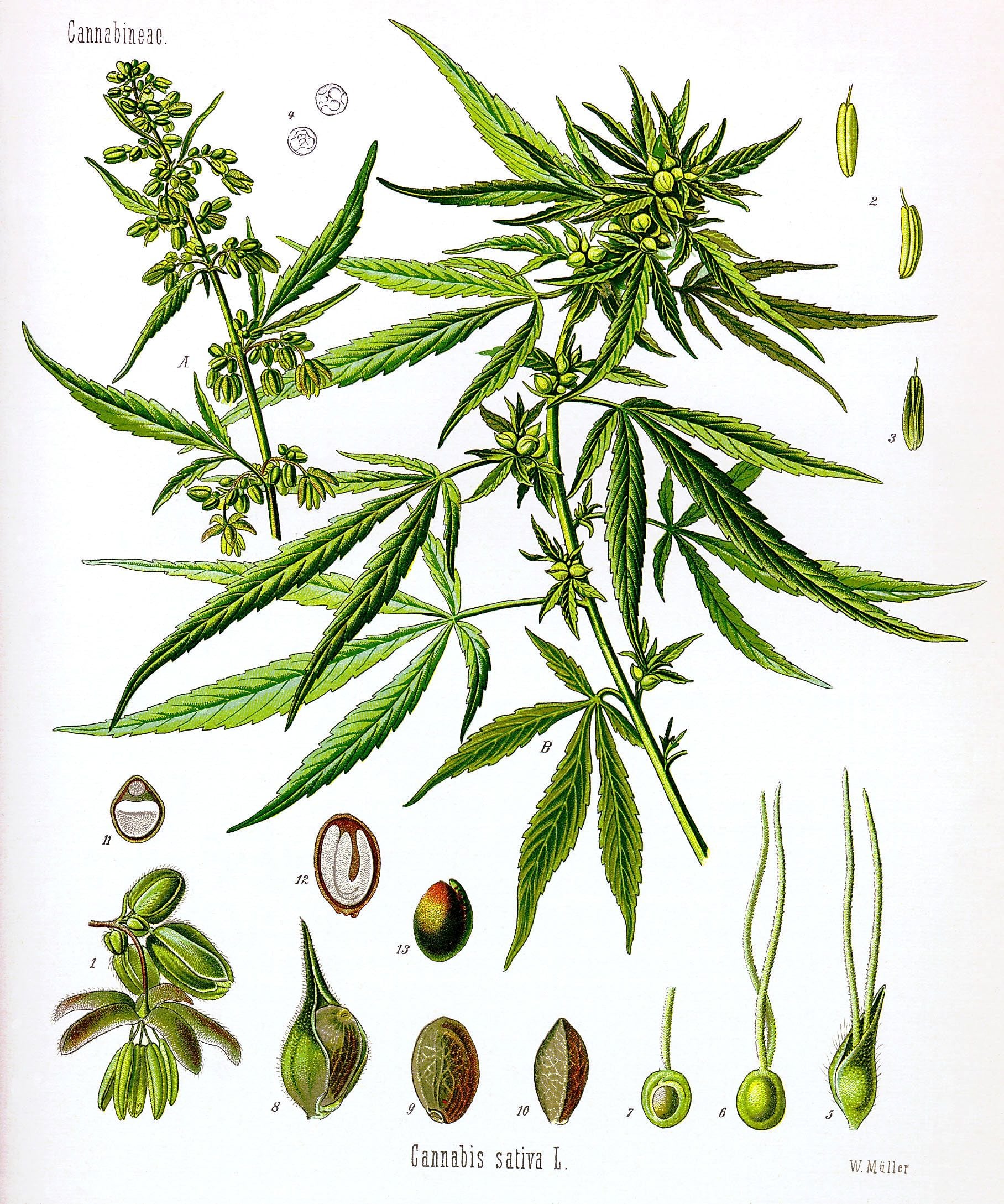
The name became official and scientific in the 18th century, when the Swedish naturalist Carl Linnaeus classified the plant as Cannabis sativa in his work Species Plantarum (1753), the cornerstone of modern botany. The epithet sativa simply means “cultivated”. In other words: while “marijuana” was being born on the street, “cannabis” was taking hold in botany books. Two words, two worlds, one and the same plant.
“Hemp”, “mota”, “ganja” and the thousand names of cannabis
Having so many names for a single plant is no coincidence: it shows just how deeply cannabis has left its mark on the cultures it has passed through over thousands of years. Here are some of the most curious.
Why cannabis is called “mota”
In Mexico and much of Latin America, “mota” is a synonym for marijuana. The most widespread theory traces it to “potiguaya”, short for the Spanish “potación de guaya”, literally “drink of sorrow”: an old preparation made by steeping cannabis flowers in wine. Over time, the term was shortened to “mota”. It's not the only reading – the RAE (Royal Spanish Academy) defines “mota” as a speck or tiny particle, which also fits the look of dried weed – but it's the one you hear most often.
“Ganja”, “hemp” and other names for cannabis
- Ganja: comes from India, from the Sanskrit gāñjyā, and was popularised in the West by the Rastafari movement.
- Hemp: the name for hemp, cannabis without psychoactive effects, used for textiles and industry. It shares a root with the Spanish cáñamo, the German Hanf and the Dutch hennep.
- Weed, grass, herb, dope, pot, hash, spliff, maconha… Every region and every era has contributed its own term, depending on whether people were talking about the plant, the flower or the habit of smoking it. In Spain, for example, you'll hear hierba, grifa, maría or porro (a joint).
What's the difference between marijuana and cannabis?
This is the question many people ask, and the answer is simple: technically, there's no difference. They're the same plant. What changes is who uses each word and why:
- Cannabis is the scientific, neutral name, the one coined by Linnaeus and used in medicine, botany and international law.
- Marijuana is a popular name that arose at a time when little was known about the plant's different strains, and which over time took on negative connotations. It tends to be reserved for cannabis with psychoactive effects (high in THC).
- Hemp refers to the variety with hardly any THC, the one used in industry and the basis of legal CBD products. If you're interested, here we explain the difference between THC and CBD.
Put another way: all marijuana is cannabis, but not all cannabis would be called “marijuana”. The difference isn't in the plant but in the word we choose to name it.
Why we prefer to talk about cannabis and CBD today
Looking back at the origin of the word “marijuana” leaves one clear lesson: names aren't innocent. The same plant can sound like medicine or like a crime depending on what we call it, and that's exactly what happened in the 20th century.
That's why today, when we talk about CBD flower, CBD oil or hemp, we're reclaiming the neutral, scientific vocabulary the plant always had: that of legal cannabis, with no psychoactive effect and intended for wellbeing (bear in mind that in some countries, such as the UK, hemp flower is controlled even when its THC content is low). If you want to understand this compound better, we explain what CBD is and what it's used for. Far from the stigma manufactured almost a century ago, the plant is once again what it was before the propaganda: one of the most useful and fascinating plants in human history.
And if you want to see that history with your own eyes, Barcelona is the place to go: right in the heart of the Gothic Quarter, the Hash Marihuana & Hemp Museum (in the Modernista Palau Mornau) brings together more than 9,000 items tracing the cultural, medicinal and industrial uses of cannabis over the centuries. Proof, if any were needed, that behind a simple name lie millennia of culture.
Frequently asked questions
What is the origin of the word marijuana?
It was born in Mexico in the mid-19th century. Its exact etymology is uncertain: the main theories link it to the names “María Juana” / “Rosa María” and to the Nahuatl word “mallihuan” (“prisoner”), with a possible Chinese and Semitic root in the background.
What does the word marijuana mean?
It has no single, settled meaning. The Nahuatl “mallihuan” hypothesis translates it as “prisoner”; the Chinese “má rén huā” theory as “hemp seed flower”; and folk etymology associates it with the women's names “María” and “Juana”. Today, in everyday use, marijuana simply means cannabis with psychoactive effects.
Why does the word marijuana have a bad reputation?
Because in the 1930s the US government, led by Harry Anslinger, deliberately used it to associate cannabis with Mexican immigration and to justify banning it (Marihuana Tax Act of 1937).
Are marijuana and cannabis the same thing?
Yes, it's the same plant. “Cannabis” is the scientific name and “marijuana” the popular one, usually referring to the variety with psychoactive effects.
Sources and references
- Isaac Campos, Home Grown: Marijuana and the Origins of Mexico's War on Drugs. University of North Carolina Press, 2012.
- Alan Piper, “The Mysterious Origins of the Word ‘Marihuana’”. Sino-Platonic Papers, no. 153, 2005.
- Martin Booth, Cannabis: A History. Doubleday / Picador, 2003.
- John C. Chasteen, Getting High: Marijuana through the Ages. Rowman & Littlefield, 2016.
- Oxford English Dictionary, entry “marijuana” (Nahuatl etymology mallihuan).
- Academia Mexicana de la Lengua and Real Academia Española, entries “marihuana”, “cánnabis” and “mota”.
- Carl Linnaeus, Species Plantarum (1753): classification of Cannabis sativa L.
- Hash Marihuana & Hemp Museum, Barcelona (Palau Mornau) – cultural history of cannabis.