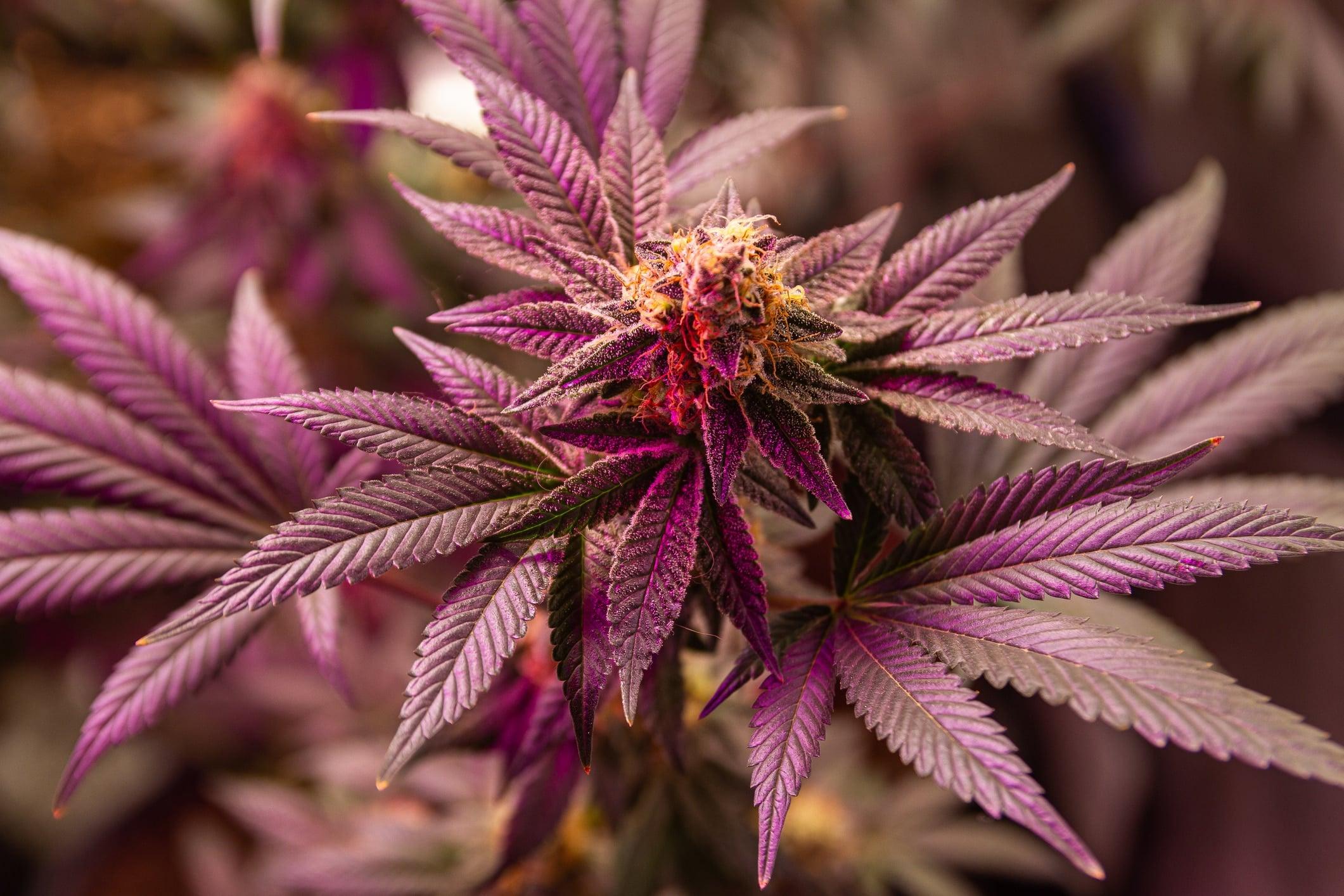
Have you ever wondered why some cannabis buds have such exotic colours as red or purple? Today we look at the flavonoids of the cannabis plant, the compounds responsible for the striking colours this plant can take on.
Alongside the well-known cannabinoids, such as cannabidiol (CBD), cannabis also contains other lesser-known but equally important compounds: flavonoids. These powerful bioactive compounds not only add beauty to the plant, but may also work in synergy with other cannabis compounds to influence our cannabis experience.
Introduction to cannabis flavonoids
What are cannabis flavonoids?
Flavonoids are a class of phenolic compounds widely distributed throughout the plant kingdom. They are known for their wide range of colours and, as well as in cannabis, these compounds are also found in a variety of plant foods. They are also considered one of the most important phenols in the diet and one of the largest groups of compounds in plants [1].
What colour do flavonoids give cannabis?
Etymologically, the term “flavonoids” comes from the Latin “flavus”, meaning “yellow”, in reference to the colouring that many of these compounds give the plants that contain them. Flavonoids can produce a wide range of colours, ranging from yellow to purple and red.
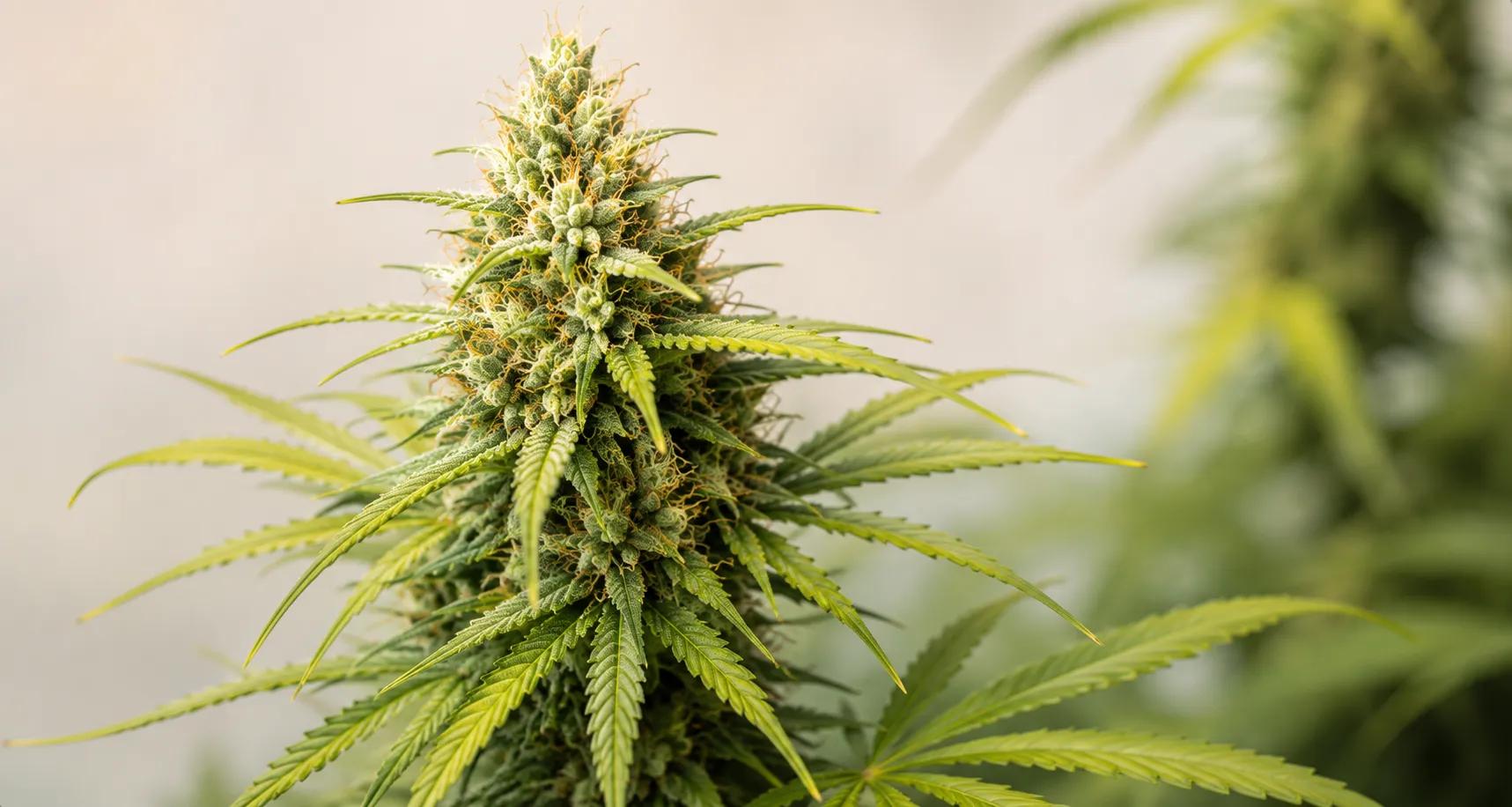
It is worth noting that in cannabis, as in other plants, the yellow colouring of some flavonoids can be masked by the green of chlorophyll (which is not a flavonoid). So the presence of these compounds is often not visible to the naked eye, but hidden beneath the various shades of green. At other times, however, the purple or red colour of the cannabis gives their presence away.
Functions of flavonoids in plants
Flavonoids are found in a great many plants and can serve several purposes, but one of their main functions is as pigments, particularly in the colouring of flowers [3]. More than 4,000 types of natural flavonoids have been found [1]. Some also suggest that these compounds may play an important role in protecting the plant against ultraviolet light and disease [3].
Flavonoids are therefore essential compounds for the plant's survival, and they also give a distinctive character to many cannabis strains, such as the CBD Purple Haze and CBD Purple Tangie strains from Cannactiva, whose striking colours are due to these polyphenolic compounds.
Classification
Flavonoids are usually found bound to carbohydrate molecules and can be divided into 13 classes according to their chemical characteristics. Some of these classes are [1]:
- Flavonols: include compounds such as quercetin and kaempferol.
- Flavones: include compounds such as apigenin, luteolin and the cannflavins A, B and C found in cannabis, which we discuss further down.
- Flavanones: include compounds such as naringenin and hesperetin, which are abundant in citrus fruits.
- Isoflavones: include compounds such as genistein and daidzein, which are plentiful in fermented soya products.
- Anthocyanidins: include the red, blue and purple pigments in plants (such as cyanidin, delphinidin…). They are the antioxidant pigments in blueberries and blackberries.
Where are flavonoids found?
Flavonoids are very common compounds in plants, including cannabis. We have previously written about anthocyanins, a type of flavonoid responsible for the violet colour in purple cannabis plants.
These compounds can also be found in a variety of plant foods that make up our diet, mainly fruit and vegetables.
Chemical structure
To understand the chemical structure of flavonoids, it is important to start with phenol, an aromatic organic compound consisting of a benzene ring with a hydroxyl (OH) group, which forms the basis of its structure [1]. Flavonoids are organic compounds containing a chain of 15 carbon atoms and two phenyl rings [2]. These compounds are closely related to phenol and are described as benzene rings in which a hydrogen has been replaced by another element or compound.
Cannabis flavonoids
Types of cannabis flavonoids
The cannabis plant has many flavonoids. Several flavonoids have been identified in the Cannabis sativa plant, some of the most notable being flavones such as vitexin, orientin, luteolin and apigenin, and flavonols such as kaempferol and quercetin [4].
Cannflavins A, B and C in cannabis
One of the first flavonoids described in Cannabis sativa is cannflavin [5] (also called cannaflavin or canflavin). It was later discovered that it can be divided into several compounds, cannflavins A, B and C [6, 7].
Cannflavins A and B have been found in young hemp plants with few cannabinoids [8] and also in homemade cannabis tinctures [9].
Cannflavins are flavonoids found only in the cannabis plant.
These two cannflavins are specific to the Cannabis sativa plant [6] and belong to the group of flavonoids called flavones, which perform many functions in plants, including regulation, transport and mediating interactions with pathogens [5-7].
These two cannflavins are prenylated flavones [9], meaning they have hydrophobic molecules attached. Cannflavins A and B are produced from luteolin, a flavonoid common in many plants, including the vegetables and fruit in our diet [6].
In addition, the presence and concentration of flavonoids can vary between different cannabis strains and growing methods.
Properties of flavonoids and their effects in cannabis
Effects of flavonoids in cannabis
In cannabis, flavonoids can contribute to the cannabis experience through the entourage effect, the synergistic interaction between various compounds present in the plant, including cannabinoids, terpenes and flavonoids.
Cannabis flavonoids can interact with the receptors of the endocannabinoid system and other systems in the body, which may modulate the effect of cannabinoids and terpenes, enhancing or altering their effects. This opens up new possibilities for developing medical cannabis strains.
Although flavonoids as a group have been widely studied because they are present in so many foods and medicinal plants, much research is still needed on the possible interactions between flavonoids and the other components of cannabis, and very little can yet be said for certain.
Properties of flavonoids
In general, flavonoids are antioxidant agents and have attracted a great deal of attention for their potential to prevent and treat countless diseases, and they may also interrupt carcinogenesis [1]. Flavonoids also appear to have antiviral properties against viruses such as HIV, herpes, respiratory viruses and polio, among others [1].
Flavonoids are antioxidants and have attracted a great deal of attention for their possible anti-cancer properties.
The three cannflavins in cannabis have antioxidant and anti-inflammatory properties and, it seems, anti-cancer properties too [10]. Cannflavins A and B have anti-inflammatory properties that can be up to 30 times stronger than those of aspirin [5]. These two cannflavins inhibit the production of two inflammatory mediators, prostaglandin E2 and leukotrienes [6, 8].
As I was saying, there are a great many flavonoids in plants. One of the best known is quercetin, which has been widely researched for its anti-cancer properties, and is the most abundant flavonoid in fruit after kaempferol and myricetin. Kaempferol also has anti-cancer properties [1].
Another fairly well-known flavonoid is apigenin, which is found in fruit and vegetables and may also be present in cannabis [1, 4]. Apparently, apigenin could reduce GABA receptor activity (as do cannabinoids such as THC, CBD and possibly some terpenes), which could explain its sedative properties (11). It also has anti-cancer properties in breast, cervical and colon cancer, leukaemia, and lung, ovarian, prostate, skin, thyroid, gastric and liver cancer, among other forms of cancer [1].
In conclusion…
Cannabis flavonoids are fascinating compounds that not only give the plant's buds their striking colours, but can also influence the cannabis experience through the entourage effect. Their presence and concentration can vary between different cannabis strains and growing methods.
I hope you have found it interesting to learn more about these compounds. As research progresses, more information is expected to emerge about how they may influence the effects associated with cannabis use. Until next time!
Quick questions and answers on cannabis flavonoids...
References
- Bhuyan, D.J. and A. Basu, Phenolic compounds potential health benefits and toxicity, in Utilisation of bioactive compounds from agricultural and food waste. 2017, CRC Press. p. 27-59.
- Stalikas, C.D., Extraction, separation, and detection methods for phenolic acids and flavonoids. Journal of separation science, 2007. 30(18): p. 3268-3295.
- Falcone Ferreyra, M.L., S. Rius, and P. Casati, Flavonoids: biosynthesis, biological functions, and biotechnological applications. Frontiers in Plant Science, 2012. 3(222).
- Vanhoenacker, G., et al., Chemotaxonomic features associated with flavonoids of cannabinoid-free cannabis (Cannabis sativa subsp sativa L.) in relation to hops (Humulus lupulus L.). Natural Product Letters, 2002. 16(1): p. 57-63.
- Barrett, M., D. Gordon, and F. Evans, Isolation from Cannabis sativa L. of cannflavin—a novel inhibitor of prostaglandin production. Biochemical pharmacology, 1985. 34(11): p. 2019-2024.
- Rea, K.A., et al., Biosynthesis of cannflavins A and B from Cannabis sativa L. Phytochemistry, 2019. 164: p. 162-171.
- Barrett, M., A. Scutt, and F. Evans, Cannflavin A and B, prenylated flavones from Cannabis sativa L. Experientia, 1986. 42(4): p. 452-453.
- Werz, O., et al., Cannflavins from hemp sprouts, a novel cannabinoid-free hemp food product, target microsomal prostaglandin E2 synthase-1 and 5-lipoxygenase. PharmaNutrition, 2014. 2(3): p. 53-60.
- Peschel, W., Quality control of traditional cannabis tinctures: pattern, markers, and stability. Scientia pharmaceutica, 2016. 84(3): p. 567-584.
- Moreau, M., et al., Flavonoid derivative of cannabis demonstrates therapeutic potential in preclinical models of metastatic pancreatic cancer. Frontiers in oncology, 2019. 9: p. 660.
- Losi G, Puia G, Garzon G, de Vuono MC, Baraldi M. Apigenin modulates GABAergic and glutamatergic transmission in cultured cortical neurons. Eur J Pharmacol. 2004 Oct 11;502(1-2):41-6. doi: 10.1016/j.ejphar.2004.08.043. PMID: 15464088.
- Bautista JL, Yu S, Tian L. Flavonoids in Cannabis sativa: Biosynthesis, Bioactivities, and Biotechnology. ACS Omega. 2021 Feb 18;6(8):5119-5123. doi: 10.1021/acsomega.1c00318. PMID: 33681553; PMCID: PMC7931196.
Quick questions and answers on cannabis flavonoids…
How many flavonoids does cannabis contain?
Cannabis is estimated to contain more than 20 different flavonoids, including flavones, flavonols and other related compounds. Some specific flavonoids found in cannabis are cannflavin A, cannflavin B, cannflavin C, orientin, vitexin, apigenin, luteolin, kaempferol and quercetin, among others (4, 12).
Which foods contain flavonoids?
As well as in cannabis, flavonoids can also be found in a variety of plant foods that make up our diet, such as fruit (especially citrus fruits, berries, apples, grapes…), vegetables (onions are particularly rich in quercetin), pulses (soya is very rich in isoflavones) and spices (such as gingerol in ginger or curcumin in turmeric). They are also found in medicinal plants and in products made from plants, such as red wine, chocolate and green tea (all three rich in catechins).
Is chlorophyll a type of flavonoid?
Chemically, chlorophyll is not classed as a flavonoid; it is a green photosynthetic pigment classified among the porphyrins. Another group of plant pigments is the carotenoids. Like some flavonoids, carotenoids give a yellow colour to some fruits and foods, but they are not flavonoids either. In other words: not all plant pigments are flavonoids!