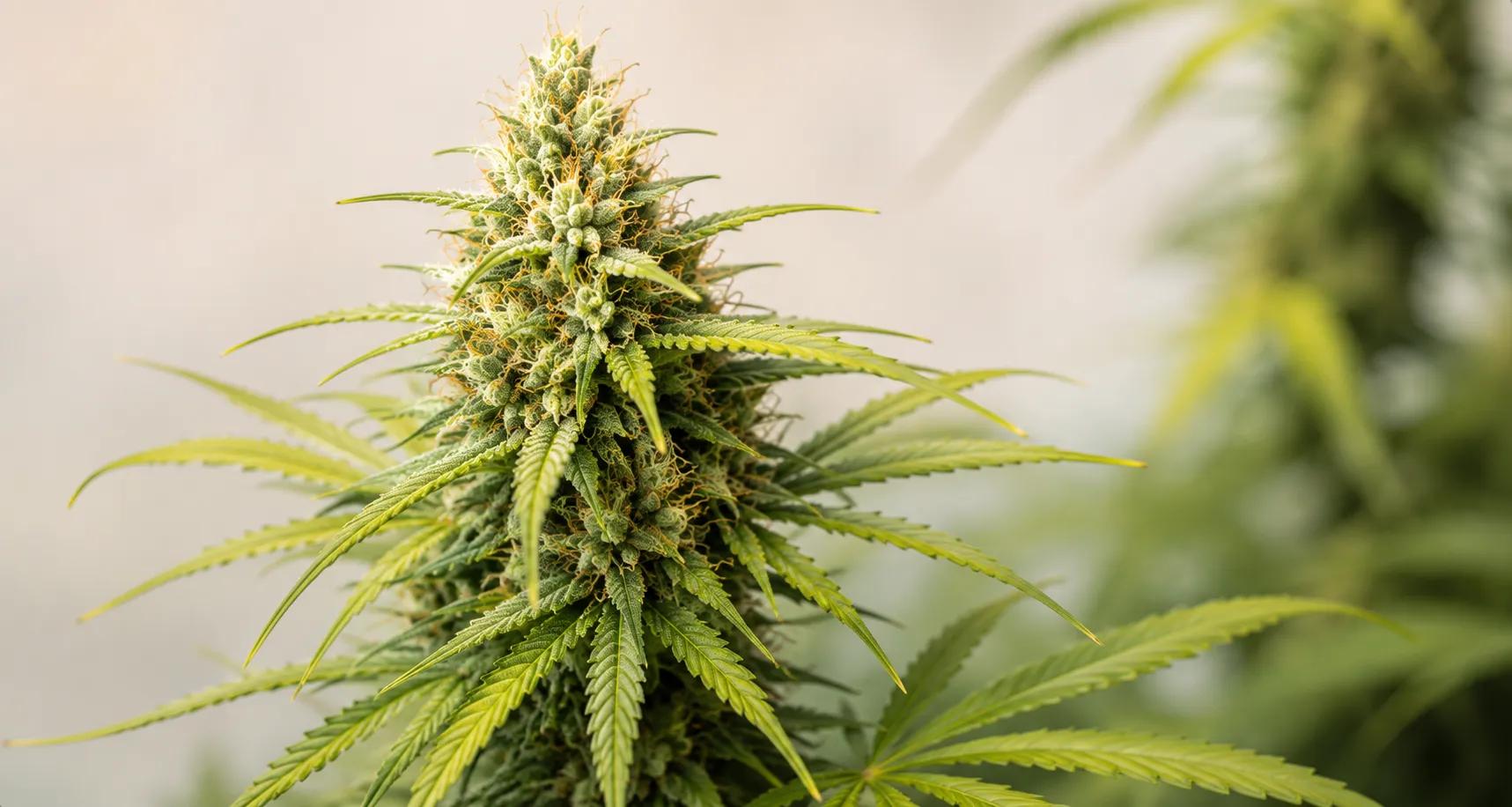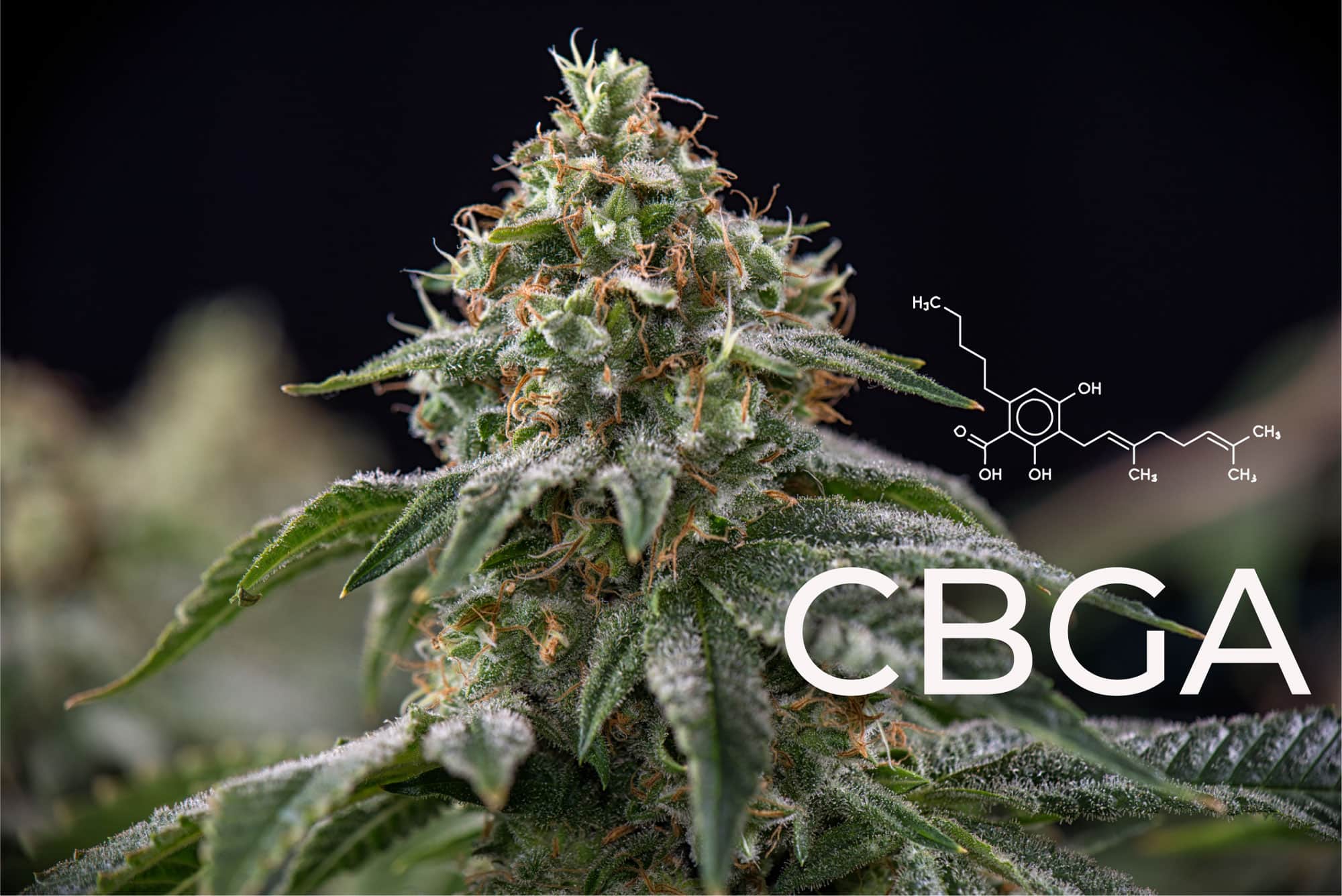
CBGA, or cannabigerolic acid, is the cannabinoid that gives rise to more than 120 types of cannabinoids in the cannabis plant, and it has attracted interest for its potential therapeutic properties. In this post, we'll tell you what CBGA is, why it matters in the cannabis plant and how it can be a source of health benefits.
What is CBGA?
CBGA, or cannabigerolic acid, is one of the many types of cannabinoids found naturally in the cannabis plant. What sets CBGA apart is that it is the precursor of other cannabinoids, such as cannabidiol (CBD), tetrahydrocannabinol (THC), cannabichromene (CBC) and, of course, cannabigerol (CBG). That is why it is also known as the mother cannabinoid.
The major cannabinoid precursor, CBGA, has a chemical formula of C22H32O4.

Origin and synthesis of CBGA
CBGA originates in delicate structures called trichomes, which cover the cannabis plant. From here, an amazing biological transformation is set in motion that produces the more than one hundred different cannabinoids found in cannabis.
In the cannabis plant, the CBGA molecule is transformed through biological processes (known as cannabinoid biosynthesis) to produce psychoactive and non-psychoactive cannabinoids, giving cannabis its remarkably diverse chemical profile. These transformations are carried out by different enzymes acting on CBGA, which is itself formed from geranyl pyrophosphate and olivetolic acid (1, 2).
Differences between CBGA and CBD/THC
Unlike CBD and THC, CBGA is not found in large amounts in cannabis plants. This is because, as cannabis grows over time, CBGA is gradually transformed to give rise to other cannabinoids.
In the cannabis plant, CBGA is rarely found in high concentrations. CBGA is said to be present in larger amounts in young plants (3), but it could be obtained from cannabis strains genetically selected to contain high concentrations of CBGA (4). In these plants, non-functional variants of the synthase enzymes prevent CBGA from being transformed into CBD, THC and other cannabinoids.
One of the properties of CBGA is that, unlike THC, it does not have a psychoactive effect; in other words, CBGA does not produce the “high” that follows THC use.

Effects of CBGA and the endocannabinoid system
CBGA shows a low affinity for the receptors of the endocannabinoid system in our body, CB1 and CB2 (5). But it can have effects on the body thanks to its action on other molecular targets (3).
As a result of this interaction, the effects of CBGA influence some physiological processes in the body, but not to the same extent as other cannabinoids. However, it may be able to contribute to the therapeutic properties of CBD and other compounds in the cannabis plant through a synergistic or entourage effect.
Potential benefits and therapeutic applications of CBGA
The effects of CBGA are still being researched; however, scientific studies have shown that CBGA and CBD share benefits such as the anti-inflammatory effect. In one study, CBGA was observed to be potentially more potent than CBD at inhibiting the release of substances that perpetuate inflammation (6).
Other research has suggested that one benefit of CBGA could be the control of diabetes mellitus and the prevention of cardiovascular problems resulting from type 2 diabetes (7); it could even reduce insulin resistance in these patients (8).
It has also been suggested that another benefit of CBGA is its synergistic action with other cannabinoids to induce cancer cell death (9). Although it has only been studied in colorectal cancer cells and in leukaemia (10), it may be the first step towards building future treatments.
The findings of these studies are still preliminary, as most of them are in vitro studies that have not yet been tested in animals or humans.
We remind you that this is an informative article that is not intended to prevent, diagnose or treat any disease. Its content can complement, but never replace, the diagnosis or treatment of any disease or symptom. Cannactiva products are not medicines and are intended for external use. Consult your doctor before using CBD.
How is CBGA taken?
CBGA products are natural and are made from cannabis plants. Commercially, CBGA can be found in oils, tinctures, concentrates and edibles such as gummies, which are made with full spectrum cannabis oil.
CBGA can also be isolated and synthesised in the laboratory, but this is generally done for research purposes.
As such, it is not yet known how CBGA should be taken to obtain certain effects or to be used for medical conditions in humans, and there is no effective CBGA dose reported to date. In laboratories, doses of CBGA are administered in solutions to cell cultures and are therefore not equivalent to what could be used in humans and animals.
Side effects and toxicity of CBGA
The side effects of CBGA have not yet been studied, but it appears to be a fairly safe compound. The toxicity of CBGA still needs to be studied, and research is needed to establish its safety profile. For this reason, the possible risks of CBGA should not be downplayed, as they are not known.
Because CBGA is found in low concentrations in commercial cannabis products such as tinctures and full spectrum CBD oils, if any adverse effects occur, they are likely to be related to the concentrations of other cannabinoids.
Legal status and regulation of CBGA
CBGA as such does not appear on the lists of controlled substances in most countries of the world, and in countries where CBD is permitted, CBGA usually is too. That said, in the EU and in Spain, just like CBD, it is not authorised as a food or as a food supplement (it is a novel food).
Although regulations vary from country to country, CBGA lacks a psychoactive, consciousness-altering effect and is therefore usually permitted. However, in countries where cannabis is illegal even for medicinal use, CBGA will most likely be illegal as well.
In short, CBGA is a key part of the cannabis plant's machinery, since the cannabinoids we know originate from this compound. Although knowledge about the effects of CBGA is limited, research may well continue to surprise us with its characteristics and its properties for maintaining health.
This article is intended for informational purposes only and is not intended to diagnose, prevent or cure any disease or symptom. Its content can complement, but never replace, the diagnosis or treatment of any disease or symptom. Cannactiva products are not medicines and are intended for external use. We recommend that you consult a health professional before using CBD products.
References
- Tahir, M. N., Shahbazi, F., Rondeau-Gagné, S., & Trant, J. F. (2021). The biosynthesis of the cannabinoids. Journal of cannabis research, 3(1), 7. https://doi.org/10.1186/s42238-021-00062-4
- van Velzen, R., & Schranz, M. E. (2021). Origin and Evolution of the Cannabinoid Oxidocyclase Gene Family. Genome biology and evolution, 13(8), evab130. https://doi.org/10.1093/gbe/evab130
- Walsh, K. B., McKinney, A. E., & Holmes, A. E. (2021). Minor Cannabinoids: Biosynthesis, Molecular Pharmacology and Potential Therapeutic Uses. Frontiers in pharmacology, 12, 777804. https://doi.org/10.3389/fphar.2021.777804
- Garfinkel, A. R., Otten, M., & Crawford, S. (2021). SNP in Potentially Defunct Tetrahydrocannabinolic Acid Synthase Is a Marker for Cannabigerolic Acid Dominance in Cannabis sativa L. Genes, 12(2), 228. https://doi.org/10.3390/genes12020228
- Navarro, G., Varani, K., Lillo, A., Vincenzi, F., Rivas-Santisteban, R., Raïch, I., Reyes-Resina, I., Ferreiro-Vera, C., Borea, P. A., Sánchez de Medina, V., Nadal, X., & Franco, R. (2020). Pharmacological data of cannabidiol- and cannabigerol-type phytocannabinoids acting on cannabinoid CB1, CB2 and CB1/CB2 heteromer receptors. Pharmacological research, 159, 104940. https://doi.org/10.1016/j.phrs.2020.104940
- Faouzi, M., Wakano, C., Monteilh-Zoller, M. K., Neupane, R. P., Starkus, J. G., Neupane, J. B., Cullen, A. J., Johnson, B. E., Fleig, A., & Penner, R. (2022). Acidic Cannabinoids Suppress Proinflammatory Cytokine Release by Blocking Store-operated Calcium Entry. Function (Oxford, England), 3(4), zqac033. https://doi.org/10.1093/function/zqac033
- D’Aniello, E., Fellous, T., Iannotti, F. A., Gentile, A., Allarà, M., Balestrieri, F., Gray, R., Amodeo, P., Vitale, R. M., & Di Marzo, V. (2019). Identification and characterization of phytocannabinoids as novel dual PPARα/γ agonists by a computational and in vitro experimental approach. Biochimica et biophysica acta. General subjects, 1863(3), 586–597. https://doi.org/10.1016/j.bbagen.2019.01.002
- Gao, Q., Hanh, J., Váradi, L., Cairns, R., Sjöström, H., Liao, V. W., Wood, P., Balaban, S., Ong, J. A., Lin, H. Y., Lai, F., Hoy, A. J., Grewal, T., Groundwater, P. W., & Hibbs, D. E. (2015). Identification of dual PPARα/γ agonists and their effects on lipid metabolism. Bioorganic & medicinal chemistry, 23(24), 7676–7684. https://doi.org/10.1016/j.bmc.2015.11.013
- Nallathambi, R., Mazuz, M., Namdar, D., Shik, M., Namintzer, D., Vinayaka, A. C., Ion, A., Faigenboim, A., Nasser, A., Laish, I., Konikoff, F. M., & Koltai, H. (2018). Identification of Synergistic Interaction Between Cannabis-Derived Compounds for Cytotoxic Activity in Colorectal Cancer Cell Lines and Colon Polyps That Induces Apoptosis-Related Cell Death and Distinct Gene Expression. Cannabis and cannabinoid research, 3(1), 120–135. https://doi.org/10.1089/can.2018.0010
- Scott, K. A., Shah, S., Dalgleish, A. G., & Liu, W. M. (2013). Enhancing the activity of cannabidiol and other cannabinoids in vitro through modifications to drug combinations and treatment schedules. Anticancer research, 33(10), 4373–4380.