The history of drugs in Ancient Greece
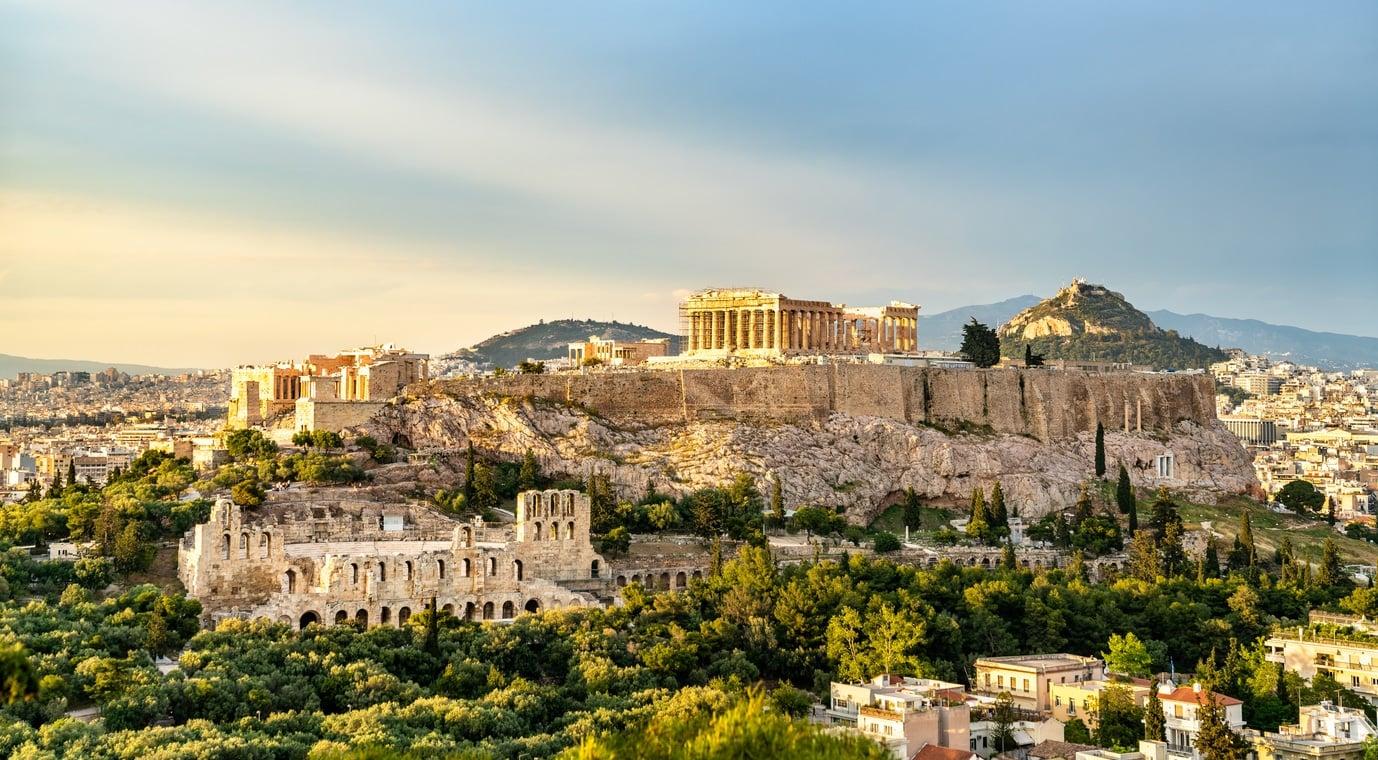
In the attempt to understand how human use of psychoactive substances has evolved, Ancient Greece stands out as an essential milestone. In classical Greece, the line between medicine and drug was not as sharp as it is today; the term phármakon covered both the idea of a remedy and that of a poison. This leads us to ask whether these substances differ so much from today's that the division between drug and medicine is necessary nowadays.
Today on the Cannactiva blog we welcome Jorge Melero and Jorge Escohotado, partners in La Emboscadura, the publishing house devoted to the work of Antonio Escohotado, author of the renowned General History of Drugs, to talk about the history of drugs in Ancient Greece, a culture dominated by the concept of phármakon.
Opium in Ancient Greece
Opium was a particularly widely used substance at the time; its derivatives are also in widespread medical use today, and even recreational use if we are talking about substances such as heroin or fentanyl. So it is no coincidence that opium already has its place in the Hippocratic treatises: “the black-seed variety (hypnotikon mekonion) is recommended for all kinds of ‘uterine suffocations’” (Escohotado, 1998, p. 101).
However, its use was not limited, as in today's medicine, to relieving pain; other kinds of applications were also considered: “opium was regarded as an ideal medication for dealing with the consequences of wanting to be chaste while the sting of lust throbs” (Escohotado, 1998, p. 101). In fact, we owe the very Latin word opium to these Hippocratic writings: “it comes specifically from that treatise, where the opos (‘juice’) of the opium poppy is mentioned as suitable for such purposes” (Escohotado, 1998, p. 101), although, curiously, it was this same school that made the least use of this drug, living up to its maxim of “healing by letting physis work on its own, with a minimum of pharmacopoeia” (Escohotado, 1998, p. 101).


Opium became a central element of Greek medicine, perfectly embodying the concept of the secular pharmakon, “equally distant from panacea and mere poison” (Escohotado, 1998, p. 103). Used by every medical school, its importance grew especially after the decline of Athens; it became the most studied medicine in the Mediterranean basin and was a constant in Greek medicine for more than five centuries. Curiously, in all that time, no social problems linked to its use are reported. Administering opium, whether to oneself or to others, was not seen as a threat to the social order: “Absolutely no one thinks that a person degrades himself or threatens the civil order by taking opium or giving it to others” (Escohotado, 1998, p. 103).
The Mysteries of Eleusis
However, the use of drugs was not confined to medicine: many were used in a religious setting.
The Mysteries of Eleusis were probably the most famous of the ancient world. Their beginnings are hard to pin down — some estimate that they date back to the 15th century BC — but we know for certain that they predate the Iliad and the Odyssey (Escohotado, 1998). Figures as prominent as Plato, Aristotle, Pausanias, Pindar, Aeschylus, Sophocles, Cicero, Hadrian and Marcus Aurelius took part in them (Marín-Gutiérrez, 2008). These Mysteries were dedicated to the Greek goddesses Demeter and Persephone. According to legend, Demeter, the goddess of grain and fertility, established these mysteries in thanks for finding her daughter Persephone, who had been abducted by Hades, the god of the underworld. While searching for her daughter, Demeter neglected the earth, which caused the first winter. When she was finally reunited with Persephone, the earth bloomed again, marking the start of spring.

The mysteries were held every year and consisted of a series of initiation rituals in two main phases: the Lesser Mysteries and the Greater Mysteries. The Lesser Mysteries were held in spring and involved fasting, purification and sacrifice; the Greater Mysteries, held in autumn, culminated in a night-time initiation ceremony (Marín-Gutiérrez, 2008).
During the ceremony of the Greater Mysteries, the Athenians made a pilgrimage to Eleusis to drink, on an empty stomach, the so-called kykeon, a hallucinogenic drink: “A preparation called kykeon, or ciceon, a special hallucinogenic drink, was ingested. The participants had astonishing visions” (Carod-Artal, 2013, p. 35).
The Eleusinian Mysteries were surrounded by mandatory secrecy. “Candidates for initiation swore on their lives to keep the details of the experience absolutely secret, and so they did” (Escohotado, 1998, p. 113). This discretion was enforced on pain of death: “the laws of Athens made it a crime to speak of what happened in the telesterion of Eleusis” (Hofmann, 2013, p. 6). The Homeric Hymn to Demeter, recited in these rituals, tells how the goddess taught her Mysteries to the princes of Eleusis, Triptolemus and Eumolpus, but of these ceremonies it states: “it is not lawful to neglect them, nor to pry into them out of curiosity, nor to reveal them, for the great reverence owed to the gods silences the voice.” (Homer, 2001, p. 2000). Because of this secrecy, the many theories on the subject are no more than speculation that cannot be confirmed. However, the constant references in ancient literature to the intoxicating power of darnel (Lolium temulentum), which has no pharmacological effects of its own, suggest that this hallucinogenic component of the kykeon is due to the rye ergot that parasitises this plant, which produces lysergic acid amide (LSA), a compound with powerful psychoactive effects and a precursor of lysergic acid diethylamide (LSD), discovered by Albert Hofmann.
Recent botanical research has shown that mainland Greece has the least toxic variety of the rye ergot fungus known on the planet, and it is quite likely that some pharmacopoles used the various ergot-infected plants to obtain highly active drugs. (Escohotado, 1998, p. 99).
The hypothesis that ergot was present in the kykeon has been championed by several researchers, among them the father of LSD himself, Albert Hofmann, who studied the alkaloids of rye ergot and later theorised about its place in the sacred drink:
Eleusis was the supreme experience in the life of an initiate. It was so in both a physical and a mystical sense: trembling, dizziness, cold sweat, and then a vision that turned everything seen before into a kind of blindness; a feeling of wonder and awe before a radiance that brought on a profound silence, for what had just been seen and felt could never be communicated: words were not equal to such a task. Such symptoms correspond unequivocally to the experience produced by an entheogen. (2013, p. 3).
The importance of these mysteries in the history of Western thought is undoubtedly vital. Perhaps it is no coincidence that Presocratic philosophy was born so close to these rites. The philosopher Terence McKenna put forward the bold theory that eating Psilocybe mushrooms was a crucial factor in the evolution from Homo erectus to Homo sapiens (Rodríguez et al., 2012). What is certainly an established fact is that thinkers of the stature of Plato and Aristotle, who left a radical mark on Western thought, were strongly influenced by these rites. Not for nothing does a philosopher of Hegel's stature devote a poem entitled Eleusis to them at the end of his Early Writings; here are a few lines that may prove illuminating:
Alliance sealed by no seals or vows
to live only for free truth and never, never
to make peace with the precept that rules opinions and feelings.
(...)
Drunk with enthusiasm I would now grasp
visions of your surroundings,
I would understand your revelations,
I would know how to read the lofty meaning of your images,
I would hear the hymns of the divine banquet,
its lofty judgements and counsels… (Hegel, 1978, p. 214)
Dionysus and wine
The use of wine in Ancient Greece and the Dionysian cults played a fundamental role in both social life and religious rituals. Wine was seen as a phármakon (remedy) that not only gave pleasure but also had a sacred and therapeutic purpose. Plato, in his dialogue Laws, states through the Athenian Stranger: “Let us not disparage the gift we have received from Dionysus, claiming that it is a bad present and unworthy of being admitted into a State!” (2014, p. 671). This respect for wine was deeply rooted in Greek culture, which used it in religious ceremonies, at banquets and as part of everyday life.
Among the Greeks there was a recurring concern about this phármakon: the debate centred on the possible negative effects that wine could have on the life devoted to knowledge that Platonic philosophy proposes (Escohotado, 1998). So it is with wine that we begin to see an incipient moral component attached to the phármakon.
Alcohol becomes the seed that will grow into an abandonment of the dual view of a substance as both poison and remedy, setting aside moderation and proportion. A moral debate thus begins around the substance, arguing over its intrinsic goodness or badness, whether it is good or bad in absolute terms, no longer taking into account prudent or excessive use. Interestingly, it is one of the most widely consumed substances today, is generally legal in the Western world and is one of the least marginalised drugs.
As for the Dionysian cults, these rituals were a way of channelling and taming hysteria through official rites. As Nilsson notes in his Greek Piety: “The Greeks took the dangerous sting out of the Dionysian cult by including it in the regulation of official rites” (1969, p. 31). This institutional control kept the excesses of the Dionysian cult within acceptable limits, providing a safety valve for social and personal tensions. “Orgiastic inebriation is at once recognised and tamed by being turned into religious rite, and the vanity of a political power bent on mere repression will be regularly abolished in shared festive ecstasy” (Escohotado, 1998, p. 108).

Secrecy also played a crucial role in these cults. A dialogue between Pentheus and Dionysus in Euripides' play illustrates the esoteric nature of these rituals:
P.: And your orgies, what form do they take? D.: It is forbidden for uninitiated mortals to know. P.: And are they of any benefit to those who sacrifice in them? D.: It is not lawful for you to hear it, but they are worth hearing. (Escohotado, 1998, p. 110).
In short, wine in Ancient Greece was not just an everyday drink but also a substance deeply intertwined with culture, religion and artistic inspiration. The Dionysian cults, with their ritual use of wine and their secrecy, show how the Greeks integrated these elements into a coherent system that celebrated both reason and ecstasy.

Conclusion
Drug use in Ancient Greece offers a historical perspective on how some of the psychoactive substances that we now regard as drugs and medicines were integrated. The Eleusinian Mysteries and the Dionysian cults are examples of rituals that sought spiritual purification and connection with the divine through substances.
What stands out is the secrecy that protected these practices and that still survives today, as can be seen in the ceremonial use of psychedelics in modern spiritual communities. It is also striking that the use of psychoactive substances in Ancient Greece, in a controlled and ritualised way, did not cause social conflict, showing a cultural acceptance that allowed these substances to be handled with reverence and regulation.
In alcohol we also see the first significant shift in the perception of drugs, bringing in moral debates about their effects and their role in everyday life. This shift reflected a growing concern about possible abuse and the social consequences of excessive use, laying the foundations for today's debates on regulation and ethics in the use of psychoactive substances.
Jorge Melero and Jorge Escohotado (Los Emboscados), Madrid, 28 December 2024
References
- Carod-Artal, F. J. (2013). Psychoactive plants in ancient Greece. Neurosciences and History, 1(1), 28-38.
- Derrida, J. (1975). La farmacia de Platón [Plato's pharmacy]. In La diseminación [Dissemination]. Editorial Fundamentos. D’Ors, A. (1975). El digesto de Justiniano [The Digest of Justinian]. Editorial Aranzadi.
- Escohotado, A. (1998). Historia general de las drogas [General history of drugs]. Espasa.
- Hegel, G.W. (1978). Escritos de juventud [Early writings]. Fondo de Cultura Económica.
- Hippocrates. (1987). Tratados hipocráticos [Hippocratic treatises]. (García, C., Trans.). Editorial Gredos. (Original work published in the late 5th century).
- Hofmann, A., Wasson, R.G., Ruck, C. (2013). El camino a Eleusis. Una solución al enigma de los misterios [The road to Eleusis: unveiling the secret of the mysteries]. Fondo de cultura económica.
- Homer. (2001). Himno homérico a Deméter [Homeric hymn to Demeter]. (Torres-Guerra, J.B., Trans.). Eunsa ediciones. (Original work published in the 7th century BC).
- Lewin, L. (1970). Phantastica. Payot.
- López, H. (2021). Las drogas en la farmacia de Platón [Drugs in Plato's pharmacy]. El Hormiguero. Psicoanálisis, infancia/a y adolescencia/s. Retrieved from: https://revele.uncoma.edu.ar/index.php/psicohormiguero/article/view/3318
- Marín-Gutiérrez, I. (2008). Los misterios de Eleusis [The mysteries of Eleusis]. Cannabis magazine, 39, 70-73.
- Nilsson, M.P. (1969). Historia de la religiosidad griega [Greek piety]. Editorial Gredos.
- Pabón, J.M. (2014). Diccionario manual griego. Griego clásico-español [Concise Greek dictionary: classical Greek–Spanish]. Vox Lenguas clásicas, p. 617.
- Parra, M. (1988). La hipótesis Sapir-Whorf [The Sapir-Whorf hypothesis]. Forma y Función, (3), 9-16. Retrieved from: https://revistas.unal.edu.co/index.php/formayfuncion/article/view/29488
- Plato. (2014). Las leyes [Laws]. (Pabón, J.M., Trans.). Alianza editorial. (Original work published around 348 BC).
- Rodríguez, J.M. and Balma, Q. (2012). Las plantas y los hongos alucinógenos: reflexiones preliminares sobre su rol en la evolución humana [Hallucinogenic plants and fungi: preliminary reflections on their role in human evolution]. Reflexiones, 91(2), 9-32.
- Theophrastus. (1988). Historia de las plantas [Enquiry into plants]. (Díaz-Regañón, J.M., Trans.). Biblioteca clásica Gredos, 112. (Original work published around the 4th century BC).