The history of drug prohibition: from worship to prohibition
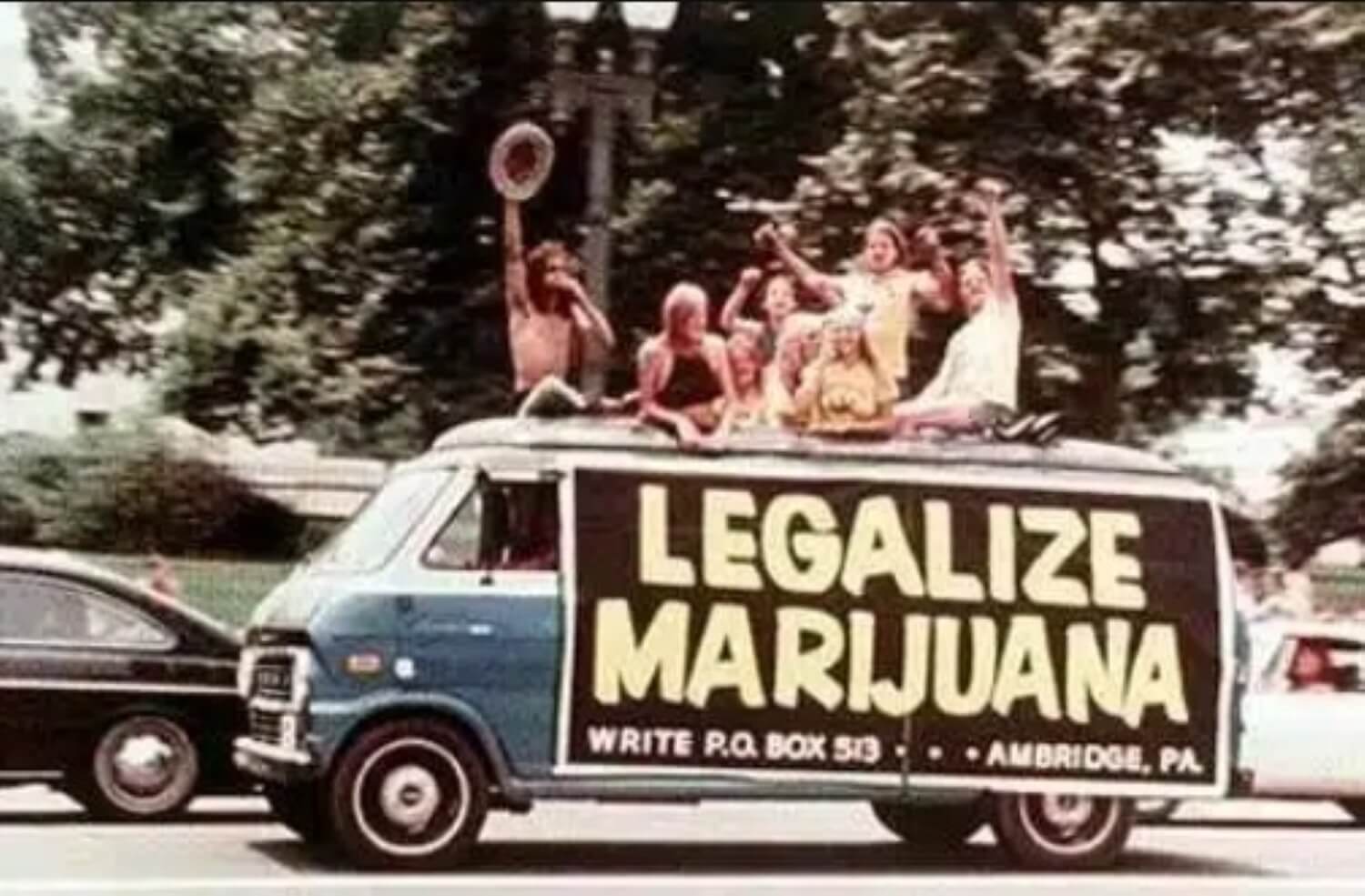
Since its earliest days, drug prohibition has rested on a mix of arguments ranging from moral and religious concerns to public health and safety. Few people today know that the strict legislation we have now was consolidated through the influence of ethical and religious movements, backed by the American press and political rhetoric.
As Antonio Escohotado showed in his Historia general de las drogas (General History of Drugs), it has not always been this way. Over the centuries, the perception and regulation of drugs have varied enormously, from their place in religious and cultural practices in ancient times to the imposition of prohibitionist laws in the modern era. This paradigm shift reflects how societies have evolved and the different ways of understanding individual freedoms. In this context, exploring the motives behind prohibition and its consequences is essential to understanding the complex web of today’s drug policies.
The repression of drug use has led to the criminalisation of users and the rise of drug trafficking as a global phenomenon. Prohibitionist legislation creates a black market that has only increased violence and organised crime in many countries. Today, the situation in places such as the United States is alarming. The fentanyl crisis, the result both of irresponsible medical use and of other street drugs being cut with this substance on the black market, means that headlines like this one from the BBC are, sadly, a reality: “The fentanyl crisis that has led a US city to declare a state of emergency” (Matza, 2024).
Worship: drugs in antiquity
It is worth remembering that in antiquity, and until the early 20th century, illicit substances were not subject to the restrictions and prohibitions we all take for granted today. In many ancient cultures, taking psychoactive substances was part of religious and ceremonial practice, seen as a way to connect with the divine or to explore consciousness with the help of shamans.
Greece
In ancient Greece, for example, wine played a central role. It was praised for its social and spiritual qualities and considered a link with the divine, a means of reaching euphoria and inspiration. It was associated with the celebrations and worship of Dionysus, the god of wine and fertility.

In the Eleusinian Mysteries, the most famous of the ancient world, initiates drank kykeon, a sacred drink which, contaminated with a precursor of LSD, brought about a transcendent religious experience in honour of Demeter and Persephone. It was an experience reserved for initiates and it happened only once in a lifetime. Figures of the stature of Socrates, Aristotle and Alexander the Great went through this rite, about which strict secrecy had to be kept: “The candidates for initiation swore on their lives to keep the details of the experience absolutely secret, and so they did” (Escohotado, 1998).

India
In ancient India, meanwhile, cannabis was used in religious and medicinal contexts. The cannabis plant, known as “bhang” in the Vedic texts, was considered sacred and was used in religious rituals to induce altered states of consciousness.
Rome
Even in the Roman Empire, the use of drugs such as opium and cannabis was not subject to the legal restrictions it faces today. These substances were used for medicinal and recreational purposes and were an integral part of many people’s daily lives. We know for certain that there were opium shops open to any citizen, and opium was also one of the goods on which speculation was forbidden. Curiously, as Antonio Escohotado points out in Historia general de las drogas (1998), there is no Latin word for an opium addict.

It is also interesting that, while opium was common, something as widely consumed today as alcohol was drunk in much smaller quantities in ancient Rome. We all picture the Roman emperor with his grapes and wine, or gladiators drinking before battle, but not everyone knows that the wine they drank was heavily watered down, which is in stark contrast to the way we drink alcohol today.

Prohibition: the rise of the crusade
Legislation
Historically, the prohibitionist story begins with the rise of moral and religious movements in the United States in the late 19th and early 20th centuries, which called for abstinence from alcohol and any other psychoactive substance. This movement, known as the Temperance Movement, gathered strength and led to Prohibition in 1919, which banned the manufacture, distribution and sale of alcohol in the United States.

This measure soon proved to be a failed experiment. Instead of reducing alcohol consumption, it fuelled the creation of a black market controlled by criminal gangs and increased the violence linked to the illegal drinks trade. The ban on alcohol also had devastating economic effects, especially during the Great Depression.


As Prohibition came to an end in 1933, the prohibitionist focus shifted to other drugs, such as cannabis, cocaine and opium. Cannabis in particular was the target of a demonisation campaign led by figures such as Harry Anslinger and Presidents Nixon and Reagan, who linked it to violence and crime, as well as to racist stereotypes.
International concern about drug trafficking led to the 1961 Single Convention on Narcotic Drugs, signed in New York, which established a single global framework for international drug control. These conventions, driven in part by the United States, laid down the body of the prohibitionist crusade, focusing on reducing supply and criminalising drug use, and so filling prisons with people who had committed no violent crime.
The 20th-century counterculture
During the 20th century, movements emerged that challenged existing drug policies, especially in the 1960s and 1970s. This period saw a resurgence in the use of psychoactive substances, which became part of counterculture and social protest movements. These substances became symbols of rebellion against established norms and vehicles for exploring consciousness and spirituality.
Opposition to the Vietnam War was a major catalyst for the hippie movement in the United States. Young people firmly opposed the war, seeing it as a sign of their government’s marked authoritarianism. Drugs, particularly LSD and cannabis, were taken up as tools of rebellion and civil disobedience, promoting a message of peace and love in contrast to violence and armed conflict.


The peace movement embraced an alternative lifestyle that rejected traditional values and stood for peace, individual freedom and a connection with nature. Iconic festivals such as Woodstock in 1969 became the epicentres of this new culture, where music, art and psychedelic drugs merged to create unique LSD-fuelled experiences shared by huge crowds.


As psychoactive drugs became more prominent in popular culture, they also caught the attention of lawmakers and the authorities. LSD experiments funded by the US government, such as the CIA’s Project MK-Ultra – run between 1953 and 1973 – were an attempt to understand and control the drug’s effects for military and intelligence purposes. These trials, which included giving hallucinogenic drugs such as LSD or MDMA to people without their consent, were a complete failure and led to the substance being unfairly stigmatised by the scientific community as having no medical value whatsoever.

In this context, the creation of the DEA (Drug Enforcement Administration) in 1973 under President Richard Nixon was no mere coincidence. The agency was a direct response to the growing influence of the counterculture and to the rise in drug use that was challenging traditional prohibitionist policies.
The end of the crusade: new regulations
Fortunately, as Antonio Escohotado foresaw, the crusade seems to be over. One of the leading countries on the continent, Germany, liberalised recreational cannabis use in 2024. In Latin America, Uruguay led the way by legalising the production and sale of cannabis in 2013, in defiance of international agreements. In a knock-on effect, other countries in the region, such as Chile and Argentina, have followed its example by authorising the medicinal use of cannabis and easing the pressure on the use and possession of other drugs. In the United States, although cannabis is still illegal at federal level, which inevitably creates tensions, several states have moved towards legalising recreational cannabis, contradicting federal policy and setting their own regulations. States such as Colorado, Washington, Oregon, California and Alaska have already legalised the sale and possession of cannabis for both medicinal and recreational use, which has opened up a new source of revenue for the public purse.
New European drug legislation is allowing clinical trials with substances such as MDMA and psilocybin for the treatment of mental disorders such as depression and post-traumatic stress, among other conditions.
Even more striking is the Canadian case. In 2023 the province of British Columbia launched a three-year pilot project under which, although hard drugs remained illegal, adults found in possession of less than 2.5 grams of any of the controlled substances did not have them seized and were not charged or arrested. The provincial government decided not to extend it, and it ended on 31 January 2026.
These moves reflect a shift towards a more scientific and less punitive approach to drug policy. Despite progress towards more flexible and innovative policies, there are still concerns about rising drug use in countries such as China and Russia, which continue to exert prohibitionist pressure internationally.
Conclusion
In short, the evolution of drug policy from antiquity to the present day reveals a drastic change in how psychoactive substances are perceived and regulated. While in the past they were part of cultural and religious practices, the 20th century saw a prohibitionist boom that criminalised their use and fuelled drug trafficking and violence.
Today, however, we are witnessing a paradigm shift, with several countries moving towards legalisation and regulation, questioning the restrictive policies of the past and seeking a more balanced and humane approach for the future.
Jorge Melero and Jorge Escohotado (Los Emboscados)
To find out more about the subject, we recommend reading Antonio Escohotado:

Bibliography
- Escohotado, A., (1998) Historia general de las drogas, Madrid: Espasa.
- Matza, M. (2024) The fentanyl crisis that has led a US city to declare a state of emergency, Seattle: BBC