History of pharmaceuticals: from drugs to medicines

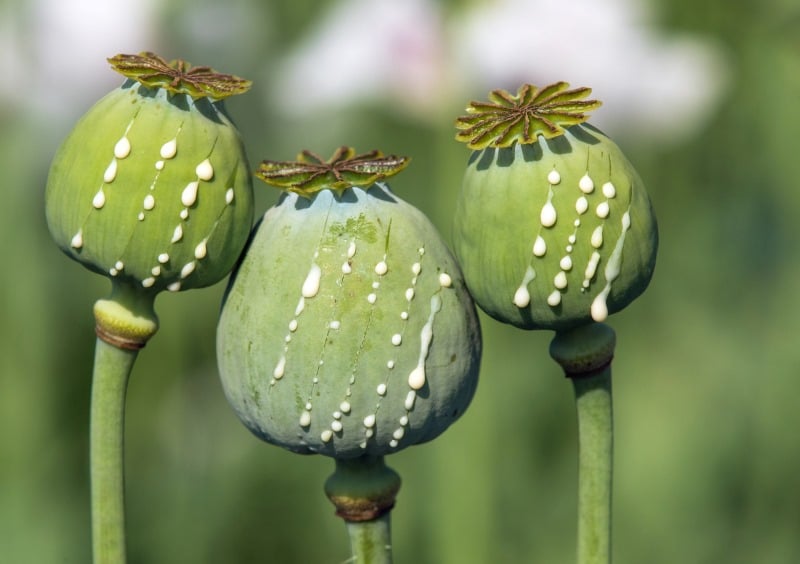
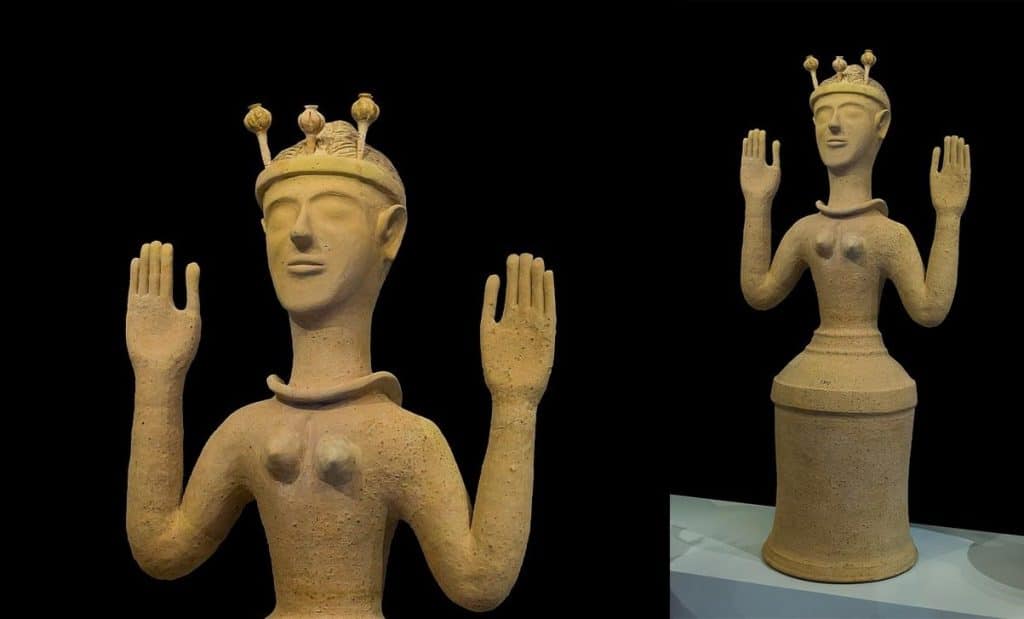
Since ancient times, plants such as cannabis, the opium poppy and mandrake have played crucial roles in traditional medicine as well as in religious rituals and cultural practices. These plants, regarded at different times as remedies or poisons, reflect the complex relationship that humankind has had with the natural world and its resources.
Today on the Cannactiva blog we welcome Jorge Melero and Jorge Escohotado, partners in La Emboscadura, the publishing house devoted to the work of Antonio Escohotado, the celebrated author of The General History of Drugs, to talk about the concept of Phármakon.
The concept of the drug: the meaning of Phármakon
The concept of the drug has evolved significantly throughout history, adapting to changing cultural and scientific perceptions.
Originally, the Greek word phármakon encapsulated an inherent duality: remedy and poison, a meaning that goes beyond the mere categorisation of substances. As we move through history, from the early treatises of Hippocrates to modern interpretations, we find that the notion of the drug has always been tied to an understanding of its contextual and dose-dependent effects. This semantic and functional complexity reflects the deep interconnection between medicine, philosophy and sociology, and shows how the words we use to describe drugs can influence our perceptions and experiences of their effects.

Drug or medicine: the impact of language on perception
Perhaps the eternal philosophical question lies in understanding whether concepts shape our perception or are merely symbols that give it a name.
The Sapir-Whorf hypothesis (Parra, 1988) tells us that language completely shapes your perception of reality. According to the classic example, now much disputed by linguists, some Inuit peoples have many words for different kinds of snow, so they would distinguish varieties that other humans do not perceive. This is especially interesting when it comes to pharmacology: can the term you give a drug change the effects it has on you? Do your beliefs end up shaping part of reality?
This is certainly a complex question; however, the use of placebos in clinical trials of medicines shows us that how you conceive of the substance you take does have a direct impact on the effect it has on you. We must therefore ask ourselves whether the terminology used, in this case drug or medicine, can have a direct effect on the user, and whether the stereotypes we directly associate with each substance end up shaping its reality.
Origin and etymology of the word fármaco
The Spanish word fármaco (drug) is currently defined by the RAE, the Royal Spanish Academy, as: “A medicine made with a specific molecule”, while the word medicamento (medicine) is defined as: “A substance which, administered internally or externally to an animal organism, serves to prevent, cure or relieve disease and to correct or repair its after-effects”. So only substances that are made with a specific molecule and aim to relieve a disease count as fármacos.
However, its origins lie in the Greek word phármakon, whose meaning is far broader: “The Greek word phármakon has the double meaning of poison and remedy, a single word for giving life and for giving death” (López, 2021, p. 1). If we turn to the dictionary, we can see how this word has been stripped of part of its meaning:
Fármaco is a polysemous word; its grammatical gender is neuter and it can mean both remedy and poison; intoxicating drink, philtre; or even spell, magical operation. (...) (phármakon): remedy, medicine, medicinal drug [potion, powders, ointment]; poisonous drug, poison; magic drug or potion, draught, philtre; magical operation, enchantment; fig. secret means or resource (Pabón, 2014, p. 617).
We can even look more deeply into its etymology: “it is a compound term, with a first part meaning ‘to carry over’ and a second meaning ‘power’. In that case, a fármaco would be ‘[that which] has the power to carry away [impurities]’” (Escohotado, 1998, p. 28).
Indeed, until Hippocrates, “any simple or compound body capable of altering the mood” was perceived as magical (Escohotado, 1998, p. 28).
So we may well ask: were the Greeks so ignorant that they could not tell a remedy from a poison? We would certainly have to be very naive to accept such a claim. As the physician and alchemist Paracelsus, considered the father of toxicology and famous for his important contributions to medicine, would say much later: “sola dosis facit venenum”, or “only the dose makes the poison” (Escohotado, 1998, p. 80).
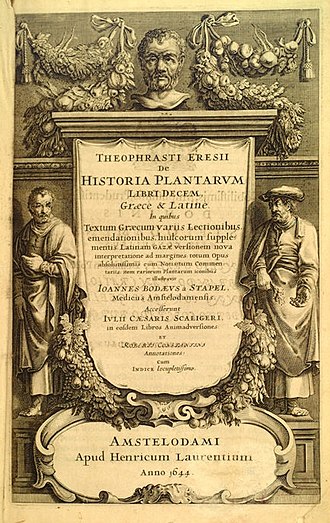
This is how the drug was viewed in ancient Greece where, far from attributing moral qualities such as good or bad to substances, it was clear that their usefulness lay in the quantities. It is common knowledge that even something as essential to life as water could end up causing death if more were ingested than the body can withstand. In the first treatise on botany, written in the 4th century BC, Enquiry into Plants, Theophrastus, who curiously lived to the age of 85, something unusual at the time, states the following:
One drachm is given if the patient is simply to be cheered up and think well of himself; twice that dose if he is to become delirious and suffer hallucinations; three times if he is to be left permanently mad; a fourfold dose is given if the man is to be killed (1988).
Philosophy and ethics in the use of medicinal substances
The scientific conception of the substance allowed for its use for multiple purposes depending on its proportions; however, to accept this reading of the pharmakon as the only one would be to fall into a superficial analysis of the term.
In Plato, for example, we find an approach that goes further:
It must be understood, in fact, that Plato distrusts the pharmakon in general, even when it comes to drugs used for exclusively therapeutic purposes, even when they are used with good intentions, as is the case with medicine, and even if they are effective as such, as is the case with psychiatric drugs. There is no harmless remedy; the pharmakon can never be simply beneficial (Derrida, 1975, p. 110).
Remedy and poison, cure and harm, are intertwined in such a way that any attempt to use the pharmakon inevitably involves an inherent risk and therefore calls for considerable ethical responsibility. Curiously, pharmakós, a word very similar to pharmakon, means scapegoat in Greek:
It is most remarkable that the Greek word for drug is phármakon, and that pharmakós – changing only the final letter and the accent – means scapegoat. Far from being a mere coincidence, this shows the extent to which medicine, religion and magic were inseparable at the outset (Escohotado, 2018, p. 14).
According to the RAE, a scapegoat is nothing other than: “A person on whom the blame for others is laid in order to exonerate the real culprits”. In other words, a whipping boy who takes responsibility for actions they did not commit.
This may apply to illicit drugs, which have burdens placed on their shoulders that are not theirs to bear: as we pointed out above, substances do not appear to be good or bad in themselves and do not deserve to be demonised or vilified; rather, it is their use, and above all their abuse, that determines the effect they have on the user.
Hippocrates and the rationalisation of medicine: separating magic from science
If we go back to the dawn of scientific medicine, the Hippocratic Corpus (Hippocrates, 1987) draws the line between practices devoted to healing and those devoted to doing harm, and more specifically it separates this discipline from techniques based on healing through harm to others, such as the use of sacrifices. It does away with the scapegoat of the pharmakós and rightly gives the power to the phármakon, establishing a rational approach based on experimentation and a thorough knowledge of medicines:
By separating his practice from magic and religion, the Hippocratic physician denies validity to any cure based on a symbolic transfer of evil from one person to another, thus breaking with the institution of the scapegoat. Instead of using some pharmakós or goat to absorb the impurity of others, the new medicine will use the appropriate phármakon or drug. (Escohotado, 2018, p. 26).
Nor do we find in the treatises of Hippocrates any distinction between pharmaceutical and drug; Hippocrates says that “drugs are substances that act by cooling, heating, drying, moistening, contracting and relaxing, or inducing sleep” (Hippocrates, 1987, p. 246).
The evolution of pharmacology: from Theophrastus to modern euthanasia
Theophrastus’ Enquiry into Plants (1988), mentioned above, offers an early list of experts who worked professionally in pharmacology (Escohotado, 1998), and tells us that almost every region at the time produced drugs to a greater or lesser extent. Here, too, there is no linguistic difference that distinguishes drug from medicine.
It is worth highlighting the concept of drug tolerance, introduced, according to Theophrastus, by Thrasyas of Mantinea and his disciple Alexias, who were pioneers in formulating, at a conceptual level, the individual differences in how drugs are assimilated:
The virtues of all drugs grow weaker for those who become accustomed to them, until in some cases they become completely ineffective... For it seems that some drugs are toxic owing to lack of familiarity, and perhaps it would be a more accurate way of speaking to say that familiarity takes the poison out of drugs, for they cease to be toxic once the constitution has accepted them and prevails over them, as Thrasyas observed; for he said that the same thing was a drug for one person and not for another, distinguishing between different constitutions, and he observed the difference shrewdly. (Theophrastus, 1988, p. 17).
In this society, habituation was not seen as a problem but as a positive adaptation that allowed individuals to live alongside substances without suffering their negative effects. Thrasyas was also known for discovering a gentle euthanasic, capable of bringing about an easy and painless death, which shows an advanced and humane approach to the use of drugs.
Spain seems to have rediscovered this approach in recent times through laws such as Organic Law 3/2021 of 24 March on the regulation of euthanasia, which opened up the possibility of deciding autonomously on the application of euthanasia, a right that some consider fundamental while others reject it. Today the subject is not without controversy, and problems arise such as conscientious objection on the part of many doctors when it comes to carrying out these practices. The interpretation of the Hippocratic Oath is essential here: perhaps both points of view can be considered humanist, but the key lies in determining whether harm is being done to the patient or, on the contrary, good.

Conclusion
In conclusion, the evolution of the concept of the phármakon over the centuries shows us the complexity and ambiguity inherent in the nature of drugs.
From ancient Greece to the present day, we have seen how these substances have been interpreted and reinterpreted according to cultural, philosophical and medical contexts. The original duality of the Greek term, encompassing both remedy and poison, is still relevant today, especially when we consider the impact of placebos and the importance of the user’s perception.
This semantic and practical evolution of the concept of the drug underlines the need for a nuanced and critical understanding, one that recognises not only the chemical effects of substances but also the power of the words and beliefs that surround them.
Jorge Melero and Jorge Escohotado (Los Emboscados), Madrid, 28 December 2024
References
- Carod-Artal, F. J. (2013). Plantas psicoactivas en la antigua Grecia [Psychoactive plants in ancient Greece]. Neurosciences and History, 1(1), 28-38.
- Derrida, J. (1975). La farmacia de Platón [Plato’s pharmacy]. In La diseminación. Editorial Fundamentos. D’Ors, A. (1975). El digesto de Justiniano [The Digest of Justinian]. Editorial Aranzadi.
- Escohotado, A. (1998). Historia general de las drogas [The general history of drugs]. Espasa.
- Hegel, G.W. (1978). Escritos de Juventud [Early writings]. Fondo de Cultura Económica.
- Hippocrates. (1987). Tratados hipocráticos [Hippocratic treatises]. (García, C., Trans.). Editorial Gredos. (Original work published in the late 5th century BC).
- Hofmann, A., Wasson, R.G., Ruck, C. (2013). El camino a Eleusis. Una solución al enigma de los misterios [The road to Eleusis: unveiling the secret of the mysteries]. Fondo de cultura económica.
- Homer. (2001). Himno homérico a Deméter [Homeric Hymn to Demeter]. (Torres-Guerra, J.B., Trans.). Eunsa ediciones. (Original work published in the 7th century BC).
- Lewin, L. (1970). Phantastica. Payot.
- López, H. (2021). Las drogas en la farmacia de Platón [Drugs in Plato’s pharmacy]. El Hormiguero. Psicoanálisis, infancia/a y adolescencia/s. Retrieved from: https://revele.uncoma.edu.ar/index.php/psicohormiguero/article/view/3318
- Martín-Gutierrez, I. (2008). Los misterios de Eleusis [The mysteries of Eleusis]. Cannabis magazine, 39, 70-73.
- Nilsson, M.P. (1969). Historia de la religiosidad griega [A history of Greek religion]. Editorial Gredos.
- Pabón, J.M. (2014). Diccionario manual griego. Griego clásico-español [Concise Greek dictionary: Classical Greek–Spanish]. Vox Lenguas clásicas, p. 617.
- Parra, M. (1988). La hipótesis Sapir-Whorf [The Sapir-Whorf hypothesis]. Forma y Función, (3), 9-16. Retrieved from: https://revistas.unal.edu.co/index.php/formayfuncion/article/view/29488
- Plato. (2014). Las leyes [The Laws]. (Pabón, J.M., Trans.). Alianza editorial. (Original work published around 348 BC).
- Rodríguez, J.M. and Balma, Q. (2012). Las plantas y los hongos alucinógenos: reflexiones preliminares sobre su rol en la evolución humana [Hallucinogenic plants and fungi: preliminary reflections on their role in human evolution]. Reflexiones, 91(2), 9-32.
- Theophrastus. (1988). Historia de las plantas [Enquiry into plants]. (Díaz-Regañón, J.M., Trans.). Biblioteca clásica Gredos, 112. (Original work published around the 4th century BC).