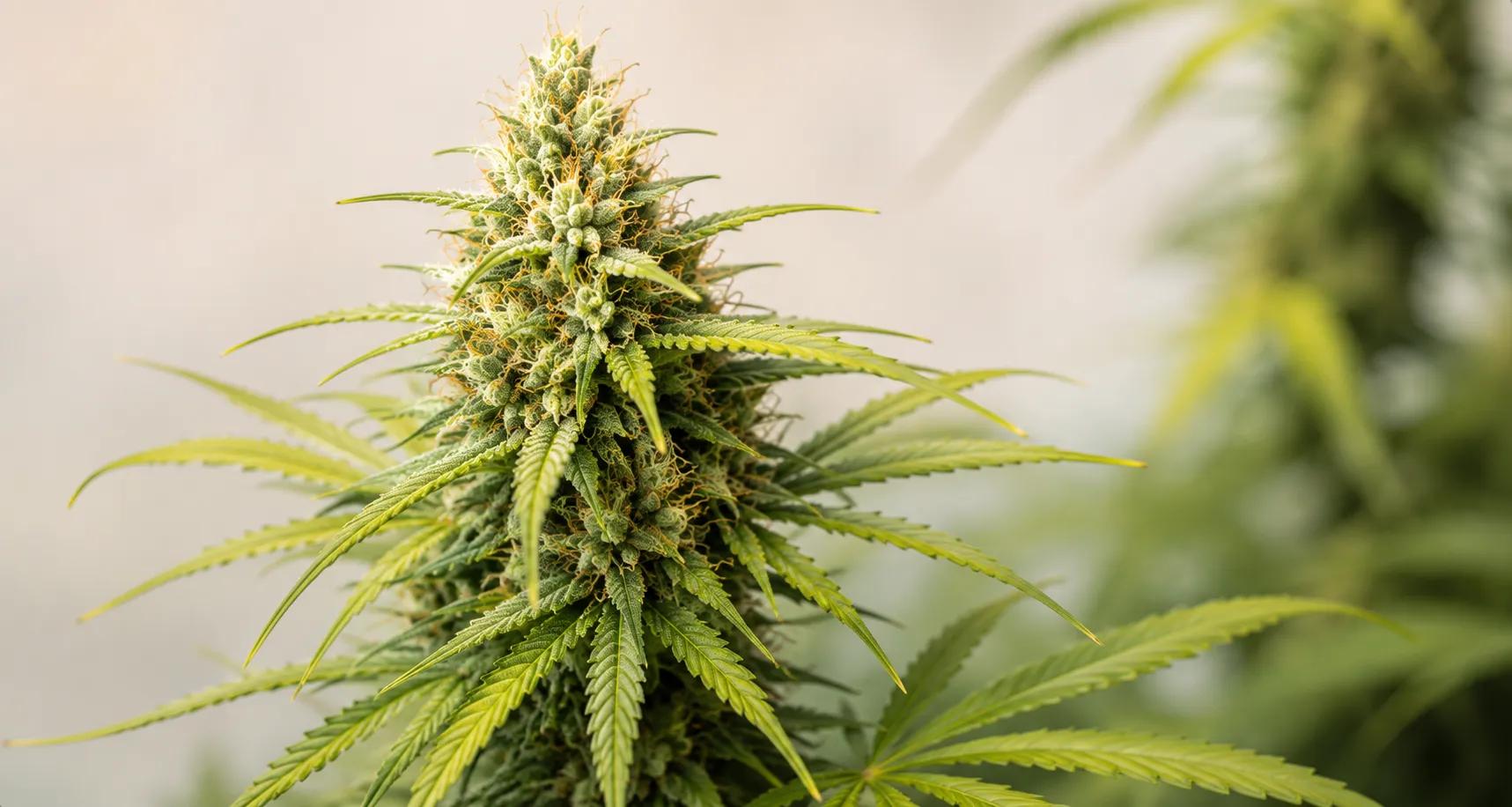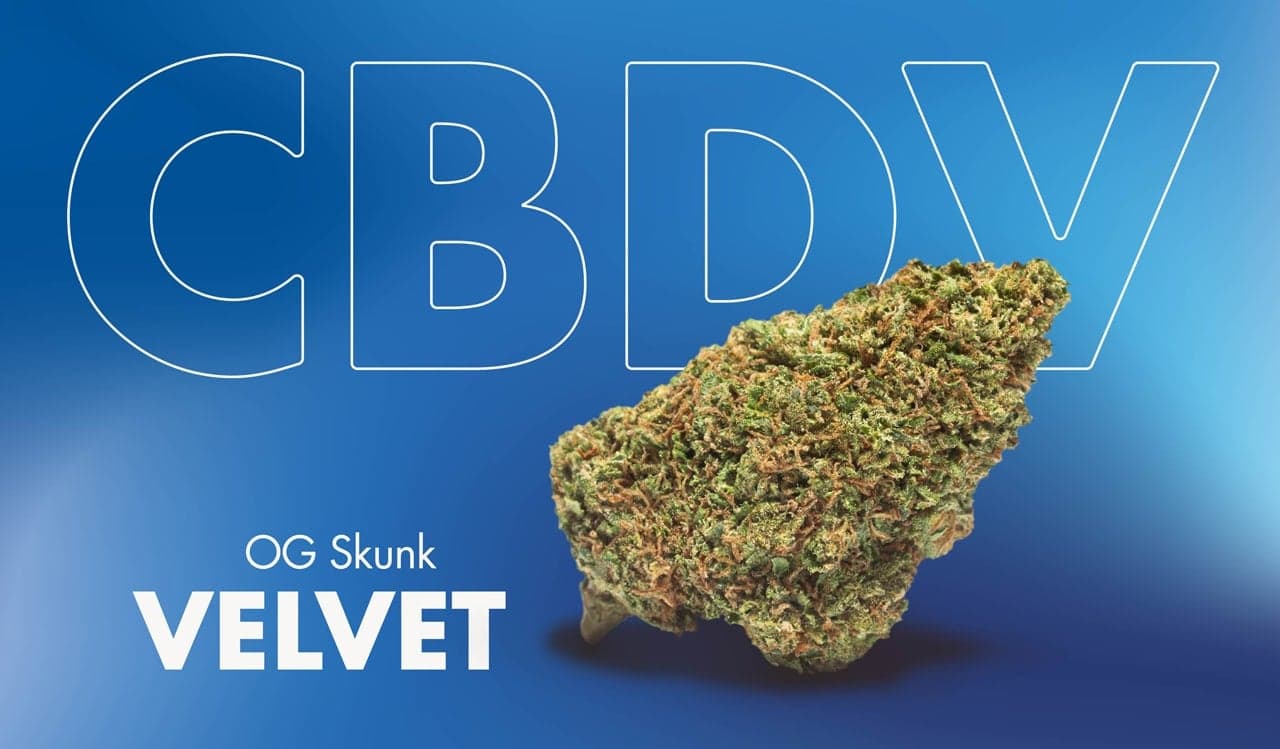
CBDV is a non-psychoactive cannabinoid found naturally in cannabis flowers. Its properties are similar to those of CBD (cannabidiol). You can find high amounts of CBDV in Cannactiva's exclusive CBD + CBDV VELVET flower. CBDV is currently attracting the attention of a number of researchers. Here we describe what has been studied about CBDV, where it comes from, its potential benefits, possible therapeutic applications and its current legal status.
Meet Cannactiva's new CBDV VELVET flower
What is CBDV?
Cannabidivarin or CBDV is a type of cannabinoid found naturally in the Cannabis sativa plant. Like CBD, CBDV has no psychoactive effect, and it is being studied for a wide range of possible therapeutic applications.
CBDV is an analogue of CBD, which means that their molecular structures are very similar. These similarities between CBDV and CBD give it non-psychoactive properties and potential benefits for treating health conditions.

Because CBDV is an analogue of CBD, it produces similar therapeutic effects. However, CBDV has stood out in research and differs from CBD in its remarkable results, with positive effects in treating symptoms related to autism (3), muscular dystrophy (4) and epilepsy (5).
Origin and synthesis of CBDV
CBDV was identified in the 1970s (1), but it was not until the 2010s that it began to attract the attention of scientists and doctors. CBDV is formed, or biosynthesised, in the trichomes of the cannabis plant, which are like tiny resin-filled, mushroom-shaped structures that coat the flowers and leaves of the plant, especially the unfertilised female flowers, which are the cannabis buds.

CBDV is produced from CBGVA (cannabigerovarinic acid). Together with CBGA (cannabigerolic acid), they are the main cannabinoid precursors in the cannabis plant, from which the other cannabinoids are derived.
While CBGA is the precursor of the best-known cannabinoids, namely THC (tetrahydrocannabinol), CBD (cannabidiol) and CBC (cannabichromene), CBGVA gives rise to the varinic cannabinoids, such as THCV (tetrahydrocannabivarin), CBCV (cannabichromevarin) and the star of today's post, CBDV, in its acid form.
Although most products on the market obtain or isolate CBDV from the cannabis plant, processes have begun to be developed to produce it synthetically from divarinol, an analogue of olivetol (2).
Differences between CBDV, CBD and THC
CBDV is very similar to CBD and, unlike THC (tetrahydrocannabinol), it does not produce the psychoactive effect characteristic of THC; in other words, CBDV does not get you high.

Properties and effects of CBDV
CBDV shares certain properties with CBD, for example its possible anti-inflammatory, analgesic and anticonvulsant effects.
CBDV has anti-inflammatory, analgesic and anticonvulsant properties. It is also being researched for the treatment of neurological disorders and nausea.
On the other hand, in recent studies, CBDV has shown promise in the treatment of neurological disorders, as an anti-nausea agent, and for its relevance to bone health.
CBDV and the endocannabinoid system
It has been demonstrated in the laboratory that the effects of CBDV can be therapeutic due to its interaction with the endocannabinoid system (ECS). CBDV shows a low binding affinity for the CB1 and CB2 receptors of the endocannabinoid system (6), but it has been suggested that it binds more effectively to CB2 receptors (7).
As with CBD, CBDV also has the ability to bind to other receptors that are related to pain perception, such as TRP cation channels (8) and GPR55 receptors (9), which are predominantly present in the central nervous system and the immune system (10). Through modulation of these receptors:
CBDV may have an impact on physiological processes linked to pain, inflammation and neurological functions.
Potential benefits and therapeutic applications of CBDV
The effects of CBDV occur in different organs and systems of the body. Below, we summarise the most relevant ones, according to studies carried out by various research groups.
We remind you that the purpose of this article is informative and is not intended to diagnose, prevent or cure any disease or symptom. Its content can complement, but never replace, the diagnosis or treatment of any disease or symptom. Cannactiva products are not medicines and are intended for external use. We recommend that you consult a health professional before using CBD products.
Autism
CBDV benefits neural circuitry by improving functional brain connectivity related to speech and language in patients with autism (13). The effect of CBDV in autism spectrum disorder has been surprising and distinguishes CBDV from other cannabinoids (14).

Nausea
CBDV has therapeutic potential for the treatment of nausea and vomiting. According to preclinical studies, it has been observed to have an antiemetic (anti-vomiting) and anti-nausea effect through indirect activation of certain serotonin receptors found in the central nervous system (16).
Epilepsy
The effects of CBDV in epilepsy appear to be promising (11). In one study, CBDV showed a reduction of up to 40% in focal seizures in patients with epilepsy, but the result was attributed to the patients' expectations of cannabinoid treatment, since it was not very different from the reduction observed in patients who received a placebo (12). The effectiveness of CBDV for epilepsy is therefore still being researched.
Muscular dystrophy
One of the benefits of CBDV is the reduction of chronic muscle inflammation present in conditions such as Duchenne muscular dystrophy (4). Although this was tested in an animal model, it certainly lays the groundwork for a potential effect of CBDV.
Bone disorders
Although more research is needed, it is possible that the effects of CBDV may help in some bone disorders, as it may modulate bone nodule formation and collagen production (15).
Treatment of gonorrhoea
It appears that one benefit of CBDV could lie in the treatment of gonorrhoea, as consistent results have been shown in treating the drug-resistant bacterium responsible for this disease (Neisseria gonorrhoeae) (17). Although the research is still at an early stage, it seems that CBDV may help in the treatment of this disease.
CBDV, by interacting with the endocannabinoid system and other receptors related to pain and neurological functions, offers therapeutic potential in the treatment of conditions such as epilepsy, muscular dystrophy, autism, bone disorders and drug-resistant gonorrhoea.
Research indicates that CBDV could be a complementary therapy for people suffering from some medical conditions. However, we should not forget that these are preliminary results and that more clinical studies are needed to ensure the efficacy and safety of CBDV.
How is CBDV taken?
CBDV products are very varied. This cannabinoid can be present in tinctures, capsules, oils and full-spectrum topical cannabis products. At Cannactiva you can find this cannabinoid in CBD oils as well as in some of our CBD flower.
In general, products containing high amounts of CBDV come from cannabis strains that have been selectively bred to produce a higher concentration of CBDV.
Although synthetically sourced CBDV products are not very widespread, it is advisable to look into the source and quality of any CBDV product.
CBDV dosage
There is currently no dosing protocol for taking CBDV. Studies on epilepsy have used oral CBDV doses of 400 to 800 mg twice a day (12), or CBDV doses of 10 mg/kg per day (18). In addition, studies on autism have used oral CBDV doses of 600 mg (13) per day.
Clinical studies have mostly used the oral route; however, CBDV can also be administered sublingually or topically. Other routes of administration could result in different blood concentrations and, therefore, different effects of CBDV.
Side effects of CBDV
To date, the side effects of CBDV have been very limited and it appears to have a relatively broad safety profile.
Common side effects or risks of CBDV may include mild gastrointestinal discomfort, fatigue or changes in appetite.
So far, CBDV has not been shown to be toxic, and more research is needed to understand its long-term effects.
Legal status and regulation of CBDV
The legality of CBDV varies around the world, mainly because of the restricted legal status of cannabis in some parts of the world.
In general, CBDV has stayed off the legal radar, as it is a non-psychotropic cannabinoid found in low proportions in cannabis. To date, it is not considered illegal in most European countries. However, in European countries its use in food products is not yet authorised, so for the time being it cannot be found in supplements, cannabis gummies or any other type of food.
CBDV regulations revolve around existing cannabinoid regulations, which in some countries tend to be clearer for CBD or THC, and this could leave cannabinoids such as CBDV in a legal “limbo”.
Due to its lack of psychoactive activity, CBDV is usually legal in countries where the use of CBD is permitted, as legality tends to be influenced first by psychotropic activity and then by evidence of therapeutic effectiveness.
Conclusion
In conclusion, CBDV is a unique cannabinoid that looks very promising for therapeutic applications and could perhaps be even more attractive than other cannabinoids in a few years. The cannabis plant remains a world from which incredible compounds continue to be obtained that surprise the scientific and medical community, as their scope can benefit the future of health.
This article is intended for informational purposes only and is not intended to diagnose, prevent or cure any disease or symptom. Its content can complement, but never replace, the diagnosis or treatment of any disease or symptom. Cannactiva products are not medicines and are intended for external use. We recommend that you consult a health professional before using CBD products.
References
- Merkus F. W. (1971). Cannabivarin and tetrahydrocannabivarin, two new constituents of hashish. Nature, 232(5312), 579–580. https://doi.org/10.1038/232579a0
- Chiurchiù, E., Sampaolesi, S., Allegrini, P., Ciceri, D., Ballini, R., & Palmieri, A. (2021). A Novel and Practical Continuous Flow Chemical Synthesis of Cannabidiol (CBD) and its CBDV and CBDB Analogues. European Journal of Organic Chemistry. (8), p. 1286-1289, https://doi.org/10.1002/ejoc.202001633
- Zamberletti, E., Gabaglio, M., Woolley-Roberts, M., Bingham, S., Rubino, T., & Parolaro, D. (2019). Cannabidivarin Treatment Ameliorates Autism-Like Behaviors and Restores Hippocampal Endocannabinoid System and Glia Alterations Induced by Prenatal Valproic Acid Exposure in Rats. Frontiers in cellular neuroscience, 13, 367. https://doi.org/10.3389/fncel.2019.00367
- Iannotti, F. A., Pagano, E., Moriello, A. S., Alvino, F. G., Sorrentino, N. C., D’Orsi, L., Gazzerro, E., Capasso, R., De Leonibus, E., De Petrocellis, L., & Di Marzo, V. (2019). Effects of non-euphoric plant cannabinoids on muscle quality and performance of dystrophic mdx mice. British journal of pharmacology, 176(10), 1568–1584. https://doi.org/10.1111/bph.14460
- Amada, N., Yamasaki, Y., Williams, C. M., & Whalley, B. J. (2013). Cannabidivarin (CBDV) suppresses pentylenetetrazole (PTZ)-induced increases in epilepsy-related gene expression. PeerJ, 1, e214. https://doi.org/10.7717/peerj.214
- Husni, A. S., McCurdy, C. R., Radwan, M. M., Ahmed, S. A., Slade, D., Ross, S. A., ElSohly, M. A., & Cutler, S. J. (2014). Evaluation of Phytocannabinoids from High Potency Cannabis sativa using In Vitro Bioassays to Determine Structure-Activity Relationships for Cannabinoid Receptor 1 and Cannabinoid Receptor 2. Medicinal chemistry research : an international journal for rapid communications on design and mechanisms of action of biologically active agents, 23(9), 4295–4300. https://doi.org/10.1007/s00044-014-0972-6
- Navarro, G., Varani, K., Lillo, A., Vincenzi, F., Rivas-Santisteban, R., Raïch, I., Reyes-Resina, I., Ferreiro-Vera, C., Borea, P. A., Sánchez de Medina, V., Nadal, X., & Franco, R. (2020). Pharmacological data of cannabidiol- and cannabigerol-type phytocannabinoids acting on cannabinoid CB1, CB2 and CB1/CB2 heteromer receptors. Pharmacological research, 159, 104940. https://doi.org/10.1016/j.phrs.2020.104940
- De Petrocellis, L., Starowicz, K., Moriello, A. S., Vivese, M., Orlando, P., & Di Marzo, V. (2007). Regulation of transient receptor potential channels of melastatin type 8 (TRPM8): effect of cAMP, cannabinoid CB(1) receptors and endovanilloids. Experimental cell research, 313(9), 1911–1920. https://doi.org/10.1016/j.yexcr.2007.01.008
- Anavi-Goffer, S., Baillie, G., Irving, A. J., Gertsch, J., Greig, I. R., Pertwee, R. G., & Ross, R. A. (2012). Modulation of L-α-lysophosphatidylinositol/GPR55 mitogen-activated protein kinase (MAPK) signaling by cannabinoids. The Journal of biological chemistry, 287(1), 91–104. https://doi.org/10.1074/jbc.M111.296020
- Oyagawa, C. R. M., & Grimsey, N. L. (2021). Cannabinoid receptor CB1 and CB2 interacting proteins: Techniques, progress and perspectives. Methods in cell biology, 166, 83–132. https://doi.org/10.1016/bs.mcb.2021.06.011
- Perucca E. (2017). Cannabinoids in the Treatment of Epilepsy: Hard Evidence at Last?. Journal of Epilepsy Research, 7(2), 61–76. https://doi.org/10.14581/jer.17012
- Brodie, M. J., Czapinski, P., Pazdera, L., Sander, J. W., Toledo, M., Napoles, M., Sahebkar, F., Schreiber, A., & GWEP1330 Study Group (2021). A Phase 2 Randomized Controlled Trial of the Efficacy and Safety of Cannabidivarin as Add-on Therapy in Participants with Inadequately Controlled Focal Seizures. Cannabis and Cannabinoid Research, 6(6), 528–536. https://doi.org/10.1089/can.2020.0075
- Pretzsch, C. M., Floris, D. L., Voinescu, B., Elsahib, M., Mendez, M. A., Wichers, R., Ajram, L., Ivin, G., Heasman, M., Pretzsch, E., Williams, S., Murphy, D. G. M., Daly, E., & McAlonan, G. M. (2021). Modulation of striatal functional connectivity differences in adults with and without autism spectrum disorder in a single-dose randomized trial of cannabidivarin. Molecular autism, 12(1), 49. https://doi.org/10.1186/s13229-021-00454-6
- Zamberletti, E., Rubino, T., & Parolaro, D. (2021). Therapeutic potential of cannabidivarin for epilepsy and autism spectrum disorder. Pharmacology & therapeutics, 226, 107878. https://doi.org/10.1016/j.pharmthera.2021.107878
- Scutt, A., & Williamson, E. M. (2007). Cannabinoids stimulate fibroblastic colony formation by bone marrow cells indirectly via CB2 receptors. Calcified tissue international, 80(1), 50–59. https://doi.org/10.1007/s00223-006-0171-7
- Rock, E. M., Bolognini, D., Limebeer, C. L., Cascio, M. G., Anavi-Goffer, S., Fletcher, P. J., Mechoulam, R., Pertwee, R. G., & Parker, L. A. (2012). Cannabidiol, a non-psychotropic component of cannabis, attenuates vomiting and nausea-like behaviour via indirect agonism of 5-HT(1A) somatodendritic autoreceptors in the dorsal raphe nucleus. British journal of pharmacology, 165(8), 2620–2634. https://doi.org/10.1111/j.1476-5381.2011.01621.x
- Yang, F., Liu, J., Gu, Y., Jiao, R., Yan, J., Gao, S., Lin, X., & van der Veen, S. (2022). Antimicrobial Activity of Auranofin, Cannabidivarin, and Tolfenamic Acid against Multidrug-Resistant Neisseria gonorrhoeae. Microbiology spectrum, 10(6), e0395222. https://doi.org/10.1128/spectrum.03952-22
- Hurley, E. N., Ellaway, C. J., Johnson, A. M., Truong, L., Gordon, R., Galettis, P., Martin, J. H., & Lawson, J. A. (2022). Efficacy and safety of cannabidivarin treatment of epilepsy in girls with Rett syndrome: A phase 1 clinical trial. Epilepsia, 63(7), 1736–1747. https://doi.org/10.1111/epi.17247