How many cannabis strains have you seen tagged with Kush or Haze? They are the two great genetic families of cannabis, and the underlying difference is simple: Kush is Indica (short, sturdy plant, relaxing effect) and Haze is Sativa (tall, slender plant, energising effect). The vast majority of strains around today descend from them. If you're after top-quality CBD flower, take a look at our guide to the best CBD buds selected by Cannactiva.
In this article you'll see how Kush and Haze differ in their origin, genetics, appearance, aroma and effects, so you know which one suits you best.
What are Kush and Haze strains?
Kush and Haze are the two “mother” strains from which almost the entire modern cannabis catalogue stems. Most current strains are hybrids that combine, in varying proportions, the Indica heritage of the Kush and the Sativa heritage of the Haze. Here's the difference at a glance:
Characteristic | Kush | Haze |
|---|---|---|
Genetics | Indica | Sativa |
Origin | Hindu Kush (Afghanistan/Pakistan) | Tropical Sativas (California/Netherlands) |
Plant | Short and sturdy, bush-like | Tall and slender |
Leaf | Broad, dark green | Thin and elongated |
Bud | Dense and compact | Airy, less compact |
Aroma | Earthy, pine and spice | Citrusy, fresh and spicy |
Typical terpenes | Myrcene, limonene and caryophyllene | Terpinolene |
Effect | Relaxing (night) | Energising (day) |
Flowering | Short | Long |


What is Kush?
Kush is a family of cannabis strains traditionally considered indica, native to the Hindu Kush mountain range between Afghanistan and Pakistan, which gives it its name. It has grown wild there for centuries, in a cold, dry mountain climate that explains what it is like: short, sturdy plants, dense, resinous buds and an earthy, herbal and spicy aroma.
In the 1970s, during the days of the “hippie trail”, Western travellers took its seeds to the United States. Since then Kush has been the basis of countless breeding programmes, and its earthy profile is now the most widespread on the market.
Most famous Kush strains:
- OG Kush: the best known of them all, famous since Kush arrived in the United States. Intense aroma, with diesel, fruity and citrus notes.
- Bubba Kush: very dense buds and an earthy aroma, with sweet notes reminiscent of coffee and chocolate.
- Purple Kush: owes its name to the purple hues of its leaves and buds.
- Hindu Kush: the native strain of the mountain range, from which the others descend.
What is Haze?
Haze is a family of strains traditionally considered sativa, born in California in the late 1960s and the 1970s from crossing tropical sativas from places such as Colombia, Mexico, Thailand and southern India. They are tall, slender plants with a very long flowering time, and a very distinctive citrus, sweet and piney aroma that you recognise straight away.
In the 1980s, when it had almost disappeared in California, it reached the Netherlands, where seed banks stabilised it and turned it into the most influential sativa: today it appears in the family tree of a huge number of strains.
Most famous Haze strains:
- Amnesia Haze: one of the most award-winning sativas and a favourite in Amsterdam's coffee shops. We tell you all about it in Amnesia Haze.
- Super Silver Haze: a cross of Haze with Skunk and Northern Lights, one of the most award-winning Hazes at the Amsterdam Cannabis Cup.
- Purple Haze: a cross of Haze with Purple Thai, with purple hues and a sweet, floral aroma.
- Lemon Haze: one of the most citrusy Hazes, with an intense lemon aroma.
History and origin of Kush and Haze
The origin of each family explains what they are like today:
- Kush: comes from the Hindu Kush, the mountain range between Afghanistan and Pakistan. It is an Indica genetic line adapted to the mountains: short, hardy plants with a short flowering time. In the 1970s it reached the United States and its popularity soared.
- Haze: was born in California from crossing tropical Sativa strains. After almost disappearing in the 1980s, it reached the Netherlands, where seed banks established it as the most influential Sativa.
You can dig deeper into the effects and uses of Kush. Later genetic selection has sent the potency of cannabis soaring, as we explain in the evolution of cannabis.
Genetics and appearance: Indica (Kush) vs Sativa (Haze)
Appearance is the first thing that gives away a flower's genetics. Here you can clearly see the difference between Indica and Sativa, the two great branches of cannabis:
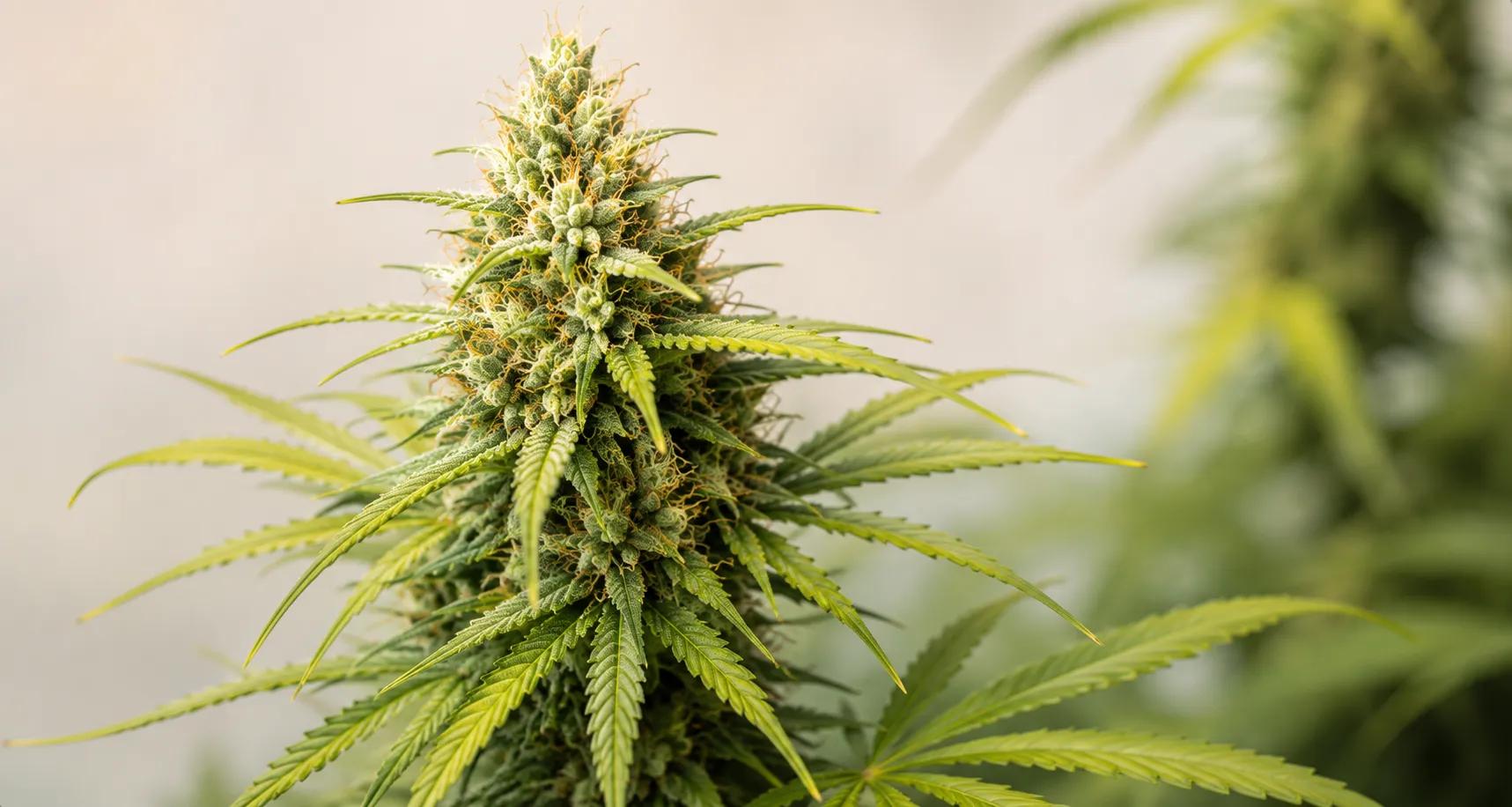
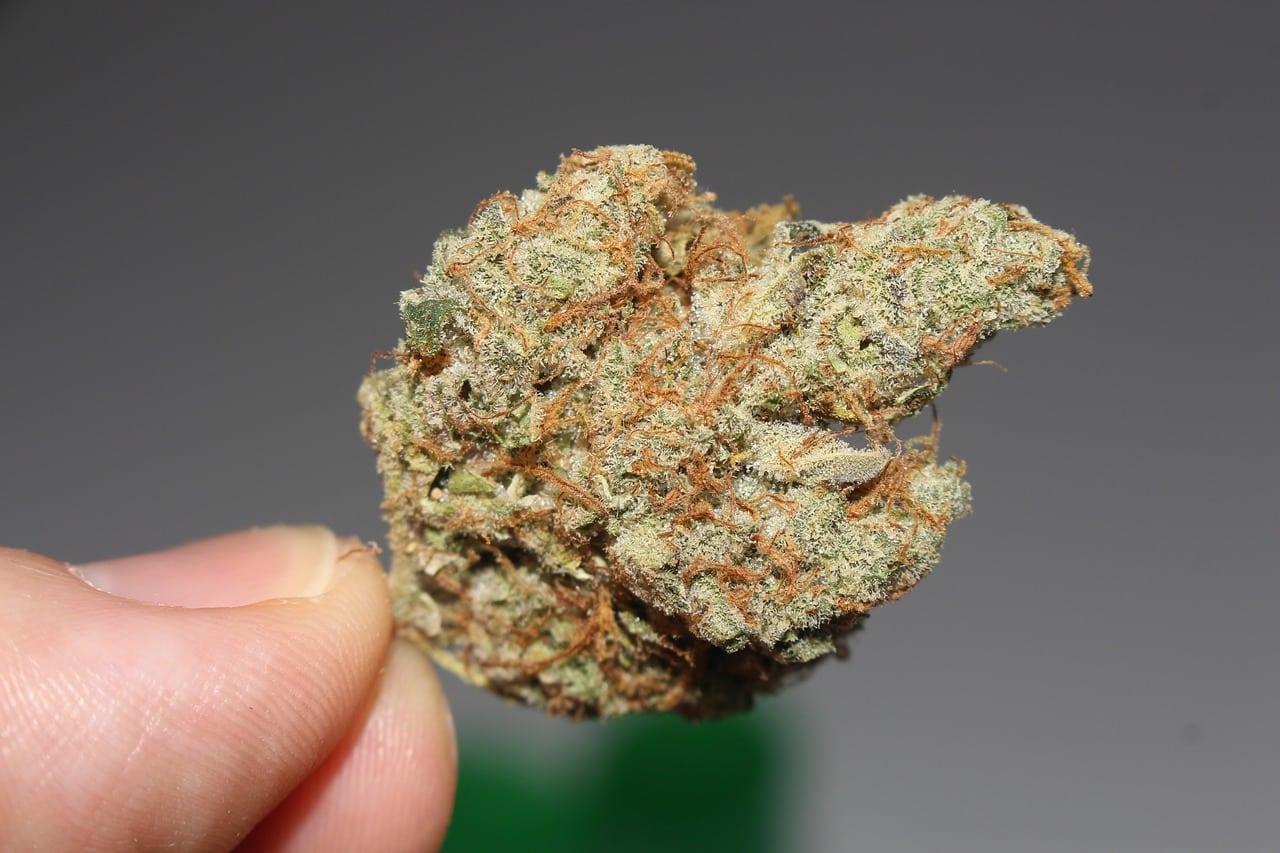
- Kush (Indica): a short, sturdy plant with a bush-like appearance. Broad, dark green leaves and dense, compact buds heavily covered in trichomes. Short flowering, a legacy of its mountain origin.
- Haze (Sativa): a tall, slender plant with thin, elongated leaves. Airier, less compact buds and a longer flowering time, typical of warm climates. Some Sativas can reach several metres in height.
With CBD you can enjoy the Indica character of Kush without any psychoactivity. Here are some of our CBD flower strains with a Kush profile:
Aroma and terpenes of Kush and Haze
Aroma is a hallmark of each family, and behind it lies its terpene profile:
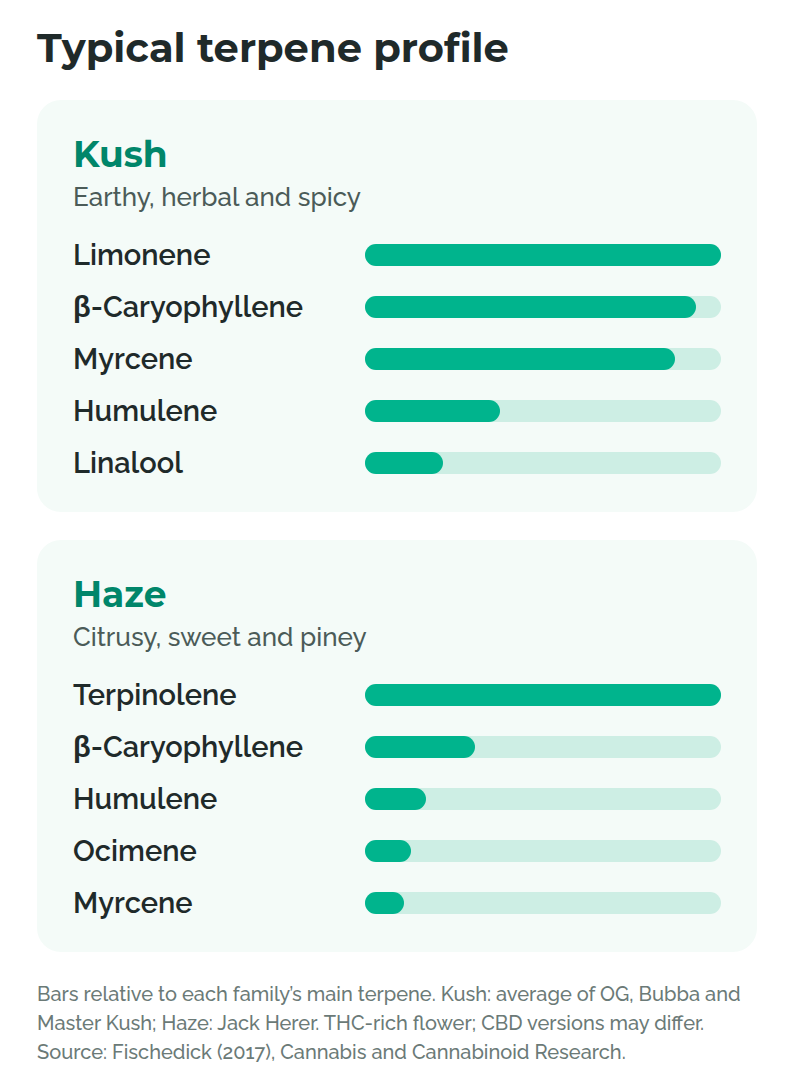
- Kush: deeply earthy, with pine and spice and a subtle sweetness. That aroma comes mainly from myrcene, limonene and β-caryophyllene.
- Haze: fresh and citrusy, with spicy and sweet touches. Its flagship terpene is terpinolene, responsible for that clean, energising character.
Lab studies confirm what your nose tells you. Kush strains mainly combine myrcene, limonene and β-caryophyllene, in almost equal parts: hence their earthy, herbal aroma, with a citrus background and a hint of spice. The sharp “fuel” note of the OGs does not come from terpenes but from traces of sulphur compounds.
Haze strains, on the other hand, stand out for terpinolene, a terpene with a sweet, piney scent and citrus and woody nuances. It is uncommon: in a study of almost 90,000 samples from the United States, only one in ten buds had a terpinolene-dominant profile; most were closer to that of Kush.
Effects and uses of Kush and Haze
- Kush (Indica): relaxing, body effects, traditionally associated with rest and night-time use.
- Haze (Sativa): stimulating, cerebral effects that encourage creativity and daytime use.
In CBD versions the psychoactive effect disappears (THC below 0.3%), but each family's aroma profile and characteristic feel remain. If the Sativa side appeals to you, these Haze-profile flowers capture that fresh, citrusy aroma:
Kush or Haze? How to choose
Neither is better than the other: it depends on what you're looking for.
- Choose Kush if you prefer a relaxing profile, earthy aromas and a moment of calm, especially at night.
- Choose Haze if you want something fresh and stimulating, with citrus aromas, ideal for the daytime.
If you like the earthiness of Kush: Fënix, from the OG Kush family; Lilith, also from the OG Kush line; Meditate, from a Kush line, and Ninja Fruit, a cross of Strawberry Kush and Watermelon. With a Kush touch, although they come from Gelato: Blue Green and Lowrider. And if you want to try several, the Earthy Kush Flavour Pack.
If you like the citrus side of Haze: Oniria, our Amnesia Haze, so famous in its CBD version; Purple Buddha, from Haze and Purple Thai; Vibration, a cross of Lemon Skunk and Super Silver Haze, and Himalaya, a Pink Haze. Citrusy without being Haze: Green Lime, from the Diesel family, and Eureka, which owes its citrus touch to Tangie. To try them, the Fresh Citrus Flavour Pack.
All of them are CBD flower with less than 0.3% THC. Each country has its own rules: in some, such as the UK, hemp flower is controlled even when its THC is low.
And remember that most current strains are hybrids that mix both heritages. If you'd like to see a ready-to-choose selection, here's our guide to the best CBD buds and our whole CBD flower category, all lab tested.
Frequently asked questions about Kush and Haze
Is Kush Indica or Sativa?
Kush is an Indica genetic line: a short, sturdy plant with a relaxing effect.
Is Haze Indica or Sativa?
Haze is Sativa: a tall, slender plant with an energising effect.
Where does Haze come from?
It was developed in California from tropical Sativas and established in the Netherlands.
What effects does Kush have?
Relaxing, body effects, associated with rest; in its CBD version, without psychoactivity.
What is the difference between Kush and Haze?
Kush is Indica (relaxing, earthy aroma) and Haze is Sativa (energising, citrus aroma).
Which is better, Kush or Haze?
It depends: Kush to relax, Haze to get going. Most flowers today mix both.
What does Kush mean?
The name comes from the Hindu Kush, the mountainous region between Afghanistan and Pakistan where these plants have grown wild for centuries.
Which terpenes does Kush have, and which does Haze have?
Kush, mainly myrcene, limonene and β-caryophyllene (earthy, spicy aroma); Haze stands out for terpinolene (citrus, sweet and piney aroma).
What are the most famous Kush and Haze strains?
For Kush, OG Kush, Bubba Kush, Purple Kush and Hindu Kush; for Haze, Amnesia Haze, Super Silver Haze, Purple Haze and Lemon Haze.