Using CBD to quit THC joints: does it work?
Cannabidiol (CBD), the main component of hemp plants, has emerged as a possible aid for withdrawal syndrome in people who have decided to stop using cannabis. But is this true? Can CBD really help you quit THC joints? Does it help with THC withdrawal syndrome?
In this post we answer these questions and explain what science says about using CBD to give up weed or THC-rich cannabis.
Differences between CBD and THC
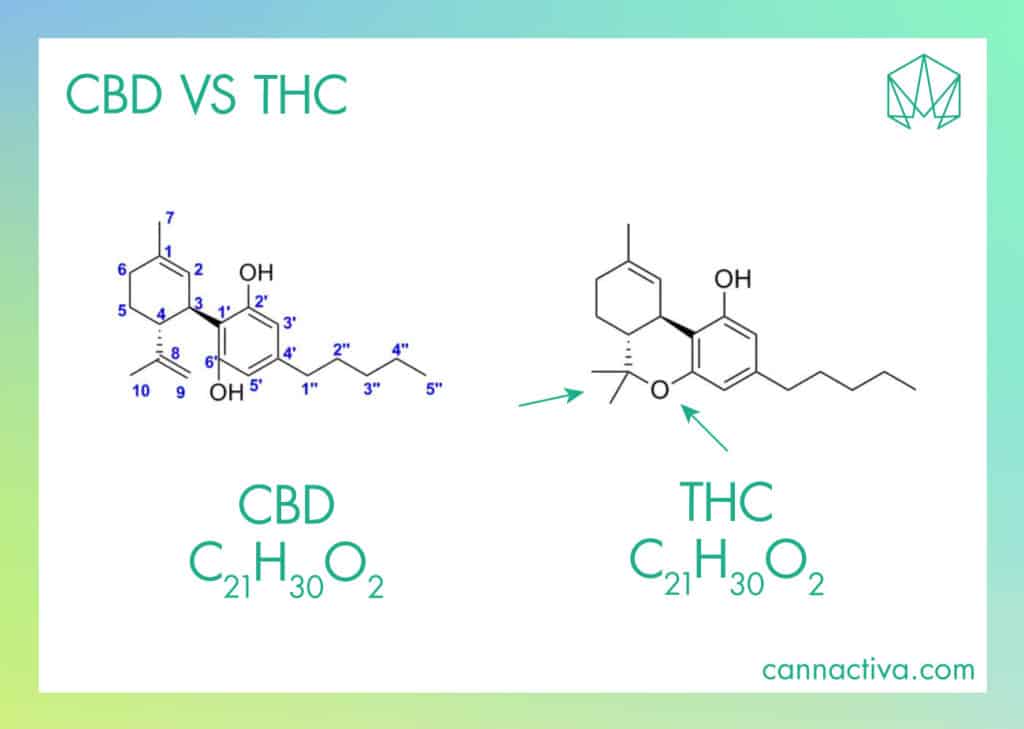
CBD and THC are two of the main cannabinoids, or active substances, found in the cannabis plant. Although both come from the same plant, their effects on the body are very different:
- CBD or cannabidiol is not psychoactive, has no addictive potential, and has been studied for treating pain, anxiety and sleep disorders, among other conditions.
- THC or tetrahydrocannabinol is psychoactive and does have addictive potential. It is the component of cannabis responsible for the euphoria and altered perception people feel when using cannabis. Chronic use, especially in young people, can lead to anxiety, paranoia and memory problems. It also has approved medical uses.
Differences between CBD and cannabis
THC is found in weed, or psychoactive cannabis, at concentrations of 15-30% THC or more, depending on the strain. Legal cannabis strains, hemp or CBD flower, contain less than 0.3% THC.

How can you use CBD to quit THC?
Scientific evidence suggests that CBD could be beneficial for quitting THC, especially when it is inhaled. Smoking or vaporising CBD may prevent the symptoms that appear when you give up THC joints. However, if symptoms are already present, CBD oil taken orally looks like a potentially great ally.
Smoking CBD to quit THC joints
CBD-rich cannabis, or CBD flower, is a variety of cannabis with less than 0.3% THC (in THC-rich or psychoactive cannabis, the concentration is 10-30% THC or higher). Although some countries have already regulated CBD flower as a smoking product, in most European countries this hemp flower is not an authorised product for consumption.
The study “A *good *smoke? The off-label use of CBD to reduce cannabis use” (15) reports on a survey of 1,556 participants carried out in France between 2020 and 2021, which set out to look at the reality of people who smoke CBD cannabis to cut down their use of high-THC cannabis.
According to the survey, 83% of people smoked CBD flower to cut down their use of high-THC cannabis. Of this group, 59% reported a large reduction in their cannabis use, thanks to fewer withdrawal symptoms. Daily CBD use was significantly associated with a greater reduction in THC use. More research is needed to confirm these findings.
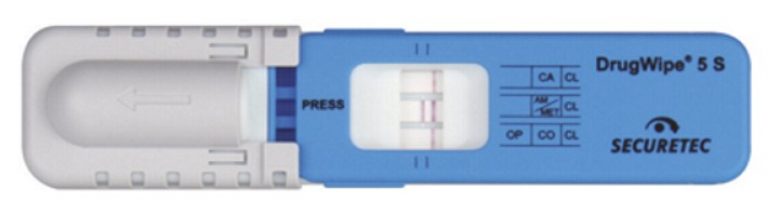
At present, smoking CBD to stop smoking cannabis with THC is something many users actually do, but it is not an accepted therapy, so there are no well-designed studies available, only surveys. Smoking, whatever the substance, is harmful to health. The available data are scarce, and there are no studies that fully assess and validate how effective smoking CBD cannabis is at reducing THC use. Cannactiva products are not authorised for consumption.
Vaping CBD to stop smoking THC
A study carried out in France suggests that inhaled CBD works particularly well at reducing withdrawal symptoms and cravings for cannabis (10).
For participants who were addicted to tobacco, an addiction linked to their cannabis addiction, nicotine was added to the CBD vaporizer to address and prevent tobacco withdrawal.
In this study, 6 of the 20 participants (30%) at least halved their THC use within 12 weeks with the help of vaped CBD, without needing to be prescribed treatment for cannabis withdrawal syndrome. The average reported CBD dose is 215.8 mg/day by inhalation, but CBD has a wide safety margin. This indicates that CBD can help you quit cannabis by relieving the characteristic symptoms of withdrawal syndrome.
CBD oil to quit THC
To treat cannabis withdrawal syndrome, effective doses of 400 to 800 mg of CBD in capsules daily (17), or 18 to 24 mg of CBD in the form of CBD oil whenever needed while under medical treatment for cannabis withdrawal syndrome (11), have been reported. On the other hand, to relieve specific THC withdrawal symptoms such as anxiety, doses of 300 to 600 mg of CBD given as CBD oil capsules have been suggested (12-14), or from 150 to 1,500 mg a day to treat psychotic disorders (12-14).

CBD is generally well tolerated and is a safe option for treating THC withdrawal syndrome. The side effects of CBD are generally mild and infrequent.
CBD to quit THC: current research
Quitting THC: symptoms
When you stop using cannabis and your body no longer receives the amounts of THC it used to be exposed to, a series of changes take place in the body. These show up as a range of symptoms and can lead to THC withdrawal syndrome.
Withdrawal syndrome usually develops within 1 to 2 days of abruptly stopping THC use, peaking between days 2 and 6 (1). Symptoms include anxiety, irritability, insomnia and loss of appetite.
After 7 days, mood changes appear to be common and include anger, aggression and depression, peaking at 2 weeks after quitting cannabis. On the other hand, sleep disturbances may last longer (3).
Given the challenge posed by THC dependence and the associated withdrawal symptoms, various strategies are being explored to ease these effects and make it easier to give up cannabis. One of these strategies is the use of CBD.
CBD's mechanism of action
CBD itself has a wide range of properties that relieve THC withdrawal symptoms. CBD reduces anxiety, has a neuroprotective effect and can help improve sleep.
In addition, CBD can indirectly help to maintain the stimulation of the CB1 receptors that THC used to activate. It does this indirectly, by increasing anandamide.
Anandamide is a THC-like molecule that our body produces. CBD blocks the mechanisms the body uses to break down anandamide, raising its levels in the brain so that it is available to activate CB1 receptors. In this way, CBD could help reduce THC withdrawal syndrome (4, 5).
Moreover, CBD has been shown to be non-addictive and to have a wide safety margin. It has no significant adverse effects in humans when used long term or at high doses (6-8), so it may be a safe alternative for quitting cannabis.
Conclusion
Overall, the initial results on using CBD to break the habit of using THC-rich cannabis are promising. Smoking CBD to cut down on THC-rich cannabis is a popular practice, but no studies have assessed its impact. As for the use of CBD vape liquids and CBD oils to treat addictions, there are more studies, and it seems that CBD could have a positive effect by reducing withdrawal symptoms. In any case, addiction treatment should be supervised by a professional. If in doubt, consult a doctor.
Note: This is an informative article and is not intended to prevent, diagnose or treat any disease. Its content may complement, but must never replace, the diagnosis or treatment of any disease or symptom. Cannactiva products are not medicines and are intended for external use. New relevant scientific evidence may have emerged since the date of publication. Consult your doctor before using CBD. The therapeutic approach should always be personalised and will depend on a professional assessment. You are advised to see a specialist to treat addiction to or dependence on cannabis, or if you have any doubts or concerns about its use.
References
- Budney, A. J., & Hughes, J. R. (2006). The cannabis withdrawal syndrome. Current opinion in psychiatry, 19(3), 233–238. https://doi.org/10.1097/01.yco.0000218592.00689.e5
- González, S., Cebeira, M., & Fernández-Ruiz, J. (2005). Cannabinoid tolerance and dependence: a review of studies in laboratory animals. Pharmacology, biochemistry, and behavior, 81(2), 300–318. https://doi.org/10.1016/j.pbb.2005.01.028
- Connor, J. P., Stjepanović, D., Budney, A. J., Le Foll, B., & Hall, W. D. (2022). Clinical management of cannabis withdrawal. Addiction (Abingdon, England), 117(7), 2075–2095. https://doi.org/10.1111/add.15743
- Bisogno, T., Hanus, L., De Petrocellis, L., Tchilibon, S., Ponde, D. E., Brandi, I., Moriello, A. S., Davis, J. B., Mechoulam, R., & Di Marzo, V. (2001). Molecular targets for cannabidiol and its synthetic analogues: effect on vanilloid VR1 receptors and on the cellular uptake and enzymatic hydrolysis of anandamide. British journal of pharmacology, 134(4), 845–852. https://doi.org/10.1038/sj.bjp.0704327
- Leweke, F. M., Piomelli, D., Pahlisch, F., Muhl, D., Gerth, C. W., Hoyer, C., Klosterkötter, J., Hellmich, M., & Koethe, D. (2012). Cannabidiol enhances anandamide signaling and alleviates psychotic symptoms of schizophrenia. Translational psychiatry, 2(3), e94. https://doi.org/10.1038/tp.2012.15
- Bergamaschi, M. M., Queiroz, R. H., Zuardi, A. W., & Crippa, J. A. (2011). Safety and side effects of cannabidiol, a Cannabis sativa constituent. Current drug safety, 6(4), 237–249. https://doi.org/10.2174/157488611798280924
- Zuardi A. W. (2008). Cannabidiol: from an inactive cannabinoid to a drug with a wide spectrum of action. Revista brasileira de psiquiatria (Sao Paulo, Brazil : 1999), 30(3), 271–280. https://doi.org/10.1590/s1516-44462008000300015
- Stempliuk, V.deA., Barroso, L. P., Andrade, A. G., Nicastri, S., & Malbergier, A. (2005). Comparative study of drug use among undergraduate students at the University of São Paulo, São Paulo campus in 1996 and 2001. Revista brasileira de psiquiatria (Sao Paulo, Brazil : 1999), 27(3), 185–193. https://doi.org/10.1590/s1516-44462005000300006
- Peters, E. N., Budney, A. J., & Carroll, K. M. (2012). Clinical correlates of co-occurring cannabis and tobacco use: a systematic review. Addiction (Abingdon, England), 107(8), 1404–1417. https://doi.org/10.1111/j.1360-0443.2012.03843.x
- Cleirec, G., Desmier, E., Lacatus, C., Lesgourgues, S., Braun, A., Peloso, C., & Obadia, C. (2022). Efficiency of Inhaled Cannabidiol in Cannabis Use Disorder: The Pilot Study Cannavap. Frontiers in psychiatry, 13, 899221. https://doi.org/10.3389/fpsyt.2022.899221
- Shannon, S., & Opila-Lehman, J. (2015). Cannabidiol Oil for Decreasing Addictive Use of Marijuana: A Case Report. Integrative medicine (Encinitas, Calif.), 14(6), 31–35.
- Mandolini, G. M., Lazzaretti, M., Pigoni, A., Oldani, L., Delvecchio, G., & Brambilla, P. (2018). Pharmacological properties of cannabidiol in the treatment of psychiatric disorders: a critical overview. Epidemiology and psychiatric sciences, 27(4), 327–335. https://doi.org/10.1017/S2045796018000239
- Crippa, J. A., Derenusson, G. N., Ferrari, T. B., Wichert-Ana, L., Duran, F. L., Martin-Santos, R., Simões, M. V., Bhattacharyya, S., Fusar-Poli, P., Atakan, Z., Santos Filho, A., Freitas-Ferrari, M. C., McGuire, P. K., Zuardi, A. W., Busatto, G. F., & Hallak, J. E. (2011). Neural basis of anxiolytic effects of cannabidiol (CBD) in generalized social anxiety disorder: a preliminary report. Journal of psychopharmacology (Oxford, England), 25(1), 121–130. https://doi.org/10.1177/0269881110379283
- Linares, I. M., Zuardi, A. W., Pereira, L. C., Queiroz, R. H., Mechoulam, R., Guimarães, F. S., & Crippa, J. A. (2019). Cannabidiol presents an inverted U-shaped dose-response curve in a simulated public speaking test. Revista brasileira de psiquiatria (Sao Paulo, Brazil : 1999), 41(1), 9–14. https://doi.org/10.1590/1516-4446-2017-0015
- Fortin D, Di Beo V, Massin S, Bisiou Y, Carrieri P, Barré T. A Good Smoke? The Off-Label Use of Cannabidiol to Reduce Cannabis Use. Front Psychiatry. 2022 Mar 17;13:829944. doi: 10.3389/fpsyt.2022.829944. PMID: 35370865; PMCID: PMC8968154.
- Rømer Thomsen K, Thylstrup B, Kenyon EA, Lees R, Baandrup L, Feldstein Ewing SW, Freeman TP. Cannabinoids for the treatment of cannabis use disorder: New avenues for reaching and helping youth? Neurosci Biobehav Rev. 2022 Jan;132:169-180. doi: 10.1016/j.neubiorev.2021.11.033. Epub 2021 Nov 22. PMID: 34822876.
- Freeman, T. P., Hindocha, C., Baio, G., Shaban, N. D. C., Thomas, E. M., Astbury, D., Freeman, A. M., Lees, R., Craft, S., Morrison, P. D., Bloomfield, M. A. P., O'Ryan, D., Kinghorn, J., Morgan, C. J. A., Mofeez, A., & Curran, H. V. (2020). Cannabidiol for the treatment of cannabis use disorder: a phase 2a, double-blind, placebo-controlled, randomised, adaptive Bayesian trial. The lancet. Psychiatry, 7(10), 865–874. https://doi.org/10.1016/S2215-0366(20)30290-X