CBD in the treatment of addiction: research into its properties
Among the many studies on the potential applications of CBD, or cannabidiol, is the treatment of some addictive disorders. As these problems continue to affect people around the world, a range of research is looking for new ways to tackle them.
This post sets out the current research on the use of CBD in the treatment of addiction from Dr Caudevilla, a GP and specialist in drug dependence with extensive experience in clinical care, research and teaching projects related to drug use.
This article is intended for informational purposes only and is not intended to diagnose, prevent or cure any disease or symptom. Its content can complement, but never replace, the diagnosis or treatment of any disease or symptom. Cannactiva products are not medicines. Consult your doctor before using CBD.
CBD for overcoming addiction: introduction
What are addictions?
An addiction is a pattern of substance use in which control over the substance is lost and its use becomes central to the person's life. A distinction is usually made between physical and psychological dependence, although the line between the two concepts is debatable.
Physical dependence refers to the state in which the body becomes accustomed to the presence of a substance and begins to require it to function properly. It is usually related to withdrawal syndrome, which is the set of symptoms that appear when abruptly stopping the consumption of a substance, which can be very uncomfortable and even dangerous in some cases.
Psychological dependence, on the other hand, refers to the emotional and mental need for the substance. The person may feel an uncontrollable need to use the substance even while aware of the negative consequences it causes them. In any case, addictions are the result of a complex and interrelated set of biological, psychological and social factors. The treatment of addiction begins by addressing these three areas in a professional, specialised medical way, and there are no “miracle pills” in this regard.
Can cannabis cause dependence?
The DSM, the international reference manual for diagnosing mental health problems, includes “cannabis use disorder” in its fifth and latest edition. Some scientists have criticised the validity of this definition, or its use in the same way as alcohol or cocaine dependence is classified (1, 2, 3).
The same DSM-5 manual introduces the diagnosis of “cannabis withdrawal” for the first time. The condition is non-specific and mild, and affects 12-20% of regular cannabis users who stop using abruptly (4).
Is cannabis dependence common?
Most authors agree that, regardless of individual and contextual factors, the potential of cannabis to generate dependence is lower than that of other substances.
It has been estimated that the statistical risk of cannabis dependence is around 8% (compared to 20% for cocaine or 60% for tobacco) (5). Other studies estimate the prevalence of the disorder at 4% - 10% (6, 7, 8). Although they offer slightly different figures, the authors cited above agree on the following ideas:
- At the pharmacological level, cannabis has a lower dependence potential than opiates, alcohol, cocaine and tobacco.
- Sociocultural and socioeconomic factors contribute to greater vulnerability to developing dependence.
- Starting to use cannabis at an early age is, epidemiologically, a clear and relevant risk factor for developing problematic use, dependence or substance use disorder.
CBD for addiction: research into its possible mechanism of action
Differences between THC and CBD in addictive potential
Tetrahydrocannabinol (THC) is the main psychoactive compound in the cannabis plant and has been linked to negative effects in relation to substance dependence. THC can be addictive and can increase vulnerability to dependence on other substances such as alcohol, opioids and tobacco. This is partly because THC can affect the brain's reward circuits, which can lead to greater craving for the substance and more difficulty in stopping its use.
Cannabidiol (CBD), however, appears to have anti-addictive properties. Some theories have been proposed suggesting that CBD may affect reward circuits, anxiety and stress, memory and inflammation, among other things. These basic research studies are complemented by case series and even clinical trials suggesting that CBD has anti-addictive potential.
For more information on these two cannabinoids, see our post on the differences between CBD and THC.
Effectiveness of CBD for addiction: are there studies in humans?
Yes. In almost all types of addictions, there are preliminary studies suggesting that CBD may become, in the near future, another option among the drugs available to treat addictive disorders.
CBD for tobacco addiction
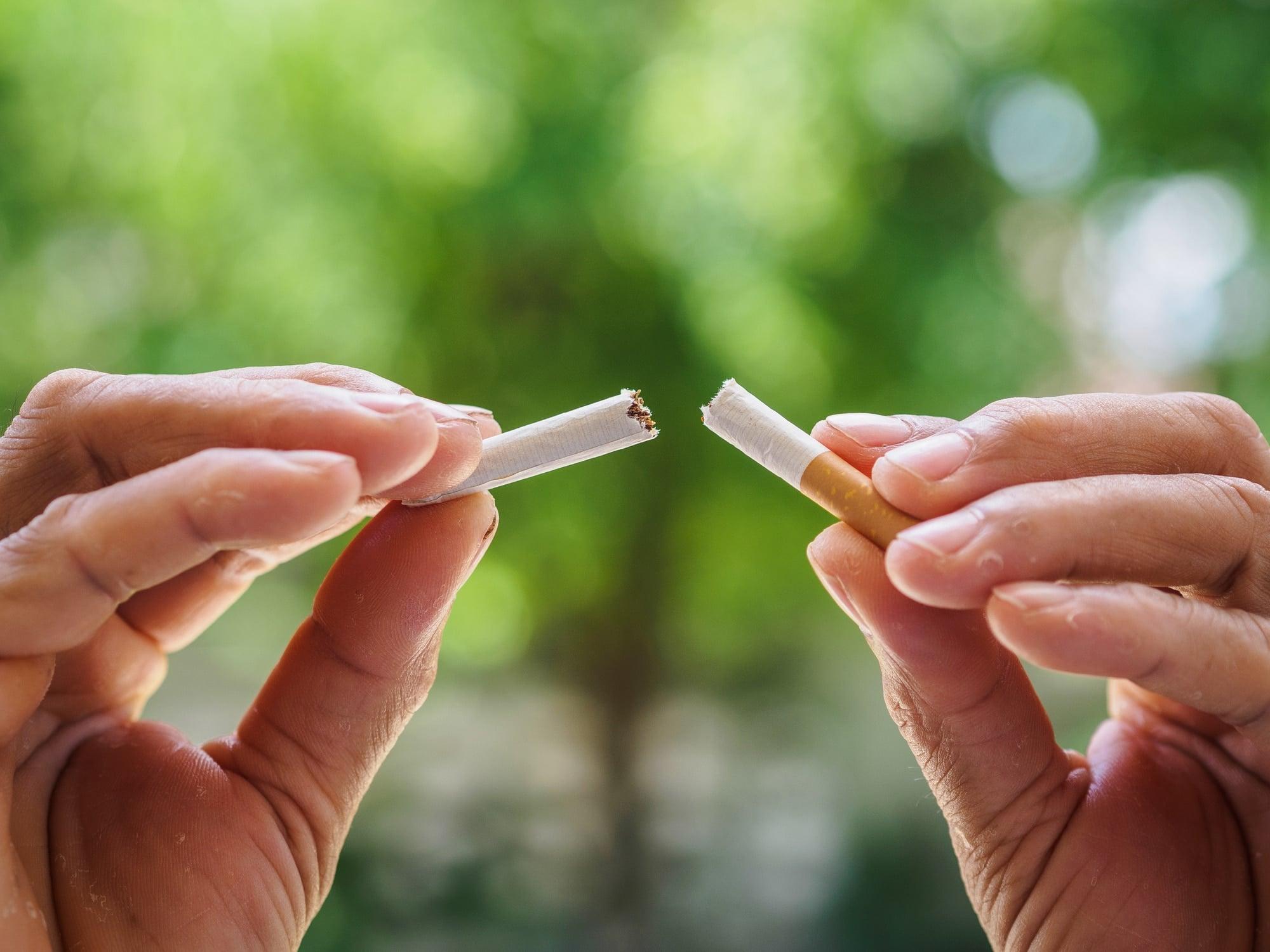
The first pilot clinical study evaluated the effects of CBD in smokers trying to quit smoking. CBD was effective in reducing the number of cigarettes smoked after one week of treatment by up to 40%, an effect that was maintained after 7 days of treatment (28). A few years later, a study administering a single dose of CBD reduced some of the withdrawal symptoms (29).

CBD and alcohol addiction
The end of 2022 saw the completion of the first two human clinical trials to explore the potential of CBD in the treatment of alcohol use disorder. Both trials enrolled patients with severe dependence and were carried out at New York University. One of the studies followed 40 patients for 8 weeks (30). The other focused on patients with alcohol dependence syndrome who also had post-traumatic stress disorder (31). Neither clinical trial has been published yet and the results have not been made public.
CBD shows therapeutic potential for addiction to tobacco (especially), alcohol and cannabis.
CBD and cannabis addiction
Several clinical trials have demonstrated that Sativex is effective in the treatment of cannabis dependence (38, 39, 40). This is not surprising, as the cannabinoid spray is an extract of the cannabis plant with fixed concentrations of THC and CBD, and in practice involves the administration of the same substance through a different route.
There are published anecdotal cases in which CBD on its own has been effective in treating cannabis dependence (41, 42). These cases have been confirmed in well-designed clinical trials involving 82 patients with cannabis dependence who managed to stop or cut down their use with CBD (43).
Another clinical trial evaluated the effect of giving cannabidiol to regular cannabis users who did not want to stop using (44). The trial showed improvements in attention, verbal learning and memory tests, as well as lower scores on psychotic symptom scales and better sleep.
There are also ongoing clinical trials, with unpublished results, on the efficacy of CBD in cannabis users with psychotic disorders (45).
CBD and opiate addiction
As for CBD for opiate addiction, although there are positive results on its therapeutic potential, there is still little evidence. The first clinical trial to evaluate the efficacy of CBD in acute opiate withdrawal was published in 2019. In a study of 42 patients, CBD proved more effective than placebo at reducing “craving” (the urge to use) and some of the typical symptoms of opiate withdrawal (32). There are also lower-quality studies and anecdotal cases that support the use of CBD for this indication (33). Another study exploring the potential of CBD in methadone detoxification has recently been completed and is currently awaiting publication (34).
CBD and addiction to stimulant drugs
Clinical trials published so far have not been able to demonstrate differences between CBD and placebo in reducing withdrawal symptoms associated with cocaine use disorder. One clinical trial used doses of 300 mg of CBD in crack (smoked cocaine) use (35), and two more clinical trials have used doses of up to 800 mg of CBD for 10 weeks (36) (37), without finding positive results in the use of CBD for addiction to this type of drug.
As for addiction to stimulant drugs, such as cocaine and amphetamines/methamphetamines, clinical trials so far have not shown CBD to be effective in their treatment.
Despite the good results obtained in preclinical models (in vitro and animal research) there are no published studies or ongoing clinical trials evaluating the efficacy of CBD in amphetamine/methamphetamine use disorder.
CBD dosage and how it is used for addiction
The doses used in clinical trials have varied widely. The most common route of administration is oral, in the form of capsules or tablets. Studies on alcohol have used doses of up to 1,200 mg a day (30, 46). For opiates, doses of 400-800 mg have been used (32, 33, 34). Doses of 300-800 mg a day have proved ineffective for cocaine (35, 36, 37), but amounts in that range produced positive results for tobacco (29) and cannabis (41).
Other forms of administration include sublingual CBD spray, used in the treatment of cannabis dependence at a daily dose of 18-24 mg/day (41) and in the methadone detoxification trial awaiting publication (34). Inhaled cannabidiol (at doses of 400 micrograms per inhalation) has also been used for tobacco (28).
In conclusion...
The conclusion is that more research and clinical trials are still needed before CBD can be applied as a therapy for addictions, although there are preliminary studies in humans that support its therapeutic potential. One of the uses that gathers the most evidence is the use of CBD in the treatment of tobacco addiction.
It is important to note that more research and rigorous clinical studies are needed to confirm the efficacy of CBD for addictions and to establish clear dosing and administration guidelines.
Addiction should be treated by specialist professionals. Please remember that this article is for information only and is not intended to prevent, diagnose or treat any disease or symptom. Its content may complement, but never replace, the diagnosis or treatment of any disease or symptom. Cannactiva products are not medicines and are intended for external use. Talk to your doctor before using CBD.
References
- Hamilton I, Tracy D. Problems with defining cannabis dependence. Curr Opin Psychiatry. 2020 Jan;33(1):14-19. doi: 10.1097/YCO.0000000000000561. PMID: 31634166.
- Schlag AK, Hindocha C, Zafar R, Nutt DJ, Curran HV. Cannabis based medicines and cannabis dependence: A critical review of issues and evidence. J Psychopharmacol. 2021 Jul;35(7):773-785. doi: 10.1177/0269881120986393. Epub 2021 Feb 17. PMID: 33593117; PMCID: PMC8278552.
- Sznitman SR, Room R. Rethinking indicators of problematic cannabis use in the era of medical cannabis legalization. Addict Behav. 2018 Feb;77:100-101. doi: 10.1016/j.addbeh.2017.09.026. Epub 2017 Sep 30. PMID: 28992573.
- Livne O, Shmulewitz D, Lev-Ran S, Hasin DS. DSM-5 cannabis withdrawal syndrome: Demographic and clinical correlates in U.S. adults. Drug Alcohol Depend. 2019 Feb 1;195:170-177. doi: 10.1016/j.drugalcdep.2018.09.005. Epub 2018 Oct 22. PMID: 30361043; PMCID: PMC6359953.
- Lopez-Quintero C, Pérez de los Cobos J, Hasin DS, Okuda M, Wang S, Grant BF, Blanco C. Probability and predictors of transition from first use to dependence on nicotine, alcohol, cannabis, and cocaine: results of the National Epidemiologic Survey on Alcohol and Related Conditions (NESARC). Drug Alcohol Depend. 2011 May 1;115(1-2):120-30. doi: 10.1016/j.drugalcdep.2010.11.004. Epub 2010 Dec 8. PMID: 21145178; PMCID: PMC3069146.
- Degenhardt L, Cheng H, Anthony JC. Assessing cannabis dependence in community surveys: methodological issues. Int J Methods Psychiatr Res. 2007;16(2):43-51. doi: 10.1002/mpr.206. PMID: 17623384; PMCID: PMC6878304.
- Fergusson DM, Horwood LJ, Lynskey MT, Madden PA. Early reactions to cannabis predict later dependence. Arch Gen Psychiatry. 2003 Oct;60(10):1033-9. doi: 10.1001/archpsyc.60.10.1033. PMID: 14557149.
- Poulton RG, Brooke M, Moffitt TE, Stanton WR, Silva PA. Prevalence and correlates of cannabis use and dependence in young New Zealanders. N Z Med J. 1997 Mar 14;110(1039):68-70. PMID: 9137298.
- Razavi Y, Keyhanfar F, Shabani R, Haghparast A, Mehdizadeh M. Therapeutic Effects of Cannabidiol on Methamphetamine Abuse: A Review of Preclinical Study. Iran J Pharm Res. 2021 Fall;20(4):152-164. doi: 10.22037/ijpr.2021.114918.15106. PMID: 35194436; PMCID: PMC8842591.
- Galaj E, Bi GH, Yang HJ, Xi ZX. Cannabidiol attenuates the rewarding effects of cocaine in rats by CB2, 5-HT1A and TRPV1 receptor mechanisms. Neuropharmacology. 2020 May 1;167:107740. doi: 10.1016/j.neuropharm.2019.107740. Epub 2019 Aug 19. PMID: 31437433; PMCID: PMC7493134.
- Uhernik AL, Montoya ZT, Balkissoon CD, Smith JP. Learning and memory is modulated by cannabidiol when administered during trace fear-conditioning. Neurobiol Learn Mem. 2018 Mar;149:68-76. doi: 10.1016/j.nlm.2018.02.009. Epub 2018 Feb 9. PMID: 29432803.
- Jîtcă G, Ősz BE, Vari CE, Rusz CM, Tero-Vescan A, Pușcaș A. Cannabidiol: Bridge between Antioxidant Effect, Cellular Protection, and Cognitive and Physical Performance. Antioxidants (Basel). 2023 Feb 14;12(2):485. doi: 10.3390/antiox12020485. PMID: 36830042; PMCID: PMC9952814.
- Szulc M, Kujawski R, Pacholak A, Poprawska M, Czora-Poczwardowska K, Geppert B, Mikołajczak PŁ. Cannabidiol as a Modulator of the Development of Alcohol Tolerance in Rats. Nutrients. 2023 Mar 30;15(7):1702. doi: 10.3390/nu15071702. PMID: 37049542; PMCID: PMC10097131.
- Wang Y, Mukhopadhyay P, Cao Z, Wang H, Feng D, Haskó G, Mechoulam R, Gao B, Pacher P. Cannabidiol attenuates alcohol-induced liver steatosis, metabolic dysregulation, inflammation and neutrophil-mediated injury. Sci Rep. 2017 Sep 21;7(1):12064. doi: 10.1038/s41598-017-10924-8. PMID: 28935932; PMCID: PMC5608708.
- Smith LC, Tieu L, Suhandynata RT, Boomhower B, Hoffman M, Sepulveda Y, Carrette LLG, Momper JD, Fitzgerald RL, Hanham K, Dowling J, Kallupi M, George O. Cannabidiol reduces withdrawal symptoms in nicotine-dependent rats. Psychopharmacology (Berl). 2021 Aug;238(8):2201-2211. doi: 10.1007/s00213-021-05845-4. Epub 2021 Apr 28. PMID: 33909102; PMCID: PMC8295227.
- Saravia R, Ten-Blanco M, Pereda-Pérez I, Berrendero F. New Insights in the Involvement of the Endocannabinoid System and Natural Cannabinoids in Nicotine Dependence. Int J Mol Sci. 2021 Dec 10;22(24):13316. doi: 10.3390/ijms222413316. PMID: 34948106; PMCID: PMC8715672.
- Markos JR, Harris HM, Gul W, ElSohly MA, Sufka KJ. Effects of Cannabidiol on Morphine Conditioned Place Preference in Mice. Planta Med. 2018 Mar;84(4):221-224. doi: 10.1055/s-0043-117838. Epub 2017 Aug 9. PMID: 28793355.
- Katsidoni V, Anagnostou I, Panagis G. Cannabidiol inhibits the reward-facilitating effect of morphine: involvement of 5-HT1A receptors in the dorsal raphe nucleus. Addict Biol. 2013 Mar;18(2):286-96. doi: 10.1111/j.1369-1600.2012.00483.x. Epub 2012 Aug 2. PMID: 22862835.
- Ren Y, Whittard J, Higuera-Matas A, Morris CV, Hurd YL. Cannabidiol, a nonpsychotropic component of cannabis, inhibits cue-induced heroin seeking and normalizes discrete mesolimbic neuronal disturbances. J Neurosci. 2009 Nov 25;29(47):14764-9. doi: 10.1523/JNEUROSCI.4291-09.2009. PMID: 19940171; PMCID: PMC2829756.
- Bossert JM, Poles GC, Wihbey KA, Koya E, Shaham Y. Differential effects of blockade of dopamine D1-family receptors in nucleus accumbens core or shell on reinstatement of heroin seeking induced by contextual and discrete cues. J Neurosci. 2007 Nov 14;27(46):12655-63. doi: 10.1523/JNEUROSCI.3926-07.2007. PMID: 18003845; PMCID: PMC2117350.
- Galaj E, Bi GH, Yang HJ, Xi ZX. Cannabidiol attenuates the rewarding effects of cocaine in rats by CB2, 5-HT1A and TRPV1 receptor mechanisms. Neuropharmacology. 2020 May 1;167:107740. doi: 10.1016/j.neuropharm.2019.107740. Epub 2019 Aug 19. PMID: 31437433; PMCID: PMC7493134.
- Rodrigues LA, Caroba MES, Taba FK, Filev R, Gallassi AD. Evaluation of the potential use of cannabidiol in the treatment of cocaine use disorder: A systematic review. Pharmacol Biochem Behav. 2020 Sep;196:172982. doi: 10.1016/j.pbb.2020.172982. Epub 2020 Jul 6. PMID: 32645315.
- Chesworth R, Karl T. Cannabidiol (CBD) reduces cocaine-environment memory in mice. Pharmacol Biochem Behav. 2020 Dec;199:173065. doi: 10.1016/j.pbb.2020.173065. Epub 2020 Oct 27. PMID: 33127382.
- Valvassori SS, Elias G, de Souza B, Petronilho F, Dal-Pizzol F, Kapczinski F, Trzesniak C, Tumas V, Dursun S, Chagas MH, Hallak JE, Zuardi AW, Quevedo J, Crippa JA. Effects of cannabidiol on amphetamine-induced oxidative stress generation in an animal model of mania. J Psychopharmacol. 2011 Feb;25(2):274-80. doi: 10.1177/0269881109106925. Epub 2009 Nov 25. PMID: 19939866.
- Calpe-López C, García-Pardo MP, Aguilar MA. Cannabidiol Treatment Might Promote Resilience to Cocaine and Methamphetamine Use Disorders: A Review of Possible Mechanisms. Molecules. 2019 Jul 16;24(14):2583. doi: 10.3390/molecules24142583. PMID: 31315244; PMCID: PMC6680550.
- Shahidi S, Sadeghian R, Komaki A, Asl SS. Intracerebroventricular microinjection of the 5-HT1F receptor agonist LY 344864 inhibits methamphetamine conditioned place preference reinstatement in rats. Pharmacol Biochem Behav. 2018 Oct;173:27-35. doi: 10.1016/j.pbb.2018.08.001. Epub 2018 Aug 2. PMID: 30077744.
- Navarrete F, Aracil-Fernández A, Manzanares J. Cannabidiol regulates behavioural alterations and gene expression changes induced by spontaneous cannabinoid withdrawal. Br J Pharmacol. 2018 Jul;175(13):2676-2688. doi: 10.1111/bph.14226. Epub 2018 May 3. PMID: 29624642; PMCID: PMC6003647.
- Morgan CJ, Das RK, Joye A, Curran HV, Kamboj SK. Cannabidiol reduces cigarette consumption in tobacco smokers: preliminary findings. Addict Behav. 2013 Sep;38(9):2433-6. doi: 10.1016/j.addbeh.2013.03.011. Epub 2013 Apr 1. PMID: 23685330.
- Hindocha C, Freeman TP, Grabski M, Stroud JB, Crudgington H, Davies AC, Das RK, Lawn W, Morgan CJA, Curran HV. Cannabidiol reverses attentional bias to cigarette cues in a human experimental model of tobacco withdrawal. Addiction. 2018 May 1;113(9):1696–705. doi: 10.1111/add.14243. Epub ahead of print. PMID: 29714034; PMCID: PMC6099309.
- ClinicalTrials.gov Identifier: NCT03252756
- ClinicalTrials.gov Identifier: NCT03248167
- Hurd YL, Spriggs S, Alishayev J, Winkel G, Gurgov K, Kudrich C, Oprescu AM, Salsitz E. Cannabidiol for the Reduction of Cue-Induced Craving and Anxiety in Drug-Abstinent Individuals With Heroin Use Disorder: A Double-Blind Randomized Placebo-Controlled Trial. Am J Psychiatry. 2019 Nov 1;176(11):911-922. doi: 10.1176/appi.ajp.2019.18101191. Epub 2019 May 21. Erratum in: Am J Psychiatry. 2020 Jul 1;177(7):641. PMID: 31109198.
- Kudrich C, Hurd YL, Salsitz E, Wang AL. Adjunctive Management of Opioid Withdrawal with the Nonopioid Medication Cannabidiol. Cannabis Cannabinoid Res. 2022 Oct;7(5):569-581. doi: 10.1089/can.2021.0089. Epub 2021 Oct 22. PMID: 34678050; PMCID: PMC9587789.
- ClinicalTrials.gov Identifier: NCT04238754
- Meneses-Gaya C, Crippa JA, Hallak JE, Miguel AQ, Laranjeira R, Bressan RA, Zuardi AW, Lacerda AL. Cannabidiol for the treatment of crack-cocaine craving: an exploratory double-blind study. Braz J Psychiatry. 2021 Sep-Oct;43(5):467-476. doi: 10.1590/1516-4446-2020-1416. PMID: 33146345; PMCID: PMC8555645.
- Rizkallah E, Mongeau-Pérusse V, Lamanuzzi L, Castenada-Ouellet S, Stip E, Juteau LC, Brissette S, Bruneau J, Dubreucq S, Jutras-Aswad D. Cannabidiol effects on cognition in individuals with cocaine use disorder: Exploratory results from a randomized controlled trial. Pharmacol Biochem Behav. 2022 May;216:173376. doi: 10.1016/j.pbb.2022.173376. Epub 2022 Mar 31. PMID: 35367279.
- Mongeau-Pérusse V, Brissette S, Bruneau J, Conrod P, Dubreucq S, Gazil G, Stip E, Jutras-Aswad D. Cannabidiol as a treatment for craving and relapse in individuals with cocaine use disorder: a randomized placebo-controlled trial. Addiction. 2021 Sep;116(9):2431-2442. doi: 10.1111/add.15417. Epub 2021 Feb 9. PMID: 33464660; PMCID: PMC8451934.
- Bhardwaj AK, Allsop DJ, Copeland J, McGregor IS, Dunlop A, Shanahan M, Bruno R, Phung N, Montebello M, Sadler C, Gugusheff J, Jackson M, Luksza J, Lintzeris N; Agonist Replacement for Cannabis Dependence (ARCD) study group. Randomised Controlled Trial (RCT) of cannabinoid replacement therapy (Nabiximols) for the management of treatment-resistant cannabis dependent patients: a study protocol. BMC Psychiatry. 2018 May 18;18(1):140. doi: 10.1186/s12888-018-1682-2. PMID: 29776349; PMCID: PMC5960200.
- Trigo JM, Lagzdins D, Rehm J, Selby P, Gamaleddin I, Fischer B, Barnes AJ, Huestis MA, Le Foll B. Effects of fixed or self-titrated dosages of Sativex on cannabis withdrawal and cravings. Drug Alcohol Depend. 2016 Apr 1;161:298-306. doi: 10.1016/j.drugalcdep.2016.02.020. Epub 2016 Feb 23. PMID: 26925704; PMCID: PMC4878903.
- Allsop DJ, Copeland J, Lintzeris N, Dunlop AJ, Montebello M, Sadler C, Rivas GR, Holland RM, Muhleisen P, Norberg MM, Booth J, McGregor IS. Nabiximols as an agonist replacement therapy during cannabis withdrawal: a randomized clinical trial. JAMA Psychiatry. 2014 Mar;71(3):281-91. doi: 10.1001/jamapsychiatry.2013.3947. PMID: 24430917.
- Crippa JA, Hallak JE, Machado-de-Sousa JP, Queiroz RH, Bergamaschi M, Chagas MH, Zuardi AW. Cannabidiol for the treatment of cannabis withdrawal syndrome: a case report. J Clin Pharm Ther. 2013 Apr;38(2):162-4. doi: 10.1111/jcpt.12018. Epub 2012 Oct 24. PMID: 23095052.
- Crippa JA, Hallak JE, Machado-de-Sousa JP, Queiroz RH, Bergamaschi M, Chagas MH, Zuardi AW. Cannabidiol for the treatment of cannabis withdrawal syndrome: a case report. J Clin Pharm Ther. 2013 Apr;38(2):162-4. doi: 10.1111/jcpt.12018. Epub 2012 Oct 24. PMID: 23095052.
- Freeman TP, Hindocha C, Baio G, Shaban NDC, Thomas EM, Astbury D, Freeman AM, Lees R, Craft S, Morrison PD, Bloomfield MAP, O'Ryan D, Kinghorn J, Morgan CJA, Mofeez A, Curran HV. Cannabidiol for the treatment of cannabis use disorder: a phase 2a, double-blind, placebo-controlled, randomised, adaptive Bayesian trial. Lancet Psychiatry. 2020 Oct;7(10):865-874. doi: 10.1016/S2215-0366(20)30290-X. Epub 2020 Jul 28. PMID: 32735782; PMCID: PMC7116091.
- Solowij N, Broyd SJ, Beale C, Prick JA, Greenwood LM, van Hell H, Suo C, Galettis P, Pai N, Fu S, Croft RJ, Martin JH, Yücel M. Therapeutic Effects of Prolonged Cannabidiol Treatment on Psychological Symptoms and Cognitive Function in Regular Cannabis Users: A Pragmatic Open-Label Clinical Trial. Cannabis Cannabinoid Res. 2018 Mar 1;3(1):21-34. doi: 10.1089/can.2017.0043. PMID: 29607408; PMCID: PMC5870061.
- ClinicalTrials.gov Identifier: NCT04105231
- ClinicalTrials.gov Identifier: NCT03248167
Frequently asked questions
How does CBD work in addiction?
The neurobiological mechanisms through which CBD acts on addictive disorders are as follows:
Firstly, it has been suggested that CBD may affect the brain's reward circuits, reducing the pleasurable effect of the substance and therefore reducing the motivation to use it (9).
In addition, it has been shown that CBD can modulate the activity of cannabinoid receptors in the brain, which may help reduce the anxiety and stress associated with substance withdrawal (10).
Another potential mechanism is that cannabidiol could affect memory and learning ability, which may help reduce the formation of associations between the substance and the cues that trigger its use (11).
Furthermore, some studies have found that CBD may have anti-inflammatory and antioxidant properties, which may help reduce the neuroinflammation and neuronal damage associated with substance dependence (12).
In which models have CBD's properties for treating dependence been demonstrated?
In animal models, cannabidiol has shown evidence of anti-dependence properties for alcohol (13, 14), nicotine (15, 16), opiates: morphine (17, 18) and heroin (19, 20); stimulants: cocaine (21, 22, 23), amphetamine (24), methamphetamine (25, 26) and cannabis (27).