You may be surprised to learn that CBD is being researched as a way to quit smoking. To mark World No Tobacco Day, we bring you a post that looks at this question in depth.
Tobacco addiction is a global health problem that causes numerous diseases and is responsible for millions of deaths every year. Despite efforts to find effective ways of overcoming this addiction, success rates remain low. Against this backdrop, there has been growing interest in the use of cannabidiol (CBD), a compound found in the cannabis plant, whose therapeutic potential could make it a possible tool to help people quit smoking.
Let's look at what is currently known about the subject and whether it's true that CBD can be a promising ally in a tobacco-free life.
What is CBD and how can it help overcome tobacco addiction?
CBD: A cannabis compound to say goodbye to tobacco?
CBD or cannabidiol is a non-addictive compound in cannabis that has grown in popularity in recent years thanks to its potential therapeutic properties and its low toxicity compared with other cannabinoids such as tetrahydrocannabinol (THC), which is responsible for the psychoactive effects of cannabis.
Several studies have explored the role of CBD in treating different addictions, including tobacco addiction. Among the potential benefits studied, CBD could help reduce the urge to smoke and ease withdrawal symptoms.
It's important to note that tobacco addiction needs a comprehensive treatment approach. Speak to a professional for help with quitting smoking.

How big is the smoking problem in Spain?
Smoking is a public health problem worldwide. It is closely related to numerous serious diseases, such as lung cancer, cardiovascular diseases and chronic respiratory diseases. Tobacco addiction is the leading preventable cause of death and disability worldwide.
According to data from the National Plan on Drugs (1), 33% of people aged 15 to 64 smoke tobacco every day. Smoking is the leading cause of preventable death and disease. In Spain, smoking has a devastating impact, causing between 50,000 and 60,000 deaths a year (2). That is as if the entire population of a city the size of Málaga, Palma de Mallorca or Murcia disappeared every year.
How does CBD work for smoking cessation?
CBD has pharmacological properties that make it a good candidate as a drug to treat addictive disorders:
Reducing anxiety symptoms
CBD modulates the activity of cannabinoid receptors and has been shown to have anxiolytic and anti-stress properties, which may help reduce the unpleasant symptoms of anxiety and stress experienced when giving up tobacco (3).
Reducing nicotine cravings
CBD interacts with the brain's reward circuits, helping to reduce the pleasurable effect of drugs and decreasing the motivation to use them, which may reduce cravings for smoking (4).
Some of the components of the endocannabinoid system, such as FAAH (the enzyme fatty acid amide hydrolase), play an important role in the reinforcing and pleasurable effects of nicotine (5).
Disrupting drug-use associations
CBD acts on brain areas involved in memory and learning, which may help break the associations between tobacco and the cues that trigger the urge to smoke (6).
Anti-inflammatory and neuroprotective properties
CBD has anti-inflammatory and antioxidant properties, which may contribute to reducing neuroinflammation and neuronal damage associated with substance dependence, including tobacco (7).
Scientific studies on CBD for smoking cessation
There is a growing number of studies suggesting that CBD could have some use in treating nicotine addiction.
In basic research studies, cannabidiol and one of its metabolites (7-OH-CBD) have been shown to interact with the mechanisms the body uses to eliminate nicotine (8). CBD has also been observed to have specific effects inhibiting the action of the enzyme FAAH, which could reduce the activation of the brain circuits of the reward mechanism on which nicotine acts (9). In animal models commonly used to study nicotine dependence, CBD has been shown to be effective against acute withdrawal syndrome (9, 10).
Smoking cessation with CBD: human studies
In a small study (11), researchers looked at whether cannabidiol could help smokers who wanted to quit. They split 24 smokers into two groups: one received a CBD inhaler, while the other received an inhaler containing a placebo (an inactive substance). Participants were told to use the inhaler whenever they felt the urge to smoke over the course of a week.
The results showed that the smokers using the placebo inhaler did not reduce the number of cigarettes they smoked during the treatment week. However, the group using the CBD vaporizer significantly cut their cigarette consumption, by around 40%, during the treatment period. The positive effects of CBD appeared to last even after the treatment had ended.
In another study comparing CBD with placebo (12), the results showed that when smokers went without smoking overnight, their attention focused more on smoking-related things and they had stronger cravings. However, when they took CBD, their attention shifted away from smoking-related cues and their cravings were reduced. CBD also made smoking-related images less pleasant for them. In addition, CBD lowered blood pressure.
These findings suggest that CBD could potentially be helpful for smokers who wish to quit smoking by reducing their focus on smoking-related cues and making the experience less pleasurable.
How to use CBD to quit smoking
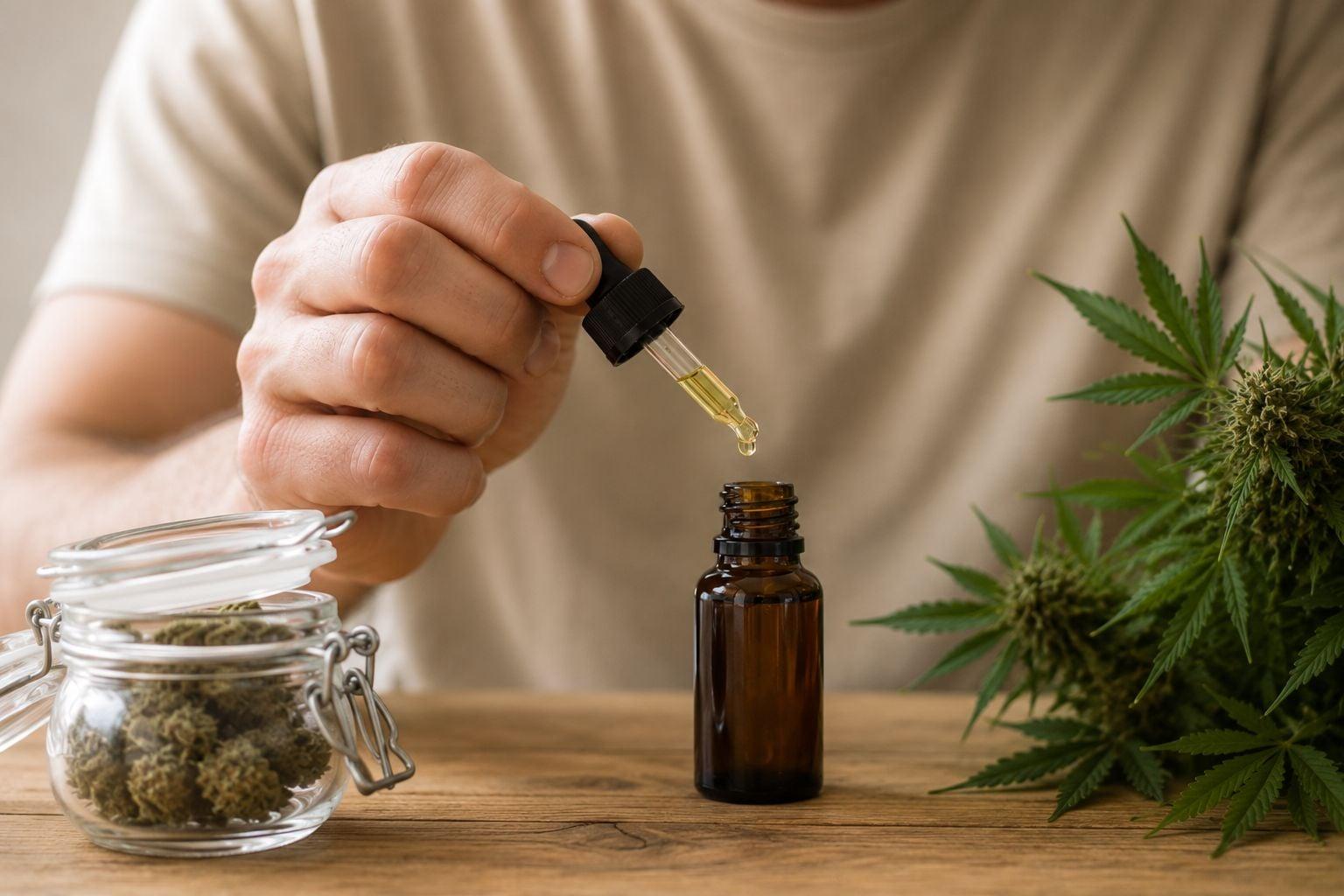
CBD can be found in CBD flower, CBD oil, CBD e-liquid and CBD vapes. Depending on the country, it can also be found in capsules and edibles such as gummies. The rules for these products depend on the country, so check what applies where you live.
Studies have used CBD taken orally or vaporised. Although cannabidiol's potential for treating addictions has been demonstrated and there is preliminary evidence of its effectiveness for quitting smoking, CBD is not currently an approved medicine for treating tobacco addiction. It is therefore not possible to point to one method that works better than another.
CBD dosage
CBD for quitting smoking is still at the research stage, and it is not possible to establish a standard dose that works for everyone. In the study that used CBD inhalations (11), an e-liquid with a 5% CBD concentration was used. Most of the studies that have explored the potential of CBD as a drug for treating addictions have used doses of between 300 and 600 mg of CBD a day.
Can vaporizers help to quit smoking?
For the past two years, a sort of “witch hunt” has been under way against e-cigarettes and vaporizers. The official line makes claims that are hard to reconcile with rational thinking, such as, for example, that smoking and vaping “are the same thing”.
However, the reality is more complex. One of the most prestigious and rigorous sources of analysis of scientific studies in medicine, the Cochrane Collaboration, considers e-cigarettes to be at least as effective as nicotine replacement therapy (14). As a harm reduction strategy, e-cigarettes are part of the public health strategies against smoking endorsed by the health ministries of countries such as Canada (15), New Zealand (16) and the United Kingdom (17).

Benefits of quitting smoking
What are the benefits of quitting smoking?
In terms of health, quitting smoking is the most important decision a person can make at any point in their life. Age and physical condition don't matter. The benefits of giving up tobacco become apparent soon after kicking the habit (18):
- After 20 minutes: Blood pressure and heart rate begin to decrease.
- After 8 hours: Carbon monoxide levels in the blood fall and oxygen levels return to normal.
- After 48 hours: Nicotine is eliminated from the body and the senses of taste and smell begin to improve.
- After 72 hours: Lung capacity increases and breathing becomes easier.
- After 2 to 3 months: Blood circulation improves, reducing fatigue and shortness of breath.
- After 1 year: The risk of heart disease is reduced by half compared to a smoker.
- After 5 years: The risk of cancer of the mouth, throat, oesophagus and bladder is halved.
- After 10 years: The risk of lung cancer is reduced by half compared to a smoker, and the risk of stroke decreases.
- After 15 years: The risk of heart disease is equal to that of a person who has never smoked.
Current approved treatments for tobacco addiction
Understanding tobacco addiction
Tobacco is addictive mainly due to the effects of nicotine on the brain. Nicotine activates nicotinic acetylcholine receptors, located in brain reward areas, producing the release of neurotransmitters associated with pleasure, such as dopamine.
Tobacco addiction develops because the brain becomes less and less sensitive to nicotine, and a greater amount of nicotine is required to obtain the same effect. As a result, smokers tend to increase the amount of tobacco to obtain the pleasurable effects (19).
Moreover, although tobacco addiction has mainly been attributed to nicotine, growing evidence suggests that smoking is rooted in behaviours acquired over time. This suggests that approaching smoking as an organic brain disease caused by nicotine falls short. Nicotine addiction needs to be tackled as a whole, taking into account biological, psychological and social factors. That's why it's advisable to see a professional who specialises in addiction treatment.
What drugs are currently approved for smoking cessation?
In 2023, the options available in Spain are:
- Nicotine replacement therapy: In the form of gum, lozenges, patches or sprays (20)
- Bupropion (Zyntabac, Elontril): An amphetamine derivative with antidepressant properties and a stimulant profile (21).
- Cytisine (Todacitan): An alkaloid extracted from trees of the genus *Laburnum *approved in February 2023. The evidence on its efficacy is of “moderate quality” (22).
- Varenicline (Champix): The manufacturer decided to stop production permanently in September 2021 because of the presence of carcinogenic substances (nitrosamines) in the manufacturing process. Curiously, the manufacturer was due to lose its exclusive rights to this drug two months later. Experts considered that “a grilled steak has as many nitrosamines as 3,000 Champix tablets”.
How effective are current smoking cessation treatments?
It is often said that these drugs “double or triple the chances of success of a quit attempt” (20, 21, 22). This statement is true, but it should be added that:
- The probability of quitting smoking with a placebo is 8–10%. In other words, doubling or tripling this effect means a real efficacy of 16–30% (20, 22).
- Most of the available studies are designed to measure efficacy over a 6-month period. That is, they consider people to have “quit smoking” after 6 months of abstinence. But when efficacy is assessed over longer periods (5 to 10 years), the results are considerably poorer (23).
In short, smoking is a public health problem of great magnitude, for which treatment options are scarce and not very effective. That's why it's essential to explore alternatives such as CBD that could ease its consequences.
With regard to CBD for quitting smoking, larger-scale research with longer follow-up is needed to fully assess the potential of this substance in treating the smoking habit. Consult your doctor before using CBD.
References
- Spanish Ministry of Health. EDADES 2022 National Report. Available at: https://pnsd.sanidad.gob.es/profesionales/sistemasInformacion/sistemaInformacion/pdf/2022_Informe_EDADES.pdf
- Pérez-Ríos M, Fernández E, López MJ. Mortality attributed to smoking in Spain: Quo vadis? Archivos de Bronconeumología, Editorial, 2021. DOI: 10.1016/j.arbres.2020.12.035
- Campos AC, Moreira FA, Gomes FV, Del Bel EA, Guimarães FS. Multiple mechanisms involved in the large-spectrum therapeutic potential of cannabidiol in psychiatric disorders. Philos Trans R Soc Lond B Biol Sci. 2012 Dec 5;367(1607):3364-78. doi: 10.1098/rstb.2011.0389. PMID: 23108553; PMCID: PMC3481531.
- Galaj E, Bi GH, Yang HJ, Xi ZX. Cannabidiol attenuates the rewarding effects of cocaine in rats by CB2, 5-HT1A and TRPV1 receptor mechanisms. Neuropharmacology. 2020 May 1;167:107740. doi: 10.1016/j.neuropharm.2019.107740. Epub 2019 Aug 19. PMID: 31437433; PMCID: PMC7493134.
- Muldoon PP, Lichtman AH, Parsons LH, Damaj MI. The role of fatty acid amide hydrolase inhibition in nicotine reward and dependence. Life Sci. 2013 Mar 19;92(8-9):458-62. doi: 10.1016/j.lfs.2012.05.015. Epub 2012 Jun 12. PMID: 22705310; PMCID: PMC3477273.
- Uhernik AL, Montoya ZT, Balkissoon CD, Smith JP. Learning and memory is modulated by cannabidiol when administered during trace fear-conditioning. Neurobiol Learn Mem. 2018 Mar;149:68-76. doi: 10.1016/j.nlm.2018.02.009. Epub 2018 Feb 9. PMID: 29432803.
- Jîtcă G, Ősz BE, Vari CE, Rusz CM, Tero-Vescan A, Pușcaș A. Cannabidiol: Bridge between Antioxidant Effect, Cellular Protection, and Cognitive and Physical Performance. Antioxidants (Basel). 2023 Feb 14;12(2):485. doi: 10.3390/antiox12020485. PMID: 36830042; PMCID: PMC9952814.
- Nasrin S, Coates S, Bardhi K, Watson C, Muscat J, Lazarus P. Inhibition of Nicotine Metabolism by Cannabidiol (CBD) and 7-Hydroxycannabidiol (7-OH-CBD). Chem. Res. Toxicol. 2023, 36, 2, 177–187 Publication Date:January 10, 2023. DOI: https://doi.org/10.1021/acs.chemrestox.2c00259
- Saravia R, Ten-Blanco M, Pereda-Pérez I, Berrendero F. New Insights in the Involvement of the Endocannabinoid System and Natural Cannabinoids in Nicotine Dependence. Int. J. Mol. Sci. 2021, 22(24), 13316; https://doi.org/10.3390/ijms222413316
- Smith LC, Tieu L, Suhandynata RT, Boomhower B, Hoffman M, Sepulveda Y, Carrette LLG, Momper JD, Fitzgerald RL, Hanham K, Dowling J, Kallupi M, George O. Cannabidiol reduces withdrawal symptoms in nicotine-dependent rats. Psychopharmacology (Berl). 2021 Aug;238(8):2201-2211. doi: 10.1007/s00213-021-05845-4. Epub 2021 Apr 28. PMID: 33909102; PMCID: PMC8295227.
- Morgan CJ, Das RK, Joye A, Curran HV, Kamboj SK. Cannabidiol reduces cigarette consumption in tobacco smokers: preliminary findings. Addict Behav. 2013 Sep;38(9):2433-6. doi: 10.1016/j.addbeh.2013.03.011. Epub 2013 Apr 1. PMID: 23685330.
- Hindocha C, Freeman TP, Grabski M, Stroud JB, Crudgington H, Davies AC, Das RK, Lawn W, Morgan CJA, Curran HV. Cannabidiol reverses attentional bias to cigarette cues in a human experimental model of tobacco withdrawal. Addiction. 2018 May 1;113(9):1696–705. doi: 10.1111/add.14243. Epub ahead of print. PMID: 29714034; PMCID: PMC6099309.
- Gournay LR, Petry J, Bilsky S, Hill MA, Feldner M, Peters E, Bonn-Miller M, Leen-Feldner E. Cannabidiol Reduces Nicotine Withdrawal Severity and State Anxiety During an Acute E-cigarette Abstinence Period: A Novel, Open-Label Study. Cannabis Cannabinoid Res. 2023 May 11. doi: 10.1089/can.2022.0317. Epub ahead of print. PMID: 37167367.
- Hartmann-Boyce J, Lindson N, Butler AR, McRobbie H, Bullen C, Begh R, Theodoulou A, Notley C, Rigotti NA, Turner T, Fanshawe TR, Hajek P. Electronic cigarettes for smoking cessation. Cochrane Database of Systematic Reviews 2022, Issue 11. Art. No.: CD010216. DOI: 10.1002/14651858.CD010216.pub7
- Health Services of Canada Government of Canada. Available at: https://www.canada.ca/en/health-canada/services/smoking-tobacco/vaping.html
- Ministry of Health of New Zealand. Tobacco control Program, information for practitioners. Available at: https://www.health.govt.nz/our-work/preventative-health-wellness/tobacco-control/tobacco-control-information-practitioners/vaping-products-information-health-care-workers-and-stop-smoking-services
- NHS, National Health Service of England. Quit Smoking: Using e-cigarettes to stop smoking. Available at: https://www.nhs.uk/live-well/quit-smoking/using-e-cigarettes-to-stop-smoking/
- National Center for Chronic Disease Prevention and Health Promotion (US) Office on Smoking and Health. The Health Consequences of Smoking—50 Years of Progress: A Report of the Surgeon General. Atlanta (GA): Centers for Disease Control and Prevention (US); 2014. 4, Advances in Knowledge of the Health Consequences of Smoking: From 1964–2014. Available from: https://www.ncbi.nlm.nih.gov/books/NBK294317/
- Mansvelder HD, McGehee DS. Long-term potentiation of excitatory inputs to brain reward areas by nicotine. Neuron. 2000 Aug;27(2):349-57. doi: 10.1016/s0896-6273(00)00042-8. PMID: 10985354.
- Stead LF, Perera R, Bullen C, Mant D, Hartmann-Boyce J, Cahill K, Lancaster T. Nicotine replacement therapy for smoking cessation. Cochrane Database Syst Rev. 2012 Nov 14;11:CD000146. doi: 10.1002/14651858.CD000146.pub4. Update in: Cochrane Database Syst Rev. 2018 May 31;5:CD000146. PMID: 23152200.
- Guo K, Wang S, Shang X, E F, Hou L, Li J, Li Y, Yang K, Li X. The effect of Varenicline and Bupropion on smoking cessation: A network meta-analysis of 20 randomized controlled trials. Addict Behav. 2022 Aug;131:107329. doi: 10.1016/j.addbeh.2022.107329. Epub 2022 Apr 5. PMID: 35397262.
- Livingstone-Banks J, Fanshawe TR, Thomas KH, Theodoulou A, Hajizadeh A, Hartman L, Lindson N. Nicotine receptor partial agonists for smoking cessation. Cochrane Database of Systematic Reviews 2023, Issue 5. Art. No.: CD006103. DOI: 10.1002/14651858.CD006103.pub8.
- Rigotti NA, Kruse GR, Livingstone-Banks J, Hartmann-Boyce J. Treatment of Tobacco Smoking: A Review. JAMA. 2022 Feb 8;327(6):566-577. doi: 10.1001/jama.2022.0395. PMID: 35133411.