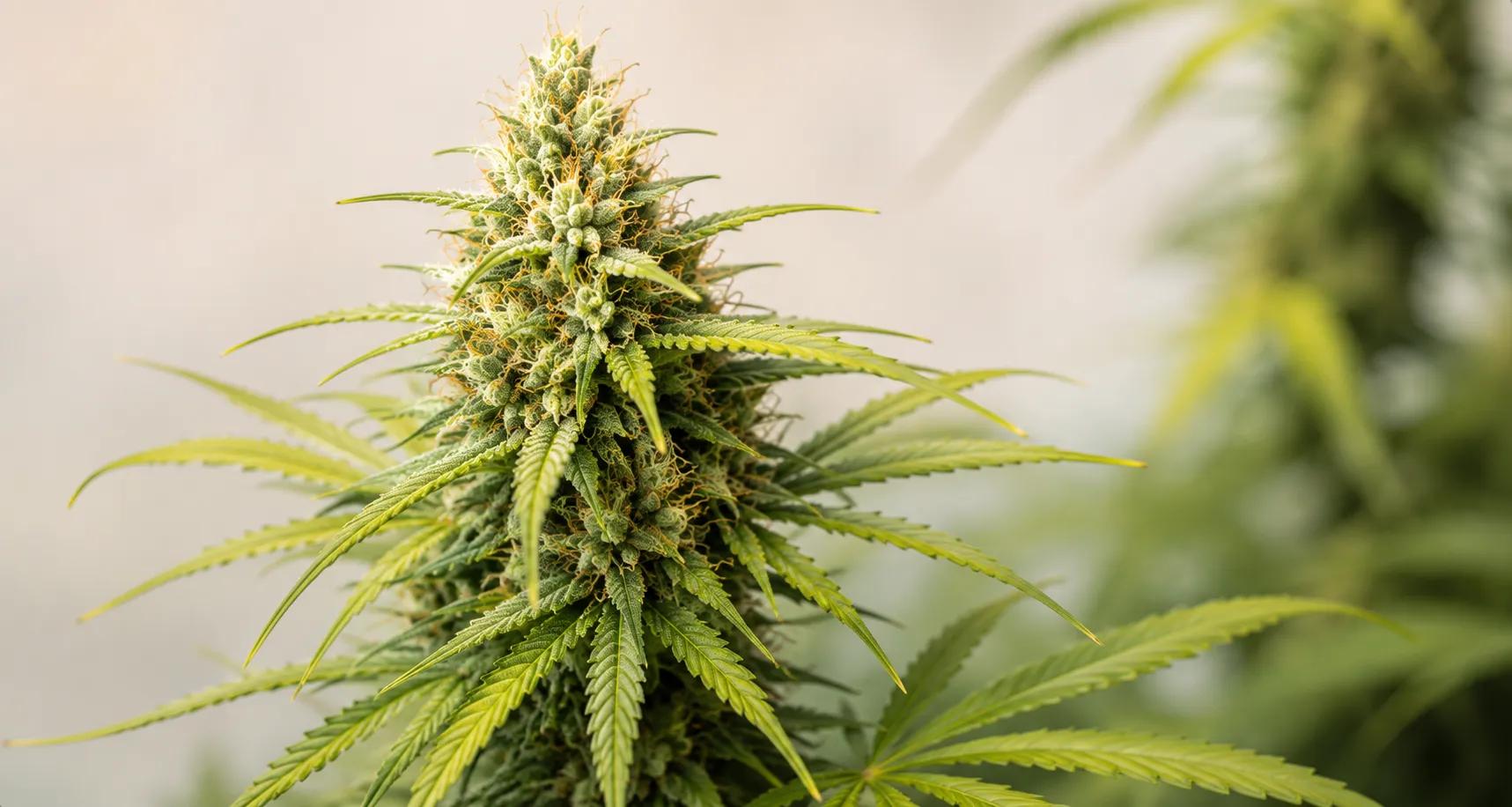
Anandamide is a fascinating molecule that our body produces and that bears a striking similarity to tetrahydrocannabinol (THC), the main psychoactive compound in cannabis. On the Cannactiva blog, we explain what anandamide is, its role and its benefits, as well as its relationship with cannabis.
What is anandamide and what does it do?
Anandamide is a neurotransmitter with a molecular structure similar to THC. Its name comes from the Sanskrit “ananda”, meaning “inner happiness”, which reflects its role in modulating mood and feelings of happiness.
Discovered in 1992 in pig brains, anandamide was the first endocannabinoid ever identified, revealing that our body produces substances similar to the cannabinoids in cannabis.
Its technical name is N-arachidonoylethanolamine (AEA), and it is a lipid neurotransmitter that could potentially be formed in any cell in the body, although it is found mainly in the brain.
Where is anandamide produced in the body?
Although technically any cell in our body can produce anandamide, it is synthesised in greater quantities in various areas of the brain. It is also produced artificially in laboratories, mainly so it can be studied in experimental models to understand its potential action in the human body.
The role of anandamide in the endocannabinoid system
The endocannabinoid system (ECS) is a unique communication system in the brain and body that affects many crucial functions of the body and aims to keep it in balance. Within this endocannabinoid system are endocannabinoids such as anandamide, substances produced by the body that can bind to and activate cannabinoid receptors and other cellular targets (1, 4).
Anandamide is an endocannabinoid that binds to the brain's CB1 cannabinoid receptors in a similar way to THC, influencing memory, appetite, stress, anxiety and inflammation.
Anandamide binds to CB1 cannabinoid receptors, which are found in different areas of the brain (5), in much the same way as the THC in cannabis does.
Anandamide, THC and CBD: differences and similarities
Anandamide, CBD (cannabidiol) and THC belong to the cannabinoid family, but they differ significantly in their origin, role and effects on the human body.
The first difference lies in their origin. Anandamide is produced naturally in our body, mainly in the brain, while CBD and THC are produced in the trichomes of the cannabis plant.
THC and anandamide have similar effects. Cannabis's psychoactive component and anandamide are alike in that both bind to the same receptors in the brain (CB1), but THC does so more directly and potently, which is what gives it a psychoactive effect (3, 6).
CBD can raise anandamide levels in our body.
Unlike anandamide and THC, CBD does not bind directly to cannabinoid receptors; instead, it acts indirectly by enhancing the effects of other brain chemicals, including serotonin and anandamide.
In addition, CBD increases anandamide levels in our body, as it inhibits the enzyme that breaks down anandamide (24). In this way, CBD, through the action of anandamide, can act indirectly on CB1 receptors.
Properties and effects of anandamide in the body
Anandamide is linked to many brain processes. When disease is present, the endocannabinoid system becomes unbalanced and disrupted, with overexpression of some receptors and of endocannabinoids such as anandamide. So finding more anandamide in certain conditions, or more endocannabinoid receptors, is a result of the disease, and not the other way round.
Problems with the regulation of anandamide are linked to pathological processes, including:
Anandamide and obesity
Anandamide is often elevated in people with obesity and is linked to increased appetite and a lack of satiety (11). This does not mean that anandamide can be used to increase appetite, but rather that it is a biomarker for detecting obesity. In future, a strategy may be developed to reduce anandamide in the body and fight obesity.
Anandamide and cancer
High levels of anandamide have been found in different types of cancer, such as liver, bladder and endometrial cancer in humans (12-15). Preliminary studies have found that disrupting the binding of anandamide to CB1 receptors and other cellular targets can reduce tumour development (15), but more studies are still needed to explore this therapeutic potential of anandamide.
Anandamide and liver cirrhosis
Anandamide levels appear to be elevated in liver cirrhosis, as in this medical condition there is an overexpression of CB1 receptors in the liver, which is not normal. Blocking anandamide from binding to CB1 receptors has been shown to reduce fibrosis and hepatic hypertension, making it a potential strategy for treating this disease (16, 17).
Anandamide and neuroprotection
Anandamide appears to be present in high amounts in neurodegenerative conditions such as Parkinson's disease and multiple sclerosis, where it seems to have a neuroprotective effect through the activation of CB1 and CB2 cannabinoid receptors (18, 19) and other pathways involved in neuronal inflammation (20). This is disputed, however, as CB1 receptor antagonism may reduce brain damage, at least in cases of cerebral ischaemia (21).
It is important to clarify that increasing anandamide through external substances does not cause disease.
How can you increase anandamide naturally? Foods and supplements
Although anandamide is not available as a supplement, certain foods and compounds can raise its levels.
Chocolate has been observed to enhance the effects of cannabis because of its lipid nature, raising anandamide levels in our body and possibly activating cannabinoid receptors (22).
Eating foods such as chocolate is linked to positive effects, such as neuroprotection and a sense of well-being, since technically anandamide is like the brain's own THC.

As well as chocolate, milk contains endocannabinoids, although not in large enough amounts to produce a noticeable effect (23).
Other substances can raise anandamide levels in our body, such as the CBD, or cannabidiol, mentioned above. CBD inhibits the enzyme that breaks down anandamide, which is the FAAH endocannabinoid enzyme. In this way, CBD, through the action of anandamide, can act indirectly on CB1 receptors. There are also other healthy habits and routines to activate the endocannabinoid system naturally.
Side effects of anandamide
As a natural compound, anandamide itself does not usually cause adverse side effects. However, altering anandamide levels through external substances (such as CBD) could cause effects inherent to those external substances. If you're concerned about the safety of cannabidiol, you can read our guide to the side effects of CBD.
Conclusion: anandamide and our well-being
Anandamide plays a key role in our sense of well-being, and research is under way to better understand how to raise anandamide levels naturally through compounds such as CBD, which could have beneficial effects on the body. We'll keep you posted! Along with other happiness cannabinoids, anandamide is a key piece of our inner balance.
References
- De Petrocellis, L., & Di Marzo, V. (2009). An introduction to the endocannabinoid system: from the early to the latest concepts. Best practice & research. Clinical endocrinology & metabolism, 23(1), 1–15. https://doi.org/10.1016/j.beem.2008.10.013
- Di Marzo, V., Fontana, A., Cadas, H., Schinelli, S., Cimino, G., Schwartz, J. C., & Piomelli, D. (1994). Formation and inactivation of endogenous cannabinoid anandamide in central neurons. Nature, 372(6507), 686–691. https://doi.org/10.1038/372686a0
- Devane, W. A., Hanus, L., Breuer, A., Pertwee, R. G., Stevenson, L. A., Griffin, G., Gibson, D., Mandelbaum, A., Etinger, A., & Mechoulam, R. (1992). Isolation and structure of a brain constituent that binds to the cannabinoid receptor. Science (New York, N.Y.), 258(5090), 1946–1949. https://doi.org/10.1126/science.1470919
- Pertwee R. G. (2008). Ligands that target cannabinoid receptors in the brain: from THC to anandamide and beyond. Addiction biology, 13(2), 147–159. https://doi.org/10.1111/j.1369-1600.2008.00108.x
- Mackie K. (2005). Distribution of cannabinoid receptors in the central and peripheral nervous system. Handbook of experimental pharmacology, (168), 299–325. https://doi.org/10.1007/3-540-26573-2_10
- Justinova, Z., Solinas, M., Tanda, G., Redhi, G. H., & Goldberg, S. R. (2005). The endogenous cannabinoid anandamide (AEA) and its synthetic analog R(+)-methanandamide are intravenously self-administered by squirrel monkeys. The Journal of neuroscience : the official journal of the Society for Neuroscience, 25(23), 5645–5650. https://doi.org/10.1523/JNEUROSCI.0951-05.2005
- Mizuno, I., & Matsuda, S. (2021). The role of endocannabinoids in consolidation, retrieval, reconsolidation, and extinction of fear memory. Pharmacological reports : PR, 73(4), 984–1003. https://doi.org/10.1007/s43440-021-00246-y
- Calignano, A., La Rana, G., Giuffrida, A., & Piomelli, D. (1998). Control of pain initiation by endogenous cannabinoids. Nature, 394(6690), 277–281. https://doi.org/10.1038/28393
- Williams, C. M., & Kirkham, T. C. (1999). Anandamide induces overeating: mediation by central cannabinoid (CB1) receptors. Psychopharmacology, 143(3), 315–317. https://doi.org/10.1007/s002130050953
- Lutz, B., Marsicano, G., Maldonado, R., & Hillard, C. J. (2015). The endocannabinoid system in guarding against fear, anxiety and stress. Nature reviews. Neuroscience, 16(12), 705–718. https://doi.org/10.1038/nrn4036
- Fanelli, F., Mezzullo, M., Repaci, A., Belluomo, I., Ibarra Gasparini, D., Di Dalmazi, G., Mastroroberto, M., Vicennati, V., Gambineri, A., Morselli-Labate, A. M., Pasquali, R., & Pagotto, U. (2018). Profiling plasma N-Acylethanolamine levels and their ratios as a biomarker of obesity and dysmetabolism. Molecular metabolism, 14, 82–94. https://doi.org/10.1016/j.molmet.2018.06.002
- Schmid, P. C., Wold, L. E., Krebsbach, R. J., Berdyshev, E. V., & Schmid, H. H. (2002). Anandamide and other N-acylethanolamines in human tumors. Lipids, 37(9), 907–912. https://doi.org/10.1007/s11745-002-0978-z
- Vago, R., Ravelli, A., Bettiga, A., Casati, S., Lavorgna, G., Benigni, F., Salonia, A., Montorsi, F., Orioli, M., Ciuffreda, P., & Ottria, R. (2020). Urine Endocannabinoids as Novel Non-Invasive Biomarkers for Bladder Cancer at Early Stage. Cancers, 12(4), 870. https://doi.org/10.3390/cancers12040870
- Ayakannu, T., Taylor, A. H., Marczylo, T. H., Maccarrone, M., & Konje, J. C. (2019). Identification of Novel Predictive Biomarkers for Endometrial Malignancies: N-Acylethanolamines. Frontiers in oncology, 9, 430. https://doi.org/10.3389/fonc.2019.00430
- Mukhopadhyay, B., Schuebel, K., Mukhopadhyay, P., Cinar, R., Godlewski, G., Xiong, K., Mackie, K., Lizak, M., Yuan, Q., Goldman, D., & Kunos, G. (2015). Cannabinoid receptor 1 promotes hepatocellular carcinoma initiation and progression through multiple mechanisms. Hepatology (Baltimore, Md.), 61(5), 1615–1626. https://doi.org/10.1002/hep.27686
- Teixeira-Clerc, F., Julien, B., Grenard, P., Tran Van Nhieu, J., Deveaux, V., Li, L., Serriere-Lanneau, V., Ledent, C., Mallat, A., & Lotersztajn, S. (2006). CB1 cannabinoid receptor antagonism: a new strategy for the treatment of liver fibrosis. Nature medicine, 12(6), 671–676. https://doi.org/10.1038/nm1421
- Domenicali, M., Ros, J., Fernández-Varo, G., Cejudo-Martín, P., Crespo, M., Morales-Ruiz, M., Briones, A. M., Campistol, J. M., Arroyo, V., Vila, E., Rodés, J., & Jiménez, W. (2005). Increased anandamide induced relaxation in mesenteric arteries of cirrhotic rats: role of cannabinoid and vanilloid receptors. Gut, 54(4), 522–527. https://doi.org/10.1136/gut.2004.051599
- Chiurchiù, V., van der Stelt, M., Centonze, D., & Maccarrone, M. (2018). The endocannabinoid system and its therapeutic exploitation in multiple sclerosis: Clues for other neuroinflammatory diseases. Progress in neurobiology, 160, 82–100. https://doi.org/10.1016/j.pneurobio.2017.10.007
- Gowran, A., Noonan, J., & Campbell, V. A. (2011). The multiplicity of action of cannabinoids: implications for treating neurodegeneration. CNS neuroscience & therapeutics, 17(6), 637–644. https://doi.org/10.1111/j.1755-5949.2010.00195.x
- Eljaschewitsch, E., Witting, A., Mawrin, C., Lee, T., Schmidt, P. M., Wolf, S., Hoertnagl, H., Raine, C. S., Schneider-Stock, R., Nitsch, R., & Ullrich, O. (2006). The endocannabinoid anandamide protects neurons during CNS inflammation by induction of MKP-1 in microglial cells. Neuron, 49(1), 67–79. https://doi.org/10.1016/j.neuron.2005.11.027
- Zhang, M., Martin, B. R., Adler, M. W., Razdan, R. K., Ganea, D., & Tuma, R. F. (2008). Modulation of the balance between cannabinoid CB(1) and CB(2) receptor activation during cerebral ischemic/reperfusion injury. Neuroscience, 152(3), 753–760. https://doi.org/10.1016/j.neuroscience.2008.01.022
- di Tomaso, E., Beltramo, M., & Piomelli, D. (1996). Brain cannabinoids in chocolate. Nature, 382(6593), 677–678. https://doi.org/10.1038/382677a0
- Di Marzo, V., Sepe, N., De Petrocellis, L., Berger, A., Crozier, G., Fride, E., & Mechoulam, R. (1998). Trick or treat from food endocannabinoids? Nature, 396(6712), 636–637. https://doi.org/10.1038/25267
- Bisogno, T., Hanus, L., De Petrocellis, L., Tchilibon, S., Ponde, D. E., Brandi, I., Moriello, A. S., Davis, J. B., Mechoulam, R., & Di Marzo, V. (2001). Molecular targets for cannabidiol and its synthetic analogues: effect on vanilloid VR1 receptors and on the cellular uptake and enzymatic hydrolysis of anandamide. British journal of pharmacology, 134(4), 845–852. https://doi.org/10.1038/sj.bjp.0704327
Frequently asked questions
What effects does anandamide have on the body?
Endocannabinoids such as anandamide are linked to a wide range of brain processes, such as memory formation, appetite stimulation, stress, anxiety and inflammation (7-10).