Bisabolol: the sweet, floral terpene of chamomile, also in cannabis

This time, we are delving into the world of bisabolol, a terpene found in cannabis that captivates our senses with its soft, sweet floral aroma. It is often associated with chamomile, because it is the main component of chamomile's essential oil. In this post we invite you to discover this aromatic touch of CBD buds, and to take a close look at the aroma, effects and properties of bisabolol in cannabis.
Bisabolol: what is it and what effect does this terpene have in cannabis?
Introduction to the terpene bisabolol and its aroma
A hectic working day was drawing to a close. It was already late at night, the sofa was crying out for company, and there was little appetite for dinner. With a stomach both knotted and unsettled, and a tired mind, an infusion was in order to make way for rest. A chamomile tea. Tonight, yes please!
Calm set in even before sipping the tea from that steaming cup, which gave off a warm, sweetish fragrance. The steam from the infusion filled the room, filling the air with its soothing aroma. Could the stress of the day really be put to bed that easily? As simple as that, yes, but also as complex as that. The secret behind the calm and the heady aroma of chamomile lies in bisabolol, the terpene with relaxing properties featured in this post.
What is bisabolol?
Bisabolol, or alpha-bisabolol, is a terpene, an organic substance that we cannot see, but can smell. Invisible to the eye, it gives aroma and flavour to certain plants, cannabis among them. And like other terpenes, beyond being responsible for the aroma of certain strains, it is an active compound with benefits of its own, as well as positive effects when combined with other terpenes and cannabinoids.
Bisabolol has a distinctive floral aroma, soft and sweet, often compared to chamomile and honey.
The role of bisabolol in plants is defensive, a kind of “chemical weapon” against pests and predators. In cannabis, it is not one of the most abundant terpenes; instead, it plays a background role in the aroma and flavour profiles of strains, adding sweet floral notes.
Its standout properties include healing the skin, as well as anti-inflammatory and antimicrobial action. That is why it is a terpene commonly used by the skincare industry, not only extracted naturally from plants but also produced as synthetic replicas.
Chemistry
Bisabolol, α-bisabolol or levomenol belongs to the family of sesquiterpenes. Sesquiterpenes are terpenes made up of three isoprene units of 5 carbons each, and α-bisabolol also contains an alcohol group in its structure. Its 15-carbon composition makes it a solid, heavy terpene.
This makes it less prone to degradation than a monoterpene such as limonene or myrcene (lighter and more fragile). Being heavier than these lighter terpenes, bisabolol is subtler on the nose: it is less volatile than a monoterpene, and you need a keen sense of smell to pick out its aroma.
Aroma
Bisabolol gives off a sweetish aroma with a floral profile. It is a gentle, comforting fragrance, with no jarring edges. A uniform smell with no bitter or spicy surprises. The easiest way to decode the traits of this sesquiterpene is to think of a steaming cup of chamomile. Can you smell something sweet? With a dry, floral touch? And in that enveloping fragrance, isn't there something that reminds you of honey? Well, those organoleptic notes of chamomile tea come from bisabolol.
Where is bisabolol found?
Bisabolol is a terpene found in a number of plants and trees of very different species. Of the plants that produce bisabolol, the best known is chamomile (Matricaria chamomilla), whose essential oil contains around 40% alpha-bisabolol.
It is also found in lesser-known plants, such as the candeia tree (Vanillosmopsis erythropappa), the shrub Myoporum crassifolium, the black laurel tree (Nectandra megapotamica), Laserpitium zernyi and Plinia cerrocampanensis (1).
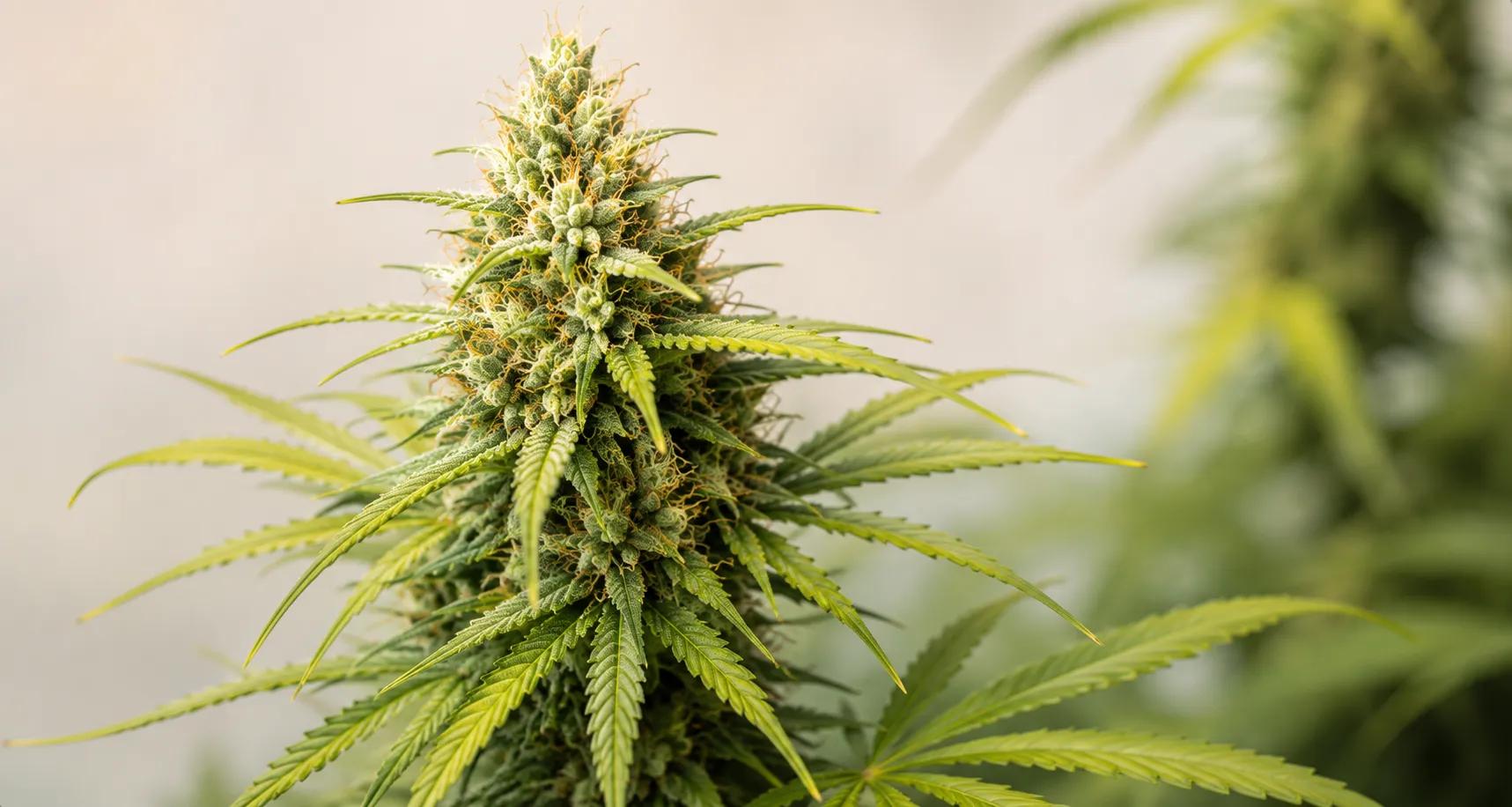
Bisabolol is also found in cannabis. More specifically, it is produced in tiny structures called trichomes.
Cannabis strains rich in bisabolol
You rarely come across a cannabis strain that smells of chamomile. Right? It would be hard to find a cannabis plant that reproduces the aroma of Matricaria chamomilla, because bisabolol is not usually the dominant terpene in any strain. In cannabis, this sesquiterpene occurs at low levels, which translate into background notes.
When we pick up a sweet, floral fragrance in some buds, it is most likely due to bisabolol. But it will always be a subtle nuance. Then again, cannabis breeding is advancing so fast, and focusing so much on the terpene profiles of strains, that it is only a matter of time before we recognise chamomile in some future hybrid.
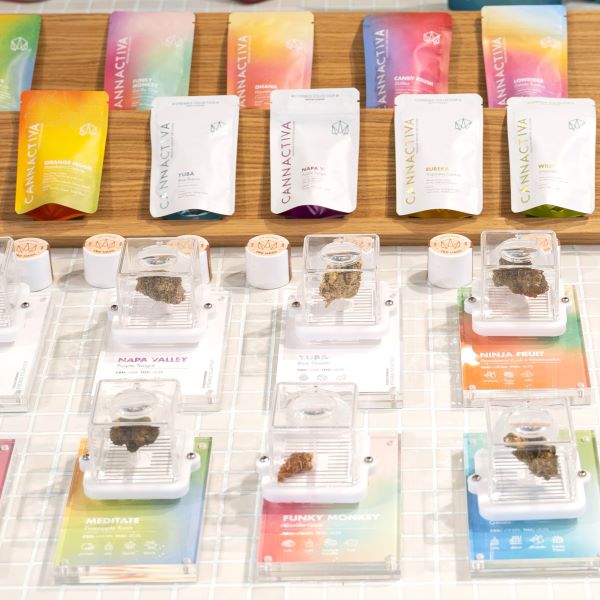
CBD flower rich in bisabolol
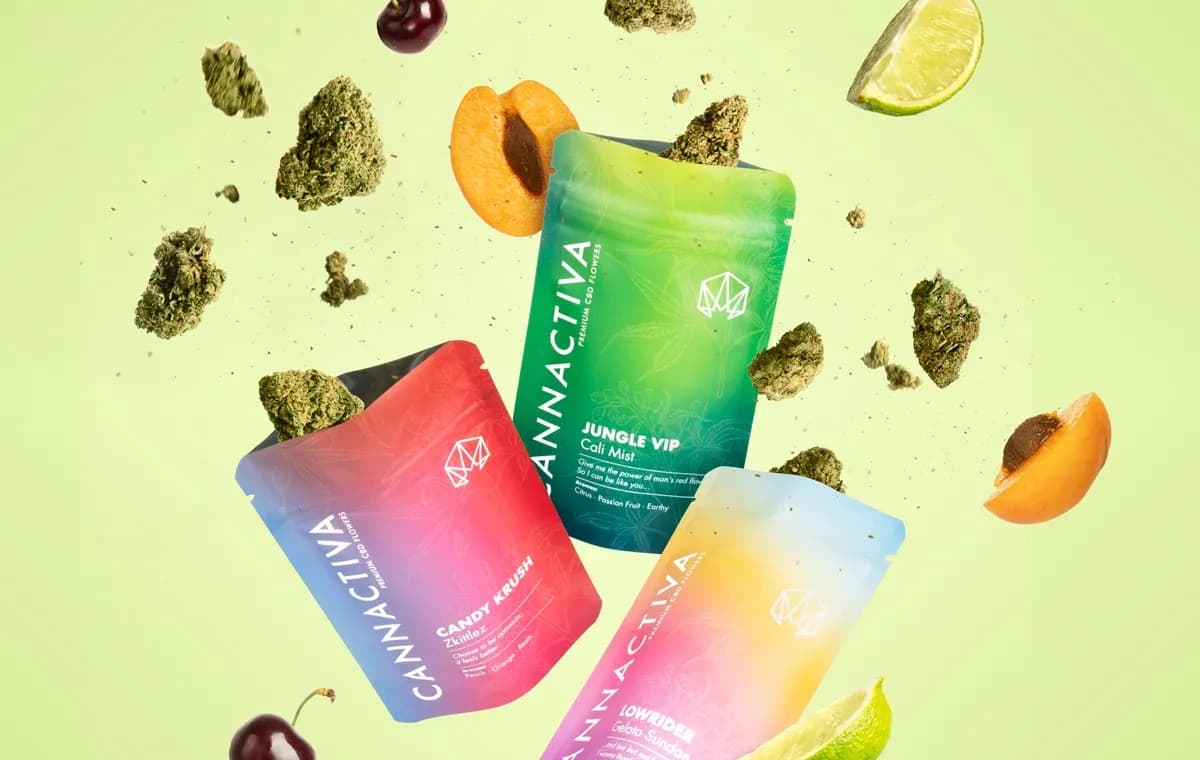
The Cannactiva CBD strains richest in bisabolol are the following:
Bisabolol-rich cannabis strains: the enriching nuance of legendary North American genetics
One strain with notable levels of bisabolol is the North American Headband. This indica-dominant hybrid, the result of crossing OG Kush and Sour Diesel, is highly acclaimed among lovers of “gassy” Kush aromas.
How many connoisseurs chase that pungent smell, herbal at first, then citrusy, and finally fuel-like, which has won over so many devotees through the years! Well, with Headband that fragrance is softened by the sweet, floral notes typical of bisabolol.
Something similar happens with Master Kush, OG Shark and Pink Kush, and, of course, with the forerunner of them all: OG Kush. All these strains produce levels of this sesquiterpene above 0.12%.
That may seem an insignificant percentage, but bearing in mind that a terpene-rich cannabis strain has total levels of between 2 and 4%, we can see that 0.12% is not a very high amount, but it is a significant one.
What effect does bisabolol have in cannabis?
Bisabolol produced by cannabis has the same effects as when the terpene is produced by chamomile or other plants. The only difference is that alpha-bisabolol from cannabis or hemp can enhance the effects of the plant's other active compounds (the rest of its terpenes and cannabinoids) thanks to the cannabis entourage effect.

As the chemist Raphael Mechoulam has scientifically shown that cannabinoids and terpenes act synergistically, we can infer that bisabolol will improve the response of our endocannabinoid system to the active compounds in cannabis.
However, there are still no scientific studies showing which terpenes and cannabinoids bisabolol is able to enhance. But one thing is clear: bisabolol will enrich your cannabis experience.
Because a single compound offers fewer benefits than a strain with all its active compounds together. We paraphrase the title of the study The Case for the Entourage Effect and Conventional Breeding of Clinical Cannabis: No “Strain,” No Gain by Ethan Russo, medical doctor, neurologist and psychopharmacology researcher, to stress that when a particular cannabis chemotype is used with its full range of compounds, its effects are amplified.
Properties and benefits of bisabolol
Bisabolol is a sesquiterpene with anti-cancer, neuroprotective, cardioprotective and antimicrobial properties (1). In addition, thanks to its anti-inflammatory and healing properties, it is a very common compound in countless skincare products (try typing bisabolol into Google and you will see how “creamy” the search results are).
It is so common in industries as popular as skincare and perfumery because it is an ingredient fully regulated for human use. In fact, even before it was catalogued, the scientific literature already recorded that bisabolol has been a terpene used for years in traditional medicine, although in that case the active compound was extracted not from cannabis but from chamomile.
For the skin
Bisabolol features in the formulation of many creams, for both pharmaceutical and skincare use, for its ability to reduce skin inflammation, and as a potentially effective agent for dermatitis, melasma (patches on the skin) and eczema.
Bisabolol's anti-inflammatory action on the skin is due to its ability to reduce the production of cytokines (immune system proteins that cause skin inflammation), as reported in several studies (2).
The benefits of bisabolol for treating dark spots or hyperpigmentation of the skin have also been demonstrated, including melasma, a pigmentation disorder in which sun exposure causes patches on the skin as a result of inflammatory skin conditions. In this clinical study (3), a cream with alpha-bisabolol was applied to 28 women with this problem, and after 8 weeks the skin patches had lightened considerably in most of them.
The benefits of bisabolol, combined with other active ingredients such as glycyrrhetinic acid or zinc (according to the formulation of the cream used in the study), were also noted in a clinical study that found an improvement in skin irritation in children with atopic dermatitis (4).
For pain
Another studied property of bisabolol is its soothing effect, used both for skin conditions and for gastrointestinal discomfort. Who hasn't had a chamomile tea for a stomach ache?
This is due to bisabolol's analgesic properties and its ability to reduce the perception of pain (antinociception). In preliminary studies on chronic pain, α-bisabolol has been shown to reduce pain sensitisation and relieve pain. It has also been observed that it could have positive effects in reducing the inflammation associated with chronic pain (1).
All this points to the potential of bisabolol as a valuable component in products for relieving pain from a range of causes, and we may well see it more and more in pain relief creams.
Other properties of bisabolol
Bisabolol is also being studied for its potential as a neuroprotective agent in neurodegenerative diseases, a field that still poses a major challenge for science today. Its antioxidant, anti-aggregant and anti-apoptotic properties could help preserve neuronal integrity and function.
Its anti-inflammatory and antioxidant properties have also been observed, potentially useful in a wide range of conditions. And of course, its gastroprotective properties, closely linked to the traditional uses of chamomile, have also been confirmed in some studies.
However, research is still under way to understand all of α-bisabolol's mechanisms of action.
That brings to an end this visit to one of the organoleptic temples of cannabis. As usual, the name bisabolol may sound unfamiliar, but as you can see it is very much present in our daily lives. We invite you to experience it in our cannabis strains!
References
- Eddin LB, Jha NK, Goyal SN, Agrawal YO, Subramanya SB, Bastaki SMA, Ojha S. Health Benefits, Pharmacological Effects, Molecular Mechanisms, and Therapeutic Potential of α-Bisabolol. Nutrients. 2022 Mar 25;14(7):1370. doi: 10.3390/nu14071370. PMID: 35405982; PMCID: PMC9002489.
- Maurya AK, Singh M, Dubey V, Srivastava S, Luqman S, Bawankule DU. α-(-)-bisabolol reduces pro-inflammatory cytokine production and ameliorates skin inflammation. Curr Pharm Biotechnol. 2014;15(2):173-81. doi: 10.2174/1389201015666140528152946. PMID: 24894548.
- Lee J, Jun H, Jung E, Ha J, Park D. Whitening effect of alpha-bisabolol in Asian women subjects. Int J Cosmet Sci. 2010 Aug;32(4):299-303. doi: 10.1111/j.1468-2494.2010.00560.x. PMID: 20642768.
- Licari A, Ruffinazzi G, DE Filippo M, Castagnoli R, Marseglia A, Agostinis F, Puviani M, Milani M, Marseglia GL. A starch, glycyrretinic, zinc oxide and bisabolol based cream in the treatment of chronic mild-to-moderate atopic dermatitis in children: a three-center, assessor blinded trial. Minerva Pediatr. 2017 Dec;69(6):470-475. doi: 10.23736/S0026-4946.17.05015-0. PMID: 29181960.