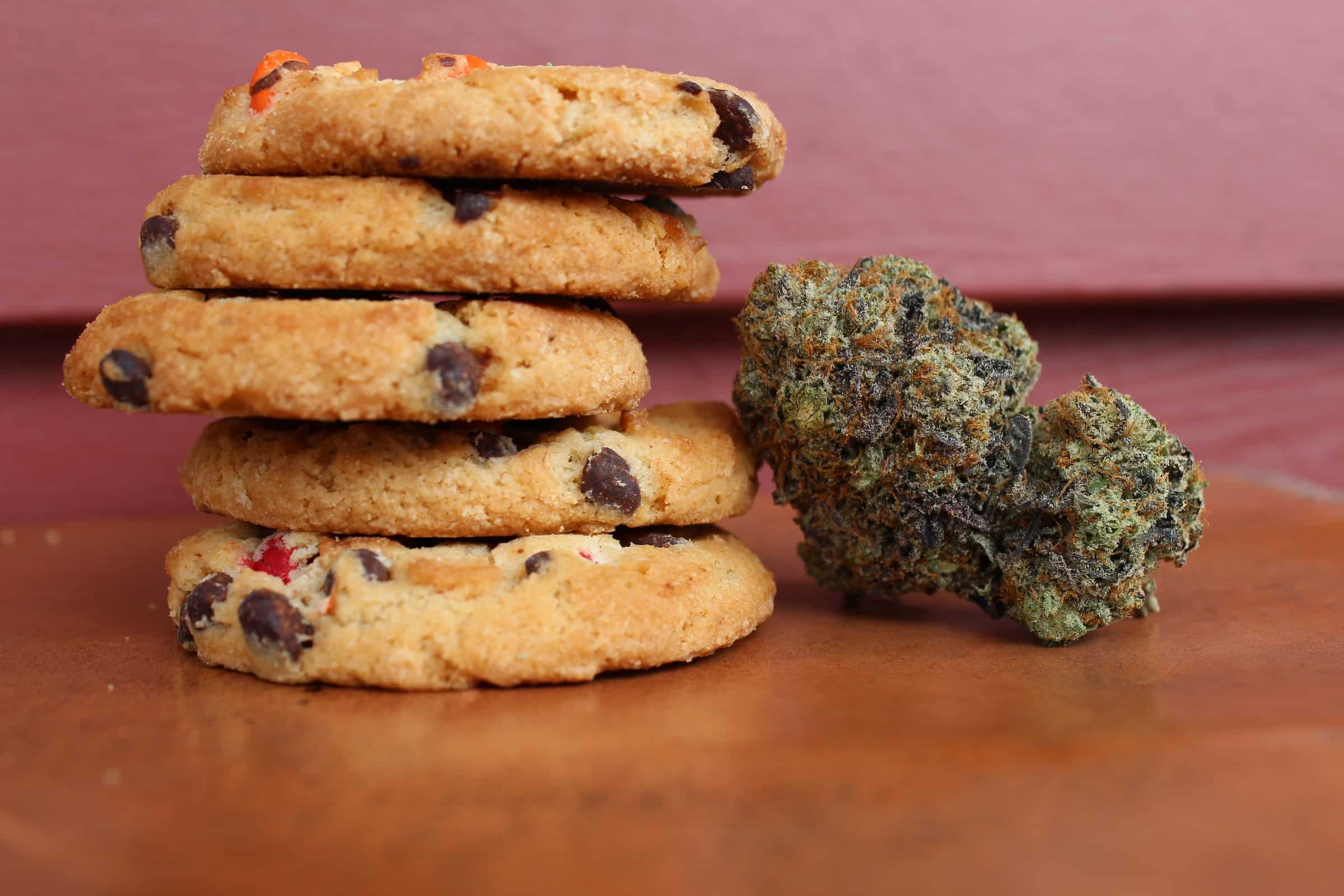
Who doesn't know someone who has experimented with cannabis recipes? Whether it's cookies, brownies or any other comforting sweet treat, the secret ingredient is good cannabis, properly prepared so that it has an effect when you eat it. And that's where the art of cooking with cannabis lies. It's fun, but it's also technique, chemistry and science – you'll feel like an alchemist! Grab your aprons, because we're going to explain everything you need to make cannabis recipes with maximum potency.
Choose the ingredients you like best
The first step is to select a cannabis strain that suits your preferences and needs. Consider both the cannabinoid profile and the terpenes to find the flavour and effects you want. As for cannabinoids, bear in mind that recipes made with cannabis will be highly psychoactive, as they contain tetrahydrocannabinol (THC).
Decarboxylate: heat the cannabis before any recipe
Before adding cannabis to your recipes, it is essential to heat it in a controlled way to activate the cannabinoids. Baking a cake with raw cannabis might seem the same as making it with cannabis that has been heated beforehand, but it isn't! The explanation lies in chemistry. In cannabis, cannabinoids are found in their acidic form, shown by an “A” at the end of the cannabinoid's name (THCA, CBDA...).
When you heat cannabis, a process takes place called decarboxylation, in which the cannabinoids are activated, changing into their neutral form (THC, CBD...) to provide the maximum effect. When we smoke weed, the cannabinoids are decarboxylated by the heat of combustion. When we cook, we can optimise this process and get the most out of the cannabis.
How to decarboxylate cannabis
The thing is, cannabis needs a very precise time and temperature to release its cannabinoids. If you overdo the time or the temperature, you will increase the oxidation and conversion of THC into CBN, a less psychoactive cannabinoid, and the weed will lose potency. Applying too little heat will mean that not all the cannabinoids are activated.
- Grind the dried buds with a grinder.
- Spread them out on a baking tray or in a microwave, if you can control the temperature.
- Preheat the oven to 120°C
- You will usually get good decarboxylation of cannabis at 120°C for about 30 minutes, or at 110°C for 45 minutes.
Time and temperature for decarboxylation
It's worth saying that something that seems as universal as oven temperature is not an exact science. It's impossible to find a perfect time and temperature for decarboxylation at home, for several reasons. The first is that each cannabinoid has a different optimal decarboxylation temperature. In laboratory studies, at a temperature of 150°C for 20 minutes, around 63% of CBDA was seen to convert to CBD, 86% of THCA to THC and 63% of CBGA to CBG. As for terpenoid content, some of the terpenes are lost during decarboxylation because of their volatility. In general, their boiling point is between 155–276°C (monoterpenes such as limonene) and 282–314°C (sesquiterpenes, such as beta-caryophyllene, are less volatile and can withstand higher temperatures).
You'll notice that a lower temperature was recommended earlier. Well, in general, it's best not to overdo the time or the temperature. Also, bear in mind that if you're going to use this cannabis for a cake, there will be another round of baking afterwards in which the cannabinoids can finish decarboxylating. With these points clear, you get cannabis with maximum flavour and potency, ready for any recipe.
Second, every appliance has slightly different temperature control, and some reach temperature sooner than others, which may justify varying the times slightly. Also, using the grill (which is not recommended) can raise the temperature through radiation. Decarboxylating cannabis at home isn't something you can control down to the last detail. Follow your intuition and common sense, and keep an eye on your cannabis's cooking time with care and inspiration. Cooking is an art!
Making cannabis butter (cannabutter) or cannabis oil (cannaoil)
You can choose between two popular methods: cannabutter (cannabis butter) or cannaoil (cannabis oil).
- For cannabutter, melt butter in a pan and add the decarboxylated cannabis. Simmer over a low heat for a couple of hours, then strain the mixture to separate out the plant material.
- For cannabis oil, heat an oil of your choice (such as coconut oil or virgin olive oil) and add the decarboxylated cannabis. Simmer over a low heat for a couple of hours and strain the mixture.
Cannabis recipes
Once your cannabis butter or oil is ready, you can start creating delicious recipes. Some popular options include cannabis brownies, cannabis cookies and cannabis chocolates. Make sure you follow the recommended doses.
Dosage and precautions
Bear in mind that the effects of ingested cannabis take longer to appear but are much stronger and longer-lasting than the effects of smoking or vaping. When you eat a cannabis recipe, its components can take between 30 minutes and 2 hours to take effect. This is because digesting the cannabinoids in edibles takes longer than inhaling smoke or vapour, but the effects last longer.
It's crucial to dose yourself appropriately and responsibly when eating food made with cannabis. Start with one portion and wait long enough (at least 60 minutes, although 2 hours is usually recommended) for the effects to appear before having more.
Please remember that Cannactiva products are not for internal use. Use cannabis at your own risk. If you leave the cake or cookies in the kitchen, put them out of children's reach and add a label warning of their contents, so that no sneaky diner gets an unexpected surprise.