The history of the Club des Hashischins: the Paris Hashish Club
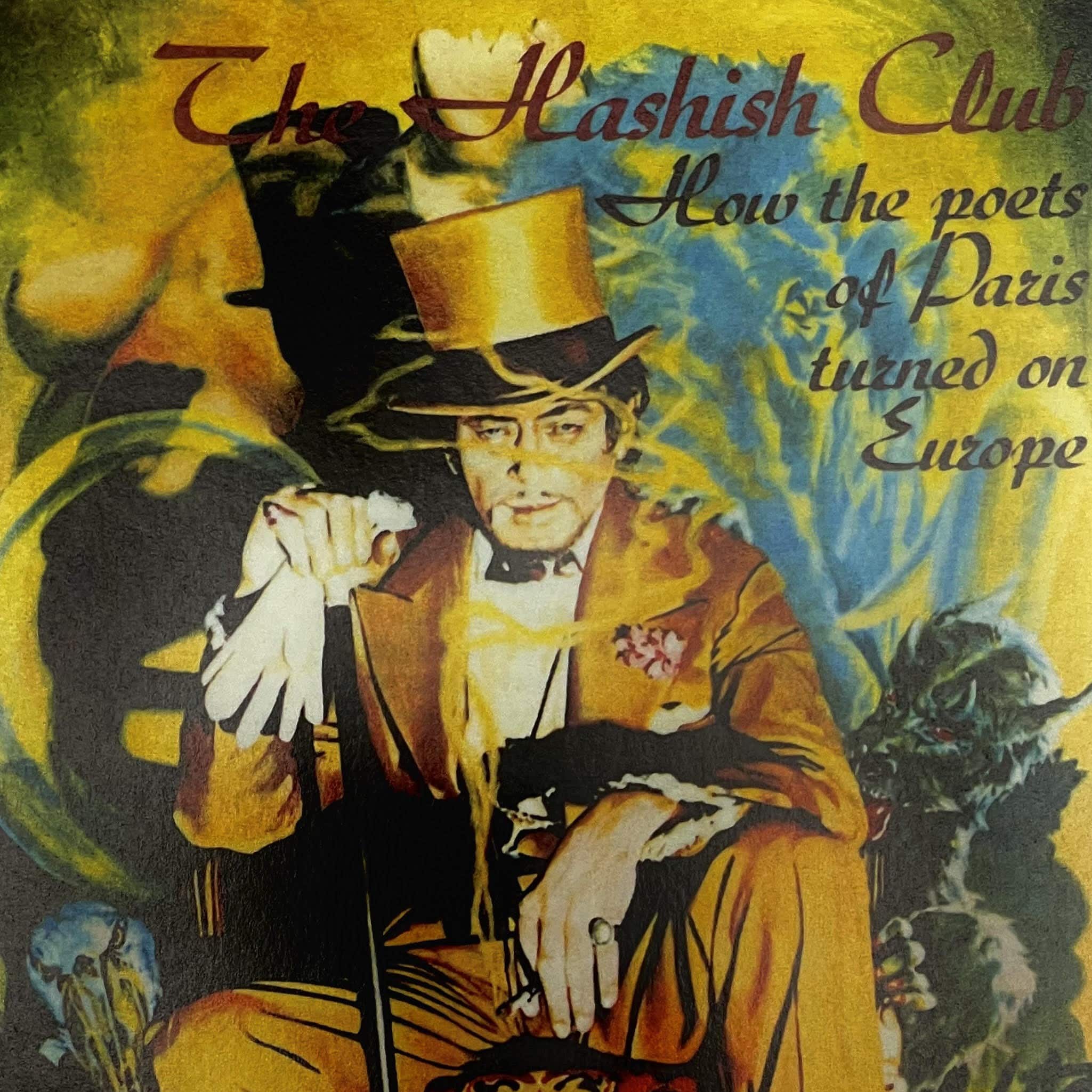
During the 1840s, in Paris, a select group of prominent French writers and artists, such as Théophile Gautier, Charles Baudelaire, Eugène Delacroix, Alexandre Dumas and Victor Hugo, ventured to experiment with hash, inspired by accounts from French soldiers in North Africa and the stories of The Thousand and One Nights.
Fascinated by mystical experiences and the possibility of transcending reality through hash, they founded the Club des Hashischins. This artistic elite held monthly sessions, recording their experiences, both positive and critical, in various articles and books. This is a true story.
History of the Hashish Club: a gathering of restless souls
It was a cold December night in Paris when, after receiving a letter with a mysterious air about it, I decided to head for an address unknown to me. Curiosity took hold of me with every step I took towards the Île Saint-Louis, one of the two natural islands in the heart of the city, in the middle of the Seine, where time seemed to have stood still.
When I arrived, an old mansion, the Hôtel Pimodan, rose majestically before my eyes, like a memory of the past holding out against the onslaught of the present. This was the secret meeting place of the famous Club des Hashischins of Paris.
Once through its doors, I was immediately embraced by an atmosphere charged with mystery and excitement. There they were, seated in a circle and absorbed in lively conversation, the literary and artistic geniuses of the time: Victor Hugo, Alexandre Dumas, Charles Baudelaire, Eugène Delacroix, Gustave Flaubert, Théophile Gautier, Honoré de Balzac, Gérard de Nerval and others whose works had graced the bedside tables of many readers.
The club's members shared a common passion: exploring the mind and soul through hash-induced experiences.
At that time, thanks to Napoleon's expeditions to Egypt in the late 18th and early 19th centuries, and the French conquest of Algeria between 1830 and 1847, hash had begun to gain popularity in Europe, especially in literary, artistic and scientific circles.
With the caution and respect due to any substance that alters perception, we were presented with a small amount of dawamesc, an edible greenish paste made from cannabis resin mixed with fat, honey and pistachios, traditional in Algeria. The taste was bitter yet sweet, and soon that delicacy began to work its magic on our minds.
The walls of the Hôtel de Lauzun began to vibrate with shifting colours and shapes, while the conversations grew ever deeper and more philosophical. The boundaries between reality and fantasy blurred, and each of us shared our deepest dreams, fears and desires.
In the midst of that euphoria, I recalled the words of Dr Jacques-Joseph Moreau, who, after studying the effects of hash during his travels through Egypt, Syria and Asia Minor, concluded that this substance offered a window onto dreams, hallucination and delirium.
But despite the wonderful experiences, the club also remembered the importance of keeping a clear head. As Gautier put it, “the true writer needs only his natural dreams”.

The legacy of the Club des Hashischins
Over time, the Hashish Club broke up, but its legacy lives on. It is not so much about the substance itself as about our constant human quest to understand ourselves, to connect with others and to transcend the barriers of everyday reality.
Today is a good time to remember the spirit of that private club in mid-19th-century Paris: curiosity, respect, connection with people and with oneself, and discovery through experimentation.
In an atmosphere charged with mystery and creativity, these visionaries sought to transcend the conventional limits of perception and plunge into unknown depths of the mind. Inspired by the exoticism of the Orient and the desire to understand human nature from an altered perspective, the Club des Hashischins became a symbol of the intellectual urge to break boundaries, not only in art and literature, but also in the understanding of the self and the world around us.

The Club des Hashischins' sessions and experiments with hash left their mark on its members' work. Théophile Gautier described his experience in “Le Club des Hachichins” (1846). Charles Baudelaire, in “Les Paradis Artificiels”, explored the world of drugs, highlighting both their dangers and their sensations. Dr Jacques-Joseph Moreau, for his part, produced one of the first scientific analyses of hash in 1845, in “Du hachisch et de l'aliénation mentale”.
Gaetano Previati painted The Hashish Smokers in 1887, a vivid and colourful depiction of people absorbed in smoking hash, with a palette and style that capture the ethereal, dreamlike atmosphere associated with the drug's effects. Although not directly related to the club, it is an example of how hash use and altered states of perception captured the imagination of European artists and writers during the 19th century.

This painting reflects the period's interest in and fascination with exotic and mystical subjects, and is in line with the trend of the time to explore and depict the Oriental and the unknown in art.
The interest in exploring and recounting the effects of hash was a phenomenon that crossed borders in the 19th century, bearing witness to many artists' curiosity to explore the outer reaches of the mind and consciousness. On the other side of the ocean, a few years later, Fitz Hugh Ludlow published “The Hasheesh Eater” in 1857, which also recounts his experiences after taking it.

Get inspired
The next time you get together with friends, whether to share a moment of relaxation or simply to chat, remember the spirit of the Club des Hashischins. Dive into the depths of your mind, listen with your heart and let yourself be amazed by the moment.
After all, as Baudelaire said, “One should always be drunk. With wine, with poetry or with virtue, as you please. But get drunk.” And if that intoxication comes from a good conversation, even better. We hope this story has inspired you. See you soon, Cannactivist!