CBD for intestinal diseases: current research on its potential benefits
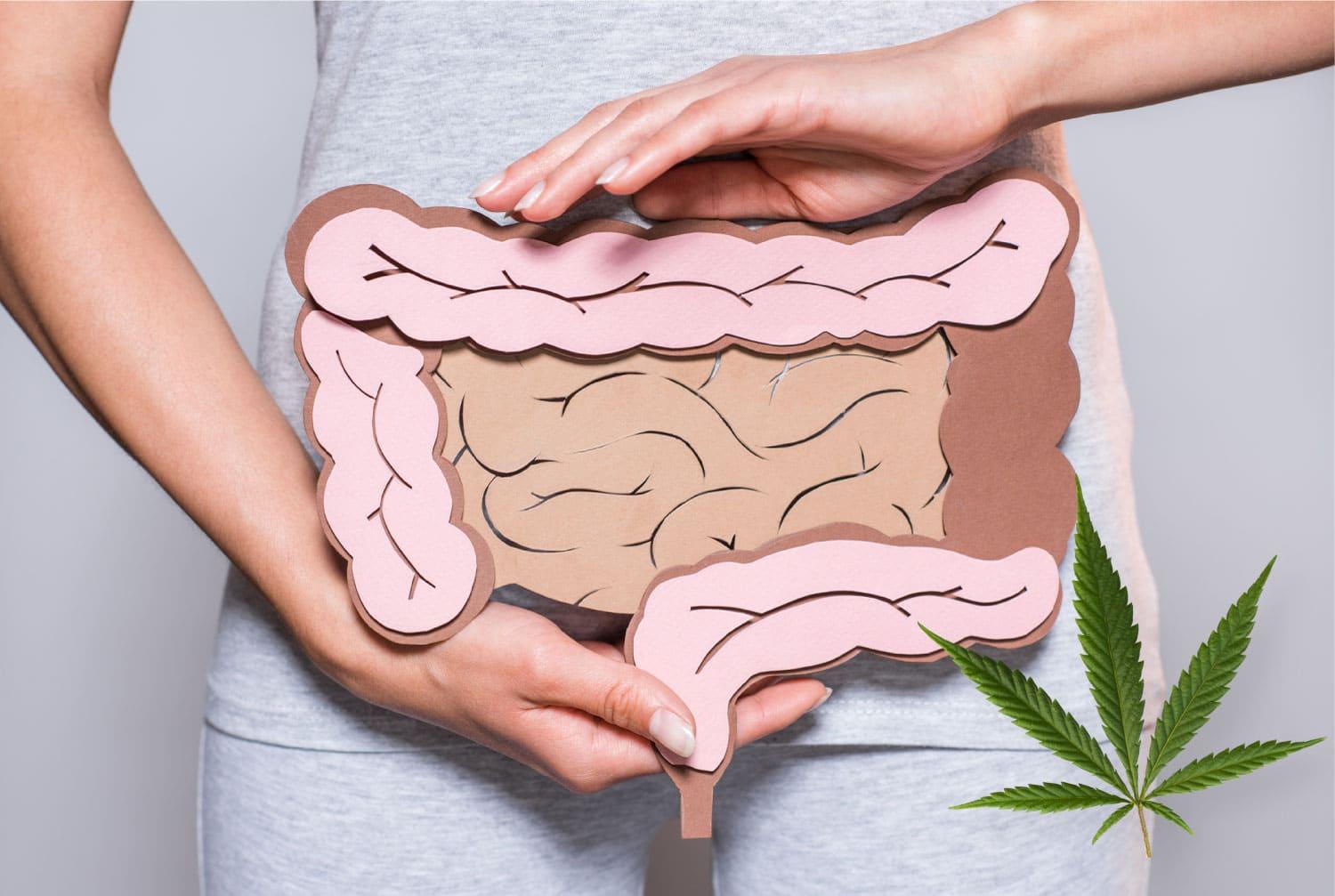
Digestive diseases affect millions of people worldwide, and finding effective solutions can be a challenge. In recent years, CBD (cannabidiol) has gained popularity as a possible treatment for various health problems, including digestive disorders, and especially those affecting the gut. In this article, we take a close look at the therapeutic potential of CBD in the management of digestive disorders and the most recent scientific studies that support its potential efficacy.
CBD and its action on the digestive system
Digestive diseases are linked to alterations in the endocannabinoid system, such as inflammatory bowel disease (IBD), irritable bowel syndrome (IBS), Crohn's disease, ulcerative colitis and gastrointestinal motility disorders.
CBD, by interacting with the body's endocannabinoid system, can regulate physiological processes related to the digestive system.
Mechanism of action
CBD interacts with receptors of the endocannabinoid system, such as CB1 and CB2, which are distributed throughout the brain and in the cells of the digestive system. In addition, CBD has the ability to activate and inhibit several enzymes and other cellular receptors (1). All of this means that CBD has different pathways through which it can help with some conditions of the digestive system.
What digestive diseases might CBD be useful for?
CBD shows therapeutic potential for the following digestive diseases:
- Inflammatory Bowel Disease (IBD), due to its anti-inflammatory effect.
- Irritable Bowel Syndrome (IBS), by influencing gastrointestinal motility and reducing stress.
- Crohn's disease, by alleviating symptoms, although its action is more effective when combined with THC;
- Ulcerative colitis: due to its anti-inflammatory properties; gastrointestinal motility disorders such as constipation and diarrhoea.
- Nausea and vomiting, due to the antiemetic properties of CBD; and in cases of stress and anxiety that present these symptoms.
Below, we tell you more about the research that supports the beneficial potential of CBD for these conditions. Please remember that this is an informational post, based on ongoing research, and it cannot and does not intend to diagnose, prevent or cure any disease or symptom. Its content can complement, but never replace, the diagnosis or treatment of any disease or symptom. Cannactiva products are not medicines and are intended for external use. Consult your doctor before using CBD.
How does CBD help with digestive diseases?
CBD offers a number of potential benefits in the treatment of digestive diseases:
Pain relief
The benefit of CBD as an analgesic has been studied in different conditions. In digestive diseases, results indicate that CBD can decrease intestinal motility, which may be related to a lower perception of pain.
Studies suggest that CBD may decrease intestinal motility and thus abdominal pain.
Intestinal motility is the natural movement of the digestive tract (oesophagus, stomach and intestines) to move food through it. This motility is linked to pain perception in digestive diseases (2).
In contrast, a study conducted in patients with irritable bowel syndrome (IBS) indicated that CBD had no significant effect on pain perception when administered in chewing gum (3). However, the reduction in intestinal motility brought about by CBD could provide relief by helping to manage abdominal pain in patients with inflammatory bowel disease (4).
Reduction of inflammation
In diseases of the gastrointestinal tract, inflammation is an important factor in their persistence and development. The anti-inflammatory effect of CBD can help in intestinal diseases (5) such as irritable bowel syndrome (IBS), inflammatory bowel disease (IBD) and colitis (6).

Protection of the intestinal wall
CBD has antioxidant properties that could play an essential role in protecting the gut against free radicals, which can damage the intestinal walls. Studies have suggested that CBD could help preserve the integrity of the surface layer of the gut, known as the epithelium, during inflammatory processes (7, 8).
Reduction of stress and anxiety
CBD is associated with a sedative effect (9) that could reduce stress and lessen the severity of anxiety, with a fairly broad safety profile (10).
CBD has a sedative effect that can lessen the effects of stress. It has also shown potential as an effective anxiolytic, which may be beneficial for people with digestive diseases.

Improved intestinal motility
CBD has been shown to influence gastrointestinal motility in disease processes, and may help increase or decrease the transit of intestinal contents as required (11, 12, 13). This is of the utmost importance for conditions such as constipation and diarrhoea, as well as for the perception of pain characteristic of gastrointestinal diseases in which motility is altered (4).
Modulation of the immune system
The effect of CBD may help decrease the immune response in some autoimmune diseases (14), which suggests that patients with intestinal autoimmune diseases could benefit.
Crohn's disease is an immune disorder that causes inflammation and irritation of the digestive system. Although CBD does not appear to reduce intestinal inflammation significantly (15) in this disease, it has been linked to relief of some of the symptoms of Crohn's disease when combinations of CBD with THC or tetrahydrocannabinol are used (16).
Nausea and vomiting
Some studies suggest that CBD could have antiemetic properties (17), which means that it could help relieve nausea and vomiting.
CBD for the stomach: is it effective for dyspepsia or indigestion?
In digestive disorders such as dyspepsia or indigestion, although we might think that CBD would have beneficial effects, it appears to have no effect at all on this condition (18).
Limitations of the studies
Research on CBD in digestive disorders may guide us towards better treatments. However, we should not forget that the research findings have some limitations. Most studies have been carried out in animal models or small human populations, which may not be representative of the complex clinical pictures of digestive diseases.
CBD dosage for digestive disorders
Currently, there is no standardised dose of CBD as a treatment for digestive diseases. However, preclinical studies in rodents have used oral doses of 10 mg/kg per day for colitis, and clinical studies analysing the efficacy of CBD in digestive disorders used oral doses of 250 mg twice a day for colitis for 8 to 10 weeks (7, 19).

Final considerations
CBD may work as a complementary therapy in digestive diseases, although more research is needed. Consult your doctor if you have any doubts.
Drug interactions
If you are taking medication for digestive diseases, you should be cautious about possible drug interactions.
Interactions between medication and CBD, although minimal and infrequent, are an important point to consider. Find out more about this topic in our post CBD and medication: what interactions are there?
Multifactorial treatment of intestinal diseases
Another important point is that changes in lifestyle and eating habits can help in the treatment of digestive diseases.
In English, we use the expression have a gut feeling (in Spanish it would literally be “tener un sentimiento intestinal”, although it is translated as “tener un presentimiento o intuición”) to refer to an intuition or hunch that is not necessarily based on logic. There are other similar expressions, such as “trust your gut” (literally “confía en tu intestino” in Spanish) or “to have butterflies in your stomach”. And in Spanish, “tener una reacción visceral” (to have a visceral reaction). All these expressions from everyday language link emotions to the gut.
Interestingly, there is a scientific basis for these expressions. The gut produces a large amount of neurotransmitters, which allows it to communicate with the brain in both directions. This connection between the gut and the brain is called the gut-brain axis. Intestinal diseases can be greatly influenced by mental and emotional state. Therefore, stress reduction and psychotherapy can be an essential pillar in the treatment of these diseases.
Does CBD work for digestive diseases?
While early research suggests that CBD in the management of digestive diseases may be promising, more research is still needed. The anti-inflammatory and analgesic properties of CBD can help alleviate symptoms and improve the quality of life of the people affected.
However, it is always important to consult a healthcare professional before considering CBD for digestive diseases or any complementary treatment. Only a doctor can provide personalised guidance based on individual health and medical history.
Finally, as more research is carried out, CBD may become an important tool in the fight against digestive disorders, bringing hope to those seeking relief and wellbeing.
This article is for information purposes only and is not intended to diagnose, prevent or cure any disease or symptom. Its content can complement, but never replace, the diagnosis or treatment of any disease or symptom. Cannactiva products are not medicines and are intended for external use. We recommend consulting a healthcare professional before using CBD products.
References
- Izzo, A. A., Borrelli, F., Capasso, R., Di Marzo, V., & Mechoulam, R. (2009). Non-psychotropic plant cannabinoids: new therapeutic opportunities from an ancient herb. Trends in pharmacological sciences, 30(10), 515–527. https://doi.org/10.1016/j.tips.2009.07.006
- Kellow, J. E., & Phillips, S. F. (1987). Altered small bowel motility in irritable bowel syndrome is correlated with symptoms. Gastroenterology, 92(6), 1885–1893. https://doi.org/10.1016/0016-5085(87)90620-2
- van Orten-Luiten, A. B., de Roos, N. M., Majait, S., Witteman, B. J. M., & Witkamp, R. F. (2022). Effects of Cannabidiol Chewing Gum on Perceived Pain and Well-Being of Irritable Bowel Syndrome Patients: A Placebo-Controlled Crossover Exploratory Intervention Study with Symptom-Driven Dosing. Cannabis and cannabinoid research, 7(4), 436–444. https://doi.org/10.1089/can.2020.0087
- Bogale, K., Raup-Konsavage, W., Dalessio, S., Vrana, K., & Coates, M. D. (2021). Cannabis and Cannabis Derivatives for Abdominal Pain Management in Inflammatory Bowel Disease. Medical cannabis and cannabinoids, 4(2), 97–106. https://doi.org/10.1159/000517425
- De Filippis, D., Esposito, G., Cirillo, C., Cipriano, M., De Winter, B. Y., Scuderi, C., Sarnelli, G., Cuomo, R., Steardo, L., De Man, J. G., & Iuvone, T. (2011). Cannabidiol reduces intestinal inflammation through the control of the neuroimmune axis. PloS one, 6(12), e28159. https://doi.org/10.1371/journal.pone.0028159
- Irving, P. M., Iqbal, T., Nwokolo, C., Subramanian, S., Bloom, S., Prasad, N., Hart, A., Murray, C., Lindsay, J. O., Taylor, A., Barron, R., & Wright, S. (2018). A Randomized, Double-blind, Placebo-controlled, Parallel-group, Pilot Study of Cannabidiol-rich Botanical Extract in the Symptomatic Treatment of Ulcerative Colitis. Inflammatory bowel diseases, 24(4), 714–724. https://doi.org/10.1093/ibd/izy002
- Jamontt, J. M., Molleman, A., Pertwee, R. G., & Parsons, M. E. (2010). The effects of Delta-tetrahydrocannabinol and cannabidiol alone and in combination on damage, inflammation and in vitro motility disturbances in rat colitis. British journal of pharmacology, 160(3), 712–723. https://doi.org/10.1111/j.1476-5381.2010.00791.x
- Gyires, K., & Zádori, Z. S. (2016). Role of Cannabinoids in Gastrointestinal Mucosal Defense and Inflammation. Current neuropharmacology, 14(8), 935–951. https://doi.org/10.2174/1570159X14666160303110150
- Spinella, T. C., Stewart, S. H., Naugler, J., Yakovenko, I., & Barrett, S. P. (2021). Evaluating cannabidiol (CBD) expectancy effects on acute stress and anxiety in healthy adults: a randomized crossover study. Psychopharmacology, 238(7), 1965–1977. https://doi.org/10.1007/s00213-021-05823-w
- Berger, M., Li, E., Rice, S., Davey, C. G., Ratheesh, A., Adams, S., Jackson, H., Hetrick, S., Parker, A., Spelman, T., Kevin, R., McGregor, I. S., McGorry, P., & Amminger, G. P. (2022). Cannabidiol for Treatment-Resistant Anxiety Disorders in Young People: An Open-Label Trial. The Journal of clinical psychiatry, 83(5), 21m14130. https://doi.org/10.4088/JCP.21m14130
- Story, G., Briere, C.E., McClements, D. J., & Sela, D. A. (2023). Cannabidiol and Intestinal Motility: a Systematic Review. Current Developments in Nutrition. 2475-2991. https://doi.org/10.1016/j.cdnut.2023.101972.
- Capasso, R., Borrelli, F., Aviello, G., Romano, B., Scalisi, C., Capasso, F., & Izzo, A. A. (2008). Cannabidiol, extracted from Cannabis sativa, selectively inhibits inflammatory hypermotility in mice. British journal of pharmacology, 154(5), 1001–1008. https://doi.org/10.1038/bjp.2008.177
- Camilleri M. (2018). Cannabinoids and gastrointestinal motility: Pharmacology, clinical effects, and potential therapeutics in humans. Neurogastroenterology and motility, 30(9), e13370. https://doi.org/10.1111/nmo.13370
- Nichols, J. M., & Kaplan, B. L. F. (2020). Immune Responses Regulated by Cannabidiol. Cannabis and cannabinoid research, 5(1), 12–31. https://doi.org/10.1089/can.2018.0073
- Naftali, T., Mechulam, R., Marii, A., Gabay, G., Stein, A., Bronshtain, M., Laish, I., Benjaminov, F., & Konikoff, F. M. (2017). Low-Dose Cannabidiol Is Safe but Not Effective in the Treatment for Crohn’s Disease, a Randomized Controlled Trial. Digestive diseases and sciences, 62(6), 1615–1620. https://doi.org/10.1007/s10620-017-4540-z
- Naftali, T., Bar-Lev Schleider, L., Dotan, I., Lansky, E. P., Sklerovsky Benjaminov, F., & Konikoff, F. M. (2013). Cannabis induces a clinical response in patients with Crohn’s disease: a prospective placebo-controlled study. Clinical gastroenterology and hepatology. The official clinical practice journal of the American Gastroenterological Association, 11(10), 1276–1280.e1. https://doi.org/10.1016/j.cgh.2013.04.034
- Long, L. E., Malone, D. T., & Taylor, D. A. (2005). The Pharmacological Actions of Cannabidiol. Drugs of the Future, 30(7), 747 – 753.
- Atieh, J., Maselli, D., Breen-Lyles, M., Torres, M., Katzka, D., Ryks, M., Busciglio, I., Burton, D., Carlson, P., Harmsen, W. S., & Camilleri, M. (2022). Cannabidiol for Functional Dyspepsia With Normal Gastric Emptying: A Randomized Controlled Trial. The American journal of gastroenterology, 117(8), 1296–1304. https://doi.org/10.14309/ajg.0000000000001805
- Carvalho, A. C. A., Souza, G. A., Marqui, S. V., Guiguer, É. L., Araújo, A. C., Rubira, C. J., Goulart, R. A., Flato, U. A. P., Bueno, P. C. D. S., Buchaim, R. L., & Barbalho, S. M. (2020). Cannabis and Canabidinoids on the Inflammatory Bowel Diseases: Going Beyond Misuse. International journal of molecular sciences, 21(8), 2940. https://doi.org/10.3390/ijms21082940