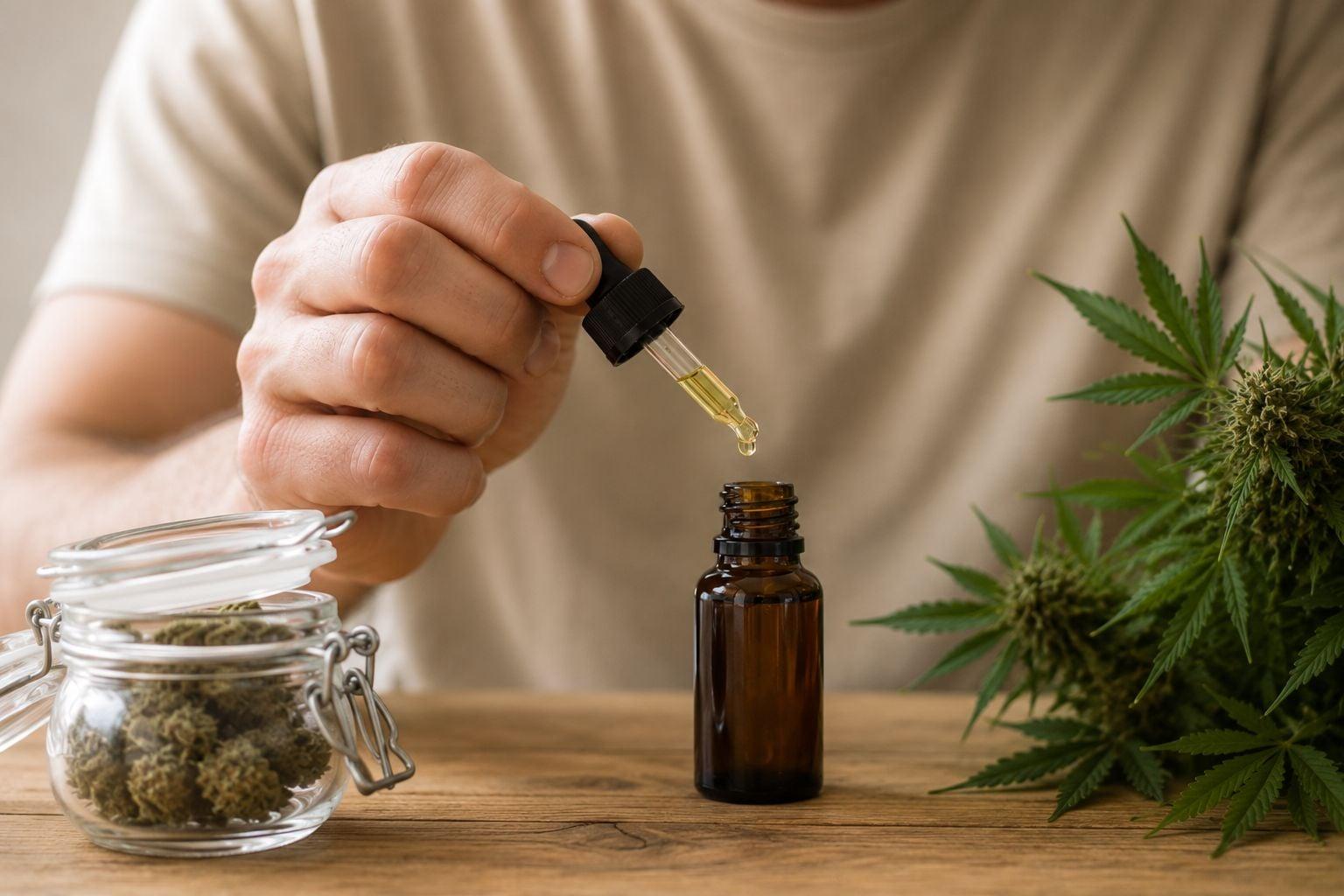
Today on the Cannactiva blog, we'll answer whether CBD can cause headaches, and look at some of the research being carried out into CBD for treating certain types of headache.
Can CBD cause headaches?
In general, so far there's no definitive scientific evidence linking CBD to the onset of headaches, or cephalalgia. In fact, it seems to be quite the opposite: scientific studies have observed that CBD can be a great help in relieving certain types of headache.
According to anecdotal reports from some users, whether CBD can cause headaches is open to debate, which could be because high doses of CBD might cause side effects such as dizziness, drowsiness and, in rare cases, low blood pressure and nausea.
Some low-quality CBD products may contain residues or traces of chemicals left over from CBD extraction, which could be responsible for headaches. This can happen with cannabis extracts made with solvents, such as BHO (extracted with butane) and tinctures (made with alcohol), but not with extracts obtained with supercritical CO2, since carbon dioxide (CO2) leaves no residue in the final product, and therefore can't cause headaches.
To boost the effect for users, some CBD products contain synthetic or semi-synthetic cannabinoids, which have unwanted adverse effects. You can see this in some CBD shops that spray their buds or hash with these kinds of products. At Cannactiva, we have never used these chemicals on our CBD flower or CBD hash.
Likewise, scientific research hasn't found any evidence to support the idea that CBD oil causes headaches or migraines, but in rare cases a particular user may have a specific susceptibility that triggers this type of pain.
On the other hand, a very high dose of CBD could lead to common side effects, which are generally mild and include dry mouth, changes in appetite, hypotension, light-headedness, drowsiness and diarrhoea. Headaches may be due to a combination of factors, such as stress, caffeine, dehydration, lack of sleep or drug interactions.
There could also be a psychological factor that brings on a headache after taking CBD, i.e. a certain kind of predisposition. In other words, predisposition could be a deciding factor in the effect.
As for cannabis containing THC, the psychoactive compound in the cannabis plant, it can cause dehydration, which in turn can cause headaches. It may also affect blood pressure, which could also be linked to headaches.
CBD for headache relief
Scientific evidence suggests that CBD offers potential benefits for relieving certain types of headache; in particular, the benefits of CBD for migraine have been studied (1).
It's important to bear in mind that how effective CBD is for headaches can vary depending on the dose (it's usually more effective for pain at low doses (2)) and the quality of the product used (CBD products with quality guarantees are safer).

The mechanism of action by which CBD would reduce headaches can be explained according to what's causing them. Cannabidiol is a compound with anti-inflammatory, analgesic and anxiolytic properties, which could act on the cause of the headache.
On the other hand, some researchers suggest that CBD doesn't significantly reduce pain, but works differently, by reducing the unpleasantness of pain (3).
In conclusion…
In conclusion, while CBD shows promise in making pain less unpleasant, its effectiveness and possible side effects, including the possibility of causing headaches, can be influenced by the quality, purity and dose of the product.
Very high doses of CBD can cause unwanted side effects. Some articles consider doses from 1,000 mg of CBD a day or 20 mg/kg/day upwards to be high. It's advisable to consult a medical professional to determine the optimal dose.
Finally, remember that CBD quality matters. High-quality CBD oil shouldn't cause headaches, but in a CBD market that is still emerging and not fully regulated, low-quality products can end up on sale. Lower-quality CBD oil is often produced from low-quality hemp strains or contains synthetic cannabinoids such as HHC, which can cause serious side effects.
Note: This is an informative article and is not intended to prevent, diagnose or treat any disease. Its content may complement, but should never replace, any diagnosis or treatment of any disease or symptom. Cannactiva products are not medicines and are intended for external use. Bear in mind that there may be new scientific evidence. For all these reasons, consult your doctor before using CBD.
References
- Chandwani, B., Bradley, B. A., Pace, A., Buse, D. C., Singh, R., & Kuruvilla, D. (2023). The Exploration of Cannabis and Cannabinoid Therapies for Migraine. Current pain and headache reports, 27(9), 339–350.
- Urits, I., Gress, K., Charipova, K., Habib, K., Lee, D., Lee, C., Jung, J. W., Kassem, H., Cornett, E., Paladini, A., Varrassi, G., Kaye, A. D., & Viswanath, O. (2020). Use of cannabidiol (CBD) for the treatment of chronic pain. Best practice & research. Clinical anaesthesiology, 34(3), 463–477.
- Syracuse University. (2021, April 25). Research shows pain relieving effects of CBD. ScienceDaily. Retrieved 17 December 2024.