Today at Cannactiva we take a closer look at the research being carried out on CBD to treat certain types of headache.
Note: This is an informational article and is not intended to prevent, diagnose or treat any disease. Its contents may complement, but should never replace, any diagnosis or treatment of any disease or symptom. Cannactiva products are not medicines and are intended for external use. Consult your doctor before using CBD.
CBD for the treatment of headache
A range of scientific evidence has suggested that CBD or cannabidiol is a safe and well-tolerated natural compound with analgesic and anti-inflammatory effects, which can be of great help in the treatment of certain types of headache disorders such as migraine (1).
In general, CBD can help with pain management and its effectiveness is closely linked to the dose used. There is evidence to suggest that low doses of CBD are more effective for the treatment of pain (2).
On the other hand, some research groups have a different view on the benefits of CBD as an analgesic. A research group at Syracuse University showed that, while CBD did not significantly reduce the intensity of pain, it made it feel less unpleasant. This effect was attributed to both the pharmacological effects of CBD and the psychological impact of expecting to receive CBD (3).
What types of headaches can be treated with CBD?
CBD has been used to treat various forms of headache, including migraines and tension headaches, potentially reducing their severity and frequency.

How does CBD work to relieve headaches?
CBD can relieve headaches through different factors. The anti-inflammatory effects of CBD can decrease brain inflammation and produce pain relief.
Moreover, by interacting with the endocannabinoid system, cannabidiol can influence serotonin, dopamine and GABA levels, which may decrease stress and anxiety, which are common triggers of headaches.
More information: How CBD affects mood and neurotransmitters
Just as there is a psychological factor in the analgesic effect of CBD, or placebo effect, there could also be a psychological factor that induces the presence of headache after CBD consumption, i.e. some kind of predisposition. That is, predisposition could be a determinant in the effect.
What is the recommended dose of CBD to treat headaches?
Some studies have found benefits of CBD for certain types of headaches. According to these studies, determining the appropriate dose of CBD for headache varies depending on factors such as age, weight, type of headache and concentration of the CBD product.
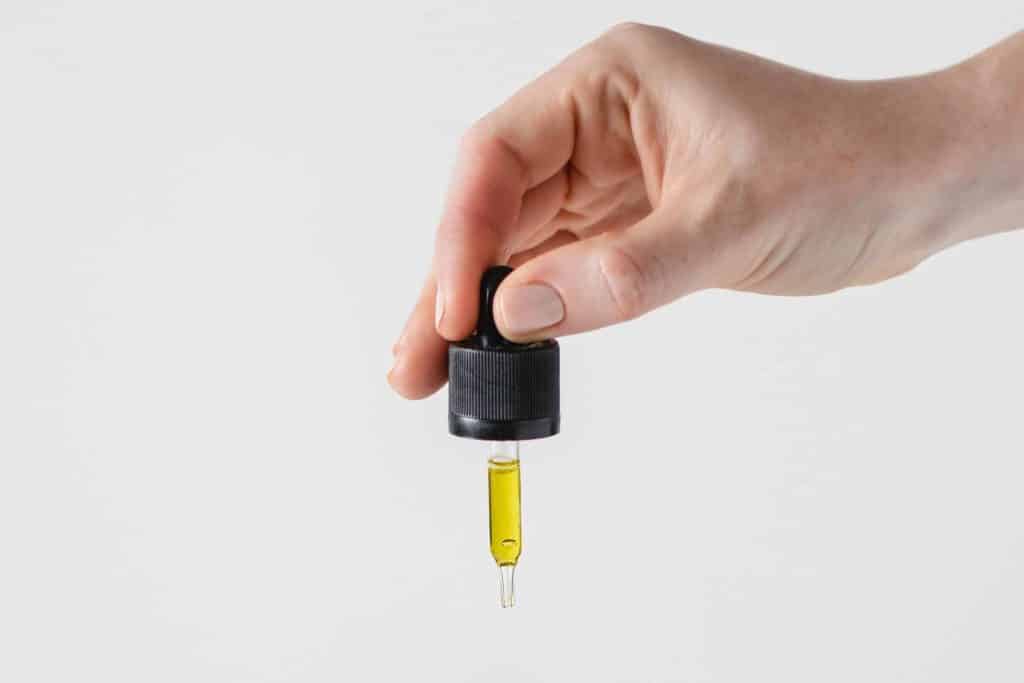
In general, it is recommended to start with a low dose and increase it gradually, always under professional advice. According to the available data, to treat headache, CBD drops could be used once or twice a day, for as long as the pain persists.
In addition, while CBD is generally safe, it is important to consult a doctor before using it, especially if you have health problems or are taking any medication. More information: CBD and medication: what interactions are there?
How long does it take for CBD to take effect?
The time it takes for the effects of CBD to appear depends on the method of consumption. Inhalation methods, such as vaping, can produce effects in about 5 to 20 minutes, while oral forms, such as CBD tinctures and oils, can take between 30 and 60 minutes.
More information: How long does CBD last in the body?
In conclusion…
While there are studies on the potential benefits of CBD as a safe adjuvant therapy to treat certain types of headaches, more research is needed to fully understand how it works and to determine the appropriate dose of CBD for each individual.
It is vital to use high-quality CBD products, in appropriate doses and under professional supervision, to ensure effective and safe use.
Note: This is an informational article and is not intended to prevent, diagnose or treat any disease. Its contents may complement, but should never replace, any diagnosis or treatment of any disease or symptom. Cannactiva products are not medicines and are intended for external use. Bear in mind that there may be new scientific evidence. For all these reasons, consult your doctor before using CBD.
References
- Chandwani, B., Bradley, B. A., Pace, A., Buse, D. C., Singh, R., & Kuruvilla, D. (2023). The Exploration of Cannabis and Cannabinoid Therapies for Migraine. Current pain and headache reports, 27(9), 339–350.
- Urits, I., Gress, K., Charipova, K., Habib, K., Lee, D., Lee, C., Jung, J. W., Kassem, H., Cornett, E., Paladini, A., Varrassi, G., Kaye, A. D., & Viswanath, O. (2020). Use of cannabidiol (CBD) for the treatment of chronic pain. Best practice & research. Clinical anaesthesiology, 34(3), 463–477.
- Syracuse University. (2021, 25 April). Research shows pain relieving effects of CBD. ScienceDaily. Retrieved 17 December 2024.