HHC vs H4CBD: Do you know the differences?
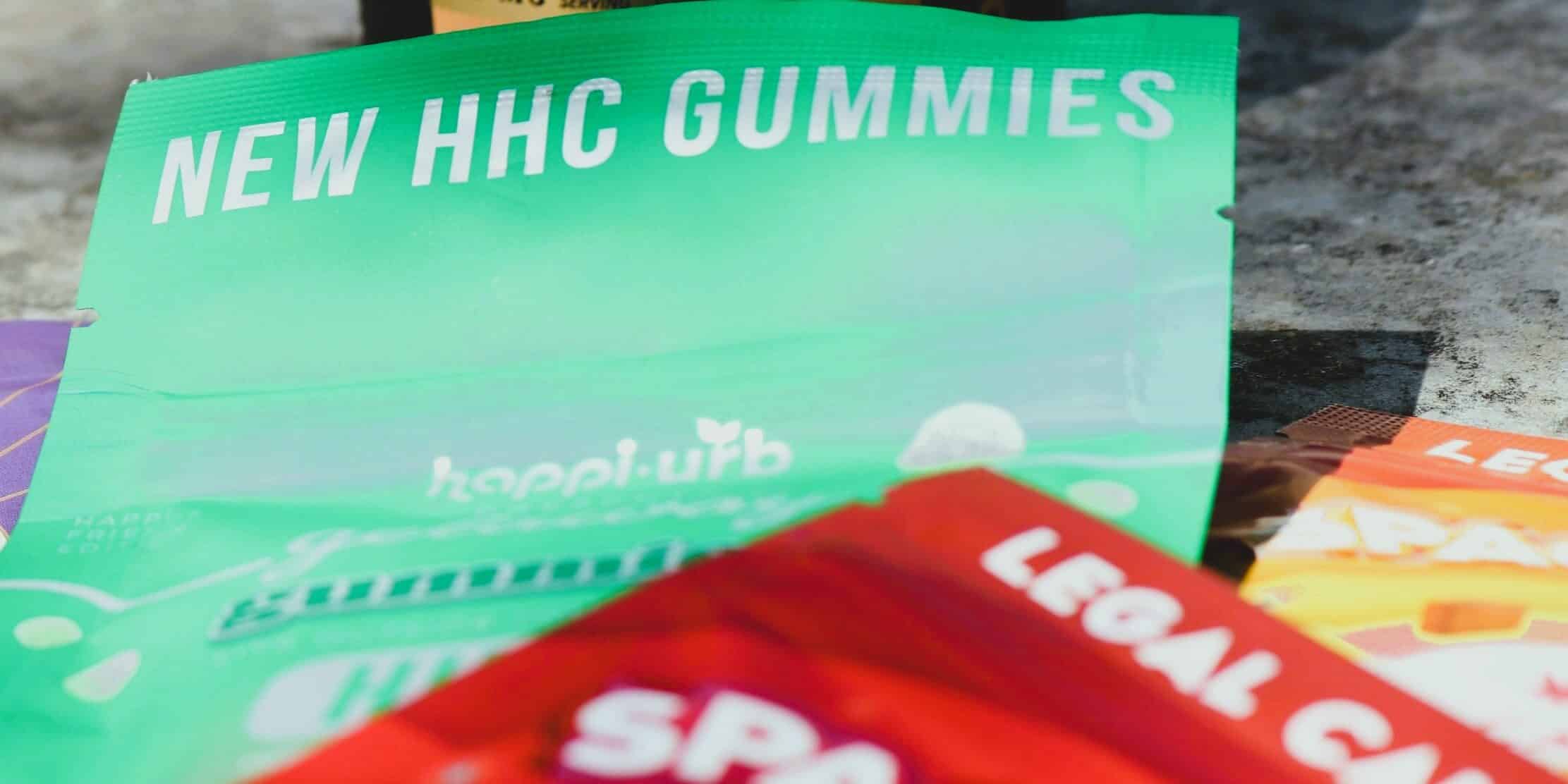
The synthetic cannabinoids HHC and H4CBD are emerging strongly in a loosely regulated and ever-changing market: that of CBD products. Both compounds are sold in cannabis shops, usually added to many hemp or CBD products, such as CBD oils, buds or vape products.
The main selling point of these products is that both have a psychoactive effect, which is promoted as a “legal” alternative to THC, easy to get hold of, for users looking for a cheap substance that gives them a “high”.
HHC or hexahydrocannabinol has already been banned in quite a few European countries due to its risk of addiction and adverse effects, and in Spain both HHC and H4CBD have been banned since April 2025.
Today on the Cannactiva blog, we explain how H4CBD and HHC differ, their distinctive effects, and finally we settle which of the two is better.
What are H4CBD and HHC?
H4CBD
H4CBD (hydrogenated CBD or tetrahydrocannabidiol) is a semi-synthetic cannabinoid that is not found naturally in the cannabis plant.
Although it is made from CBD or cannabidiol, H4CBD has a unique molecular structure, due to the addition of hydrogen, which gives it different effects from CBD, including some psychoactivity.
H4CBD is mainly found in countries where HHC is illegal, although it is possible to find, in some countries, a cocktail of both types of cannabinoids.
HHC
HHC (hexahydrocannabinol) is a cannabinoid with a psychoactive effect that occurs naturally in the cannabis plant, albeit in very small amounts. All HHC products are semi-synthetic in origin, obtained from THC (tetrahydrocannabinol), or made by chemical synthesis.
It has similarities to THC, including addictive potential. It also carries added health risks, due to the lack of control and quality of the HHC products on the market. For these reasons, many European countries have joined the HHC ban, including Austria, Belgium, Denmark, the United Kingdom, France, the Czech Republic and Spain.
Main difference between HHC and H4CBD
The main difference between these two compounds is that H4CBD is a semi-synthetic compound, obtained from CBD, that is not found in nature. By contrast, HHC is synthesised from THC, through a process that also alters its molecular structure. Unlike H4CBD, HHC does occur naturally in the plant (albeit in very small amounts).

At the molecular level, H4CBD and HHC have almost identical molecular formulas: C21H34O2 and C21H32O2, respectively. This clearly sets them apart from CBD, whose molecular formula is C21H30O2. This similarity between H4CBD and HHC can be seen in the shape of the molecules:

H4CBD and HHC: What are their effects?
In terms of molecular shape, H4CBD sits closer to CBD. However, H4CBD has not been shown to have the benefits of CBD, but it does have a psychoactive effect. The mental effects of H4CBD are due to its interaction with the CB1 receptors of the endocannabinoid system (2), which are mostly found in the brain.

By contrast, HHC produces an experience closer to THC, with less pronounced but longer-lasting psychoactive effects. This cannabinoid also acts on the CB1 receptors, which are responsible for the psychoactivity of THC in cannabis.
In the end, both are psychoactive cannabinoids with little research or data behind them, raising serious doubts about their safety.
H4CBD vs HHC: Differences in how they are made
The main difference between these two compounds is that H4CBD is a semi-synthetic compound that is not found in nature. It is obtained by hydrogenating CBD, transforming its chemical structure in the lab.
By contrast, HHC is synthesised from THC, through a process that also alters its molecular structure. Unlike H4CBD, HHC does occur naturally in the plant (albeit in very small amounts).
Differences between the effects of HHC and H4CBD
The main difference lies in their origin and effects. While HHC is a THC derivative with psychoactive properties, H4CBD is a modified version of CBD, with less intense psychoactive effects than HHC.
Differences in the legality of H4CBD and HHC
In many countries, HHC, H4CBD and Delta-8 are already controlled and banned; in Spain, HHC and H4CBD have been banned since April 2025 (Order SND/380/2025). At Cannactiva we do not recommend buying them: they are synthetic in origin, of doubtful traceability, and there have been serious cases. If you still want to, check the law in your country very carefully, because it is dangerous.
And more and more countries are outlawing them: HHC has been banned in several European countries, and there may be legal developments regarding the other cannabinoids in the coming months.
In addition, under the European legal framework, adding cannabinoids to edibles such as gummies is not permitted.
H4CBD or HHC: Which is better?
The synthetic cannabinoids H4CBD and HHC are added to many hemp or CBD products to make products such as HHC buds, HHC hash, HHC vapes and more.
It is difficult to decide between H4CBD and HHC. Both products promise a psychoactive experience. HHC seems a worse option, more similar to THC, and with data indicating its potential for abuse and health risk, which is why some countries have already banned it.
H4CBD products sell more in countries where HHC is illegal, for obvious reasons. In some countries, it is possible to find cocktails of both types of cannabinoids. However, H4CBD or hydrogenated CBD is not a safe compound, as there is insufficient data on its toxicity and possible risks.
Conclusions
HHC and H4CBD are emerging as psychoactive alternatives on the cannabis market. Both face bans in Europe due to safety concerns (in Spain, since April 2025), and both raise doubts about their effects and safety.
At Cannactiva, we will keep offering you the best of cannabis: top-quality premium CBD flower and CBD hash of the finest quality. Because the perfection and balance that nature offers us is unmatched! Bear in mind that in some countries, such as the UK, hemp flower is controlled even when its THC content is low.
Frequently asked questions
What is H4CBD?
It is a semi-synthetic derivative of CBD (hydrogenated CBD) with a mild psychoactive effect. We cover it in depth in what H4CBD is.
Are HHC and H4CBD legal in Spain?
No. Both have been banned in Spain since April 2025 (Order SND/380/2025), which added HHC, H4CBD and other derivatives to the list of controlled substances.
What is the legal alternative?
CBD: natural, well-researched and legal. Compare it in CBD vs HHC and HHC vs THC.