H4CBD, also called hydrogenated CBD, THD or tetrahydrocannabidiol, is an emerging synthetic cannabinoid. It is an altered form of CBD that, according to what users report, has similar effects to CBD, but with a slight psychoactive effect. Although it is not yet very popular, H4CBD products are starting to fill the shelves of many CBD shops.
Below, we tell you more about what H4CBD is, its effects, possible applications, legal framework, and why this cannabinoid raises serious doubts about its safety.
What is H4CBD?
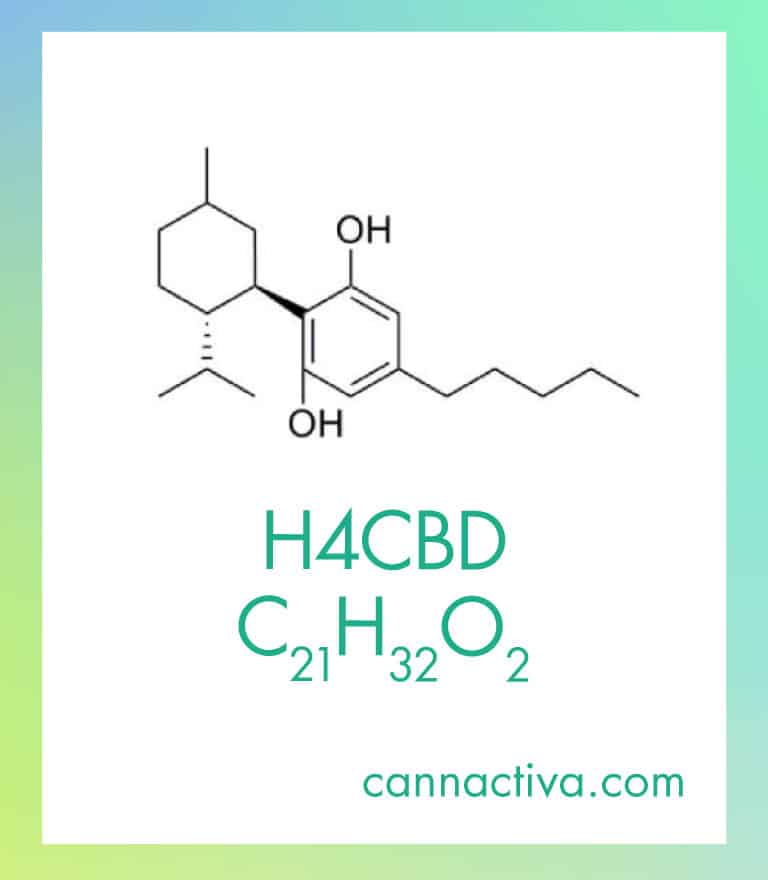
H4CBD is a type of synthetic cannabinoid produced from CBD (cannabidiol). H4CBD is a CBD analogue to which hydrogen has been added synthetically.
This cannabinoid is not found naturally in the hemp plant; it can only be obtained through chemical transformations in laboratories.
The chemical formula of H4CBD is C21H34O2, and it is characterised by its unique structure resulting from hydrogenation. Because 4 hydrogens are added to CBD, it is also called tetrahydrocannabidiol or THD.
The name tetrahydrocannabidiol or THD has not been used in scientific studies, but various sources on the web have started to use it.
Origin and synthesis of H4CBD
H4CBD is synthesised through a hydrogenation process using different chemical methods (1). In this process, the unsaturated bonds of CBD are saturated with hydrogen atoms. The molecular structure of CBD thus changes to become H4CBD, opening up new possibilities for biological activity in the body.
Differences between H4CBD, CBD and THC
H4CBD is an altered form of CBD and, according to what users report, has similar effects to CBD, but with a slight psychoactive effect.
One peculiarity is that there is no conversion pathway from H4CBD to THC (tetrahydrocannabinol). This stands out, as there is a hypothesis that part of CBD's anxiolytic or sedative effect is due to the fact that, when taken orally, it is converted to THC through a chemical reaction with gastric acid (1).
In other words, if one of the properties of H4CBD is that it has a slightly THC-like effect, it does so through its interaction with the endocannabinoid system and not through a possible conversion to a psychoactive molecule when ingested orally.
H4CBD and the endocannabinoid system
The endocannabinoid system (ECS) has different receptors in our body, the best known of which are the cannabinoid receptors CB1 and CB2. It is through the various receptors of the endocannabinoid system that several physiological processes can be regulated, and so cannabinoids can produce different responses.
The effects of H4CBD are related to its affinity for the CB1 receptor of the endocannabinoid system (2); these receptors are mostly found in the brain.
It is very likely that, as a result of its interaction with the CB1 receptor, the effects of H4CBD may be perceived as psychoactive.
Likewise, not all the possible cellular targets of H4CBD are known yet. It is still too early to draw conclusions about the effects of hydrogenating CBD.
Does H4CBD have any benefits or therapeutic applications?
The properties of H4CBD are not yet fully understood. One might even think that the benefits of H4CBD could be similar to those of CBD, but it has been shown that it does not have an anti-inflammatory effect like that of CBD (3). However, although its role in inflammation is small, H4CBD can inhibit tumour necrosis factor (TNF-α) (3), which is involved in the inflammatory process. Ultimately, whether the effects of H4CBD could have potential implications for the field of cannabinoid-based therapeutics is something science has yet to answer.
Although it is obtained from CBD, H4CBD has not been shown to have the benefits observed with CBD, or cannabidiol.
How is H4CBD taken?
The dose of H4CBD is not known. Studies have been limited to the experimental setting, so there are no guidelines of any kind for working out a suitable dose of H4CBD. This knowledge gap highlights the importance of being cautious when considering the use of synthetic cannabinoids such as H4CBD, as the full effects of these compounds are not yet completely understood.
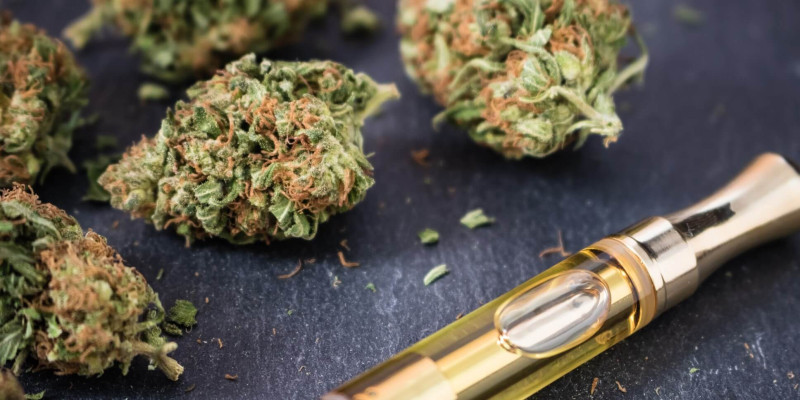
H4CBD products are currently available commercially in some countries. These H4CBD products range from cannabis flower to gummies, tinctures and oils.
H4CBD is not found in the cannabis plant, so if you come across cannabis flower with H4CBD, it has been added to the flower.
For example, by spraying H4CBD onto CBD flower. Don't forget that H4CBD is a synthetic compound.
Side effects and toxicity of H4CBD
The scientific evidence available on the toxicity of H4CBD is limited. One study on human cells is known (4). However, it is an “in vitro” study, in which H4CBD was tested on lung cells, liver cells and neural stem cells as a model, and the results could differ when applied to the “living” human body.
The side effects of H4CBD have not yet been documented, so the possible risks of H4CBD should not be ruled out.
Legal status and regulation of H4CBD
H4CBD is not found naturally in cannabis plants; it is an artificial compound. Like other synthetic cannabinoids such as HHC, it is already controlled and banned in many countries; in Spain, since April 2025 (Order SND/380/2025). At Cannactiva we don't recommend buying it: it is synthetic in origin and of dubious traceability, and serious cases have been seen. If you still want to, check the law in your country very carefully, because it is dangerous.

In countries where it is not yet banned, H4CBD regulations could be defined over the coming years as scientific research develops and provides more answers about the use of H4CBD.
In general, H4CBD is a cannabinoid whose presence on the market is starting to stand out. As there is still no definitive information on the properties, effects and toxicity of H4CBD, combined with the lack of quality control of these products, special care should be taken with its use and possible abuse. HHC has shown us an example of these risks: a cannabinoid that began to be sold in a “not illegal” way, but which has shown addictive potential and health risks.
For now, at Cannactiva we will keep offering you the best CBD flower in Europe, of organic quality, 100% natural and free from synthetic products. Because the highest perfection can only be achieved by nature!
References
- Collins A, Ramirez G, Tesfatsion T, Ray KP, Caudill S, Cruces W. Synthesis and Characterization of the Diastereomers of HHC and H4CBD. Natural Product Communications. 2023;18(3). https://doi.org/10.1177/1934578X231158910
- Ben-Shabat, S., Hanus, L. O., Katzavian, G., & Gallily, R. (2006). New cannabidiol derivatives: synthesis, binding to cannabinoid receptor, and evaluation of their antiinflammatory activity. Journal of medicinal chemistry, 49(3), 1113–1117. https://doi.org/10.1021/jm050709m
- Tesfatsion, T., Ramirez, G., Collins, A., Ray, K., & Cruces, W. (2022). Evaluation of In-Vitro Cytotoxicity, Genotoxicity and Cardiac Safety of Hydrogenated Cannabidiol on Cells Using Metabolic Assay, AMES and hERG Test. PREPRINT (Version 1). https://doi.org/10.21203/rs.3.rs-2256889/v1