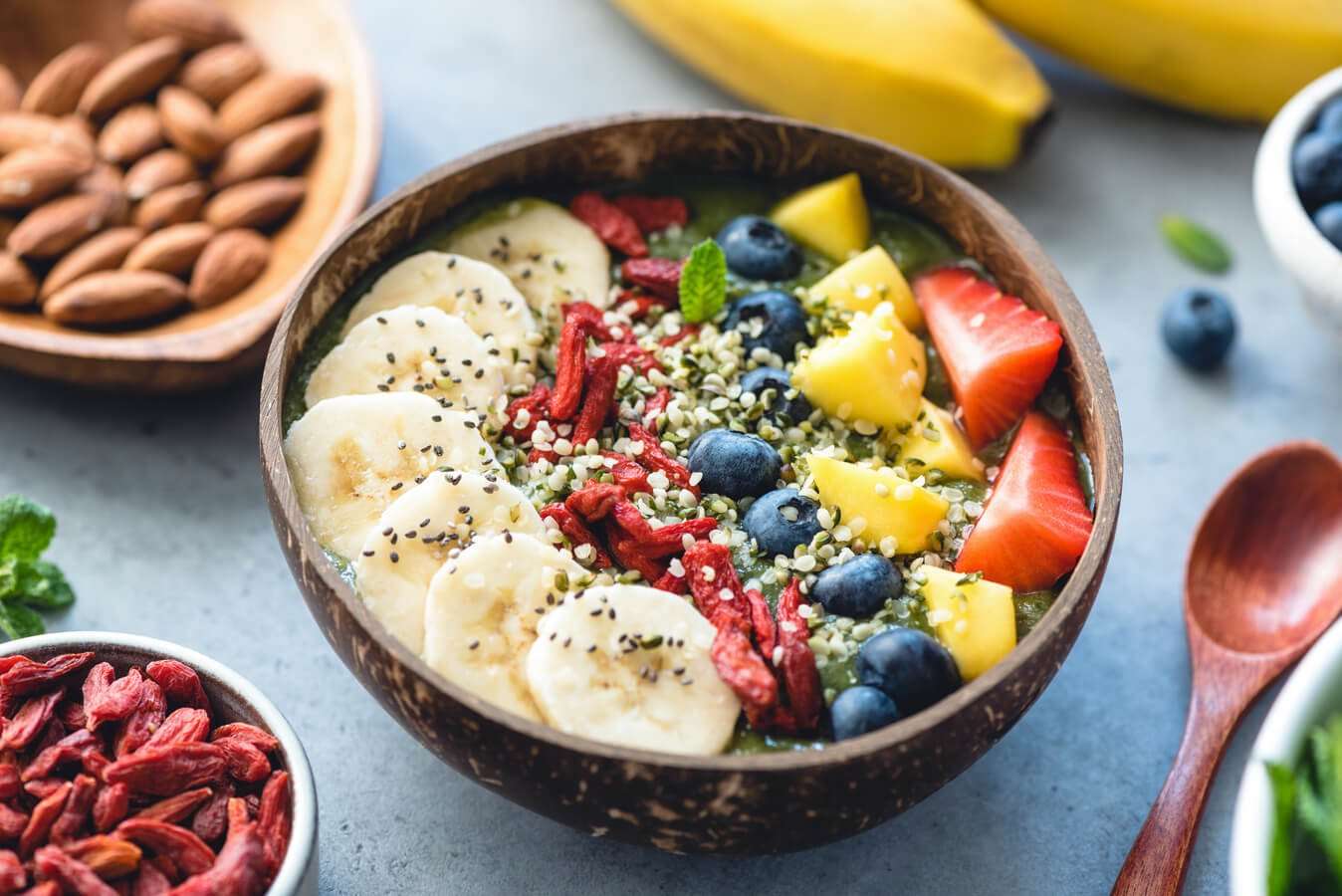
Have you tried adding hemp seeds to your diet yet?
Hemp seeds are very rich in omega 3, protein, fibre and minerals for your health. Adding them to your diet is like taking a multivitamin, only tastier and more nutritionally complete. In this article you'll find the nutritional properties and benefits of hemp seeds, explained by our nutritionist.
The discovery of hemp seeds
Although hemp seeds were traditionally eaten in Asian countries, the West only discovered them just under half a century ago. Once their nutrients had been analysed and quantified, the value of these seeds as human food became clear.
In Spain, hemp seeds boomed with the superfood trend, because they really are very nutrient-dense. The truth, though, is that they reached Spain much earlier, as bird food. It's funny to remember that you used to find them only in shops selling bird seed (cañamones, which are the seeds still in their shells). Today, hemp seeds are available in most health food shops, adding to the huge range of nutritious foods we can include in our diet.
Hemp oils can also be made from the seeds. See our hemp seed oils in our CBD shop.
What nutrients do hemp seeds provide?
Hemp seeds stand out as an extraordinary source of omega 3, protein, fibre, phosphorus, magnesium, iron and zinc.
Omega 3 is one of the essential fats (essential fatty acids), which the human body needs to build its structures but cannot synthesise. That's why it's important to include foods rich in omega 3 in your diet.
From the omega 3 in food, the body can synthesise antioxidant and anti-inflammatory substances, which it needs to function properly.

Per 100 g, hemp seeds contain:
- Iron 57% NRV *
- Magnesium 187% NRV *
- Phosphorus 236% NRV *
- Zinc 100% NRV *
* NRV = Nutrient reference values.
Do hemp seeds contain CBD or THC?
It's worth making clear that these seeds don't contain cannabinoids, since these compounds are found in the trichomes of the plant's flowers, not in the seeds.
Although it's quite a widespread myth, hemp seeds are not a source of cannabinoids. They contain no THC or CBD, not even in tiny amounts, unless the food has been contaminated with cannabis flower. So you shouldn't expect any psychoactive effect from eating hemp seeds.
Nutritional composition of hemp seeds
Nutrient | Per 100 g | 15 g (1 tablespoon) |
Energy | 553 kcal | 83 kcal |
Protein | 31.6 g | 5 g |
Fat | 48.8 g | 7 g |
of which saturates | 4.6 g | 1 g |
of which monounsaturates | 5.4 g | 1 g |
of which polyunsaturates | 38.1 g | 6 g |
Omega 3 | 8.7 g | 1.3 g |
Carbohydrate | 8.67 g | 1 g |
of which sugars | 1.5 g | 0.23 g |
Fibre | 4 g | 0.6 g |
Salt | 0 g | 0 g |
Calcium | 70 mg | 11 mg |
Iron | 8 mg | 1 mg |
Magnesium | 700 mg | 105 mg |
Phosphorus | 1,650 mg | 248 mg |
Potassium | 1,200 mg | 180 mg |
Sodium | 5 mg | 1 mg |
Zinc | 10 mg | 2 mg |
Source: USDA, 2021.
Benefits of hemp seeds
Adding hemp seeds to our dishes gives us extra omega 3, protein, fibre and minerals. The main benefits of this change to your diet include:
- Because of their high omega 3 content, they are highly recommended in diets for obesity, pain, fibromyalgia and dysmenorrhoea, and in general for any condition involving inflammation.
- Thanks to their protein and mineral content, they are an ideal remineralising food at every stage of life, but especially during growth, helping to build bone and muscle mass. They are also recommended for anyone who needs extra protein in their diet, such as athletes.
- Their carbohydrate content is low, which, together with their nutritional profile, makes them an ideal food for people with diabetes or obesity, and suitable for ketogenic diets.
- Thanks to their fibre and fat content, they are highly recommended in diets for constipation.
- They are a food rich in iron, which can be added to any dish in cases of anaemia, during pregnancy and breastfeeding, or in any diet with higher iron requirements.
- They are very rich in magnesium, an intake that is worth increasing in diets for high blood pressure, heart health, athletes, fibromyalgia, insomnia and tiredness.
- They are high in phosphorus, an essential mineral for healthy brain function, as it forms part of the phospholipids in neurons. Students, people preparing for competitive exams, intellectuals, creatives… These seeds get your mind going!
- Because of their high zinc content, they are recommended in diets to boost fertility and the immune system.

Add hemp seeds to your diet, and within a few days you'll notice you feel full of energy and vitality.
Are hemp seeds high in calories?
A generous serving of hemp seeds, such as 1 heaped tablespoon (around 15 g), provides 83 kcal. That's not many calories, considering how many nutrients they contain.
People who need to follow a low-calorie diet to lose weight can eat hemp seeds, which will also give them all the benefits of the essential fats and other nutrients mentioned above.
What do hemp seeds taste like?
They have a very mild flavour, reminiscent of walnuts and pine nuts, with a few bitter notes from the hemp.
You can add them to both sweet and savoury recipes: their neutral flavour goes with everything.
How to eat hemp seeds
Here are a few tips for adding hemp seeds to your diet:
- The best way to eat them is raw, because that way they keep more of their nutritional benefits.
- Add hemp seeds to yoghurts, Buddha bowls, fruit smoothies or green smoothies.
- In all kinds of salads: green salads, pulse salads, quinoa, rice or potato salads.
- You can blend them with oil, garlic and salt to make a pesto-style sauce, as an alternative to pine nuts.
Dietary tips
In summer we tend to eat lots of fruit and vegetables, foods that by nature aren't very dense in minerals, protein or omega 3. So in summer more than ever, we recommend always adding seeds to your diet. Your body will need the nutrients in hemp seeds to keep up with the pace of the holidays!
Have you tried them yet? Feel free to send us any questions you have and we'll pass them on to our nutritionist!