CBD for psoriasis: potential benefits and applications
CBDSkin & cosmetics
💥 PRE-BLACK FRIDAY: UP TO -40%! 🚀
⭐ +15,000 reviews — 4.8/5
🔥 LIMITED OFFERS · FILL YOUR CART! 🛒
🚀 Free shipping in 48-72 h from €60 🔥
To mark World Psoriasis Day, we bring you a post on the research carried out on CBD and its potential benefits for psoriasis. This post is informational and is not intended to prevent, diagnose or treat any disease. Consult your doctor before using CBD. Cannactiva products are not medicines.
Psoriasis is a chronic autoimmune disease that can cause red, scaly patches to appear on the skin. Although there is no known cure for psoriasis, some people find relief from the use of CBD.
CBD or cannabidiol is a medicinal compound obtained from the resin of the flowers of the hemp plant (Cannabis sativa). Recent research has found that this cannabinoid may have therapeutic effects on psoriasis through the skin's endocannabinoid system.
The endocannabinoid system is a complex network of cellular communication distributed throughout the body. It is responsible for maintaining homeostasis, i.e. biological balance, by promoting an appropriate response from the body to situations that cause imbalance or disease, as is the case with psoriasis. This system is therefore linked to different physiological processes that take place in organs and systems, including the skin.
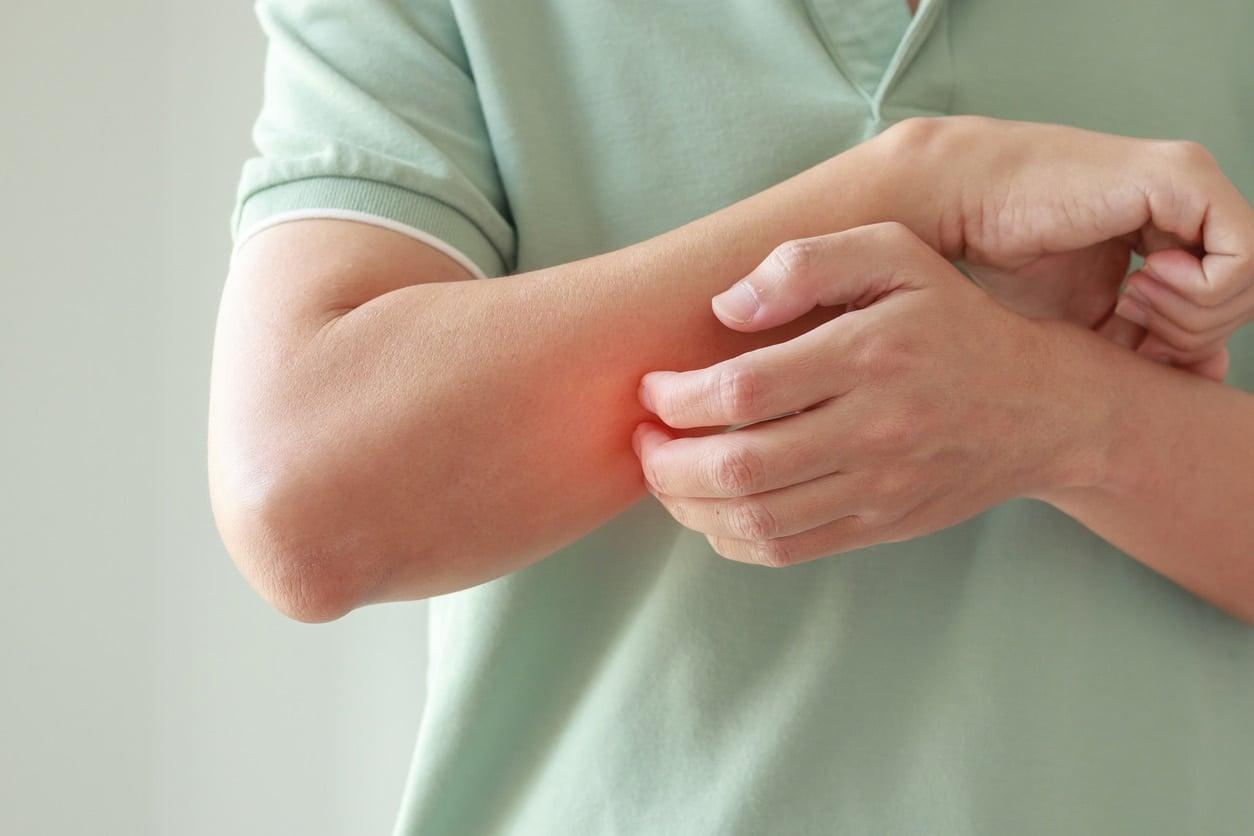
Topical CBD has been shown to be useful in treating psoriatic skin lesions. Both scientific research and clinical experience indicate that CBD can be of great help in controlling the symptoms caused by psoriasis, such as skin lesions, anxiety, the itching caused by psoriatic plaques, and the sleep problems resulting from this discomfort.
Although the skin is the largest organ in the body, it had never captured the interest of scientists studying the endocannabinoid system. It was not until the 1990s, when anandamide, a natural endocannabinoid (1), was isolated for the first time in rat skin, that different research groups focused on characterising the endocannabinoid system and its mechanisms of action in this organ.
We now know that the endocannabinoid system is an extremely important neuroendocrine regulator in maintaining skin homeostasis and, therefore, the use of cannabinoids can benefit skin health and alleviate symptoms of medical conditions such as psoriasis (2).
Psoriasis is a chronic autoimmune disease characterised by rapid cell growth, producing red, scaly patches on the skin.
In recent years, it has been shown in the laboratory that CBD can help with some symptoms of this condition, reducing and even clearing the lesions when CBD is applied to psoriatic skin lesions (3). In addition, topical use of CBD has been shown to have few adverse effects (3), and little or no potential to irritate the skin when applied in topical preparations (4).

Topical CBD has been observed to improve psoriasis through different pathways, either by interacting with keratinocytes at cellular level or by interfering with the inflammatory process and angiogenesis. Psoriasis is a disease in which the skin becomes scaly in some areas; this is because keratinocytes (or keratin-producing cells) start to reproduce excessively and, owing to the excess keratin, the skin takes on this firm, rough appearance.
Keratinocytes, among many other skin cells, have the capacity to produce endocannabinoids and are therefore sensitive to CBD, as they have cannabinoid receptors in their cell membrane (5). Thus, cannabidiol can bind to keratinocytes and activate pathways that inhibit their proliferation (6, 7), and can even regulate keratin production when these cells are in a hyperproliferative state (8-10).
CBD in psoriasis helps to restore the skin's smooth texture by halting the excessive reproduction of keratinocytes and the formation of keratin.
Psoriasis is also characterised by an inflammatory process, in which proinflammatory substances are released that produce and maintain the inflammation. Some of these substances, such as interleukins, tumour necrosis factor (TNF)-α and nitric oxide (11-13), have been suppressed through the use of CBD. In other words, if proinflammatory substances are reduced, inflammation is reduced. Likewise, it has been suggested that CBD can inhibit the formation of new blood vessels in the skin (angiogenesis), which plays an important role in the origin and development (pathogenesis) of psoriasis (14).
Now that we have reviewed some of the many mechanisms of action of CBD in psoriasis, we can suggest that cannabidiol has properties that make it suitable to become a great therapy for psoriatic skin lesions in the future. As it is an immune disease with no cure, and its treatments have to be personalised, being open to new alternatives is beneficial for patients.
However, we must remind you that it is not currently an approved therapy, which means its use is contraindicated without professional advice and supervision. Consult your doctor.
The topical action of CBD has been confirmed by different research groups when applied directly to psoriasis lesions. These ointments have been effective in preparations containing 0.1 to 10% CBD (3).
Skin conditions are usually treated with ointments, which is a type of product or preparation formulated to remain longer on the skin, and therefore the dose of CBD absorbed by the skin is constant throughout the day. CBD oil, being oil-based, can also be absorbed through the skin (25). However, because of its faster absorption, it should be applied frequently during the day to maintain therapeutic concentrations for psoriasis.
With the available data, it is not possible to indicate a dose of cannabidiol for psoriasis. Effective doses vary from person to person, therefore it is suggested to start with applications of low concentrations of CBD. The response to psoriasis treatments varies from person to person. Therefore, CBD may have a different effect depending on the severity of the lesions. Being an autoimmune disease, it will also depend on the individual's immune response. Consult your doctor.

Oral use of CBD is not authorised as a food or food supplement in some countries such as Spain, although it is used in others, such as the USA and the United Kingdom, as well as in research. In that context, CBD oil has been shown to be effective in treating certain types of pain (15, 16). Although oral or sublingual CBD oil has not been tested specifically for psoriasis, its effectiveness for the pain caused by the disease has not been ruled out either.
In addition, CBD oil has shown properties for the treatment of anxiety (18) caused by the pruritus (itching) that comes with psoriasis; likewise, it could help reduce swelling, as CBD is known for its anti-inflammatory properties (11, 12, 14, 19).
Scientific studies suggest that CBD is a potential therapeutic agent for psoriasis, due to its effect on the following pathological pathways:
Topical route:
Oral route:
The risks of drug interactions when using CBD with medication prescribed by your doctor have not yet been studied in detail.
There may be interactions between CBD and certain anti-inflammatory drugs. The most serious, albeit with drugs used for conditions other than psoriasis, is drug-induced aseptic meningitis (DIAM). There is one report in which taking CBD and meloxicam (a commonly used NSAID, or non-steroidal anti-inflammatory drug) orally triggered DIAM (21). Caution is therefore recommended when CBD is taken with oral NSAIDs.
Regardless of whether topical or oral treatments are used for psoriasis, the lack of clinical studies on possible combinations restricts the recommendation of CBD use with other medicines. Therefore, we recommend that you consult your doctor before using CBD in any of its preparations.
Among the treatments used to treat psoriasis are topical medications such as corticosteroids, retinoids, salicylic acid and UV phototherapy. While CBD may represent a safer therapy than common preparations for treating psoriasis, it has been shown that CBD can help protect healthy keratinocytes when UV therapy is applied (22-24).
In conclusion, scientific research indicates that CBD has proven effective for the treatment of psoriatic lesions when applied directly to the skin in the form of ointments containing 0.1 to 10% CBD. This treatment would be applied topically to reduce the lesions caused by psoriasis and to obtain greater benefits from UV therapy. However, it is an application currently under study, so its possible use is indicated only at the discretion and under the strict supervision of a specialist doctor.
Psoriasis is a chronic autoimmune disease that requires personalised treatment. It is therefore necessary to consult a specialist doctor before taking CBD. As for its use with other medicines, since there are possible interactions, self-medication without professional supervision should be avoided.
We remind you that this is an informative article that is not intended to prevent, diagnose or treat any disease. Consult your doctor before using CBD. Its content can complement, but never replace, the diagnosis or treatment of any disease or symptom. Cannactiva products are not medicines.
CBD is a possible treatment for psoriasis, as it can relieve some of its troublesome symptoms. From skin lesions to anxiety and even the insomnia caused by itchy psoriatic plaques, research is revealing more and more every day about the use of CBD for psoriasis. If this applies to you, we recommend that you see a specialist before using CBD.
CBD for psoriasis has two possible uses: topically for the plaques, or internally for anxiety. For topical use, scientific research uses CBD ointments applied directly to the skin.
Topical CBD ointments have been effective in preparations containing 0.1 to 10% CBD.
For people with psoriasis and skin lesions, CBD oil may be their new ally. Although CBD ointments are normally used for this type of treatment, as they make it possible to maintain therapeutic concentrations throughout the day, CBD oils can also be absorbed by the body quickly and effectively, so they could be a great option to explore.
The internal use of CBD oil has been studied. The results of these studies have shown the potential of drops of CBD oil taken sublingually (under the tongue) to relieve pain and to treat the anxiety caused by the pruritus, or itching, of psoriatic skin lesions. Likewise, CBD oil could help reduce swelling, as CBD is known for its anti-inflammatory properties. It is worth adding that in many European countries the legal sale of CBD oil for internal use is not permitted.
The benefits of CBD for the skin, how to apply it (topical use) and which CBD skincare to choose, according to scientific studies.
Read more →
What effects CBD has on the body: what it feels like, how it acts, whether it gets you high, whether it is addictive and how long it lasts. A clear, science-based guide.
Read more →
How CBD supports muscle recovery: pain relief, less inflammation and better rest. Ways to use it (creams and oils) and what the science says.
Read more →
Cannabis has many uses for athletes. From CBD physiotherapy creams to CBD oil and hemp protein, you're sure to find what best suits your needs.
Read more →