What is bruxism?
Bruxism is a disorder in which a person involuntarily clenches or grinds their teeth, either during sleep (night-time bruxism) or during the day (daytime bruxism). Recently, several studies have shown the potential of CBD to address a range of conditions, including bruxism.
In today's Cannactiva post, Eva Federici, osteopath, physiotherapist, sexologist and founder of the ReActiva Sants centre, explains in depth what bruxism is, its possible causes and the options for treating it, including the possible use of CBD.
Defining bruxism: more than just clenching your teeth
Normally, clenching the teeth serves a vital function when chewing or biting food. In bruxism, however, this action becomes a functional disorder, a repetitive activity that is of no use to our body. This disorder involves an abnormality in oral function, particularly affecting the muscles and joints of the face.
Once again, our wise body gives us signs that something isn't working properly. Bruxism is not only an unnecessary waste of energy; it can also cause complications such as tooth wear, temporomandibular joint problems, facial and neck pain, and other issues related to oral health, posture and general wellbeing. That is why it needs a professional approach.
If you wake up in the morning with a tense or sore face, a stiff neck or a headache, you may be experiencing bruxism. Likewise, if you notice that you keep your teeth tightly clenched during the day, you may be suffering from daytime bruxism. In that case, it is important to address the underlying cause. (1)
Causes: why does bruxism happen?
Bruxism can have different causes:
- Purely psychosomatic: a physical response to emotional or psychological stress.
- Solely due to dental malocclusion, because of the way the teeth grow.
- Post-traumatic: after head trauma, whiplash or a blow to the face.
- Osteoarthritic: related to wear of the cartilage in the temporomandibular joint.
- Multifactorial: a combination of two or more of these causes.
Treatment of bruxism
When someone with bruxism comes to my osteopathy practice, I always consider these five aspects during the initial assessment, or anamnesis, to identify the underlying cause rather than just treating the symptom.
I can say with certainty that 90% of the bruxism consultations I see at my clinic in Barcelona have a strong stress component. Indeed, the most common cause of bruxism is psychosomatic (2), a physical manifestation of emotional or psychological stress, and it can be common in industrialised countries, and even more so in big cities.
Being psychosomatic doesn't mean it isn't real, or that the symptoms aren't genuine and don't need attention. Understanding why we clench our teeth in times of stress is essential. In these cases, although it is a natural reaction to a stressor, bruxism can become a problem when it persists beyond the initial stressful event, setting up a dysfunctional cycle of tension and relaxation. We can illustrate this psychosomatic cause as follows. Ask yourself: “Who do I want to bite?”, “What am I fighting against?”, “What situation am I accepting against my will?”
Conventional treatment
Conventional treatment typically focuses on relieving symptoms and preserving tooth structure with mouthguards or dental splints, as well as botulinum toxin (Botox) injections or other physical approaches.

Although addressing the physical component with jaw physiotherapy and osteopathy can provide muscle relief using non-invasive techniques and prevent tooth wear, it is essential to consider a holistic approach involving both body and mind, especially in cases of bruxism of psychosomatic origin.
Orthodontic bruxism is also relatively common. In the pursuit of ideal dental aesthetics, people sometimes turn to treatments that can have repercussions on the back, posture and, of course, jaw tension, which can lead to bruxism of mechanical origin. It is worth understanding that a perfectly symmetrical dental occlusion is unrealistic, and forced treatments can cause imbalances in the temporomandibular joint (TMJ), affecting the jaw and neck muscles, which could lead to bruxism of mechanical origin. When orthodontic treatment really is necessary to achieve a functional occlusion and you experience tension in your face and neck, you'll be surprised how much osteopathy and CBD can help you through the process.
When bruxism is post-traumatic or osteoarthritic, cervico-cranio-mandibular osteopathic techniques can be used to restore mechanical balance after trauma, or to reduce inflammation in the case of osteoarthritis.
Natural and/or complementary treatments for bruxism
Lifestyle and therapies for bruxism
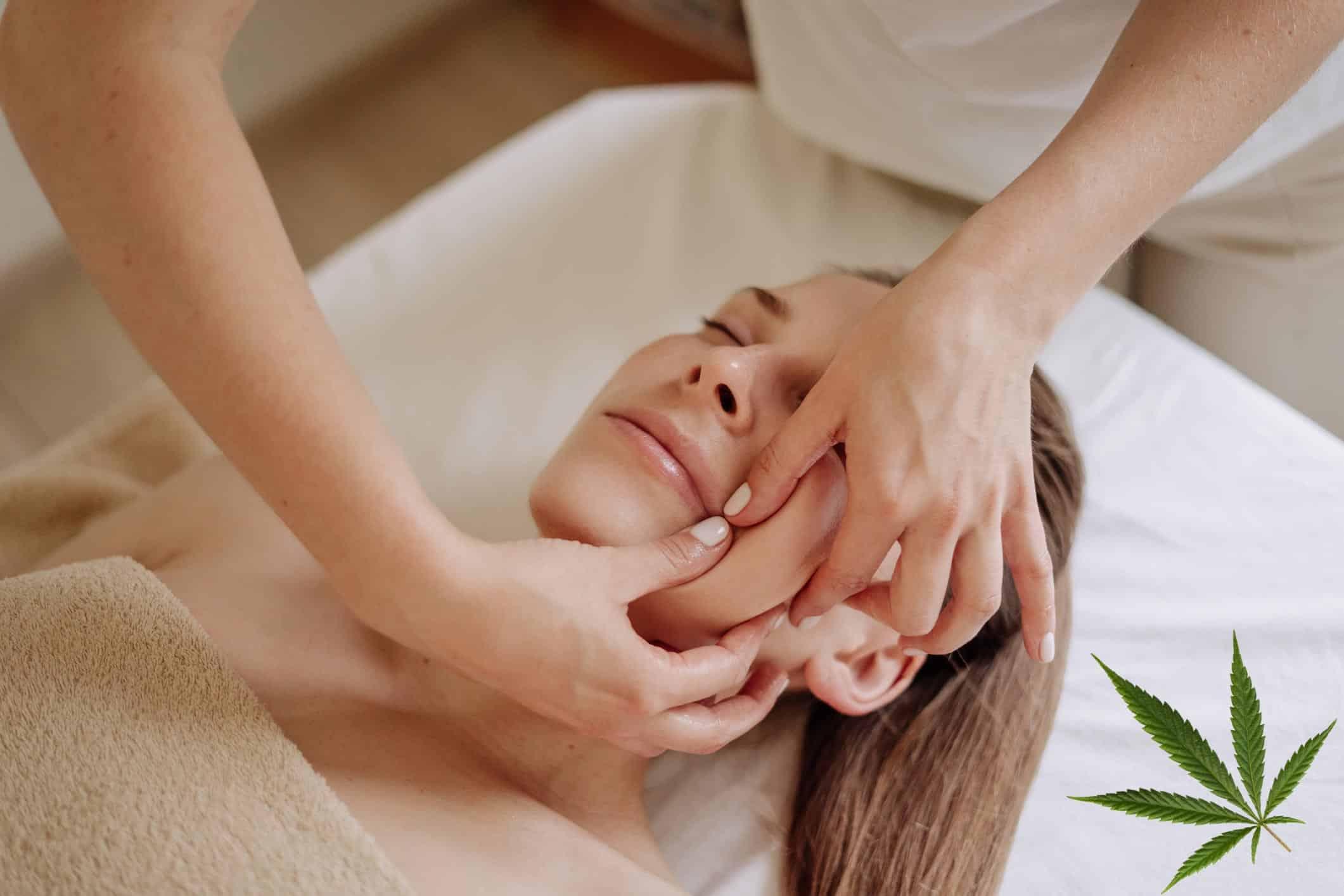
- Osteopathy: As an osteopath, my approach includes breaking the cycle of jaw tension and contraction and guiding the patient in managing their bruxism. This is done through specific treatments such as jaw osteopathy. CBD creams and oils can be used in these treatments, which we cover in depth in the next section. In addition, osteopathy focuses not only on the jaw but also on the nervous system, breathing and posture. Jaw physiotherapy can be a great help in specifically relaxing the jaw muscles. Physiotherapy for bruxism should be complemented by other physical and lifestyle therapies.
- Physical activity: When you're under a lot of stress, your body needs to release that tension, and exercise is an excellent option.
- Postural education, body awareness and breathing exercises: yoga and Pilates are useful ways to connect deeply with your body.
- Relaxation practices: meditation, reading a book you like, resting for longer, avoiding activities you don't enjoy, or connecting with something that really relaxes you. All of these options encourage the production of dopamine, endorphins and endocannabinoids, which are natural muscle relaxants.
- Strategic behavioural therapy: working with cognitive behavioural psychotherapy is an effective way to acquire strategic tools to manage stress in the present.
Potential benefits of CBD for bruxism
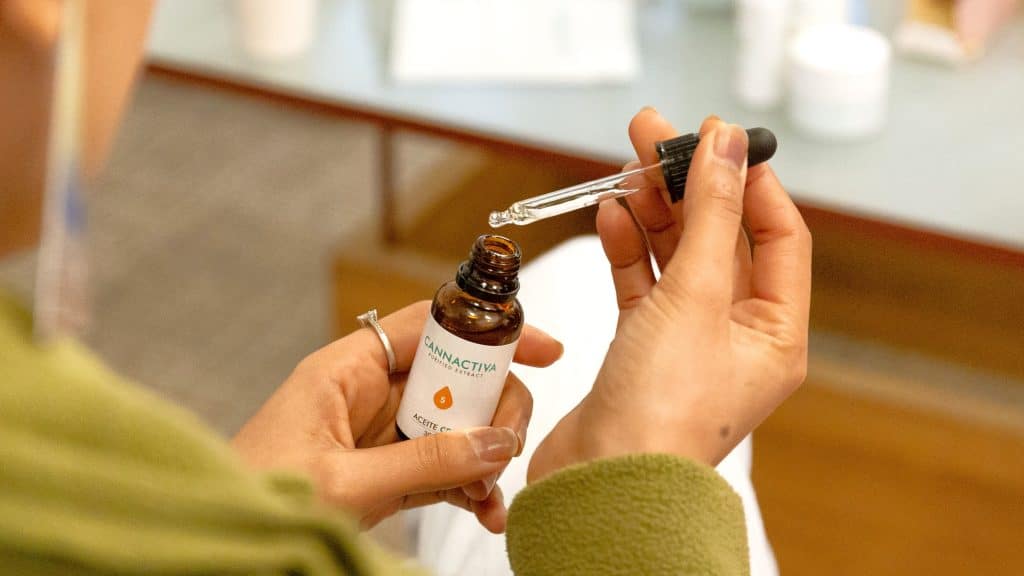
CBD, or cannabidiol, is a compound extracted from cannabis with analgesic, anti-inflammatory and anxiolytic properties. Unlike THC, the main compound in the cannabis plant, CBD has no psychoactive effects.
This compound has been studied for its properties in neuropathic pain, for improving sleep and for anxiety. Research suggests that CBD is of interest to people who suffer from night-time bruxism and want to improve their general wellbeing.
How does CBD work in the treatment of bruxism?
By interacting with the body's endocannabinoid system, CBD can regulate various physiological functions, including the stress response, pain and inflammation. These properties of CBD offer a promising route to reducing anxiety and stress, which are factors in the development of psychosomatic bruxism first and foremost, but also pain and other causes linked to bruxism.
Scientific study on CBD for bruxism
In a parallel, double-blind study, the group that applied a topical CBD preparation to the masseter muscle showed a marked reduction in involuntary muscle activity and a significant improvement in myofascial pain, which is commonly associated with bruxism. This myorelaxant effect of CBD is particularly relevant, as bruxism often involves clenching and grinding of the teeth due to tension in the masseter muscles. In addition, patients reported a considerable decrease in pain intensity, suggesting that CBD not only relaxes the muscles but also effectively relieves the pain associated with this condition.
The ease of application of the treatment, twice daily for 14 days, and the positive results obtained reinforce the potential of CBD as a promising therapeutic option for the treatment of bruxism (3).
Jaw physiotherapy with CBD
Whatever the cause of your bruxism, it is important to break the tension-contraction-tension cycle. Alongside professional treatment, I recommend following a self-relaxation routine for your jaw using CBD cream or a massage oil with CBD and soothing botanical extracts.
CBD creams are applied directly to the jaw or neck and give a feeling of localised relief by reducing inflammation and relaxing tense muscles.
You'll notice a feeling of relief from the very first application. Do this exercise routine 1 to 3 times a day for two weeks.

CBD oil dosage for bruxism
It isn't possible to give a dose of CBD for treating bruxism. In the study mentioned above, a topical CBD preparation was applied twice a day for two weeks, with positive results.
As for CBD oil drops, they have become popular in recent years as a natural remedy for anxiety or nerves. While topical application acts locally, CBD taken orally has a more general effect, acting throughout the body. However, bear in mind that oral use of CBD products is not currently authorised as a food or as a food supplement in the European Union, including Spain, and in the UK the Food Standards Agency also treats CBD as a novel food. CBD oil for sublingual use used to be sold, but in 2019 the legislation changed and CBD came to be considered a novel food. For this reason, Cannactiva products are legally intended for external use. That said, the European Food Safety Authority (EFSA) assessment is well advanced: it has set a provisional safe intake level, and authorisation seems close. CBD oil can also be used externally, by massaging the CBD oil drops into the skin.
In general, full spectrum CBD oil is recommended, as it retains all the components of the original plant and their benefits.
As for the optimal dose of CBD, the advice in cannabis use is “start low and go slow”, which means starting with a small amount and increasing it gradually if necessary.
There has been a lot of research into the uses of CBD oil for anxiety, and we recommend reading the article on CBD for anxiety and the one on the benefits of CBD.
How to make CBD part of your bruxism relief routine
Recommended book on bruxism
You have probably already heard some of the ideas mentioned throughout this article. That's why we like to give not only recommendations but also related reading. Getting to know our symptom more closely, reading about it and reflecting on it can make us more aware of its origin and bring us closer to treating it.
If you fancy it, I think you might find this an interesting read: Dentosophy: our teeth, a gateway to health. From oral balance to overall health
Conclusions
With this article, my aim is to help you feel more empowered in understanding your body. Remember that the body is wise, and pain and tension are its ways of telling you that something isn't working properly. In the hectic routine of daily life, we often ignore or silence the signals our body sends us. It is important to learn to be grateful for each of these signals and to look after our body, which is our one true home.
Note: This is an informational article and is not intended to prevent, diagnose or treat any disease. Its contents may complement, but should never replace, any diagnosis or treatment of any disease or symptom. Cannactiva products are not medicines and are intended for external use. The author and Cannactiva are not responsible for any misuse of this information. Please note that there may be new developments since the date of publication. Therefore, consult your doctor before using CBD.
References
- Lavigne GJ, Khoury S, Abe S, Yamaguchi T, Raphael K. Bruxism physiology and pathology: an overview for clinicians. J Oral Rehabil. 2008 Jul;35(7):476-94. doi: 10.1111/j.1365-2842.2008.01881.x. PMID: 18557915.
- Kuhn M, Türp JC. Risk factors for bruxism. Swiss Dent J. 2018 Feb 12;128(2):118-124. PMID: 29533049.
- Nitecka-Buchta A, Nowak-Wachol A, Wachol K, Walczyńska-Dragon K, Olczyk P, Batoryna O, Kempa W, Baron S. Myorelaxant Effect of Transdermal Cannabidiol Application in Patients with TMD: A Randomized, Double-Blind Trial. J Clin Med. 2019 Nov 6;8(11):1886. doi: 10.3390/jcm8111886. PMID: 31698733; PMCID: PMC6912397.
- Mona, B. CBD for TMJ: Can It Help? Healthline. Edited by Chelsea Logan, medical review by Dominique Fontaine, BSN, RN, HNB-BC, HWNC-BC, and copy editing by Jen Anderson. https://www.healthline.com/health/cbd-for-tmj
- Lavigne GJ, Khoury S, Abe S, Yamaguchi T, Raphael K. Bruxism physiology and pathology: an overview for clinicians. J Oral Rehabil. 2008 Jul;35(7):476-94. doi: 10.1111/j.1365-2842.2008.01881.x. PMID: 18557915.
- Kuhn M, Türp JC. Risk factors for bruxism. Swiss Dent J. 2018 Feb 12;128(2):118-124. PMID: 29533049.