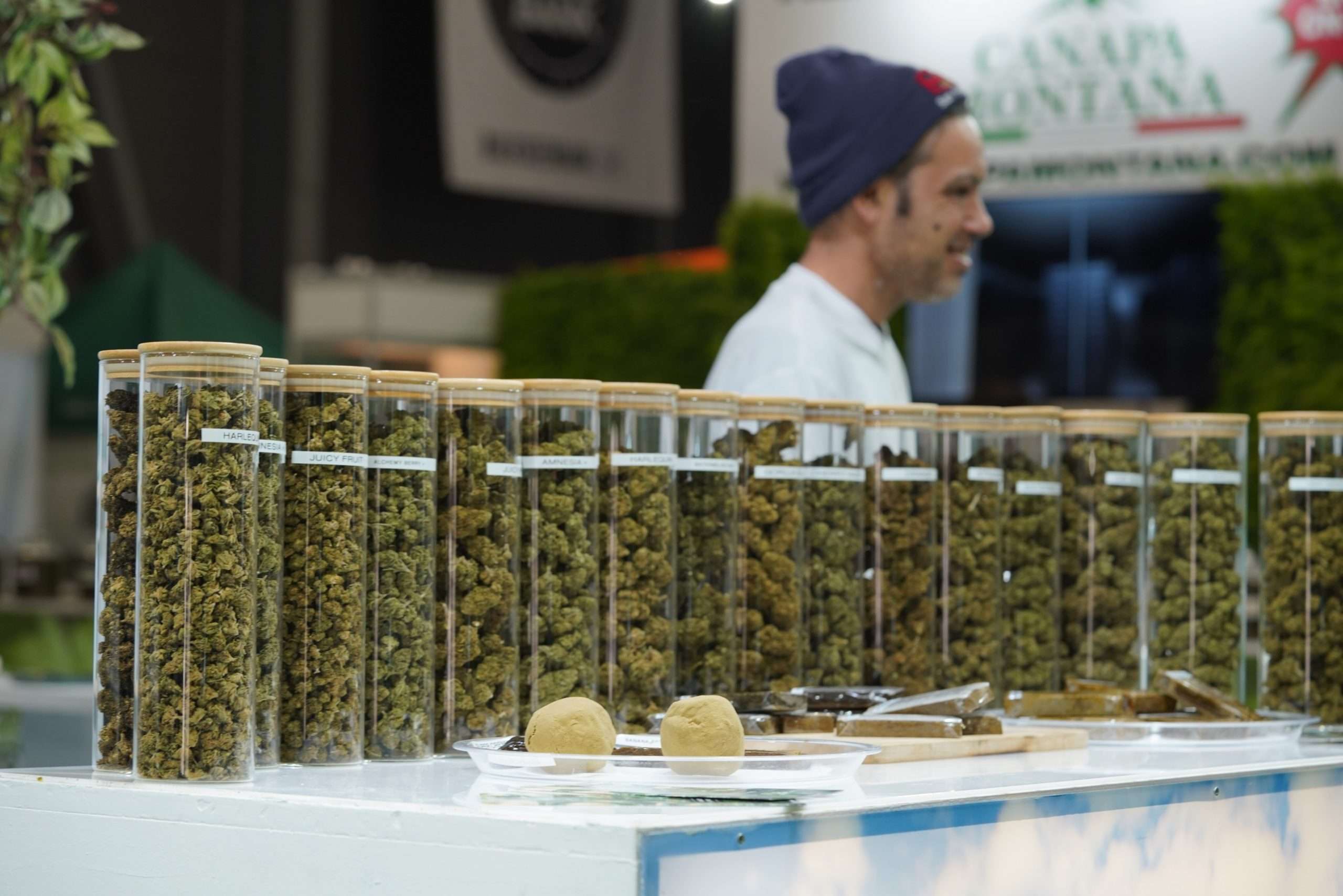
Cover image: Prague Cannafest 2022, from magazin-konopi.cz.
In the eyes of the international community, the Czech Republic has always been seen as a very liberal country when it comes to cannabis or hemp laws. The legislative changes of 2022 – such as allowing the export of medical cannabis and raising the THC limit to 1% – cement that status. However, things are rarely what they seem, and there are many issues to resolve in order to establish a thriving, fair and successful cannabis market, with regulations that benefit both individuals and society as a whole.
Why is Czechia seen as one of the most liberal nations in Europe and the world in terms of its relationship with cannabis? What significant changes have taken place in this small country of 10 million people, and what more can the rest of Europe expect from the Czechs in the coming months and years?
A little history of cannabis in the Czech Republic
In 2010, small amounts of cannabis for personal use were decriminalised in the Czech Republic, which meant that people carrying up to 10 grams of dried flower or growing fewer than 5 plants at home would only receive fines for minor offences, with no trials or prison sentences. However, the police and the judges decided to bend the will of the lawmakers slightly, and began prosecuting anyone who grew any kind of cannabis, as long as those growers cut the plant and started the drying process.
The argument of law enforcement has been that when you harvest cannabis (even a tiny branch weighing 2 grams), you are actually no longer growing cannabis but producing the drug. And then it is no longer a simple offence, but a criminal act. Even so, in 2010 this approach could be considered one of the most liberal compared with other countries around the world.
The medical cannabis system and its flaws
Another pivotal moment came in 2013, when Czechia became one of the first countries in the European Union to legalise the medical use of cannabis. It is said that the Czechs were the first in the world to write this into their statute book through a legislative process. Unfortunately, the will of the lawmakers was – once again – paralysed, this time not by law enforcement but by red tape and overregulation from the state authorities.
As a result, the system did not work properly for many years. A shortage of cannabis plant strains, a shortage of doctors, numerous administrative problems, a lack of education, high prices... all of this meant that it took around six years for the number of registered patients and grams of cannabis to start growing significantly. This was mainly thanks to the introduction of a reimbursement scheme in 2020, under which 90 per cent of the average monthly prescription of 30 grams is covered by health insurance.
In January 2022 the law was amended again, this time to allow an unlimited number of domestic growers (for eight years, only one Czech company was allowed to grow medical cannabis in the Czech Republic, because the law did not allow any more – the rest of the medical cannabis was imported from Canada) as well as the export of medical cannabis abroad (which was also prohibited). There are now companies owned by wealthy investors building state-of-the-art facilities with the aim of growing premium medical cannabis in the Czech Republic to supply the rest of Europe.

From 0.3 to 1 per cent THC
When it comes to hemp and CBD-rich strains, the Czechs were also ahead of the game in this area, as the permitted THC limit in this country has been 0.3% for decades (unlike the European Union, which did not raise the limit from 0.2 to 0.3 until 2023). And since January 2022, the Czech Republic has become the first EU country (and the second in Europe after Switzerland) to raise the THC level in all cannabis to 1%.
This change is already attracting investors – growers, extractors, wholesalers – who see the advantage of growing cannabis strains with up to 1% THC, compared with strains with only the 0.3% allowed by the rest of the EU countries. It means your plants can have more CBD and a richer terpene profile and, at the same time, you don't have to be afraid of ending up in court just because your plants had 0.6% THC. The same goes for extraction, where companies no longer need certificates allowing them to handle narcotic substances, as long as they don't exceed 1% THC.
The CBD situation in the Czech Republic
What is still in a kind of grey area is the CBD sector, as officially most brands sell their oils and so on only as products for further processing, not for consumption, in order to avoid possible questions from the food and health authorities about novel food registration or toxicity and heavy metal testing. The market for CBD flower and CBD oil is fairly large (bear in mind that in some countries, such as the UK, hemp flower is controlled even when its THC content is low), but the lack of regulation and clarity means that, alongside good and reliable businesses, there are also many shady operators who simply sell CBD isolate of unknown origin with inaccurate information about its content, misleading and false health claims and probable residues of harmful substances.
What is even worse is the fact that in 2022 the Czech market was flooded with so-called HHC, which has mild psychoactive effects similar to THC. But unlike THC, HHC was not regulated in any way in the Czech Republic at the time, even though nobody really knows what its long-term effects might be and, once again, there are no safeguards when it comes to the content and residues of this semi-synthetic substance imported in huge quantities from the United States. Today HHC is already controlled and banned in many countries (in Spain since April 2025, under Order SND/380/2025). At Cannactiva we do not recommend buying it: it is synthetic in origin with questionable traceability, and there have been serious cases; anyone who wants to do so should check the law in their country very carefully, because it is dangerous.

What comes next: the future of cannabis in the Czech Republic
Last but not least, we have to mention the situation of recreational cannabis. The Czech national drug policy coordinator, Jindřich Vobořil, is leading an effort to draft new legislation that would effectively end cannabis prohibition in Czechia. There are many issues to discuss, but if everything goes according to plan (which it probably won't), there should be a regulated market in 2024 with home growing also allowed, as well as cannabis social clubs. The coordinator has the support of the government and the prime minister himself, but it will still be a long, uphill battle, because law enforcement and the pharmaceutical and alcohol lobbies see this effort as a serious threat to their well-being and will use any means at their disposal to prevent this change, which could have – especially combined with Germany's efforts – a colossal impact on the collapse of cannabis prohibition across the whole Old Continent and around the world. (Update: that regulated market did not arrive in 2024; since then the Czech Republic has only passed partial changes to its cannabis legislation.)
Editor's note: article adapted by Cannactiva from the original.