Italy passes a decree banning CBD: hemp sector on alert
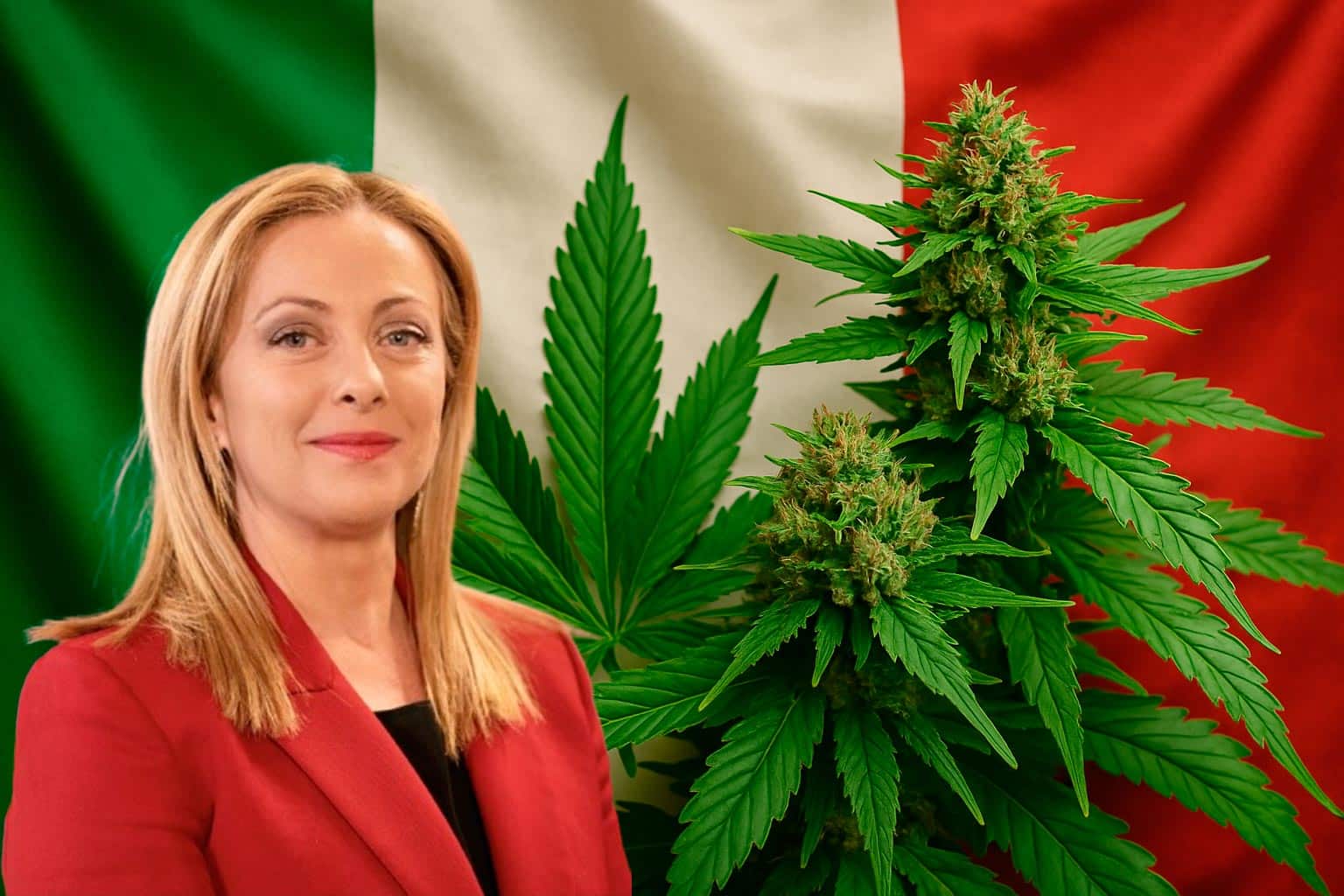
Update (October 2026): the decree was published in the Gazzetta Ufficiale on 11 April 2025 (Decree-Law No. 48/2025), came into force the following day and Parliament converted it into law with Law No. 80 of 9 June 2025. Since then, several Italian courts have brought the constitutionality of Article 18 before the Constitutional Court.
The new Public Security Decree-Law approved by the Italian government on 4 April 2025, driven by the current right-wing government led by Giorgia Meloni (Fratelli d’Italia), imposes severe restrictions that will directly affect the industrial hemp sector and CBD products.
The text includes the controversial Article 18, which prohibits the import, production, processing, distribution, marketing and delivery of the inflorescences of *Cannabis sativa L.*, including CBD flower, CBD hash and CBD oil, regardless of whether they comply with legal THC limits.
The decree will come into force imminently after its official publication, as Meloni has invoked Article 77 of the Constitution to approve it through the urgent procedure, bypassing parliamentary debate.
With this decision, the Italian government is jeopardising the development of a fully legal, regulated and growing sector. The measure follows the prohibitionist line of parties such as Fratelli d’Italia and Lega, which have shown systematic opposition to any form of cannabis regulation, without distinguishing between high-THC strains and non-psychoactive industrial hemp, legally grown throughout the European Union.
The news has provoked a strong reaction across the hemp sector, both in Italy and in the rest of Europe. The provision ignores Italian Law 242/2016, which allows the growing and marketing of industrial hemp; contradicts the European legal framework, which authorises its free movement as long as the THC content is below 0.3%; and violates the principle of free movement of goods in the common market, also affecting operators in other countries where non-psychoactive hemp is fully legal.
What will happen to hemp in Italy now?
Meloni has invoked Article 77 of the Constitution, which allows decrees to be issued on grounds of “necessity and urgency”, bypassing parliamentary debate. Once the decree is officially published in the Gazzetta Ufficiale, it will come into force immediately, with no waiting period.
From the moment it is published in the Gazzetta, the growing, processing, marketing and possession of hemp flower (even with legal THC levels) will be considered a criminal offence in Italy. This means that companies in the CBD sector could face criminal consequences if they continue to trade in products derived from hemp flower.
Parliament will have 60 days to amend, ratify or reject the text, although the ban will already be legally enforceable. The decree expressly refers to Title VIII of Decree of the President of the Republic No. 309/1990, also known as the Testo Unico sulle Sostanze Stupefacenti, which governs criminal offences relating to drugs and prohibited substances in Italy.
During this period, associations such as Canapa Sativa Italia and Federcanapa are actively mobilising to demand the withdrawal or revision of Article 18, warning of the serious economic, social and legal consequences its application would have for the entire industrial hemp chain.
The European Commission has already opened an investigation to assess the compatibility of this rule with EU law, following complaints from the Italian hemp sector. President Sergio Mattarella can still sign it into law or veto it.
Why is this measure so serious?
- It criminalises a legal product with no psychoactive effect, recognised by European legislation as industrial hemp.
- It ignores Italian Law 242/2016, which allows the growing and marketing of hemp with THC within legal limits. In Italy, Law 242/2016 states that the THC content of industrial hemp must not exceed 0.2%. However, a natural fluctuation of up to 0.6% is tolerated without penalties for farmers, provided that certified seeds are used and the established conditions are met.
- It contradicts the European legal framework, which authorises the growing and free movement of industrial hemp within the common market. The case law of the Court of Justice of the European Union has repeatedly held that Member States cannot ban hemp products legally produced and marketed in other EU countries, as long as they meet common standards.
- It violates the principle of free movement of goods, one of the pillars of the European single market, affecting operators in countries where non-psychoactive hemp is fully legal.
- It puts more than 30,000 direct and indirect jobs in Italy at risk, which depend on an emerging, sustainable and fast-developing sector.
- It destroys a market worth more than €500 million a year, focused in particular on the sale of low-THC hemp flower.
- It creates legal uncertainty throughout Europe, as it is a step backwards from the regulatory trend that has increasingly recognised industrial hemp as a legal agricultural raw material with many sustainable uses.
Article 18: a total ban on cannabis
The ban on hemp flower is part of the Security Decree-Law, a package of 34 articles driven by Giorgia Meloni's government. The text does not only target cannabis: it also includes measures such as evictions without a court order, crackdowns on protests and legal protection for police officers and military personnel facing prosecution.
As for hemp, Article 18 of the Decreto Legge Sicurezza 2025 bans the growing, processing and marketing of Cannabis sativa L. flowers, even when their THC content is within legal limits.
This means that hemp flower — even with THC levels below 0.3%, as allowed by European law and Italian Law 242/2016 — would be banned throughout Italy. A measure without precedent in the European Union, which threatens to criminalise an entire legal and established industry.
This is not the first time the Italian government has tried to attack industrial hemp. In 2023, the Italian Ministry of Health had already tried to add CBD to the list of narcotic drugs, but the decree was suspended by the Lazio Regional Administrative Court for lack of scientific basis. Yet far from backing down, the government has stepped up its strategy.
It is worth stressing that this new regulation does not only affect the Italian market: it also has immediate implications for Spanish and other European hemp companies that trade with Italy, which will no longer be able to rely on the lawful origin of products coming from Italy, legally weakening their movement within Europe.
Ironically, the news comes in the month when Italy's most important hemp fair, the Indica Sativa Trade Fair, is held in the city of Bologna, from 11 to 13 April.
In short, a measure that clashes with reality. Hemp flower is not a dangerous drug and does not pose a risk to public health. On the contrary, CBD is neither addictive nor psychoactive, and regulating it not only poses no danger, but also brings safeguards and control to a market that already exists.
Banning hemp flower does not protect the public: it only harms farmers, businesses and consumers. Insisting on a prohibitionist policy against non-psychoactive hemp has no scientific, logical or legal basis.
At Cannactiva, we support coherent regulation based on evidence, common sense and the principles of the European single market. Hemp is an opportunity, not a threat.