Antonio Escohotado: a pioneer of cannabis knowledge in Spain
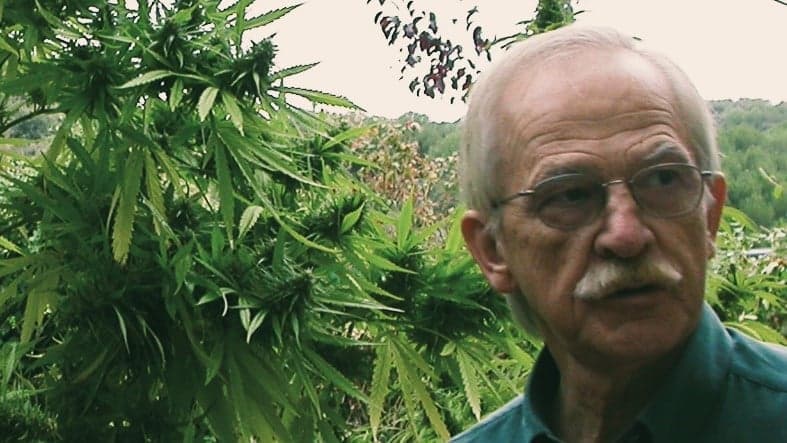
Today on the Cannactiva blog we welcome La Emboscadura, the publishing house devoted entirely to Antonio Escohotado’s work, to talk about the cannabis experience of the philosopher who challenged the precepts of anti-drug morality.
“The greatest service which can be rendered any country is to add a useful plant to its culture”.Thomas Jefferson, Summary of Public Service
Who was Antonio Escohotado
Antonio Escohotado Espinosa was a Spanish philosopher, university lecturer and essayist, known for his work Historia General de las Drogas (A General History of Drugs) (1989). A fervent critic of prohibitionist policies, Escohotado tirelessly defended individual freedom, challenging social and legal conventions with soundly reasoned arguments and deep erudition. His life was extraordinary: from translating great authors (Newton, Hobbes, etc.) and co-founding the Amnesia nightclub in Ibiza, to teaching philosophy, law and sociology at university for more than 30 years.
Having died in November 2021, Antonio Escohotado is now seen as a legend of contemporary Spanish thought, who stood out for decades for his in-depth analysis of controversial subjects and his tireless exploration of new perspectives on issues considered contentious, including cannabis.
A passion for knowledge
Born into a middle-class family, Antonio felt an irrepressible passion for knowledge from a very young age. Escohotado defied conventions and ventured into unknown territory to explore the complexities of society, reality and the human mind. His research on cannabis, set out in works such as La Cuestión del Cáñamo (The Hemp Question) and Aprendiendo de las Drogas (Learning from Drugs), made him a central figure in the anti-prohibitionist movement, especially as far as Spain is concerned.

For Escohotado, cannabis was more than just a recreational plant; on a strictly personal level, for much of his life it was a tool for introspection and creativity. He saw it as a catalyst for what he called “depressive lucidity”, a state of mind that allowed him to explore his thoughts and review his texts from a different angle after long nights of intellectual work.
Beginnings and experiences
Escota’s relationship with cannabis began relatively late compared with the young people of his day, one more sign of the caution and elegance that defined the master’s personality, which spared him the possible harms associated with using cannabis at an early age. The story goes that his first foray into this world came in the early 1970s when, after finishing his studies, he took a leave of absence from his post as a civil servant at the Instituto de Crédito Oficial (ICO) and moved to the island of Ibiza intending to join the ‘Brotherhood of Eternal Love’, as he “confessed” at an Eleusinian Encounter with Fernando Sánchez Dragó held in San Lorenzo de El Escorial. The group’s main aim was to hand out LSD free of charge on a global scale, funding itself by trafficking Lebanese red hash. Although the hippie sect had originated in the United States and not anywhere near the Balearic Islands, they had a “man on the island” – as Escohotado mentioned on several occasions – and it was to him that he dedicated the book Mi Ibiza privada (My Private Ibiza).
Founding Amnesia and his first grows
The author’s path on Ibiza eventually led him to break away from that idea, which culminated in the founding of the famous Amnesia nightclub with his great friend Manolo Saez de Heredia, and also in his first steps in growing cannabis. Escohotado threw himself into caring for the plant and managed to get a splendid specimen to germinate in his garden, a rarity in Spain at the time.
However, his commitment to growing was soon cut short by the police, who confiscated a plant Escohotado was especially proud of, which is why our protagonist was arrested for the first time, in the “castle” of Dalt Vila.

Back in Madrid, Escohotado carried on exploring the study of psychoactive substances, and this time he did so as a true pioneer, venturing into hydroponic cannabis growing. This method, which involves growing plants in a nutrient-rich water solution instead of soil, offers a number of advantages that have made it an especially attractive option for growers today. Escohotado precisely measured – in the early 1990s – his control of nutrients and created an idyllic environment for growth and flowering for his girls, being one of the first Spaniards to have a regular supply of Dutch seeds – such as Skunk or White Widow – of a potency unheard of until then, which produced “buds like corn cobs”, in his own words.
He later moved from Hoyo de Manzanares to Parquelagos, but this time it was not a police raid that ruined the philosopher’s harvest, but some heartless petty thieves – a circumstance that is almost ironic: the difficulties of ordinary people growing cannabis purely for their own supply still seem to be cut short again and again today, with no protection at all from the authorities. Escohotado once again found himself losing his harvest with no means of redress, and to his dismay, months later he heard that his crop had been sold on the black market in the hills around Madrid, with the mark-up that came with having “Escohotado’s weed”.
Far from being discouraged, the Madrid-born author decided to try again in the years that followed, but this time he placed a clearly visible axe on his porch in the hope of deterring would-be criminals prowling around his small grow in the back garden of his semi-detached house. Unfortunately for him, the visual threat did not always have the desired effect, and years later, on another ill-fated night, intruders managed to get into his home again and make off with his three plants.
Escohotado recounted that, when he realised what was happening, he went out into the garden hurling all kinds of insults and even managed to touch the hand of one of the thieves, who got away unharmed with the loot.
Escohotado’s unfortunate experience with growing cannabis meant that, after this incident, his skills as a grower never saw the light of day again, and from then on he relied on whatever readers and friends were kind enough to give him.
Antonio Escohotado’s legacy on drugs
In his well-documented trilogy Historia General de las Drogas, Escohotado explains how drugs have been an integral part of many cultures around the world as a way of connecting with the divine. He mentions some rather curious facts, such as that in ancient pagan rites the hosts were bread wafers with psychoactive ingredients, or that until well into the 20th century, drugs that are heavily criminalised today, such as opium, were the philosopher’s stone of medicine. All this until the UN’s 1961 International Convention, when certain substances were arbitrarily classified as “drugs”, triggering their prohibition. For example, cannabis and its resin (hash) were placed in Schedule IV, at the same level as heroin. In a few sheets of paper, thousands of years of history and traditional culture were wiped out.
*“Moderation is elegance. Elegance is moderation, and the word comes from ‘to choose’.”*Antonio Escohotado
In one of his interviews, Escohotado says that “banning drugs is like trying to stop cars from speeding by taking away their speed control”. Prohibition is not only useless for controlling drug use, it has also turned users into guinea pigs for unregulated and therefore adulterated substances, increasing the risks of using them. Antonio Escohotado was not in favour of legalising drugs, but of repealing prohibitionist laws, since the problem arose after drugs were criminalised.

The work of Antonio Escohotado Espinosa and his contribution to the study and practice of cannabis in Spain are immeasurable, and his legacy endures as a testament to his commitment to intellectual exploration. He always stressed the importance of being willing to change your mind as an essential part of learning, rejecting the dogmatism of religions and political ideologies. His motto was “live and let live”. His legacy continues to inspire debate on personal freedom and drug policy around the world.
*“From the skin inwards begins my exclusive jurisdiction. I choose what may or may not cross that border. I am a sovereign state, and the boundaries of my skin are far more sacred to me than the political borders of any country”.*Anonymous contemporary
Although he rose to fame with his well-documented trilogy Historia General de las Drogas, Escohotado also wrote philosophical works on Hegelian metaphysics such as Realidad y Substancia (Reality and Substance), and an in-depth analysis of communism, set out in the monumental trilogy Los Enemigos del Comercio (The Enemies of Commerce).
In the search for the truth about the use of this age-old plant, cannabis has countless real and potential benefits for society, whether as a plant for producing numerous eco-friendly and sustainable materials, or medicinally through the various cannabinoids present in this “divine” plant, as the Madrid-born author once called this versatile shrub.
Jorge Melero and Jorge Escohotado
La Emboscadura