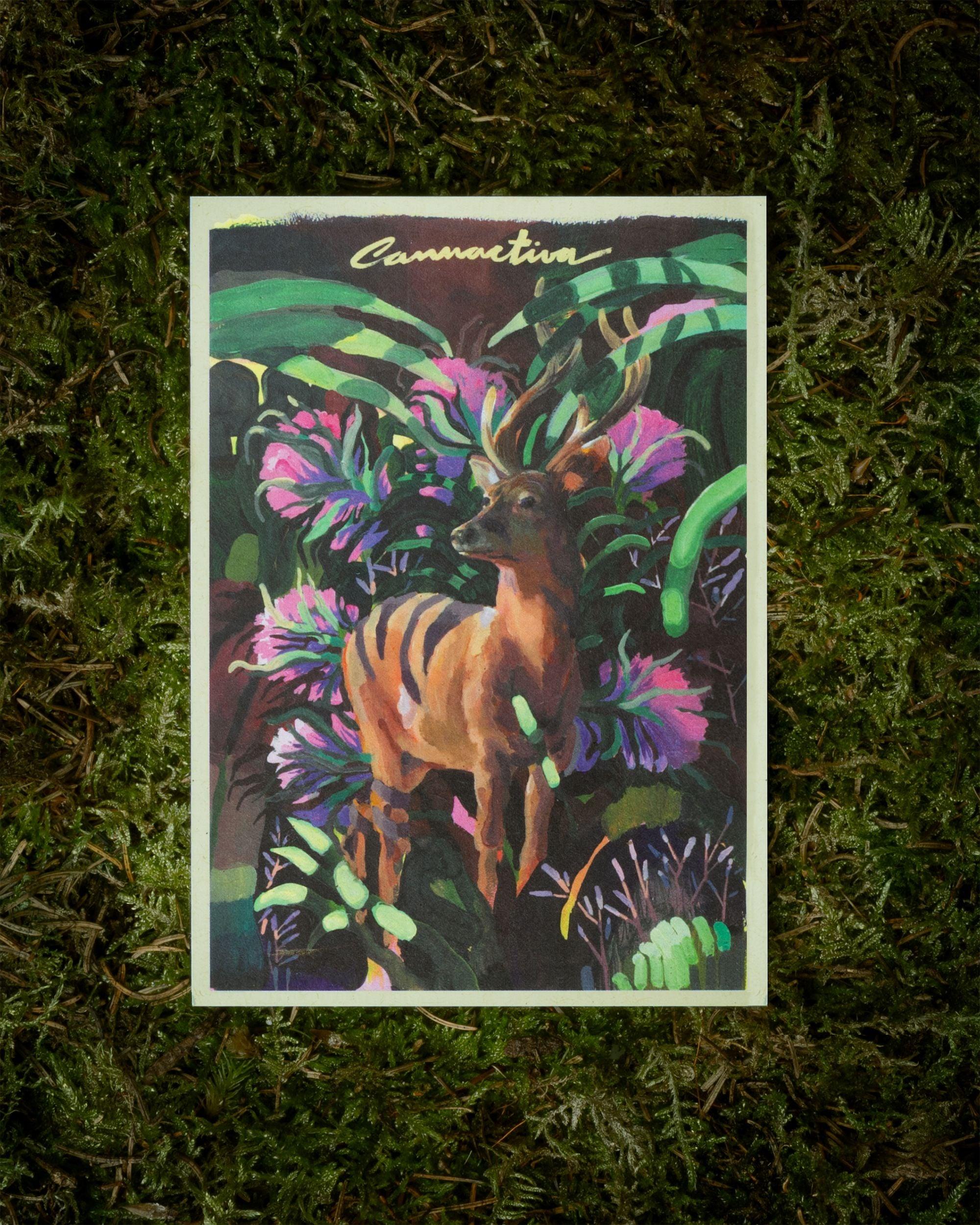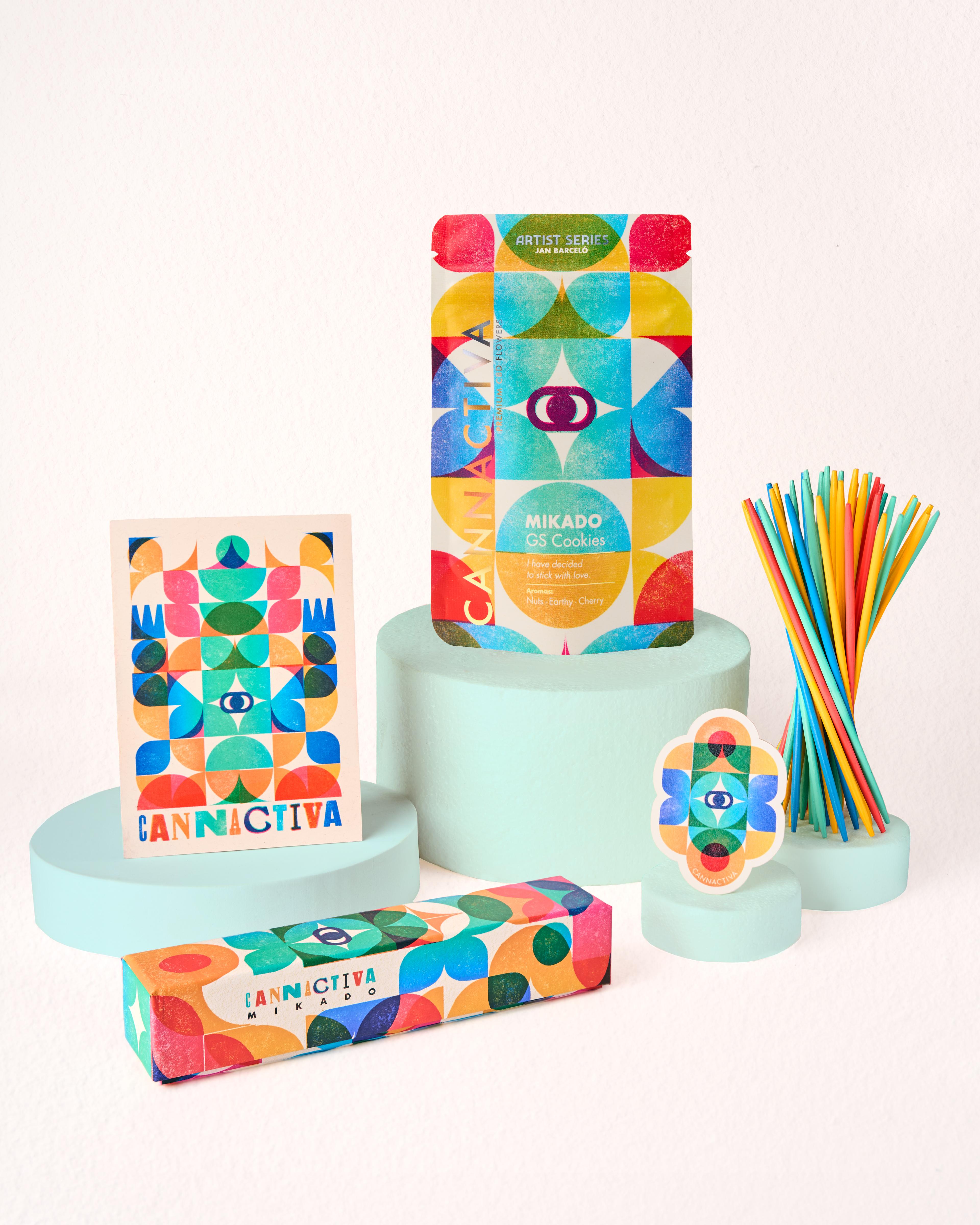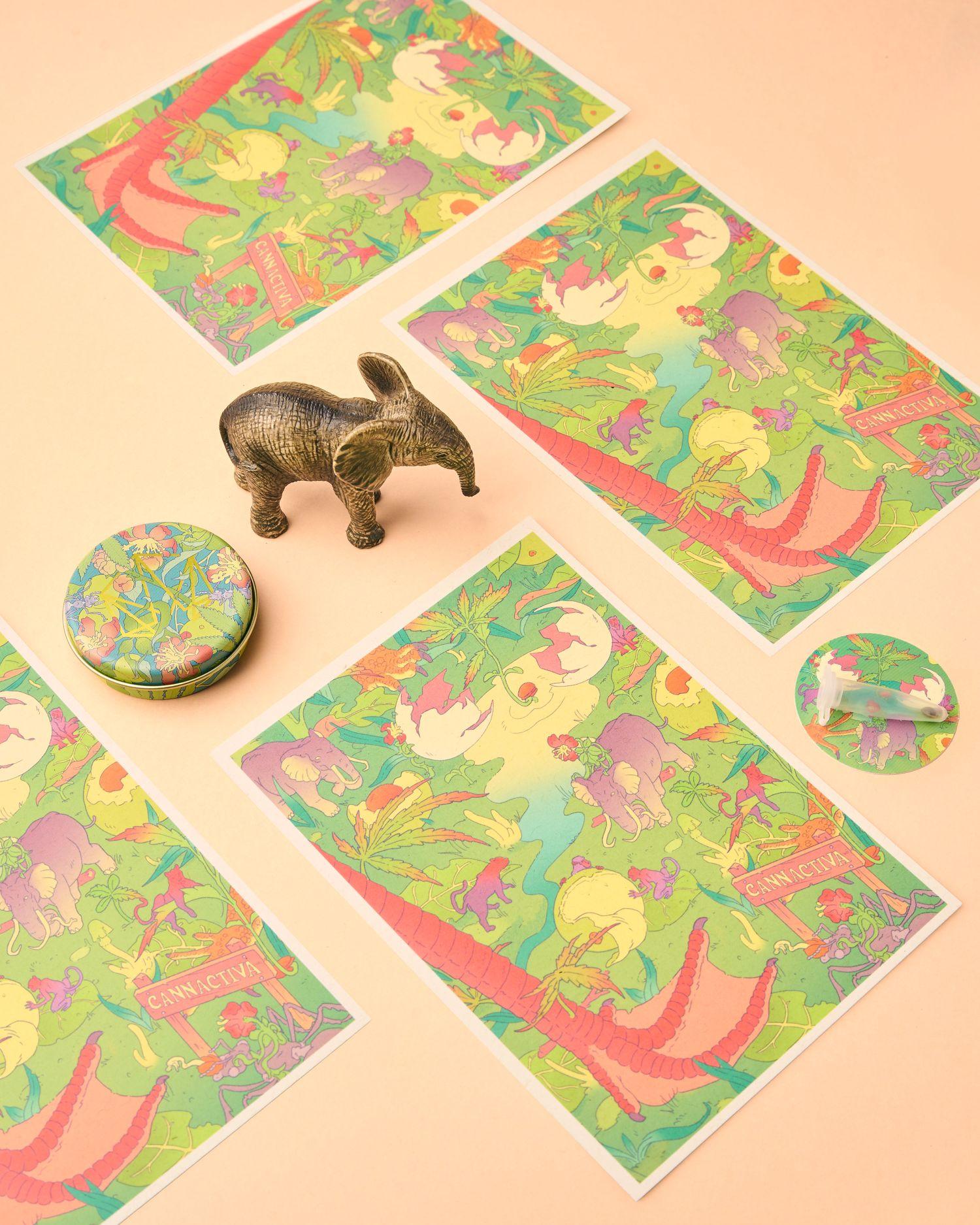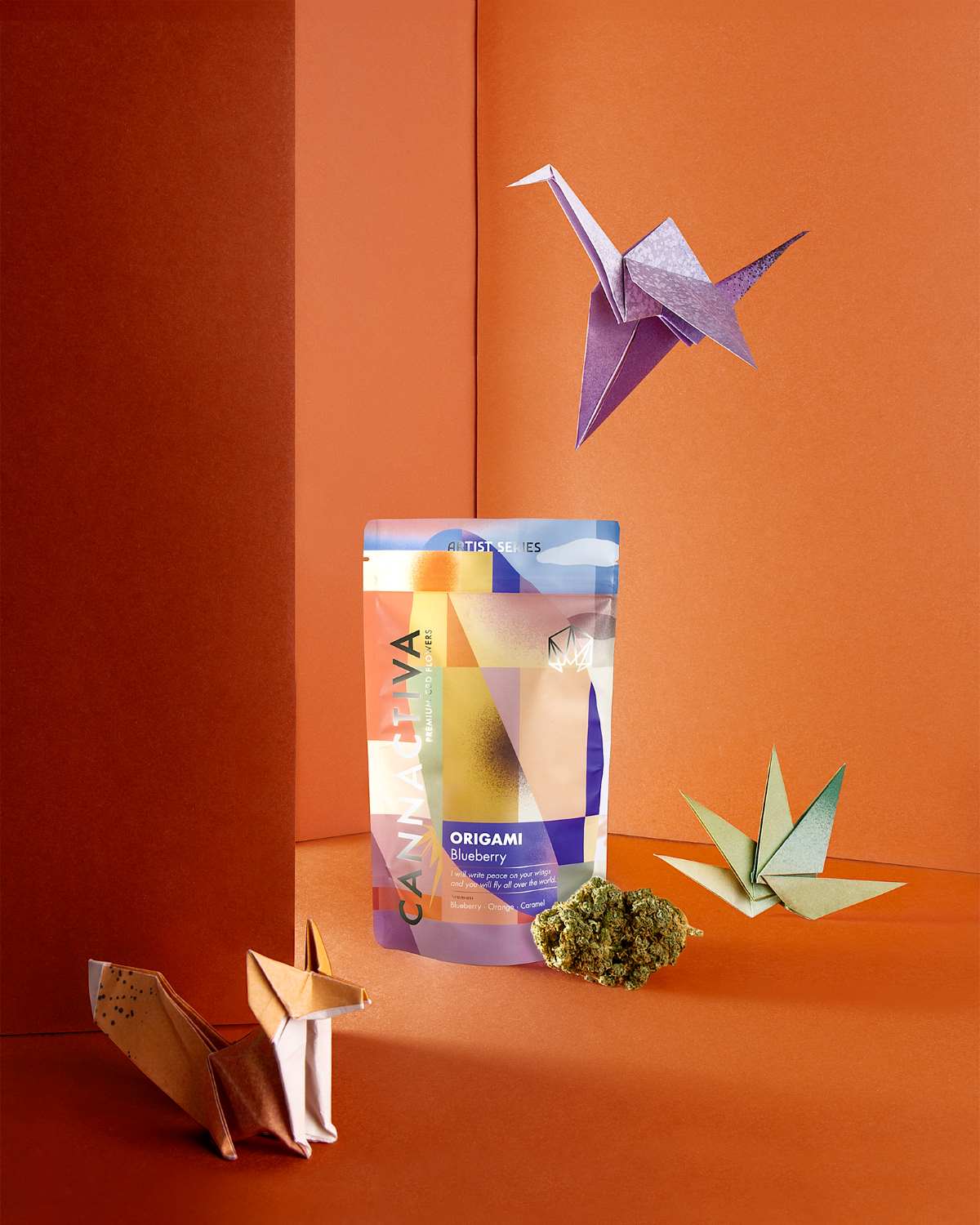
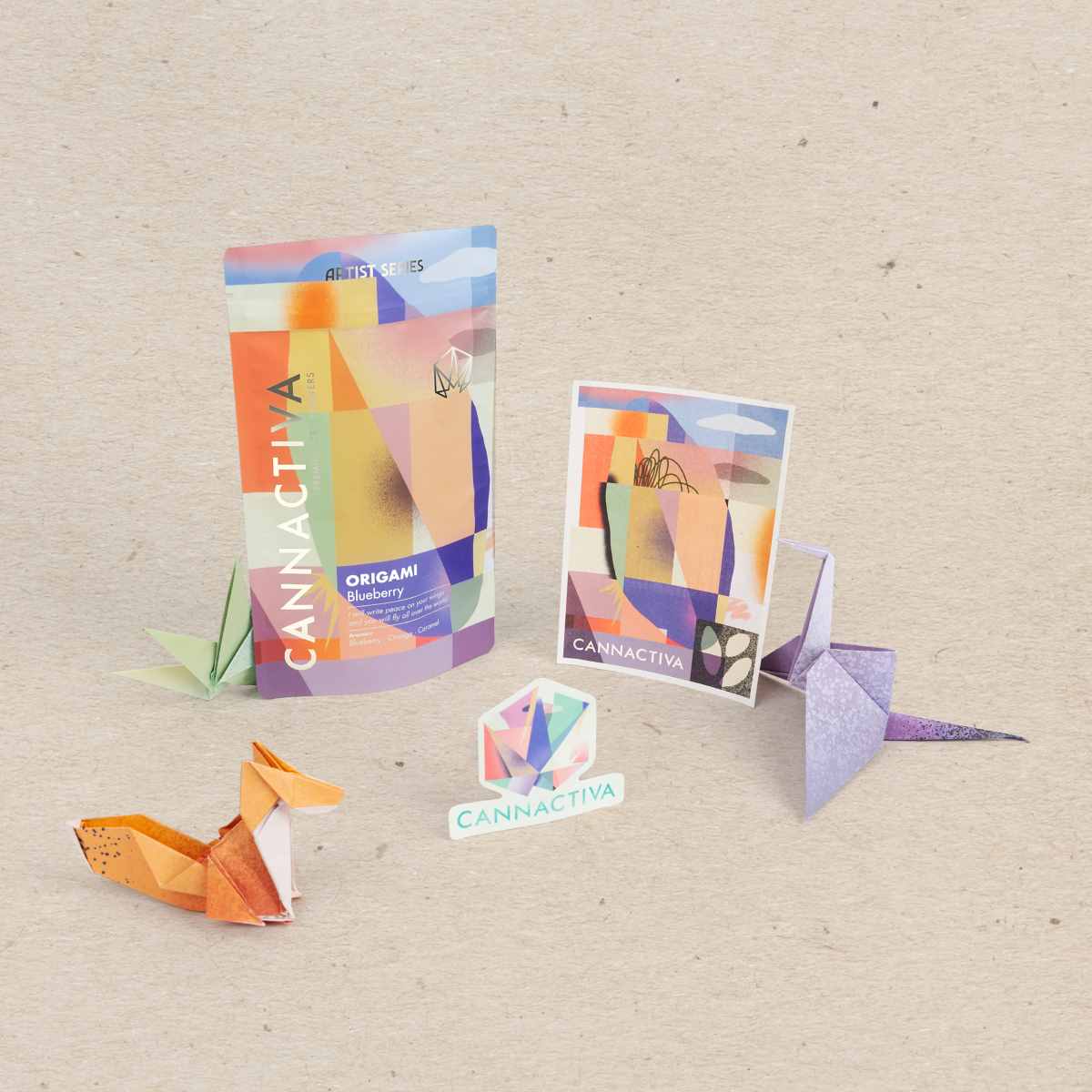
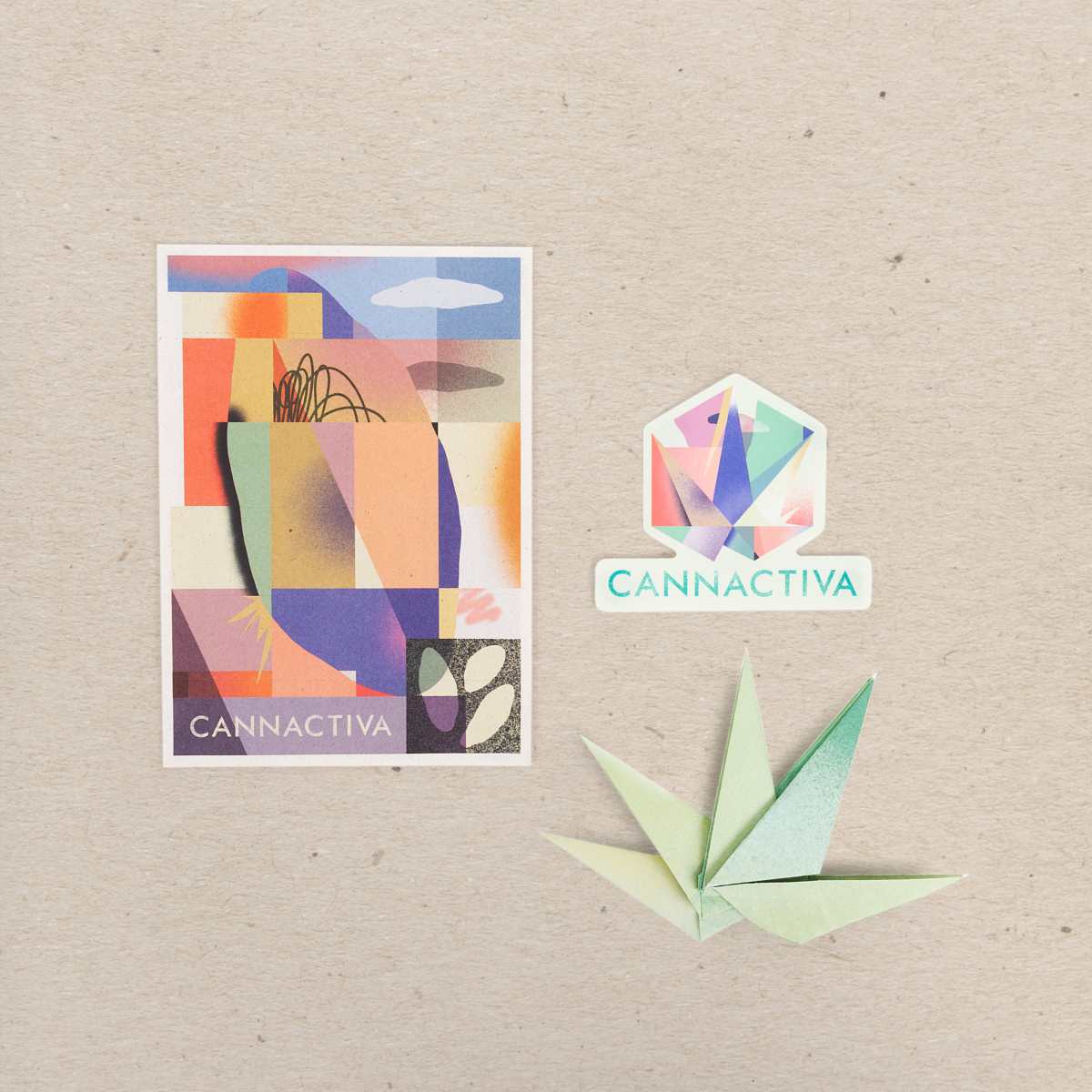
Here is the new autumn card we have created at Cannactiva, featuring a digital painting by the artist Aleix Font Arroyo. The greeting is inspired by origami, the Japanese art of paper folding, which symbolises the transformation of simplicity into beauty, patience, inner peace and creative expression.
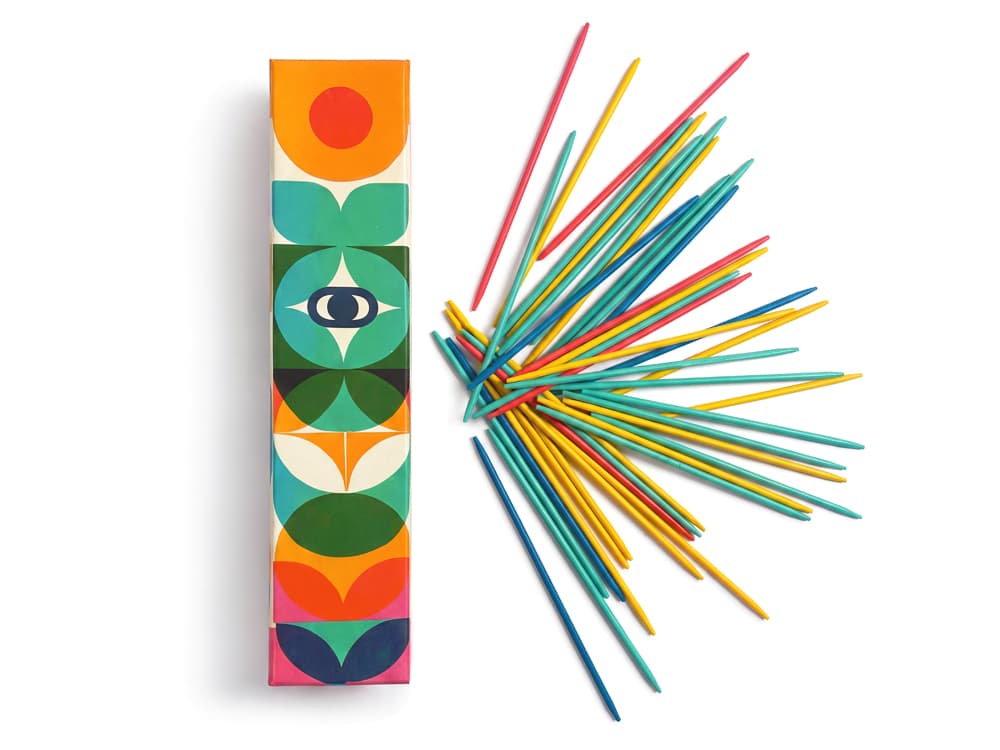
And so you can start the autumn with good energy, we are bringing you a new Origami CBD flower (Blueberry CBD). A special edition that joins our CBD Indoor range – premium CBD flower. With an aroma profile we didn't yet have in our catalogue. We've been preparing this surprise for a long time – we hope you love it!
We also ran the Origami Challenge, in which you could win various CBD prizes. During that campaign, every order placed with Cannactiva came with a sheet of origami paper, which was what you needed to take part.
Let CBD bring you calm while you immerse yourself in artistic creation. More information at the link below:
Cannactiva's autumn greeting (2023)
Our autumn greeting – Cannactiva
While the wolf fears fire, the human is warmed by it.
The sailor is afraid of storm waves, while the surfer longs for them with patience.
A dragon made of paper, once unfolded, is just paper.
And a grey cloud is really just hiding joy for the plants.
The wild summer has gifted us a storm of experiences, fruits and flowers.
And wise autumn harvests, selects, organises and prepares for winter.
It's time to fold!
To focus on surfing the tides we know, on building and admiring the figures we like.
To leave behind everything we couldn't understand, and let it fly to the next ray of light.
Fly! In the end you are just waves, clouds and paper figures.
PS: This is just a brainstorm longing to be surfed.
About the card's artist: Aleix Font Arroyo
At Cannactiva we believe art is essential in life, and we like to collaborate with people who devote their lives to art.
So here is the story of the star of our latest collaboration, Aleix Font Arroyo (also known as “Rata con Corbata”), a fine arts student who dropped out of university to go and live in Brazil. There, he delved deeper into the art of graffiti and mural painting. Two years later, he finished his art studies and complemented them with social education and philosophy. Today, Aleix runs workshops using participatory art methods: a space for intervening in conflicts, supporting organisations and groups, and also for community gathering workshops.
In his work, he likes to explore the spatial: how this element shapes and relates to people, and generates perceptions that travel in many directions. This is just a small part of his story. Find out more by visiting his social media profile!
Here is the photo gallery from Cannactiva's 2023 autumn promotion, captured by our amazing photographer Valeria Gallardo:
Get to know the art of origami
What is origami?
Origami is a Japanese art form expressed through the folding of sheets of paper. This seemingly minimalist art can turn a simple piece of paper into a shape full of beauty and meaning.
Origami transforms simplicity into beauty, a metaphor for life itself.
Every crease made by a fold has a specific purpose, reflecting the essence of Japan, where delicacy is valued and patience is cultivated.
History of origami
Using paper folding to make art has its roots in China, where paper was invented around AD 105. In the land of the Great Wall, people practised “zhezhi”, a style of paper folding in which ornaments were made from gold paper, folded into the shape of ingots, coins or gold nuggets, and thrown into the fire at funerals.
Origami symbolises the transformation of simplicity into beauty, patience, inner peace and creative expression.
Over time, the art of paper folding flourished in Japan, and origami became a recognised art form during the Edo period (1603–1868). Paper reached Japan in the 6th century, and origami was used in Shinto ceremonial rituals. These rituals were based on the veneration of the “kami”, spirits or deities that represent natural elements, objects and places of the ancestors. That is why origami works feature shapes or models inspired by nature, such as flowers, birds and all kinds of animals.
One of the best-known modern origami artists is Akira Yoshizawa, who is considered to have helped invent and document more than 50,000 models. Some of these figures appear in his book “Akira Yoshizawa: The Art of Origami”.
Meaning of origami
In Japan, origami became associated with the concepts of patience, simplicity and beauty, and became an essential part of Japanese culture. So it is an art and a cultural legacy, and it represents much more than just the act of folding paper or simple papercraft. Origami carries deep symbolism, because the folding process itself is an act of patience, discipline, problem-solving and concentration. Origami also represents the transformation of simplicity into beauty, a metaphor for life itself.
Sadako Sasaki and the Hiroshima peace cranes
Some origami figures also carry a particular symbolism. Paper cranes, for example, are a symbol of peace, health and good wishes in Japanese culture.
The story of Sadako Sasaki is closely linked to the modern history of origami. Sadako was a two-year-old girl when she survived the atomic bomb in Hiroshima, apparently unharmed. Ten years later, Sadako was diagnosed with leukaemia, which at the time was called the “atomic bomb disease”, with a poor prognosis. In hospital, in the midst of her illness, Sadako began folding origami paper cranes, following the Japanese belief that doing so would grant her a wish.
Although her illness was getting worse, Sadako persevered, filling her room with colourful paper cranes. She died at the age of twelve, but her story became a children's peace movement, both in Japan and internationally.
“I will write peace on your wings and you will fly all over the world.”
Three years after Sadako's death, money was raised to build a monument in her honour, the “Children's Peace Monument”, which stands in the centre of Hiroshima Peace Memorial Park, near the spot where the atomic bomb was dropped. At the base of the statue a wish is inscribed: “*This is our cry, this is our prayer, *peace in the world”.
We hope this introduction to the art of origami inspires you as much as it inspired us while we were preparing the autumn greeting. We encourage you to find out more about this form of artistic creation, which inspired our Origami Challenge in autumn 2023.
We are especially excited to share this project with you – we've been preparing it for you for some time. Happy autumn, Cannactivist!
We look forward to seeing you in our CBD shop.
Sources
- Book “Akira Yoshizawa: The Art of Origami”.
- The Story of Sadako Sasaki. National Park Service. https://www.nps.gov/articles/000/the-story-of-sadako-sasaki.htm