The cannabis industry keeps growing and expanding, so regulations that ensure crops are grown properly and consumers are kept safe have become a priority. In many countries where cannabis or hemp is legal, measures have started to be adopted to protect the end users of cannabis products. Today at Cannactiva we explain what Good Manufacturing Practice, or GMP, in cannabis growing involves.
What is GMP?
Good Manufacturing Practice (GMP) applies to the production processes involved in growing cannabis. Although it is not a set of rigid rules, it lays down guidelines or protocols that guarantee the quality of final cannabis products.
Originally implemented in the pharmaceutical industry, GMP has been adopted by other industries such as food, cosmetics and medicinal products to ensure that products are manufactured and controlled to consistent quality standards. In the case of cannabis, GMP has gained relevance due to the legalisation of medical cannabis in several countries. * Please remember that Cannactiva's products are not medical cannabis and are not intended to treat, cure or prevent any disease or symptom.
What is GMP cannabis growing?
GMP cannabis growing refers to grows that comply with the regulations needed to obtain GMP certification. This certification is available in some countries where medical cannabis has been legalised for consumption and growing. In other countries, GMP is only required for the processes that come after growing, i.e. for preparing medical cannabis by-products.

Key aspects of GMP in cannabis growing
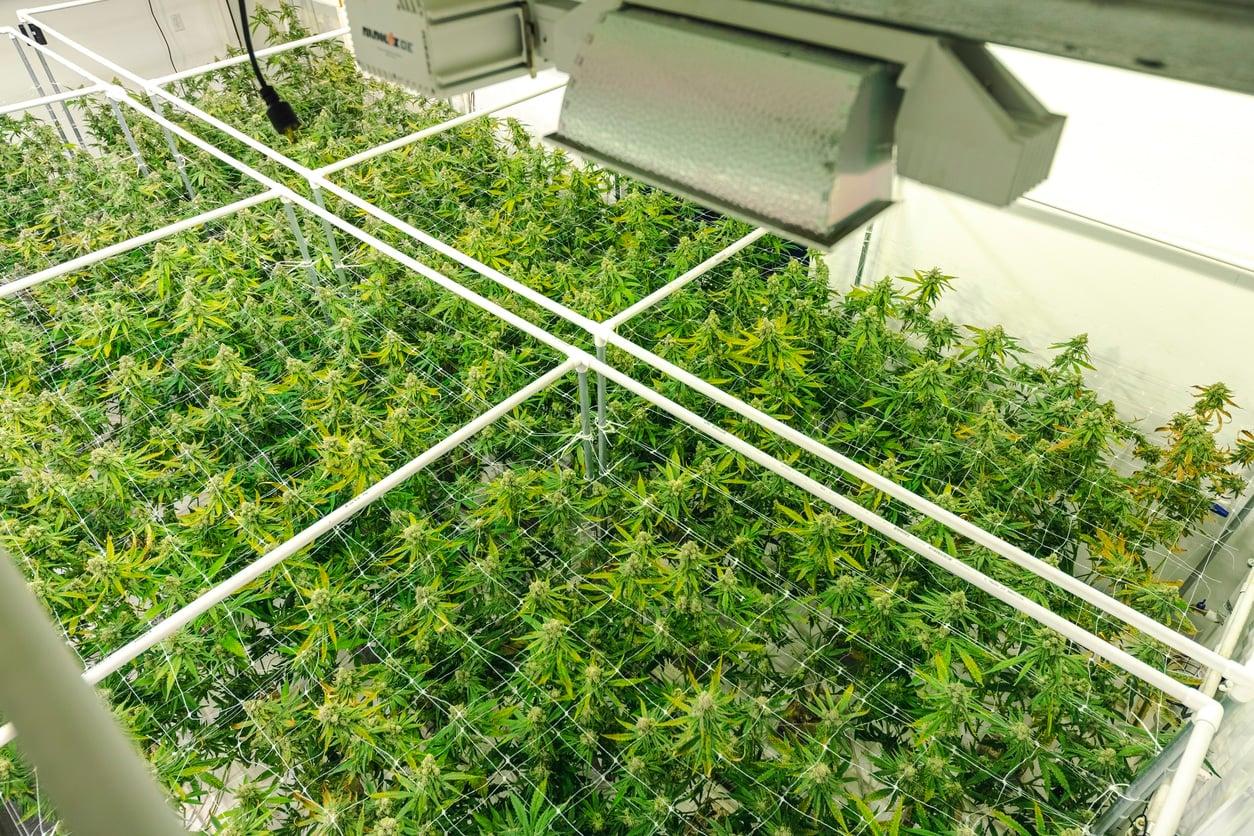
GMP covers every aspect of cannabis growing, from raw materials and the design of facilities and equipment to staff training and personal hygiene.
In cannabis growing, GMP aims to guarantee the production of quality cannabis by ensuring that plants are not exposed to pesticides, heavy metals or dangerous microbial agents. In addition, the concentrations of cannabinoid compounds must be consistent in order to comply with the country's legislation and to produce standardised cannabis products.
What does GMP involve in cannabis growing?
Traditional farming practices are not enough to guarantee the standards required for cannabis products. In Canada, for example, the current Good Production Practices (GPP, the Canadian equivalent of GMP) set out different procedures for complying with them (1), known as SOPs (Standard Operating Procedures).
Standard operating procedures (SOPs) for cannabis GMP compliance
The standard operating procedures for complying with cannabis GMP include:
- Sanitation of facilities and equipment
- Staff hygiene
- Transfer, receipt and distribution of cannabis and other raw materials
- Cannabis production and processing, including:
- Cloning or propagation of cannabis seeds
- Adding nutrients, fertilisers and pest control products
- Harvest
- Drying and curing
- Extraction
- Encapsulation or other forms of processing
- Production of cannabis edibles
- Production of cannabis extracts or topical products
- Cannabis sampling and analysis
- Packaging and labelling
- Storage
In the European Union, GMP varies depending on the type of cannabis product being produced. Companies wishing to import their products into European countries where medical cannabis is legal can obtain this certification (2). Some of the specific requirements include:
GMP requirements in the European Union:
- Stability or susceptibility to degradation.
- Macroscopic identification of plants.
- Chromatographic determination of THC, CBD and other cannabinoid concentrations.
- Purity of the cannabis flower, determination of foreign matter, ash, heavy metals, pesticides and other compounds.
- Microbiological quality according to the route of administration of the final product, with the oral route being of greatest interest.

How could GMP be implemented in cannabis growing?
First, the official regional guidelines for obtaining GMP certification must be reviewed. Generally speaking, the current conditions of cannabis production need to be assessed in order to decide which improvements to implement.
In addition, workflows, cleaning, training and environmental controls must be put in place to minimise the risk of contamination while maintaining efficient production.
All these procedures should be set out as standard operating procedures (SOPs), which will serve as a reference for quality control, calibration and continuous improvement at the different stages of cannabis growing.
Why GMP matters in cannabis growing
It is essential that products for human consumption meet certain standards to avoid contamination accidents, which can result in serious injury or even death. Although GMP is not mandatory in every country where cannabis products are sold, it is likely to become a requirement in the future.
The expansion of the global cannabis market is driving producers to obtain GMP certification, as this can translate into higher profits by winning consumers' preference. In addition, setting up safe grows is crucial to protecting the health of both consumers and workers on cannabis farms.
Conclusion
Good Manufacturing Practice (GMP), already implemented in countries that pioneered cannabis legalisation, will be essential for growing cannabis in many other places. Although it is not mandatory worldwide, it is crucial to encourage ethical growing that guarantees safe cannabis products. GMP not only offers a commercial advantage, but also strengthens consumer loyalty towards companies that make cannabis products.
Note: Cannactiva products are derived from industrial hemp and contain less than 0.3% THC. They are not medicines and are intended for external use.
References
- Health Canada, (2019). Guidance document: Good production practices guide for cannabis.
- Veit M. (2023). Quality Requirements for Medicinal Cannabis and Respective Products in the European Union - Status Quo. Planta medica, 89(8), 808–823. https://doi.org/10.1055/a-1808-9708
- Johnson, E., Kilgore, M., & Babalonis, S. (2022). Label accuracy of unregulated cannabidiol (CBD) products: measured concentration vs. label claim. Journal of cannabis research, 4(1), 28. https://doi.org/10.1186/s42238-022-00140-1
- Brown, C. E., Shore, E., Van Dyke, M. V., Scott, J., & Smith, R. (2020). Evaluation of an Occupational Safety and Health Training for Cannabis Cultivation Workers. Annals of work exposures and health, 64(7), 765–769. https://doi.org/10.1093/annweh/wxaa026
- Department of Cannabis Control. (2024). Cannabis manufacturer: self-inspection checklist. Retrieved from: https://www.cannabis.ca.gov/licensees/manufacturing/cannabis-manufacturer-self-inspection-checklist/