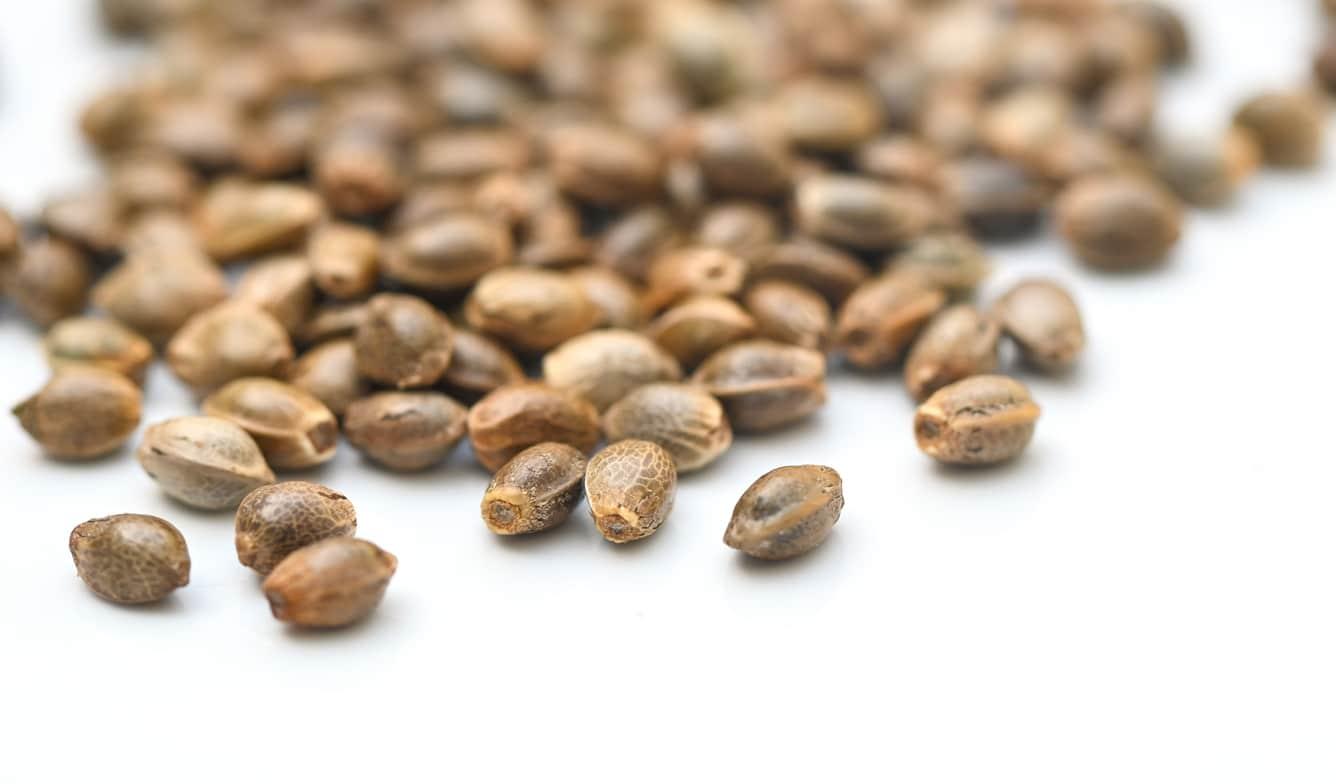
Certified hemp seeds comply with European Union legislation and guarantee legal, traceable growing that stays within the legal THC limits. They are the basis for producing industrial hemp for uses such as fibre, grain or CBD extraction.
CBD flower and CBD oil come from seeds certified by the European Union. In some countries, such as the UK, hemp flower is a controlled substance even when its THC content is low.
What does it mean for a hemp seed to be certified?
A seed is certified when:
- It comes from a variety registered in the EU Common Catalogue of Varieties of Agricultural Plant Species.
- It contains ≤ 0.3% THC in the plant, complying with the European legal limit. THC is the psychoactive compound in cannabis.
- It has been produced with guaranteed genetics (cannabis with a low THC content) and traceability.
- It is sold with documentation proving its legal origin.
Most common certified hemp varieties
Some of the most widely used varieties in the EU for their reliability, yield and adaptability:
- Futura 75: very popular in Europe, good for flower and fibre production.
- Finola: dwarf, early-maturing variety, excellent for seed (grain) production.
- Felina 32: good fibre and seed production.
- Santhica 27: variety with low THC and high CBG.
- Kompolti: traditional in Eastern Europe, good for flower and fibre.
- Tiborszallasi: Hungarian variety, very aromatic, good for flower.
Legal framework for hemp in the European Union
The legal framework for hemp in the European Union is based on several key regulations governing its cultivation, marketing and use:
- Regulation (EU) 2021/2115 of the European Parliament and of the Council of 2 December 2021: this regulation lays down the rules for the Common Agricultural Policy (CAP) strategic plans and, since 1 January 2023, has replaced Regulation (EU) No 1307/2013. In Article 4, it establishes that areas under hemp are only eligible for support if the varieties grown have a tetrahydrocannabinol (THC) content not exceeding 0.3%.
- Council Directive 2002/57/EC of 13 June 2002: this directive focuses on the marketing of seed of oil and fibre plants, including hemp. It sets out requirements for the production and sale of seeds within the EU, ensuring their quality and traceability.
- Commission Delegated Regulation (EU) 2022/126 of 7 December 2021: this regulation establishes additional rules for land under hemp to be eligible for direct payments, as well as rules on THC controls in the field and on hemp as a catch crop.
- National legislation applicable in each member state.
Uses of certified hemp seeds
Certified hemp seeds are selected genetics with qualities that make them suitable for use in different sectors:
- Textile industry and eco-construction (fibre)
- Seed production for food
- Extraction of CBD and other non-psychoactive cannabinoids
- Natural skincare and wellness products
- Biomass, compost and other sustainable uses
Frequently asked questions about certified hemp seeds (FAQ)
Can certified seeds be marketed freely within the EU?
Yes. Seeds listed in the Common Catalogue of Varieties of Agricultural Plant Species can move freely within the European market, provided they come with their official documentation. However, each country may require additional formalities (operator registration, notification to the authorities, etc.).
What are the requirements for growing industrial hemp in Spain?
To grow hemp legally in Spain, you must use only certified and authorised varieties, keep the official labels and invoices from the seed purchase in case of an inspection, notify the local authorities of the crop and, in some cases, obtain an additional permit if you are growing for flower or cannabinoids. Field inspections may take place.