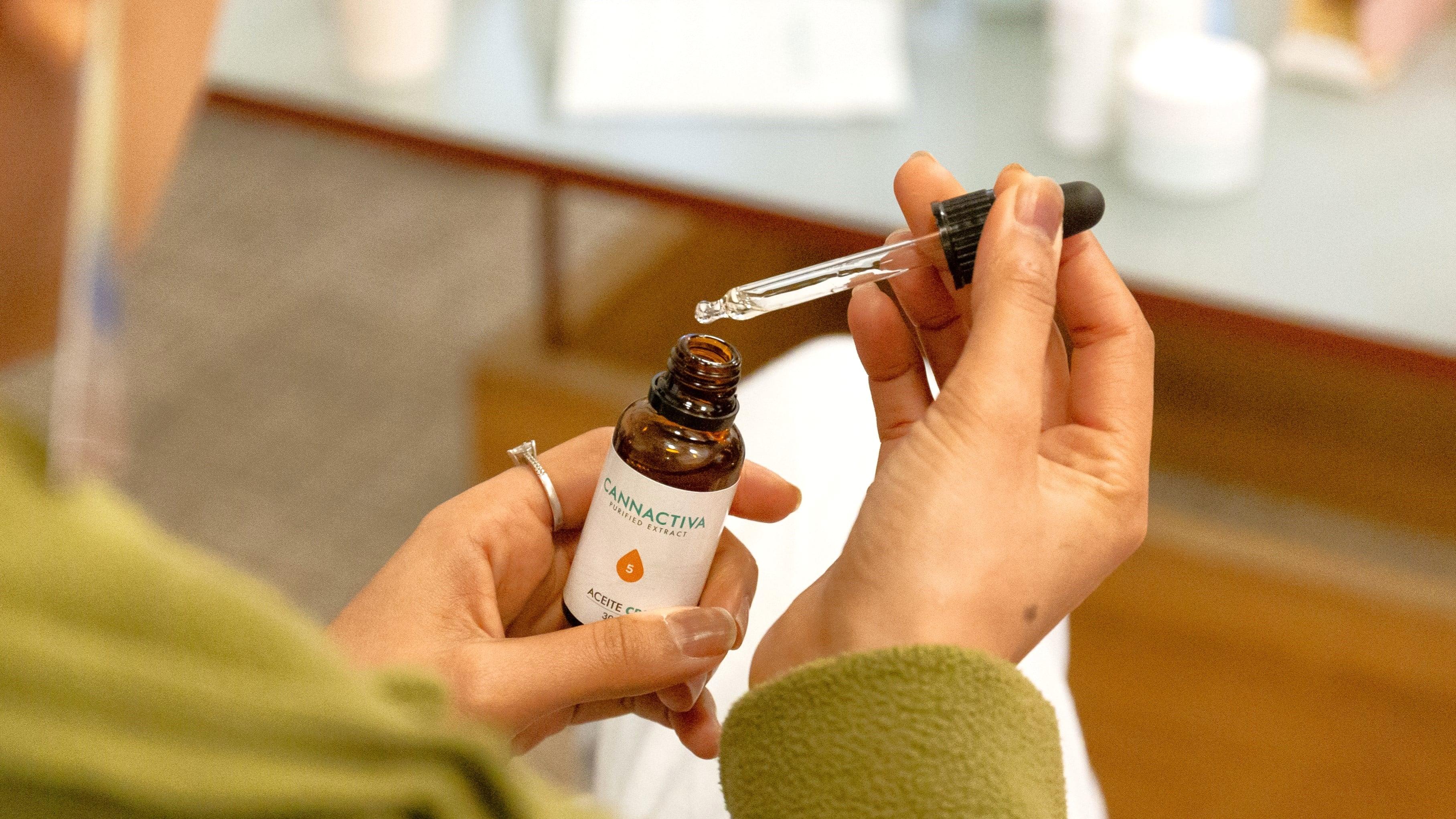
The use of cannabidiol (CBD) products, in particular CBD oil, has gained popularity for its potential therapeutic effects. However, many questions arise when considering the safety of CBD during pregnancy.
Did you know that the endocannabinoid system influences pregnancy and childbirth? And that babies have a different endocannabinoid system from adults, which is why it is not advisable to expose them to CBD or THC? This article aims to shed light on this controversial topic, based on the existing scientific evidence.
Clarifying note: the use of CBD or cannabis is not recommended during pregnancy and breastfeeding. If you want to know why, keep reading this post, which mentions some very interesting facts.
CBD, cannabis use and pregnancy
Pregnancy is a unique stage in every woman's life that can bring different challenges, not only physiological but also spiritual, in family structure and even cultural. Amid the whirlwind of changes that pregnancy brings with it, it is natural for there to be moments of stress, anxiety, difficulty sleeping, nausea and vomiting. To cope with the different situations that can arise during this stage, some women ask whether it is possible to use CBD oil during pregnancy.
It should be made clear that, as regards taking CBD sublingually, CBD products are not authorised for oral use in the European Union or in Spain (CBD has been a novel food since 2019).
Is CBD safe to use during pregnancy?
Currently, there is a lack of conclusive evidence that CBD is completely safe to use during pregnancy. Some animal studies suggest potential risks that may affect fetal development, but comprehensive human studies are lacking.
It is recommended to avoid cannabis use during pregnancy and breastfeeding.
Health authorities advise against the consumption of CBD during pregnancy due to the lack of research on its effects on the developing fetus and pregnant mothers.
From the few reports in humans, it has been observed that the most prudent option is to abstain from taking CBD during pregnancy and breastfeeding. This is because doing so could alter the normal physiology and growth of the fetus or baby, which in turn could affect the formation of fundamental brain connections.
Factors to consider before using cannabis during pregnancy and breastfeeding
The endocannabinoid system is a complex network of receptors and neurotransmitters that play an essential role in maintaining the body's homeostasis. In other words, it is like the “control centre” in charge of keeping the body's functions healthy and in balance.
The function of the endocannabinoid system varies from embryonic development to adulthood and old age. During pregnancy, the endocannabinoid system is involved in embryo implantation, uterine growth and even childbirth (3). Any substance that affects this system could have far-reaching implications.
Babies and children have a different endocannabinoid system from adults.
The endocannabinoid system varies throughout life. In infants, the endocannabinoid system is crucial for forming new neurons (neurogenesis) and their connections (synaptogenesis). Therefore, these processes should not be altered by exposing infants to cannabinoids such as CBD or THC.
One of the differences between babies and adults is the number and distribution of cannabinoid receptors. This number of receptors could be altered if the baby is constantly in contact with cannabinoids.
Scientific studies on the use of CBD in pregnancy
There are ethical and physiological obstacles to conducting CBD research in pregnancy, and variability in the way the body processes substances during pregnancy further complicates research.
CBD has been found to decrease the development of blood vessels in the umbilical veins (4), which, although more research is needed on this fact, could interfere with gestation itself. It has also been found that CBD can alter the permeability of the placental barrier (5), which could compromise the compartment where the fetus is located during pregnancy and thus jeopardise the development of the baby. Although there are not many studies on the effects of CBD in pregnancy, the use of cannabinoids during pregnancy has been linked to a weakening of the immune system of the developing fetus (6).
There is no clear understanding of CBD's mechanisms of action and their implications in pregnancy, so more research is still needed to establish the safety of CBD during pregnancy (7).
For all these reasons, the best thing is not to use cannabis during pregnancy and breastfeeding.
Possible adverse effects of CBD during pregnancy and breastfeeding
Cannabinoids are lipophilic in nature, which means that they have an affinity for fatty tissues. This allows them to cross the placental barrier, reaching the developing fetus, and to be excreted in breast milk, affecting the nursing baby.
The existing literature, although not conclusive, suggests that there may be a low birth weight and delayed fetal development. It may also interfere with the baby's brain development.
Due to all the unknowns and the known effects of CBD in pregnancy, it is recommended to look for natural solutions to insomnia, stress and anxiety as a first choice. Yoga, meditation or reading a good book can help. In any case, avoid taking any new substance, including CBD, during pregnancy and breastfeeding without the advice and supervision of your doctor.

Frequently asked questions about CBD and pregnancy
Can I take CBD oil during pregnancy?
Given the lack of conclusive evidence, it is not advisable to use CBD oil or other cannabinoid products during pregnancy without consulting a healthcare professional.
What happens if I use or smoke cannabis while pregnant?
As for what would happen if you smoke or use cannabis during pregnancy, for all the reasons above, it is not advisable. Although it is not possible to say for sure what the consequences might be (studies are lacking), with the current data the most prudent thing is to avoid using cannabis.
Cannabis contains both CBD and THC; the latter is psychoactive and has possible harmful effects on fetal development. One study found that children born to mothers who used cannabis (with THC and CBD) during pregnancy had visual processing difficulties and a shorter attention span (8).
What if I use cannabis and I am breastfeeding?
It is advisable to avoid cannabis, weed or THC (tetrahydrocannabinol) during pregnancy and also while breastfeeding, because THC and other cannabinoids are excreted in breast milk (1).
As a result of breastfeeding with traces of THC, the infant's endocannabinoid system is stimulated, which may alter natural developmental processes and interfere with the formation of neural connections, resulting in a decrease in the motor development of infants (2).
Can the risk of cannabis during pregnancy be minimised?
Abstaining from weed and other cannabis products during pregnancy and breastfeeding is currently the safest course of action, given the unknowns. While it is tempting to seek natural alternatives such as CBD oil for pregnancy-related symptoms, the lack of comprehensive research makes it difficult to recommend a safe dose.
Until more conclusive studies are conducted, it is prudent to be cautious and not use CBD or cannabis products during pregnancy and breastfeeding. It is also advisable to consult a professional before using medications, plants or supplements during this stage. In case of discomfort, we recommend that you consult a professional.
In conclusion...
The use of CBD is not recommended during pregnancy and breastfeeding. In case of discomfort or symptoms that you want to treat during pregnancy, we advise you to seek professional advice and avoid the use of external substances such as CBD.
Cannactiva products should not be used during pregnancy or breastfeeding. Nor should they be used on babies, and it is advisable to store CBD products out of the reach of children. Consult your doctor before using CBD if you have any doubts.
This is an informational post, based on ongoing research, and cannot and is not intended to diagnose, prevent, treat or cure any disease or symptom. Its content can complement, but never replace, the diagnosis or treatment of any disease or symptom. Cannactiva products are not medicines and are intended for external use.
References
- Crowley, H. R., Goyal, N. K., & Chung, E. K. (2022). Marijuana and Breastfeeding: A Pilot Survey of Mothers. Hospital pediatrics, 12(7), e255–e260. https://doi.org/10.1542/hpeds.2021-006420
- Astley, S. J., & Little, R. E. (1990). Maternal marijuana use during lactation and infant development at one year. Neurotoxicology and teratology, 12(2), 161–168. https://doi.org/10.1016/0892-0362(90)90129-z
- Fride, E., Gobshtis, N., Dahan, H., Weller, A., Giuffrida, A., & Ben-Shabat, S. (2009). The endocannabinoid system during development: emphasis on perinatal events and delayed effects. Vitamins and hormones, 81, 139–158. https://doi.org/10.1016/S0083-6729(09)81006-6
- Solinas, M., Massi, P., Cantelmo, A. R., Cattaneo, M. G., Cammarota, R., Bartolini, D., Cinquina, V., Valenti, M., Vicentini, L. M., Noonan, D. M., Albini, A., & Parolaro, D. (2012). Cannabidiol inhibits angiogenesis by multiple mechanisms. British journal of pharmacology, 167(6), 1218–1231. https://doi.org/10.1111/j.1476-5381.2012.02050.x
- Feinshtein, V., Erez, O., Ben-Zvi, Z., Eshkoli, T., Sheizaf, B., Sheiner, E., & Holcberg, G. (2013). Cannabidiol enhances xenobiotic permeability through the human placental barrier by direct inhibition of breast cancer resistance protein: an ex vivo study. American journal of obstetrics and gynecology, 209(6), 573.e1–573.e15. https://doi.org/10.1016/j.ajog.2013.08.005
- Dong, C., Chen, J., Harrington, A., Vinod, K. Y., Hegde, M. L., & Hegde, V. L. (2019). Cannabinoid exposure during pregnancy and its impact on immune function. Cellular and molecular life sciences : CMLS, 76(4), 729–743. https://doi.org/10.1007/s00018-018-2955-0
- Sarrafpour, S., Urits, I., Powell, J., Nguyen, D., Callan, J., Orhurhu, V., Simopoulos, T., Viswanath, O., Kaye, A. D., Kaye, R. J., Cornett, E. M., & Yazdi, C. (2020). Considerations and Implications of Cannabidiol Use During Pregnancy. Current pain and headache reports, 24(7), 38. https://doi.org/10.1007/s11916-020-00872-w
- Fried, P. A., & Smith, A. M. (2001). A literature review of the consequences of prenatal marihuana exposure. An emerging theme of a deficiency in aspects of executive function. Neurotoxicology and teratology, 23(1), 1–11. https://doi.org/10.1016/s0892-0362(00)00119-7