CBD is legal in France in all its forms: CBD flower and CBD products
The French Council of State has approved the legalisation of CBD leaves and CBD flower, authorising the sale of CBD in France in all its forms. The decision came on Thursday 29 December 2022, definitively overturning the order that banned the sale of CBD in bud form. All of this came exactly one year after the French government, on 30 December 2021, introduced the ban on the sale of CBD leaves and flower, supposedly to protect consumers and fight drug trafficking.
CBD is now legal in France: the news we had all been waiting for
In a landmark decision on Thursday 29 December 2022, the French Council of State overturned an order that had banned the sale of CBD flower in France, and declared it safe for consumption and fit for sale to the public.
The Council of State has thus settled the legal status of CBD in France, finding that there are no established links between the use of CBD products and risks to public health. This unprecedented decision clears the legal path for CBD in France, where you can now buy CBD flower completely legally and safely, along with all kinds of CBD products and hemp derivatives. The ruling by France's highest court declared that CBD products, including CBD flower, pose no risk to public health and can be sold without restrictions. It adds that there are scientific studies showing that CBD has calming and anticonvulsant properties but produces no psychoactive effects or addiction.

CBD and the cannabis revolution in France
Cannabidiol or CBD is a substance found naturally in hemp extract (*Cannabis sativa *L.) that contains no THC and therefore lacks the psychoactive effects of cannabis. It could also have various medical applications. Despite its close relationship to the cannabis plant, CBD-rich hemp extract has no narcotic properties – quite the opposite. CBD has a subtle effect with few side effects, and those are mild.
One of the most controversial hemp-derived products has been CBD flower.
CBD flower has revolutionised the cannabis industry by presenting itself as a smokable plant product that comes from cannabis but has no psychoactive effects.
At first, French industrial hemp growers viewed CBD flower with suspicion, worried that regulating it might disrupt their business. Since then, however, the CBD industry has flourished worldwide and opinion in the sector has done a complete U-turn, welcoming an innovative sector with huge potential. Now the whole sector is very keen on CBD flower, which is a very profitable business for them.
CBD comes in a range of formats: CBD flower, CBD oils, CBD creams, CBD skincare… all with a THC content below 0.3%. According to France's Professional Hemp Union (Syndicat Professionnel du Chanvre), the number of CBD shops has risen sharply in recent years, reaching around 2,000 CBD shops across the country today. This boom in CBD shops reflects French consumers' growing interest in cannabidiol and hemp derivatives and their possible uses.
How the legal status of cannabis has evolved in France
Since 2018, the French CBD industry has been on a regulatory rollercoaster. Yet despite the inconsistent rules, France's long tradition of industrial hemp is still going strong.
On 30 December 2021, a momentous policy change opened the door to legal CBD products in France, as long as they contained less than 0.3% THC. It stated that CBD, or cannabidiol, has no psychoactive effect and is not addictive, so it cannot be considered a narcotic.
This was set out in the first part of article R. 5132-86 of the Code de la Santé Publique, paving the way for access to cannabis derivatives and the benefits associated with them, such as the benefits of CBD oil. However, the second part of the same article introduced a ban on the sale of CBD flower, supposedly to protect consumers and fight drug trafficking. The ban was suspended by the Council of State (Conseil d'Etat) a month later, on 24 January 2022, because of serious doubts about its legality, once again restoring the sale of CBD products under European Union law. From then until now, CBD products could be sold in France as long as they contained less than 0.3% THC. But the sale of CBD leaves and flower, even with the same legal THC level, was only allowed provisionally, pending the final decision.
Despite the legal skirmishes between the French authorities and businesses, the sale of CBD in France is protected by European Union law, which lays the foundations of a single market with free movement of goods between member states. On this basis, no member state can ban products legally produced in another European country.
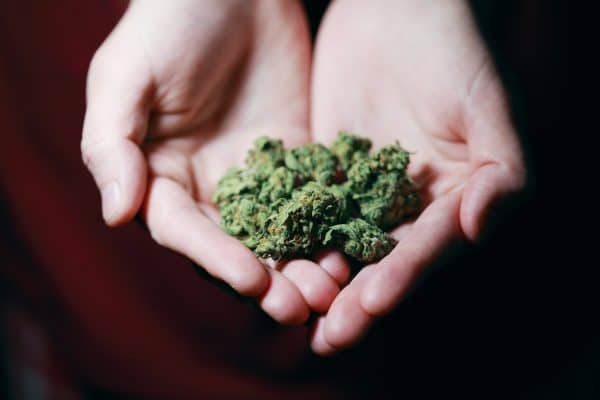
France's Ministry of Solidarity and Health, for its part, opposed legalising CBD flower, arguing that it would be impossible for the police and gendarmerie to tell CBD buds from cannabis buds, to which the Council of State replied that the presence of THC, with its narcotic properties, can be detected through lab testing. Anti-drug policy would therefore not justify keeping the ban on selling cannabis flowers and leaves with a THC content below 0.3%.
In November 2020, the Court of Justice of the European Union declared France's CBD ban illegal, under the EU's fundamental principles. Later, the Court of Cassation, France's highest judicial body, ruled in favour of free movement within Europe and declared that all CBD legally produced in member states could be sold in France. This ruling has been key to ensuring that all forms of CBD below 0.3% THC are available for legal sale and use throughout France today.
Recreational cannabis regulation in France
Following the legalisation of CBD, it is worth getting a rough idea of public opinion on cannabis and cannabis legalisation in France.
Some time ago, we had the chance to interview Benjamin-Alexandre Jeanroy, one of the leaders of the cannabis movement in France, who has experience at the UN and founded the specialist cannabis consultancy Augur Associates. He explained to us that cannabis legalisation is always a controversial subject in France. Before his election, Macron seemed to have no known position on legalising recreational cannabis in France. During his election campaign, however, he gradually began to voice his doubts about it. Macron's government has been reluctant to legalise cannabis because of its complicated relationship with the police and the strong precedent it has in French culture.
All in all, everything suggests that, for now, cannabis legalisation in France is a long way off. If they want to, they can even arrest you for wearing a T-shirt that glorifies cannabis! You can read the full interview in our post on the political situation of cannabis in France.
The Kanavape case in France: the European courts have their say
One of the best-known CBD cases in Europe, and the prelude to this court ruling, was that of the company Kanavape. In 2020, the Court of Justice of the European Union (CJEU) ruled on the legality of CBD and its sale in the different European countries, declaring that the compound is not psychoactive and that member states cannot ban its sale in other countries, provided it has been obtained legally.
It came about through the prosecution of the company Kanavape, which imported CBD produced in the Czech Republic into France to package it in e-cigarette cartridges. France brought criminal proceedings against the two businessmen responsible, aged 33 and 31, because French rules banned the sale of CBD extracted from the cannabis plant and only allowed the sale of hemp fibre and seeds. As a result, the businessmen were given suspended prison sentences of 18 and 15 months and a fine of €10,000.
The CJEU ruled on the case and held that EU law precluded the French rules. The CJEU found that CBD is not considered a narcotic drug and can therefore be subject to the provisions on the free movement of goods within the European Union. The ban on selling CBD was therefore a measure that restricted the free movement of goods and was not compliant with EU law. Such a measure could only be justified on grounds of general interest, such as protecting public health. The CJEU stressed that CBD has no psychotropic effects or harmful effects on human health, unlike tetrahydrocannabinol (THC), the cannabinoid responsible for the effects of cannabis.
With these arguments, the Court of Justice urged the French national court to examine the available scientific data to make sure that the alleged risk to public health was real and not based on purely hypothetical considerations.
In short, the Kanavape case laid the foundations that make selling CBD between EU countries legal, provided it comes from legal hemp produced in another member state. Member states cannot block its sale based solely on its origin or the source it was extracted from.
You can now buy legal CBD!
CBD is now legal in France, including CBD flower. With the reassurance that the French courts recognise CBD products as non-psychoactive substances, all consumers can access this beneficial compound without any worries.
See our premium online CBD shop
CBD is now a fully legal product in France and can be sold in all its forms. You can now buy CBD as buds or as oil, which offer all the benefits without any of the psychoactive effects associated with traditional cannabis strains. Bear in mind that in most European countries cannabis with THC is not legal and each country has its own rules: in some, such as the UK, hemp flower is controlled even when its THC content is low.
If you are planning a trip to France, you can buy CBD directly there, so there is no need to travel with CBD.
At Cannactiva you will find a wide range of CBD products with exceptional properties. Fast 24/48-hour delivery across Europe!
Legal CBD in France: FAQs
Legal CBD in France: FAQs
What is the difference between CBD from hemp and THC from cannabis?
CBD is a type of cannabinoid, just like THC. The difference between the two compounds is that their chemical structures vary, making them two completely different substances. They also have different effects on the body. While THC strongly activates CB1 receptors, causing psychological effects, CBD does not produce these effects. What's more, CBD may act as an antidote to THC, toning down its psychoactive effects.
What is the legal THC limit in France?
The legal THC limit in France is 0.3%.
Does cannabis contain CBD?
Cannabis can contain varying amounts of CBD as well as THC. However, strains with a higher CBD content are less psychoactive, because CBD reduces the psychoactive effects of THC.
What did the French Senate approve in November 2022?
On 24 November 2022 the French Senate passed a resolution proposing the legalisation of CBD in all its forms (including CBD flower), the development of and support for the agro-industrial sector of industrial hemp and CBD cannabis, and new regulations to benefit CBD consumers with hemp-derived products. Although it was a good start, in practical terms it had no meaningful effect.
How is THC-free hemp produced?
THC-free hemp is a variety of cannabis. The Cannabis sativa plant shows extraordinary genotypic and phenotypic diversity within the plant world. This means there are many types of cannabis in terms of their morphology. Two Cannabis sativa plants can differ markedly in height, flower shape, colour, fibre, and cannabinoid and terpene content. And although they may look like different plants at first glance, they are the same botanical species! Surprised? Well, you should know that there are currently hundreds of certified Cannabis sativa seed varieties in Europe. Some are more efficient for producing fibre (for textiles and eco-building materials), others for producing medical cannabis, others for extracting CBD, others for making CBD skincare products, and others for using their seeds as food (hemp seed oil)… The cannabis plant is versatile and has many beneficial uses! It's time to free it from the stigma of weed.
What is THC-free CBD flower sold for?
CBD flower is presented as a legal way to smoke cannabis without the high that has given it such a stigma. CBD flower is a unique, legal way to experience the aromatic richness of cannabis without feeling its psychoactive effects. Besides CBD, hemp contains many aromatic compounds, such as minor cannabinoids, terpenes and flavonoids. Together they give each CBD flower strain its own distinct effect.
How does CBD differ from cannabis?
The cannabis plants that produce CBD have a low-THC genotype, so they are not psychoactive. Legally speaking, cannabis with a very low THC content is called hemp, although in practice these plants look more like weed than industrial hemp. Our cannabis expert, Dr Daniela Vergara, wrote a very detailed article for us explaining the differences between hemp and cannabis, in which she noted that CBD cannabis plants could be considered low-THC cannabis.