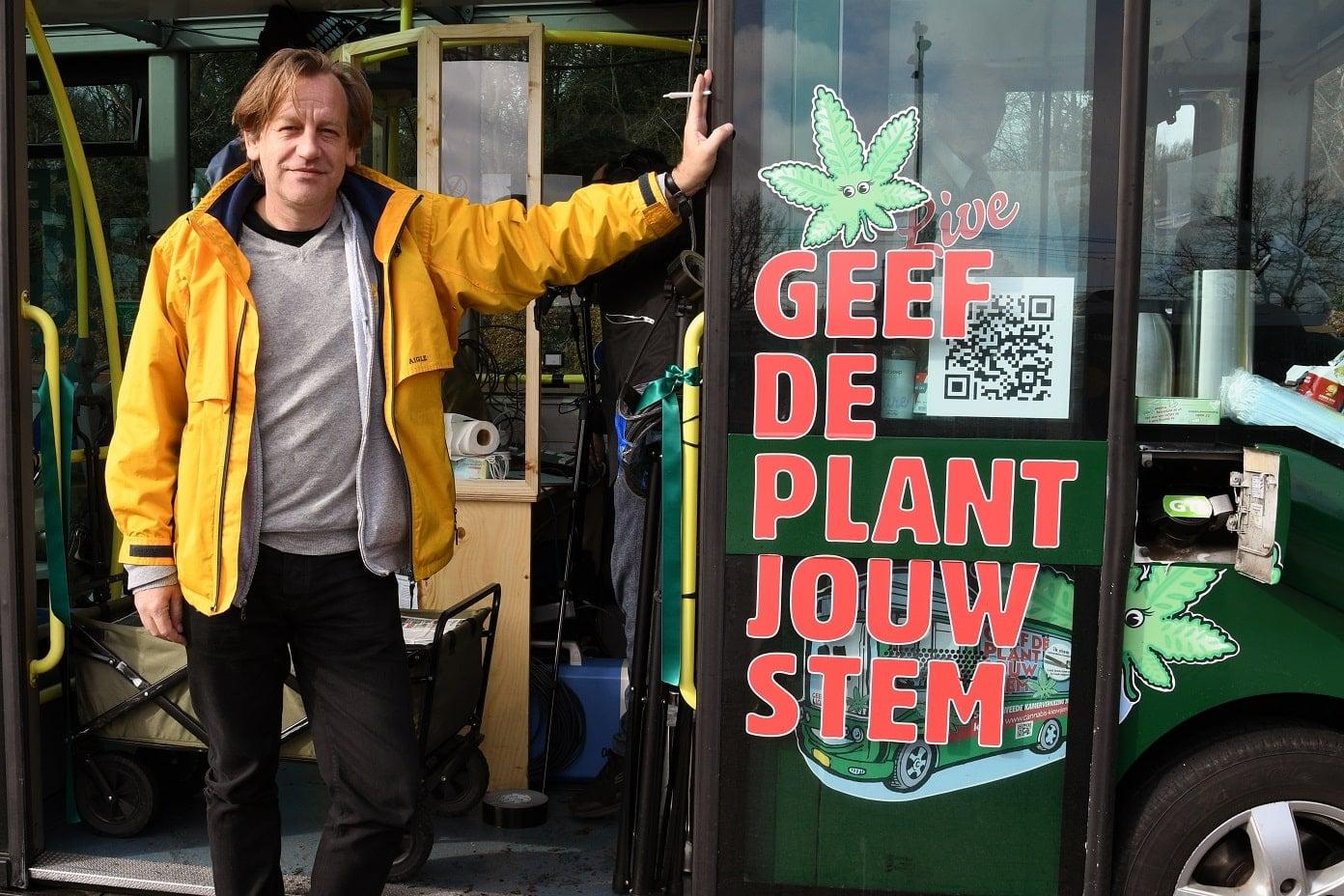
Many people think cannabis is completely legal in the Netherlands. The truth, however, is much more complicated: selling small amounts of cannabis is allowed, but production and wholesale distribution are still considered illegal. And where does CBD fit into all this? To answer all these questions, I sat down with Derrick Bergman, one of the leading Dutch cannabis experts and legalisation activists.
Expert interview: the cannabis situation in the Netherlands with Derrick Bergman
Could you briefly introduce yourself and the organisations you represent on the Dutch and international cannabis scene?
I'm a freelance journalist, photographer and podcaster, and I have specialised in cannabis since 1994. In 2009 I was one of the founders of VOC, the Dutch Union for the Abolition of Cannabis Prohibition, of which I am the current chair. As a former chair of ENCOD (the European Coalition for Just and Effective Drug Policies) and organiser of Cannabis Liberation Day in Amsterdam, and thanks to my reporting for Leafly and other international media, my cannabis network extends far beyond the Dutch borders.
Is CBD fully legal in the Netherlands? If so, in what forms and under which laws?
Typical of our confusing cannabis policy, there is a grey area even when it comes to CBD products. The mayor closed seven tourist shops in the centre of Amsterdam because they were selling joints pre-rolled with CBD cannabis. In a similar case, a judge ruled in December 2022 that selling these CBD joints was illegal. The verdict states that the Opium Act (Opiumwet), the Dutch drugs law, “does not distinguish between products with or without THC… You can't even sell hemp – without THC, because hemp (both with and without THC) is prohibited under the Opium Act”. The ruling also establishes that selling CBD oil is not prohibited. In practice, this means that all kinds of CBD products, such as lollipops and other edibles, are sold in tourist shops and CBD oil is sold in chemists and supermarkets, but CBD flower and pre-rolled joints made with CBD cannabis are quite hard to find.
Is CBD flower sold in coffeeshops alongside cannabis?
I hardly ever see CBD weed on the menu any more. There was a short-lived buzz, with lots of CBD flower imported from Switzerland, but it didn't last. It's not easy to judge whether there is enough demand, especially since there seems to be little CBD cannabis on offer in coffeeshops.
Are there any “CBD-only” shops in cities / towns?
I know of a specialist CBD shop in the southern city of Maastricht that also sold CBD flower, but it was closed down by the local authorities. The irony is that the number of these CBD shops is growing rapidly in our neighbouring country, Belgium, where the laws on psychoactive cannabis are still very strict. Welcome to Europe!
Do you have any estimate of how many Dutch people use cannabis or THC / CBD products? Is it rising or falling?
According to the most recent official figures, 1.1 million Dutch people over 18 have used cannabis in the past year. That is 8% of the adult population. Use rose between 2015 and 2021. Almost a quarter of a million people, 1.7 per cent, use cannabis every day. 24.6 per cent of the adult population has tried cannabis at least once in their life. All these figures refer to psychoactive cannabis, i.e. weed, but as far as I know there are no reliable figures on the use of CBD products.
Is medical cannabis legal in the Netherlands? What does it look like on paper and in practice?
Yes, medical cannabis was legalised in 2001 and has been available in pharmacies since 2003. There is only one licensed producer, Bedrocan, but this is finally going to change, as more producers are to be granted a licence. Doctors are very reluctant to prescribe cannabis and no insurance company reimburses the cost. The price of Bedrocan cannabis has fallen to an average of €8 per gram, cheaper than what is sold in coffeeshops. Legal cannabis oil, made from Bedrocan cannabis flower, is still very expensive: up to €178 for a small bottle.
Are you familiar with the “HHC affair” in Europe? What's the situation in the Netherlands?
In 2023, when this interview took place, there was no ban on HHC in the Netherlands, and HHC vaporizers and edibles had been appearing in some coffeeshops since late 2022. CAN, an industry group of companies that sell CBD products, advised its members not to sell HHC products in January 2023. (Cannactiva's note: HHC is now controlled and banned in many countries; in Spain, since April 2025, under Order SND/380/2025. We don't recommend buying it, because it is synthetic in origin, its traceability is doubtful and serious cases have been reported; if anyone wants to do so, they should check the law in their country very carefully, because it is dangerous.)
What are the latest developments in cannabis policy in your country?
The ban on tourists entering Amsterdam's coffeeshops has been dropped and, instead, a ban on smoking cannabis in public spaces will be introduced throughout the Red Light District in May 2023. After a series of delays with the so-called legal weed experiment, a new phase has been introduced. In this phase, two of the eleven cities taking part in the experiment will start selling “legal” cannabis, produced by only three of the ten selected growers. This is due to start in October 2023, in the southern cities of Breda and Tilburg. A recent positive development was the visit by our Health Minister, Ernst Kuipers, who is responsible for the weed experiment, to Canada to learn about its experience with legalising recreational cannabis.
About Derrick Bergman
Derrick Bergman is a Dutch journalist, photographer, podcaster and activist who has been covering cannabis culture since 1994. He is the founder and current chair of VOC, the union for the abolition of cannabis prohibition. Derrick is a father of three and has been growing his own cannabis for almost three decades. You can listen to the English episodes of the High Tea Potcast, hosted by Derrick and Rens, via this link.
* Interview conducted in 2023 and adapted from the original by Cannactiva.