Fluoride-free toothpaste is one of the fastest-growing natural alternatives to conventional toothpastes. It may sound contradictory – we’ve always been told that fluoride is the best thing against tooth decay – so the question is a direct one: why choose a fluoride-free toothpaste? Behind this daily habit, about which surprisingly little is said, there is more nuance than it seems. It is part of a natural cosmetics routine, which seeks to replace controversial ingredients with others that are gentler on the body.
In short:
- Fluoride prevents tooth decay, but more and more people are avoiding it: they prefer natural formulas without controversial additives, and they are concerned about cumulative exposure (fluorosis and the debate over high systemic exposure).
- Fluoride-free toothpastes opt for gentler ingredients without controversial substances (endocrine disruptors, SLS): the standouts are white clay (kaolin), which cleans without damaging the enamel, and hydroxyapatite, which remineralises.
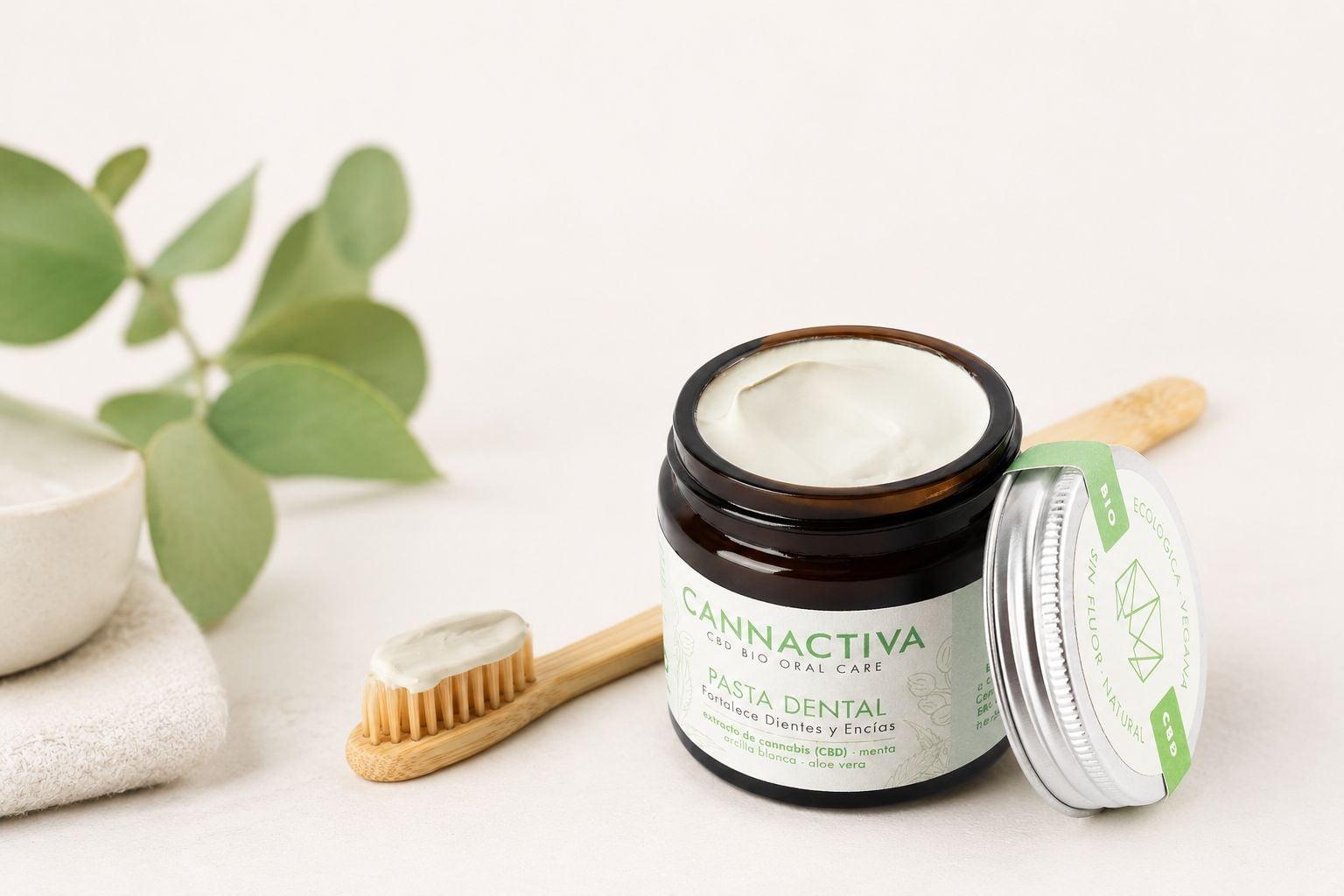
- Cannactiva's toothpaste combines white clay, botanical ingredients and CBD for gentle daily hygiene that looks after teeth and gums.

The history of fluoride in toothpaste
When and why did fluoride start being used in toothpaste?
Fluorine is a chemical element found in nature in the form of fluoride minerals. In the early twentieth century, in Colorado Springs, the dentist Frederick McKay noticed curious brown stains on the enamel of the local population (the so-called “Colorado Brown Stain”). Years later, Churchill (1931) identified excess natural fluoride in the water as the cause, and the researcher H. Trendley Dean quantified in the 1930s and 1940s that those same fluoridated waters were associated with fewer cavities. That epidemiological finding gave rise to the idea of adding fluoride to toothpaste from the 1950s onwards (1).
We now know that fluoride can bind to tooth enamel, turning its structure into fluorapatite, a more resistant mineral. In this way, fluoride hardens the enamel and helps protect teeth against cavities. But, as we’ll see, the story has more nuance to it.
From fluoridated water to the first fluoride toothpaste
In 1945, Grand Rapids (Michigan) became the first city in the world to fluoridate its drinking water in a controlled way. A decade later, in 1955–1956, Procter & Gamble launched Crest with “Fluoristan”, the first fluoride toothpaste, which would go on to be endorsed by the American Dental Association (1960). So, in just a few decades, fluoride went from an epidemiological finding to the commercial standard for oral hygiene worldwide.
What we know about fluoride today
From the 1950s to the present day, new research has gradually filled in what we know about fluoride’s impact on health. The main recognised problem is that, in excess, it causes dental fluorosis: the condition that produces stains and malformations in the enamel, and precisely the one that put McKay on fluoride’s trail. Today, in its severe forms, it is uncommon and concentrated in areas with heavily fluoridated water.
Is fluoride really safe and effective?
A possible link between fluoride and the thyroid
A more recent and controversial topic is the possible link between fluoride and the thyroid. Fluorine and iodine belong to the halogen group and share physicochemical properties (although fluorine is more reactive). This similarity could allow fluoride to interfere with iodine metabolism and, with it, the functioning of the thyroid gland. Several studies have found a correlation between high fluoride exposure and thyroid disorders such as Hashimoto’s thyroiditis or hypothyroidism, especially in people with low iodine levels (2,4,5). In Hashimoto’s thyroiditis, for example, reduced expression of the iodide symporter and thyroglobulin genes has been described (3). High fluoride exposure has also been observed to hinder iodine absorption, and there is research detailing the molecular mechanism by which this would occur – the inhibition of the sodium/iodide symporter, or NIS (6,7). For this reason, more and more therapists recommend that people with thyroid problems choose a fluoride-free toothpaste.
Is fluoride really that effective at preventing cavities?
Fluoride toothpastes have been promoted almost as a cure-all against tooth decay. It is worth, however, putting the focus where it matters: tooth decay is a multifactorial disease, in which diet and sugar, brushing technique and flossing weigh as much as – or more than – fluoride. The 2020 Oral Health Survey in Spain by the General Council of Dentists (presented in January 2021) shows that tooth decay affects practically the entire adult population, although its severity has declined in recent decades (the average number of affected teeth in young adults fell from 11 to 7). The honest message is not that “fluoride is useless”, but that toothpaste alone does not guarantee a healthy mouth: without good hygiene and a low-sugar diet, even fluoride will not prevent tooth decay.
Fluoride toxicity
Fluoride is not an essential nutrient, and no disease has been described from its deficiency (not even tooth decay). At high, chronic doses it can interfere with physiological processes by inhibiting the activity of numerous enzymes (1). It also tends to accumulate in the body’s calcified tissues, above all bones and teeth; it is also deposited in the pineal gland – a small gland in the brain that produces melatonin and tends to calcify with age – where high concentrations have been measured (14). Its possible effect on the central nervous system has also been studied (8).
More recently, the United States National Toxicology Program concluded (2024) that fluoride exposure above 1.5 mg/L is consistently associated with lower IQ in children (11), in line with earlier findings from Harvard (12) and the Canadian MIREC cohort (13). It is worth clarifying that dental authorities consider topical fluoride at toothpaste concentrations (1,000-1,500 ppm) safe and effective in adults: the concern raised by these studies refers above all to high, chronic systemic exposure (for example, fluoridated water above 1.5 mg/L).
If you want to dig deeper, we recommend reviewing the bibliography that accompanies this article and reading The Fluoride Deception, by the journalist Christopher Bryson, who spent a decade investigating the subject. In the United States it remains a hot topic, as many states continue to add fluoride to drinking water.
Benefits of fluoride-free toothpaste
Let’s now look at the main benefits of using a fluoride-free toothpaste and the ingredients these formulas usually include.
Natural, less abrasive ingredients
If you read the label of a conventional toothpaste carefully, you’ll probably find a long list of ingredients you don’t recognise. Fluoride-free toothpastes tend to be more natural, less abrasive to the enamel and gentler on teeth and gums. And one of the best ingredients is white clay, or kaolin: in a study that assessed the effectiveness of several toothpastes, kaolin proved the most effective at removing dental stains while, at the same time, being minimally abrasive to the enamel (9).
Toothpaste free from endocrine disruptors: the Cornucopia study
The Cornucopia Institute, a non-profit organisation dedicated to monitoring organic products on the US market, carried out an in-depth analysis in 2016 of the risks associated with conventional toothpastes. Its report “Behind a Dazzling Smile” (Behind a Dazzling Smile) details the common presence of controversial substances: detergents such as SLS (sodium lauryl sulfate), endocrine disruptors such as parabens (ethylparaben, propylparaben...) or the antibacterial triclosan, artificial sweeteners such as saccharin, and compounds such as PEG or DEA (10). Although toothpaste is not swallowed, the report points out that the oral mucosa has a high absorption capacity.
The report also notes that many brands offer safer formulations in Europe than in the United States – the same products, from the same companies – because of the stricter cosmetics legislation in force in the EU.

Cannactiva’s CBD and white clay toothpaste
At Cannactiva we have formulated our own CBD toothpaste with white clay and mint: vegan, fluoride-free, SLS-free and made with certified organic ingredients. White clay (kaolin) attracts and captures dirt from teeth and gums, giving a gentle yet effective clean without being abrasive to the enamel.
Toothpastes with hydrated silica, on the other hand – the most common ingredient in whitening toothpastes, even in organic brands – are among the most abrasive to the enamel (hence their whitening power). At Cannactiva we also add cannabidiol, or CBD, for its potential benefits for teeth and gums. Take a look at the rest of our natural CBD skincare.
Tips for good oral hygiene
We hope you’ve found the benefits of fluoride-free toothpaste useful and that you’ll give this daily habit the importance it deserves. To finish, here are some complementary tips for maintaining good oral hygiene:
- Use a soft-bristled brush and brush gently: hard brushes or too much force can damage the gums and cause tooth sensitivity.
- Use dental floss to clean between the teeth, where plaque builds up.
- Brush preferably after meals and before going to bed.
- Avoid sugary foods, which are the most cariogenic.
- If you have pain, tartar, bad breath or bleeding gums, see your dentist: these need professional assessment.
By following these habits you’ll be able to enjoy a healthy smile for many years. And remember: the most beautiful smile is always the one that comes from the soul. With or without fluoride, live with joy and good humour :-)
Hydroxyapatite: the fluoride alternative that really does remineralise
When someone is looking for a fluoride-free toothpaste that also remineralises the enamel, the ingredient with the most scientific backing is hydroxyapatite (often in its nano form, nHAP). It’s not an exotic additive: tooth enamel is made up of around 97% hydroxyapatite, so applying it means “giving back” to the tooth its own mineral (which is why it’s called biomimetic). Its use in oral hygiene grew out of NASA research in the 1970s – astronauts were losing bone and tooth mineral – and it became popular in Japan, where it was approved as an anti-caries agent in 1993.
Does it work as well as fluoride? Recent evidence suggests it does:
- Non-inferior to fluoride: an in situ study using baby-tooth enamel, published in BDJ Open (2019), concluded that 10% hydroxyapatite is non-inferior to fluoride (500 ppm) at remineralising early caries (15).
- No significant differences: a review of 36 studies (2024) found no relevant differences between hydroxyapatite and fluoride in remineralising early white spots (ICDAS 1), with added advantages for hydroxyapatite (desensitising effect, anti-biofilm action, aesthetic improvement) and a superior safety profile, as it carries no risk of fluorosis if swallowed.
- Fewer cavities at 2 years: a 24-month clinical trial in more than 600 children showed that a toothpaste with biomimetic hydroxyapatite reduced the increase in cavities; in that study the hydroxyapatite was combined with fluoride (16, 17).
In short, hydroxyapatite is currently the fluoride-free alternative with the best evidence for remineralisation. Cannactiva does not include it yet – our toothpaste relies on the gentle cleaning of white clay and botanical care with CBD – but it’s only fair that you know about it if active fluoride-free remineralisation is your priority.
Frequently asked questions about fluoride-free toothpaste
Is fluoride-free toothpaste bad or less effective?
Not necessarily. Preventing cavities depends more on brushing technique, flossing and a low-sugar diet than on fluoride itself. There are also alternatives that remineralise (such as hydroxyapatite) and natural options that clean without harming the enamel (such as white clay).
Which toothpaste is best if I have thyroid problems or hypothyroidism?
Several studies link high fluoride exposure with thyroid disorders, especially when iodine levels are low; that’s why many therapists recommend fluoride-free toothpastes for these people. Always check with your healthcare professional.
What is a toothpaste free from endocrine disruptors?
It’s one that avoids endocrine disruptors such as parabens or triclosan, and other controversial compounds such as certain surfactants (SLS), flagged in reports such as the Cornucopia Institute’s. Certified natural formulas usually leave them out.
Can teeth be remineralised without fluoride?
Yes. In recent studies, hydroxyapatite has been shown to remineralise enamel no less effectively than fluoride, and good hygiene together with a balanced diet helps maintain the tooth’s mineral balance.
Can children use fluoride-free toothpaste?
This is a common question because of the risk that they swallow toothpaste. The paediatrician or dentist should advise according to each child’s age and caries risk. (Cannactiva’s toothpaste is for adult use.)
Looking after your mouth can be natural too. If you want to take the step, try our CBD toothpaste with white clay and explore Cannactiva’s full range of natural CBD skincare, such as our natural solid soap.
References
- Unde MP, Patil RU, Dastoor PP. The Untold Story of Fluoridation: Revisiting the Changing Perspectives. Indian J Occup Environ Med. 2018 Sep-Dec;22(3):121-127. doi: 10.4103/ijoem.IJOEM_124_18. PMID: 30647513; PMCID: PMC6309358.
- Malin AJ, Riddell J, McCague H, Till C. Fluoride exposure and thyroid function among adults living in Canada: Effect modification by iodine status. Environ Int. 2018 Dec;121(Pt 1):667-674. doi: 10.1016/j.envint.2018.09.026. Epub 2018 Oct 10. PMID: 30316182.
- Popławska-Kita A, Telejko B, Siewko K, Kościuszko-Zdrodowska M, Wawrusewicz-Kurylonek N, Krętowski A, Hryniewicka J, Dzięcioł J, Bauer W, Milewski R, Szelachowska M, Górska M. Decreased Expression of Thyroglobulin and Sodium Iodide Symporter Genes in Hashimoto’s Thyroiditis. Int J Endocrinol. 2014;2014:690704. doi: 10.1155/2014/690704. Epub 2014 Mar 4. PMID: 24723949; PMCID: PMC3960735.
- Susheela, A. K. ; Bhatnagar, M. ; Vig, K. ; Mondal, N. K. (2005) Excess fluoride ingestion and thyroid hormone derangements in children living in Delhi, India Fluoride, 38 (2). pp. 98-108. ISSN 0015-4725
- Singla S, Shashi A. Thyroid peroxidase activity as toxicity target for fluoride in patients with thyroid dysfunction. Curr. Res. Microbiol. Biotechnol. 2013;1:53-7.
- Li Y, Zhang J, Li Z. Prevention of iodine deficiency in high fluoride areas in Tianjin City, China. Fluoride. 1998;31:S18-.
- Waugh DT. Fluoride Exposure Induces Inhibition of Sodium/Iodide Symporter (NIS) Contributing to Impaired Iodine Absorption and Iodine Deficiency: Molecular Mechanisms of Inhibition and Implications for Public Health. Int J Environ Res Public Health. 2019 Mar 26;16(6):1086. doi: 10.3390/ijerph16061086. PMID: 30917615; PMCID: PMC6466022.
- Valdez-Jiménez L, Soria Fregozo C, Miranda Beltrán ML, Gutiérrez Coronado O, Pérez Vega MI. Effects of the fluoride on the central nervous system. Neurologia. 2011 Jun;26(5):297-300. English, Spanish. doi: 10.1016/j.nrl.2010.10.008. Epub 2011 Jan 20. PMID: 21255877.
- Schemehorn BR, Moore MH, Putt MS. Abrasion, polishing, and stain removal characteristics of various commercial dentifrices in vitro. J Clin Dent. 2011;22(1):11-8. PMID: 21290981.
- Cornucopia Institute. Behind a Dazzling Smile: Toxic Ingredients in Your Toothpaste. The Cornucopia Institute Research Report, 2016.
- National Toxicology Program (NTP). Monograph on the State of the Science Concerning Fluoride Exposure and Neurodevelopmental and Cognitive Health Effects. U.S. Department of Health and Human Services, 2024.
- Grandjean P. Developmental fluoride neurotoxicity: an updated review. Environmental Health. 2019;18:110. doi: 10.1186/s12940-019-0551-x.
- Green R, Lanphear B, Hornung R, Flora D, Martinez-Mier EA, Neufeld R, Ayotte P, Muckle G, Till C. Association Between Maternal Fluoride Exposure During Pregnancy and IQ Scores in Offspring in Canada. JAMA Pediatrics. 2019;173(10):940-948. doi: 10.1001/jamapediatrics.2019.1729. PMID: 31424532.
- Luke J. Fluoride deposition in the aged human pineal gland. Caries Res. 2001;35(2):125-128. doi: 10.1159/000047443. PMID: 11275672.
- Amaechi BT, et al. Comparative efficacy of a hydroxyapatite and a fluoride toothpaste for prevention and remineralization of dental caries in children. BDJ Open. 2019;5:18. doi: 10.1038/s41405-019-0026-8.
- Cagetti MG, Cocco F, Wierichs RJ, Wolf TG, Salerno C, Arghittu A, Campus G. Efficacy of HAF toothpastes in primary and permanent dentitions. A 2-years triple-blind RCT. J Dent. 2022;121:104049. doi: 10.1016/j.jdent.2022.104049.
- Bossù M, Saccucci M, Salucci A, et al. Enamel remineralization and repair results of Biomimetic Hydroxyapatite toothpaste on deciduous teeth: an effective option to fluoride toothpaste. J Nanobiotechnology. 2019;17:17. doi: 10.1186/s12951-019-0454-6.