Germany defends the legality of hemp flower! Good news for CBD in Europe
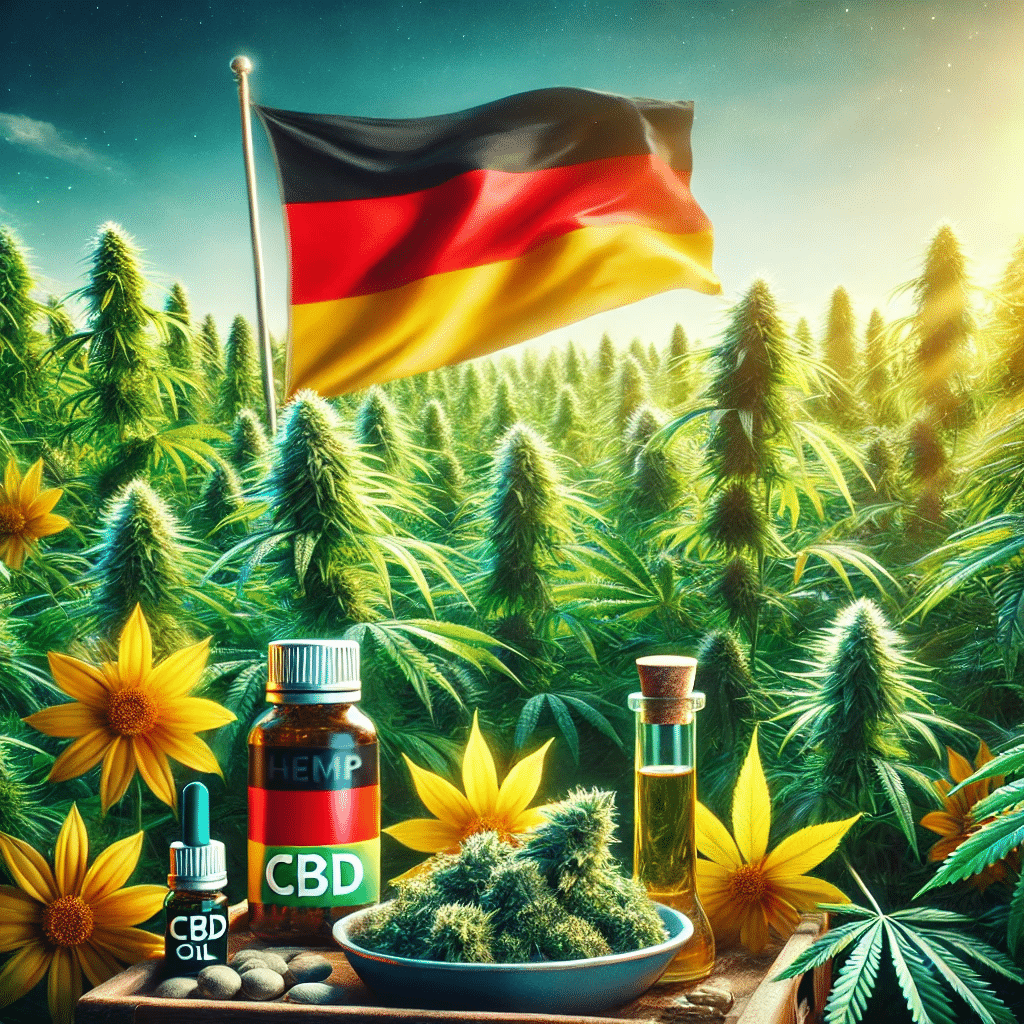
The progress of CBD in Europe continues apace, and this time the good news comes from Germany. The German government has presented a bill that confirms the legality of hemp flower and states that its regulation does not contravene international treaties, especially the 1961 Single Convention on Narcotic Drugs.
This news is an important milestone for the hemp and CBD sector, as it tackles one of the main obstacles many countries face: hemp flower being wrongly treated as a narcotic drug because of confusion over definitions and over its nature in relation to international treaties.
The problem with hemp flower in Europe
In several member states of the European Union, legal uncertainty over hemp flower still persists. Some authorities consider the flowers to be narcotic drugs, based on a restrictive reading of international treaties, which limits their sale and industrial use. In some countries outside the EU, such as the UK, hemp flower is controlled even when its THC content is low.
This confusion arises, in part, from the specific mention of “fibre and seed” in Article 28(2) of the 1961 Single Convention on Narcotic Drugs, which explicitly leaves out the flowers. However, this interpretation does not take into account the scientific and economic advances that have broadened the industrial use of hemp, including CBD flower.
Germany clarifies and confirms the legality of hemp flower
The German bill, entitled “First bill amending the Consumer Cannabis Act – Liberalisation of industrial hemp”, proposes significant changes for the sector:
- Removal of the “abuse clause”: the clause that restricted trade in industrial hemp if there was a possibility that it could be used for intoxicating purposes is removed. This clause had been interpreted restrictively, creating legal uncertainty and holding back the development of the sector.
- Permission for indoor growing: growing industrial hemp indoors is authorised, widening the opportunities for growers and allowing more precise control of the levels of substances in the plants.

Explicit mention of flowers in the bill
The German bill explicitly mentions hemp flower as part of legal industrial hemp:
“9. Industrial hemp: plants, flowers and other parts of plants of the genus Cannabis, if...”
(§1 no. 9 of the bill)
This inclusion is crucial, as it recognises the flowers as an integral part of industrial hemp and allows their use and sale, provided the THC content does not exceed 0.3%.
Legal reasoning and compatibility with international treaties
Germany argues that its bill does not contravene the 1961 Single Convention. The explanatory memorandum states:
“The bill is compatible with the Single Convention on Narcotic Drugs of 1961 as amended in 1972. In Article 28, paragraph 3, the Single Convention obliges States Parties to prevent the misuse of, and illicit traffic in, the leaves of the cannabis plant, but in Article 28, paragraph 2, it explicitly excludes the cultivation of industrial hemp for exclusively horticultural and commercial purposes (fibre and seed).”
(Section V. Compatibility with European Union law and international treaties)
Furthermore, the German government reasons that, with the entry into force of the Consumer Cannabis Act (KCanG), which legalises access to THC cannabis for personal use, there is no justification for restricting industrial hemp:
“With the possibility provided by the Consumer Cannabis Act (KCanG) of obtaining cannabis for consumption legally, the misuse of industrial hemp for consumption is ruled out under the KCanG rules. The abuse criterion can therefore be removed in compliance with the UN conventions.”
(Section V. Compatibility with European Union law and international treaties)
This reasoning is significant, as it holds that, since there is legal access to recreational THC cannabis, there is no need to restrict industrial hemp for fear of possible misuse.
Implications for other European Union countries
Although this bill is specific to Germany, its implications go beyond its borders. The legalisation of recreational cannabis in an EU member state has legal and practical consequences for the other countries:
- The public health protection argument: if an EU country allows legal access to THC cannabis, the argument of protecting public health by restricting industrial hemp loses its force. This reasoning could be applied in other member states, calling into question the current restrictions on hemp flower.
- Harmonisation of legislation: Germany's move may encourage other countries to review and update their legislation, especially those that still treat hemp flower as a narcotic drug.
- Free movement of goods: under EU law, restrictions on trade between member states must be justified and proportionate. Germany's decision may strengthen the position that low-THC hemp flower should not be subject to trade bans.
Hemp is not a narcotic drug: the backing of Article 28(2)
The German bill also reinforces the interpretation that industrial hemp is not a narcotic drug, backed by Article 28(2) of the 1961 Single Convention, which excludes industrial hemp from the restrictions that apply to psychoactive cannabis.
This is crucial to the argument that hemp flower, when its THC content is below 0.3%, should not be considered a narcotic drug and that its industrial use and sale should be allowed.
When will this bill be passed?
The bill was introduced on 11 October 2024 and was due to enter into force on the day after its promulgation. However, it was never passed: it lapsed at the end of the legislative term after the early elections of February 2025. As of October 2026, the “abuse clause” is still in force and a new proposal to liberalise industrial hemp is going through the Bundestag.
Conclusion
Germany's confirmation of the legality of hemp flower and its compatibility with international treaties is a significant step forward for the CBD sector in Europe. This step not only benefits the German market, but also sets a precedent that may influence other European Union countries.
At Cannactiva, we welcome this progress and remain committed to promoting and sharing accurate information about hemp and CBD. We firmly believe that industrial hemp is a plant with enormous benefits and that regulating it properly can drive sustainable economic development and offer healthy alternatives to consumers.
The future of hemp and CBD in Europe is promising, and this news from Germany is proof of it!
Useful sources: https://www.bundesrat.de/drs.html?id=490-24