To celebrate summer, we at Cannactiva would like to invite you to find your IKIGAI. This word, which has recently become popular all over the world, comes from Japanese and could be translated as “a passion that gives value and joy to life”. To follow IKIGAI, there are four basic premises:
You love what you do,
You’re good at what you do,
What you do is useful to the world,
And it feeds you, giving you energy to keep going.
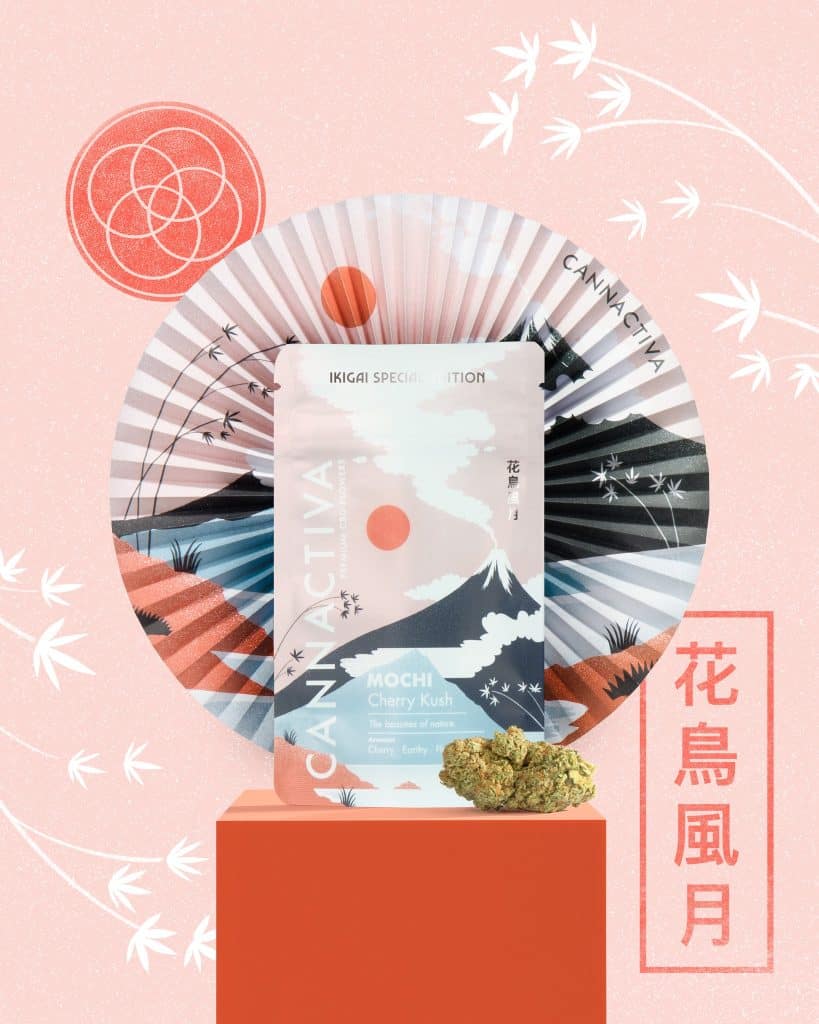
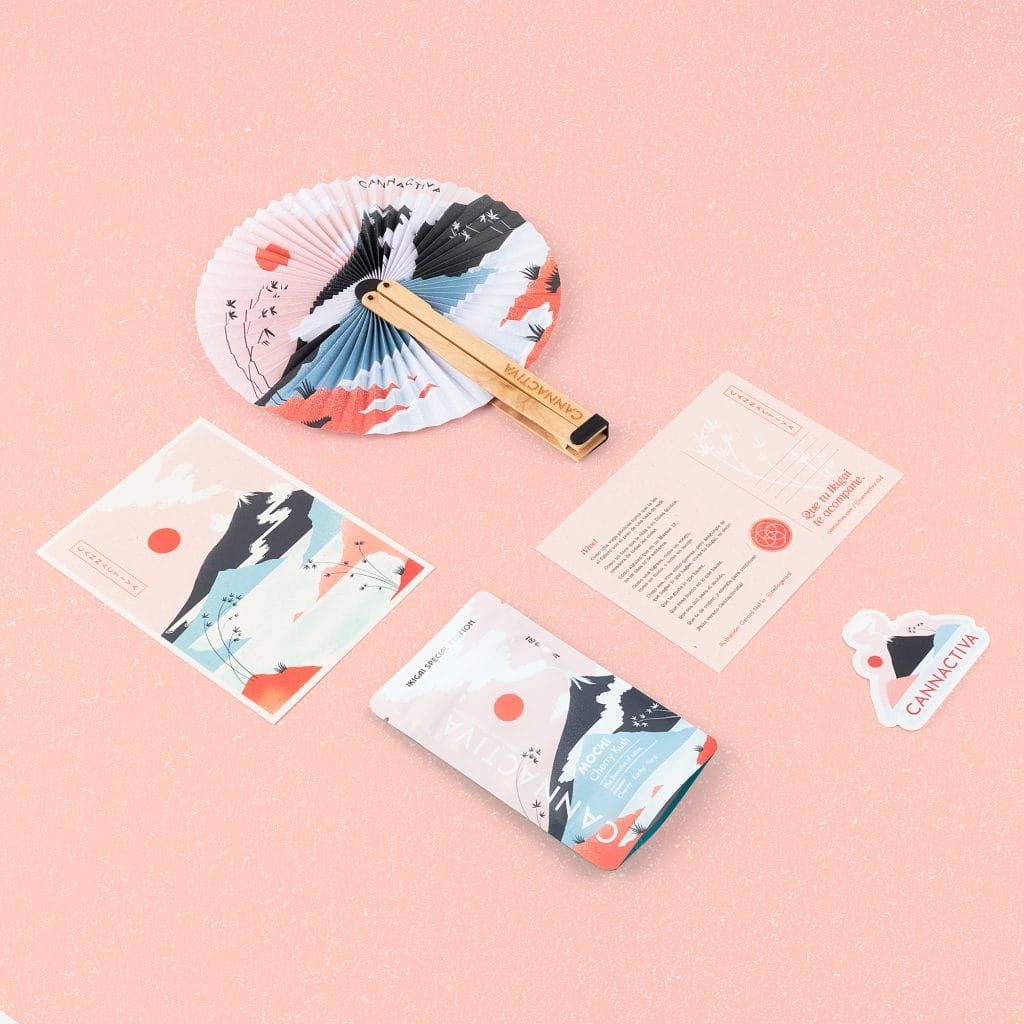
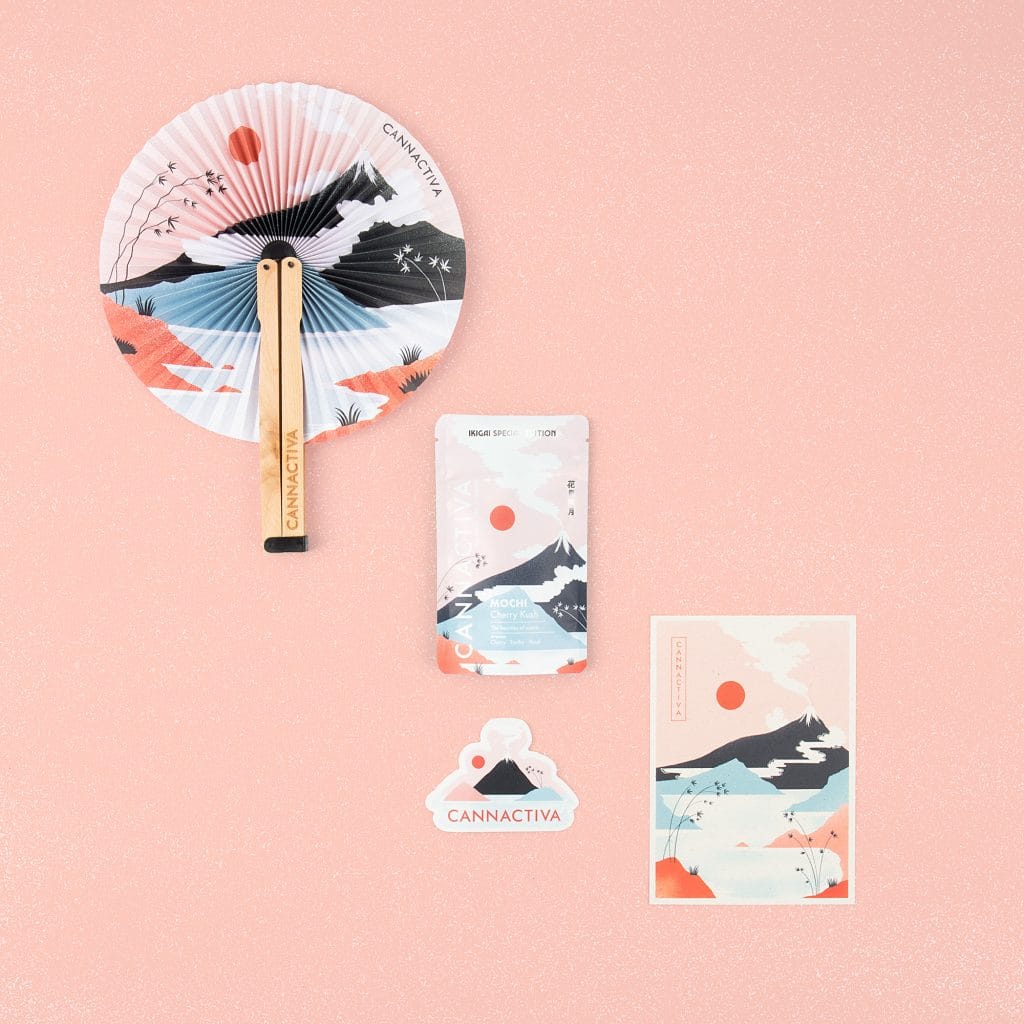
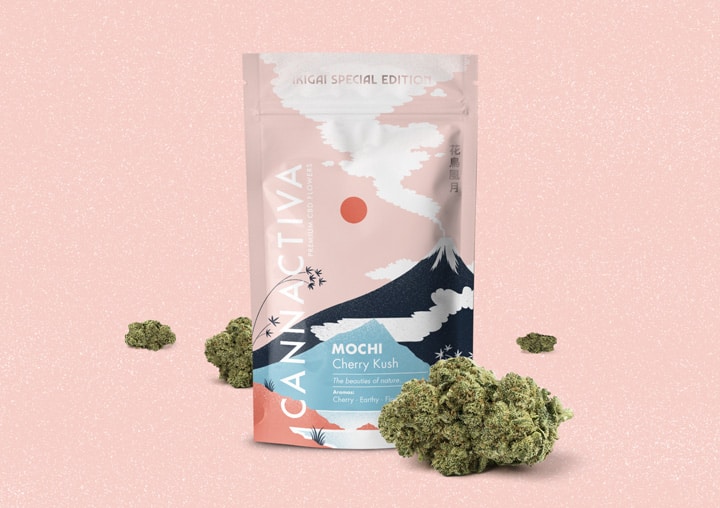
Summer is here and we want to focus on our IKIGAI. To inspire you, with CBD flower orders in summer 2023 we’re giving away a free fan featuring a Japanese-style illustration by the artist Gerard Nel·lo (@nellogerard). We’re also launching an exclusive strain: Ikigai Special – Mochi CBD flower, limited edition.
Summer is a time for relaxing and good vibes, when you can enjoy yourself with friends and family. Savour every moment shared with your loved ones, where laughter is guaranteed. Explore new horizons and live new experiences. Enjoy the summer sun with our new reversible hat with a printed cannabis design. Find the calm you need and feel how life invites you to be present and to be honest with yourself. Live the present to the full.
Here’s a photo gallery from the campaign, by our amazing photographer Valeria Gallardo:
What IKIGAI really means
What is IKIGAI?
IKIGAI is a Japanese concept that could be translated as what gives value and fulfilment to life. Others translate it as “a reason for being”. It’s about finding an activity, a purpose or whatever makes you feel accomplished, fills you with joy and keeps you engaged and enthusiastic every day.
In fact, IKIGAI is a broad concept that covers everything that brings value and joy to life: from people, such as parents, siblings, children or friends, to activities, including work and hobbies.
It’s said that, to find your IKIGAI, each person needs to take stock of four fundamental elements of their life: what they love, what the world or the community needs, what they can be paid for (not necessarily with a salary: energy to keep going) and what they’re good at. When you find your IKIGAI, you reach a state of fulfilment and satisfaction, a balance between passions, contributions to society, rewards and skills.
Our IKIGAI can change several times over the course of a lifetime. People may not have one single, big IKIGAI. This can take some of the pressure off, at least for me, as I like so many things in life. Although, without a doubt, I understand that those who devote themselves masterfully to just one thing can, broadly speaking, be blessed with a clear and constant IKIGAI. No doubts, just flow.
Origin
“IKIGAI” has been part of Japanese culture for centuries. The word is made up of two terms: “iki”, which refers to “life”, and “gai”, which translates as “value” or “worth”. It would be something like “having value in life”, although it’s hard to grasp the real connotation it takes on in its original culture without westernising the meaning.
To understand the real meaning of “IKIGAI”, we can travel in our minds to Japan, to the small village of Ogimi, in the north of the island of Okinawa, next to a national park, where the concept of IKIGAI is deeply rooted. This place is known as “the village of longevity” because it has more people over 100 years old than anywhere else in the world. Héctor García, co-author of the book on IKIGAI that popularised the term, interviewed more than a hundred elderly residents of the village to ask them about their IKIGAI. Drawing on these experiences, he explains that what keeps these people active and healthy into old age is IKIGAI: “They all have a source of enthusiasm for life and devote themselves to it every day”.
The authors of the book explain that a notable feature of everyone they interviewed is that 100% had a vegetable garden at home. They also found that in Ogimi, music, singing and dancing are present practically every day as an essential part of daily life.
Another distinctive feature of this community is that the elderly have strong social bonds with their peers, and meet frequently to take part in activities such as sport, karaoke or birthday celebrations. Avoiding social isolation may therefore be a key factor in maintaining the motivation and confidence needed to lead an active and fulfilling life. Most people are active members of neighbourhood associations, where they find a sense of belonging and love similar to that of a family. There are also moai, informal groups of people with shared interests, whose members meet regularly to have dinner and plan joint activities.
The book conveys the idea of the simplicity of the IKIGAI concept in Japan. It goes beyond (or not so far beyond) the Western scheme of “something I like, that’s useful to the world, that I’m paid for and that I’m good at”. It’s much simpler and more fulfilling. For some people, IKIGAI can be as simple as playing with their grandchildren. In other words, experiencing a sense of belonging (where the community plays a fundamental role), being active in life, present, useful to society and recognised by the group.
Finding your IKIGAI means feeling that we belong (the community is a fundamental part), being active in life, present, useful to society and recognised by the group.
The authors of the book also invite us to live and immerse ourselves in our daily actions with mindfulness, reaching that state of “flow” where we’re in sync with life, we stop looking at the clock and time stretches out. Interestingly, in Japan there is no word that means “retire for good”, as there is in the West.
Finally, the book refers to young people, who sometimes feel unmotivated, worried or depressed. From childhood, they’re told what they could become when they grow up, but IKIGAI is about living in the present, feeling, flowing.
How to find your IKIGAI in life
If you’re looking to find your IKIGAI, here’s a short step-by-step guide to help you along the way:
Reflect on what you’re passionate about
Think about the activities that make you feel good, that you enjoy doing, that you like, that you’re passionate about. Reflect on the things that excite you, fire you up and fill you with energy. What fulfils and excites you can, just like IKIGAI, change as we grow and go through different stages of life.
Identify your skills and strengths:
Explore your strengths and skills. What natural abilities do you have? Recognising your strengths will let you put them to use in your search for IKIGAI.
Think about what your community or the world needs:
Reflect on how your passions and skills could be useful to others, in your community, and on the ways you’d like to help make the world a better place. Thinking about the existing needs you see around you could help.
Seek balance:
Reflect on the ideas that come out of the previous steps. Is there an activity, hobby or vocation that combines all or some of them? That intersection could be your IKIGAI, the point where you find purpose and complete fulfilment.
Experiment and flow:
Take it easy: slow and steady wins the race. Try out different activities, projects or jobs that let you grow. Look for opportunities that challenge you and help you broaden your skills and knowledge. Don’t be afraid to try new things and step out of your comfort zone. Explore different paths, or just one; test yourself and flow, without pressure.
Nurture your relationships and your community
IKIGAI is also found in human connections. Nurture positive, meaningful relationships with the people around you. Community is a fundamental part. Share what you love and your purpose with those who support and inspire you. These relationships can be a source of motivation and enrichment in your search for IKIGAI: telling and listening to stories, dreaming together, asking for advice, having fun… It’s an elixir of life.
Embrace personal growth
The search for IKIGAI is an experience in itself. Learn as you go along, and embrace challenges and obstacles as opportunities for personal growth.
Keep an open mind
IKIGAI can be found in unexpected places, so keep an open mind and be willing to explore different paths. Listen to your intuition as you set out on this search.
A reference book on IKIGAI
The concept of IKIGAI has become popular all over the world as a philosophy for finding enthusiasm and joy in everyday life. It has been linked to greater longevity, emotional wellbeing and greater overall satisfaction in many areas of life. Many assume that the IKIGAI concept is responsible for the exceptional longevity and health of Okinawa’s elderly population, one of the world’s so-called “blue zones”, as it is home to the highest number of people over 100 per 100,000 inhabitants on the planet.
If you’d like to read more on the subject, there’s the book-length essay Ikigai: The Japanese Secret to a Long and Happy Life, by Héctor García (Kirai) and Francesc Miralles. It has been translated into 63 languages, has sold more than 3 million copies since it was published in 2016, and it can offer, and remind you of, some very important things in life.
Cannactiva x IKIGAI
We hope you’ve enjoyed this short journey through the philosophy of IKIGAI as much as we have. We’ll sign off by wishing that you live your life the way you want:
Like an old Turkish fortune teller who reads your future in the grounds of a coffee cup,
like an Inca praying to their Goddess Quinoa, creator of all things,
like someone who would never marry or set sail on Friday the 13th,
with your own spirit animal, be it a tigress, a rabbit, a monkey or a monk…
However it may be, live as you wish and make sure that, whatever you do, you fulfil your IKIGAI.
May your IKIGAI be with you. Happy summer, Cannactivista!
Sources
- IKIGAI. Los secretos de Japón para una vida larga y feliz [Ikigai: the Japanese secret to a long and happy life]. Héctor García (Kirai) and Francesc Miralles Contijoch. Editorial Urano. First edition: 2016. ISBN 9788479539221
- JapanGov, The Government of Japan. IKIGAI: The Japanese Secret to a Joyful Life. KIZUNA, Linking Japan and the World (18 March 2022)